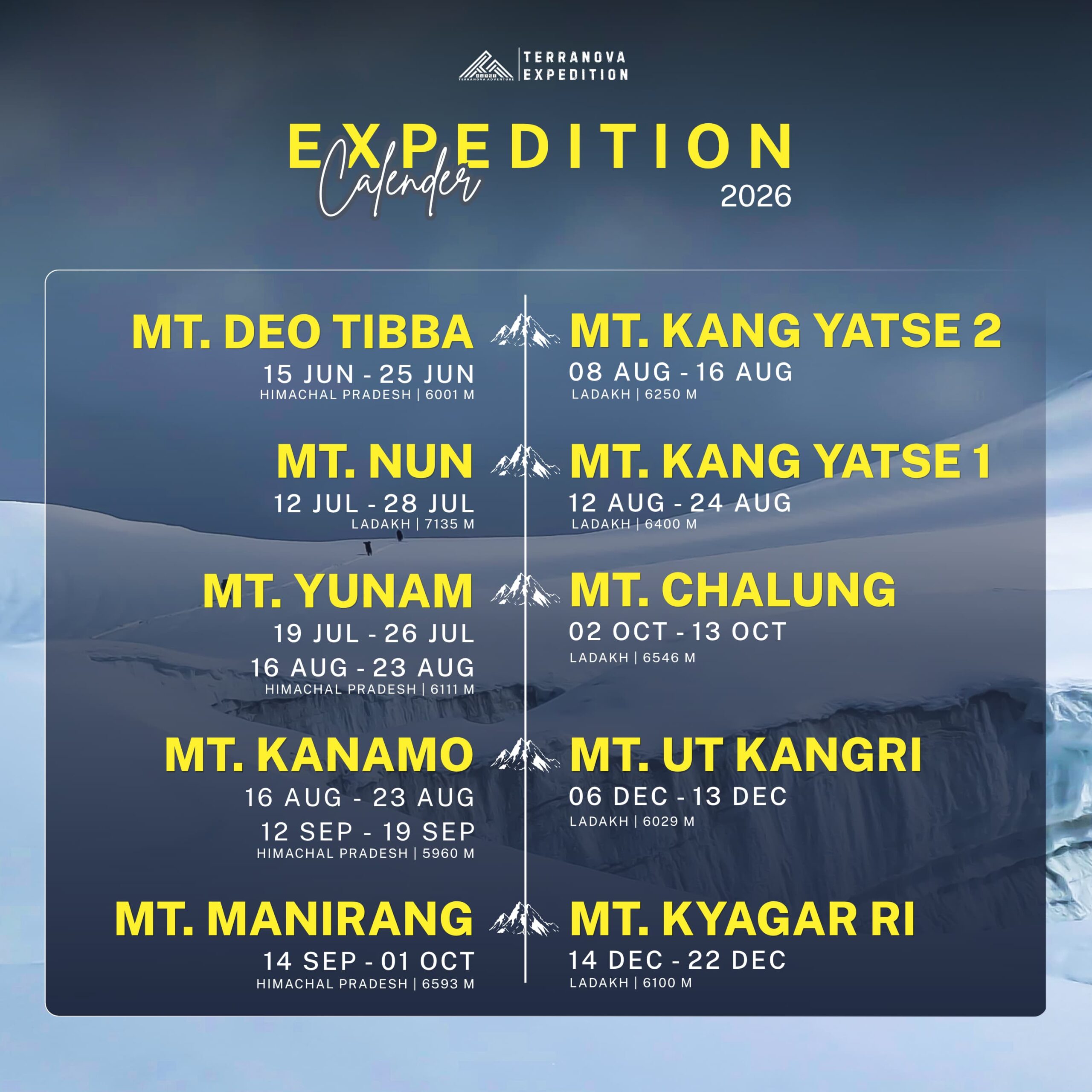
On a Himalayan expedition, reaching Base Camp does not mean the team can simply choose a morning and start climbing towards the summit.
The final summit attempt is one of the most carefully considered decisions of the entire expedition.
Weather forecasts have to be studied. Wind speed matters. Recent snowfall matters. The condition of the route matters. The health and acclimatisation of the team matter. Even the time climbers are expected to reach a particular section of the mountain can determine whether the attempt continues or turns around.
This period of potentially suitable conditions is commonly described as a summit window.
Experienced Himalayan Expedition Guides therefore do much more than lead climbers along a route. They continuously assess changing conditions and help determine whether the team should climb, wait or retreat.
For this reason, a responsible Himalayan Expedition Company builds flexibility into an expedition rather than treating the summit date as fixed.
Here is how summit windows actually work.
What Is a Summit Window?
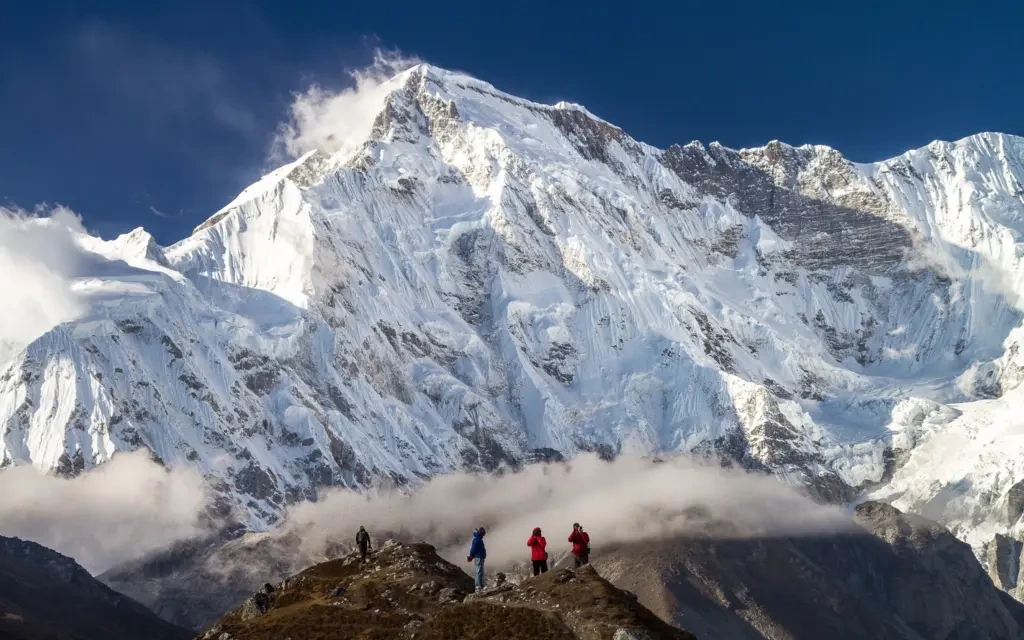
A summit window is a period during which a combination of weather, mountain conditions, route readiness and team preparedness may provide an acceptable opportunity for a summit attempt.
It does not necessarily mean perfect weather.
Perfect conditions are uncommon in high mountains.
Instead, expedition teams look for a period when conditions are considered manageable for the specific route and team.
A potential summit window may involve:
- Relatively stable weather
- Acceptable wind conditions
- Manageable snowfall
- Adequate visibility
- A usable climbing route
- Acceptable avalanche or snow conditions
- A sufficiently acclimatised team
- Enough time to climb and descend
- Operationally ready camps and equipment
All of these factors interact.
A clear sky alone does not create a summit window.
Similarly, a favourable forecast does not automatically mean the route itself is ready.
That distinction is fundamental to understanding expedition strategy.
A Summit Date and a Summit Window Are Not the Same Thing
Most expedition itineraries include a proposed summit day.
This is necessary for planning.
Transportation, food, staff, camps and the total duration of the expedition all have to be organised around an approximate schedule.
But a proposed summit date should not be interpreted as a guaranteed climbing date.
Imagine an itinerary listing the summit attempt for 15 September.
If heavy snowfall occurs on 13 and 14 September, the team may need to wait.
If strong winds are expected on the 15th but conditions improve on the 16th, the summit attempt may move.
If conditions continue deteriorating, the attempt could be abandoned altogether.
This flexibility is one reason expedition itineraries often contain contingency or buffer days.
A mountain itinerary is a plan.
A summit window is a decision based on conditions.
Why Weather Is So Important
Weather is one of the most obvious factors affecting summit strategy, but expedition weather assessment goes beyond asking whether it will snow.
Teams may examine several variables.
Wind Speed
Strong winds can dramatically increase the difficulty of moving at altitude.
They can affect balance, visibility and temperature exposure while making exposed ridges significantly more demanding.
Wind chill can also make already-low temperatures feel considerably colder.
For exposed summit sections, predicted wind conditions can become a major factor in deciding whether to proceed.
Snowfall
Fresh snowfall can change a route within hours.
A trail or slope that was manageable one day may require substantially more effort after heavy snow.
Snow accumulation can also affect stability.
Guides therefore consider not only whether snow is falling but also how much has fallen, where it has accumulated and what conditions existed before the snowfall.
Temperature
Extremely low temperatures affect climbers and equipment.
Hands and feet become harder to keep warm, water freezes faster, batteries lose performance and routine tasks take longer.
Temperature becomes particularly important during summit attempts that begin before sunrise.
Visibility
Poor visibility can make route finding difficult, especially on glaciers, broad snowfields or complex terrain.
Cloud, snowfall and whiteout conditions can remove visual reference points.
This can turn relatively straightforward terrain into a much more complicated navigation problem.
Forecasts Are Important, but Guides Still Observe the Mountain
Modern expedition teams have access to increasingly detailed mountain weather forecasts.
These forecasts are extremely useful.
But a forecast is still a forecast.
Conditions observed on the mountain remain important.
Experienced Himalayan Expedition Guides compare forecast information with what they are actually seeing around them.
They may observe cloud development, snowfall, wind behaviour, temperature changes and conditions on nearby slopes.
Local terrain can also influence weather differently from broader regional forecasts.
This is why expedition decisions should not be reduced to checking a weather application on a phone.
Forecast data is one source of information.
Direct observation is another.
The summit decision uses both.
Route Conditions Can Override a Good Forecast
Imagine that tomorrow’s forecast shows clear skies and relatively low wind.
At first glance, it looks like an ideal summit opportunity.
But the route received significant snowfall two days earlier.
The team now has to determine what happened to that snow.
Has it consolidated?
Has wind moved it onto particular slopes?
Has the climbing route become significantly slower?
Are important sections safe and practical to cross?
These questions may matter more than the clear sky.
A summit window therefore depends on both atmospheric conditions and conditions under the climbers’ feet.
This is particularly important on routes involving glaciers, snow slopes, exposed ridges or technically demanding sections.
Snow Stability and Avalanche Assessment
Snow-covered mountains are dynamic environments.
Fresh snow, older snow layers, temperature fluctuations and wind can all influence stability.
Wind is particularly important because it can transport snow from one area and deposit it somewhere else.
A slope may therefore accumulate significant wind-loaded snow even when total recorded snowfall appears moderate.
Expedition teams assess the terrain they are actually travelling through.
There is no single visual sign that can make every slope safe or unsafe.
Snow assessment requires experience, context and continuous observation.
This is another reason summit decisions may change even when the weather forecast appears favourable.
The Team Must Be Ready Too
A good weather window is useful only if the climbing team is prepared to use it.
Suppose a three-day period of favourable conditions is expected.
If the team has not acclimatised adequately, rushing towards the summit simply because the forecast looks good can create unnecessary problems.
Summit strategy therefore has to coordinate two different timelines:
the mountain’s timeline and the team’s timeline.
The mountain may provide an opportunity before the team is ready.
Or the team may be fully acclimatised while the mountain remains unsuitable.
The expedition works only when those two timelines align closely enough.
How Acclimatisation Affects Summit Timing
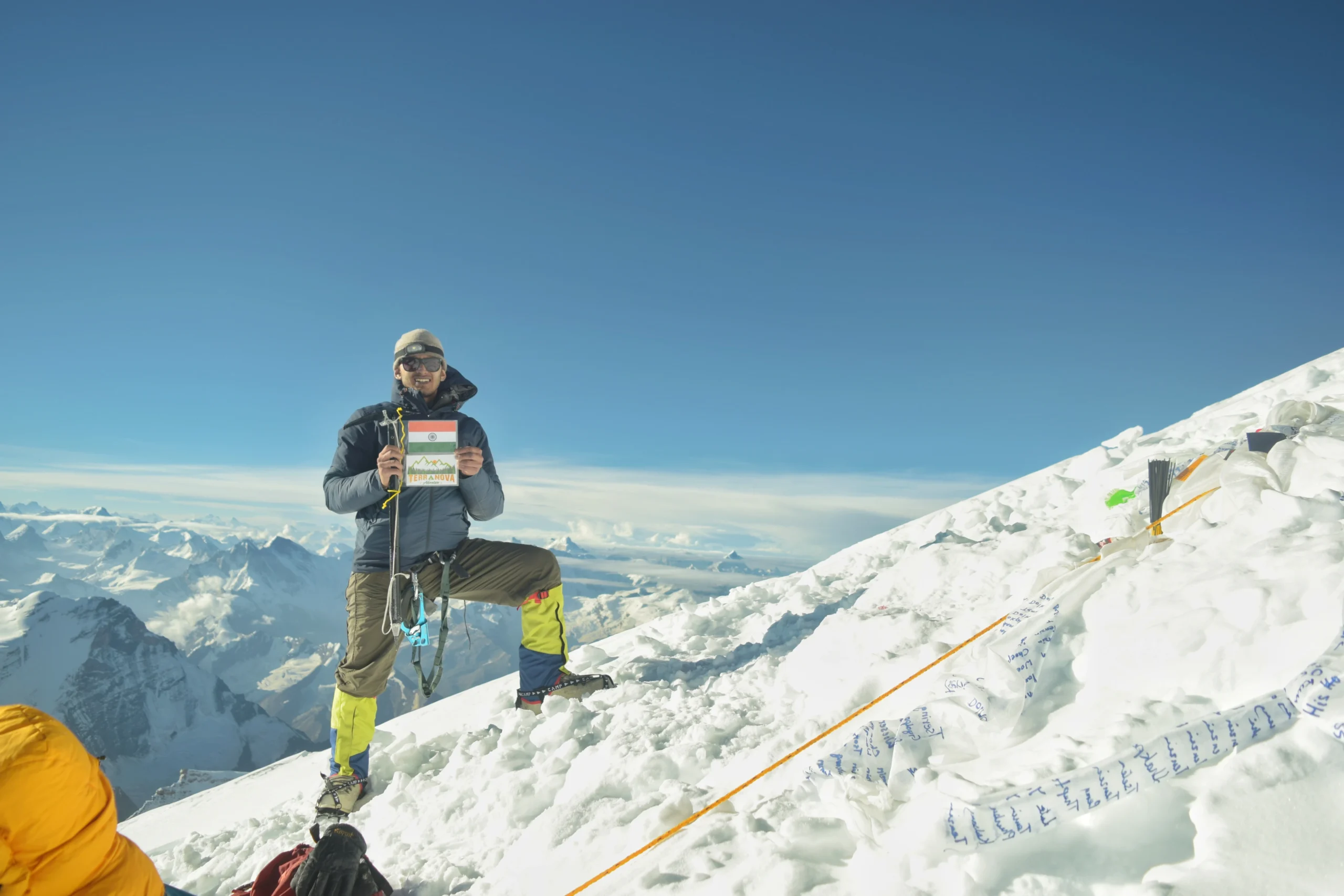
At high altitude, climbers need time to adapt to reduced oxygen availability.
This process cannot be completely predicted before the expedition.
Two climbers following the same itinerary may respond differently.
Guides monitor factors such as:
- General energy levels
- Appetite
- Sleep
- Recovery after climbing
- Headaches or unusual discomfort
- Ability to maintain an appropriate pace
- Overall response to increasing altitude
If several team members are struggling, the expedition leader may adjust the schedule.
An extra rest day can sometimes be more valuable than forcing the team upward according to the original itinerary.
This is why good expedition planning allows some flexibility before the summit phase.
Why Summit Attempts Often Begin at Night
People unfamiliar with mountaineering are sometimes surprised to learn that summit attempts frequently begin late at night or in the very early hours of the morning.
There are several reasons.
First, summit days can be long.
Starting early gives the team more usable time for both ascent and descent.
Second, snow conditions may sometimes be firmer during colder nighttime and early-morning temperatures, depending on the mountain and season.
Third, weather patterns on some mountains can deteriorate later in the day.
Most importantly, reaching the summit is only half the objective.
The team still needs sufficient time and energy to descend.
An early departure provides a larger operational margin.
Turnaround Time: One of the Most Important Summit Rules
One of the most important decisions on summit day may have nothing to do with the summit itself.
It is the turnaround time.
Before or during an attempt, expedition leaders may establish a time beyond which continuing upward becomes inappropriate.
Suppose the team expects to reach a key point by 8:00 AM.
If they reach it significantly later, the guide may reassess whether there is enough time to summit and descend safely.
This can lead to one of the most difficult decisions in mountaineering: turning back while the summit appears close.
Climbers naturally focus on upward progress.
Guides have to think about what happens afterwards.
The summit is optional.
The descent is not.
Why Descent Conditions Matter When Choosing the Window
Summit planning should never focus exclusively on the climb upward.
Conditions expected during descent matter just as much.
A slope that is firm in the early morning may change as temperatures rise.
Visibility may deteriorate later in the day.
Snowfall may be expected in the afternoon.
Wind may increase.
The team may also be considerably more tired during descent.
This means expedition leaders think beyond the estimated summit arrival time.
They consider when the team should return through key sections of the route.
A successful summit strategy is therefore a round-trip strategy.
Himalayan Expeditions from Dehradun: How the Gateway Influences Planning
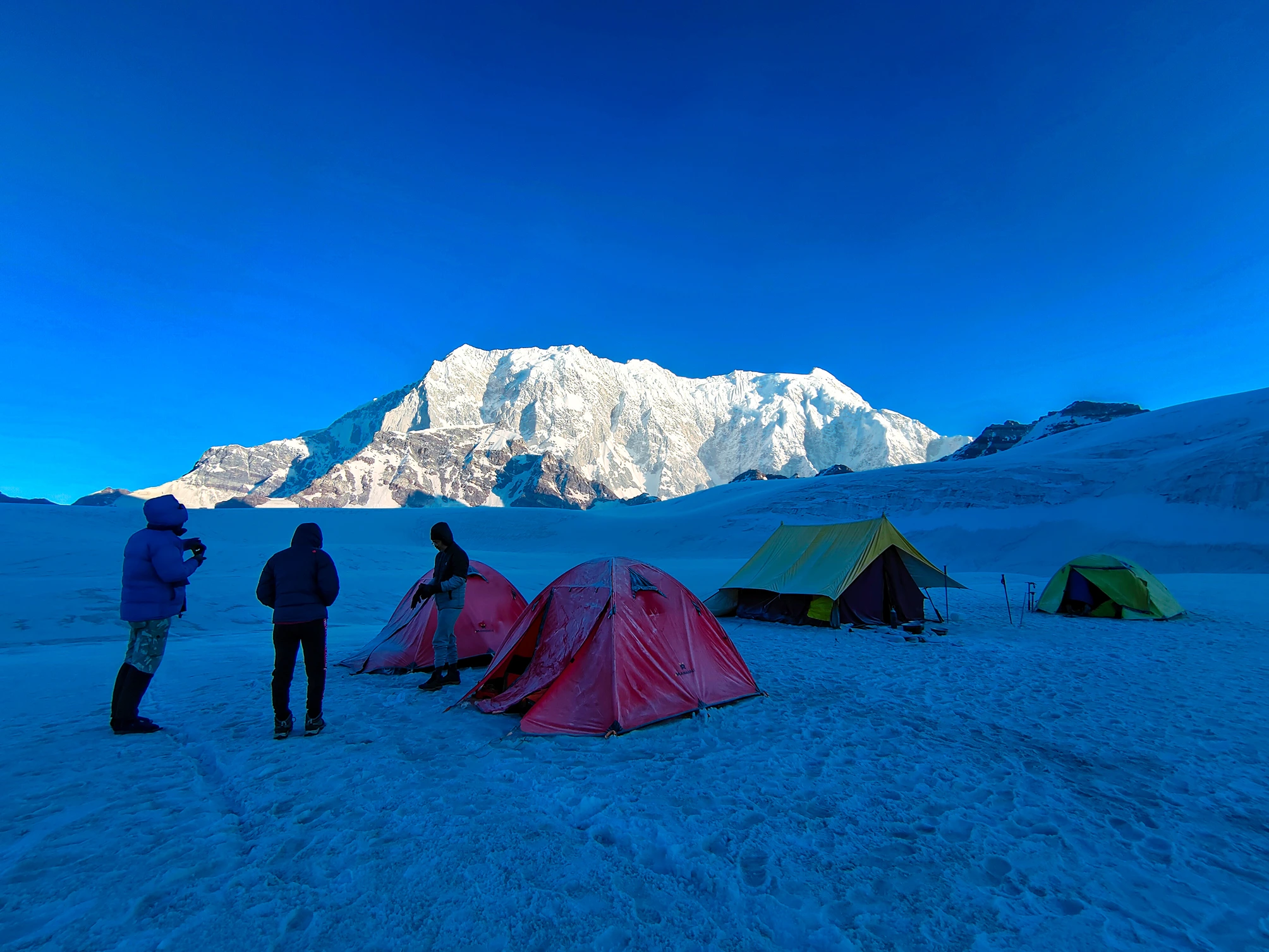
Many Himalayan Expeditions from Dehradun head towards mountain regions of Uttarakhand.
Dehradun functions as a practical assembly and transportation point for several Garhwal expeditions, but the summit window itself is decided much later in the journey.
Teams may spend days travelling towards the mountain, completing the approach, acclimatising and establishing camps before summit conditions become relevant.
Weather in Dehradun tells climbers very little about conditions on a high Himalayan summit.
The expedition team therefore progressively shifts its attention from regional travel conditions to increasingly local mountain observations as it approaches the objective.
By the time the summit phase begins, conditions at Base Camp and higher on the route matter far more than conditions at the original gateway.
Himalayan Expeditions from Manali: Local Mountain Conditions Matter
Himalayan Expeditions from Manali can access several climbing regions of Himachal Pradesh.
Manali is useful for assembling teams, arranging equipment, completing final preparations and moving towards the mountain.
But again, good weather in Manali does not necessarily mean good weather at expedition altitude.
Mountain systems create highly localised conditions.
Cloud can develop around high peaks while valleys remain relatively clear.
Snowfall at altitude may occur while lower elevations experience completely different weather.
As teams move higher, decisions become increasingly dependent on observations from the expedition route itself.
This is where experienced guides and reliable communication become particularly important.
Himalayan Expeditions from Leh: Altitude Changes the Planning Process
Himalayan Expeditions from Leh have an additional consideration from the moment climbers arrive: altitude.
Leh itself sits at high elevation compared with most expedition gateways.
Teams therefore need to think about acclimatisation immediately rather than treating the city merely as a transport stop.
After appropriate acclimatisation, expeditions continue towards their approach routes and eventually Base Camp.
In Ladakh’s high-altitude environment, weather can appear clear while temperatures and winds remain demanding.
This illustrates an important principle.
Blue skies do not necessarily mean easy climbing conditions.
Temperature, wind, route condition and team acclimatisation still have to be considered together.
How Himalayan Expedition Guides Make the Final Decision
There is rarely one single factor that produces a simple “go” or “no-go” answer.
Experienced Himalayan Expedition Guides combine several sources of information.
They may consider:
- Current weather observations
- Short-term forecasts
- Wind conditions
- Recent and expected snowfall
- Snow and route conditions
- Team acclimatisation
- Physical condition of individual climbers
- Progress during previous rotations
- Condition of camps and equipment
- Expected climbing speed
- Turnaround times
- Conditions expected during descent
These factors are continuously reassessed.
A decision made at Base Camp can change at a higher camp.
A decision made at midnight can change at 4:00 AM.
A summit attempt is therefore not one decision.
It is a sequence of decisions.
What Happens on the Night Before a Summit Attempt?
The final hours before a summit attempt are operationally important.
The team normally focuses on rest, hydration, nutrition and equipment preparation.
Climbers organise their layers, boots, crampons, harnesses, gloves, headlamps, water and other required equipment.
Guides review the expected conditions and climbing plan.
Departure time is confirmed.
The team may also be briefed about pacing, rope systems, important route sections and turnaround criteria.
Equipment problems should ideally be discovered before departure rather than halfway up the mountain.
Something as simple as an incorrectly adjusted crampon can become a serious inconvenience in darkness and extreme cold.
Preparation reduces avoidable problems.
What Happens If the Summit Window Disappears?
Mountain weather changes.
A forecast that looked favourable two days earlier may deteriorate.
If the expected summit window disappears, the team has several possible options depending on the expedition.
They may wait.
They may move the summit attempt.
They may descend temporarily.
Or they may end the expedition without attempting the summit.
The available choice depends partly on how many buffer days, supplies and operational resources remain.
This is where itinerary design becomes important.
A schedule with no flexibility leaves very little room for changing mountain conditions.
Why Buffer Days Are Essential
Buffer days are not wasted days.
They are part of expedition strategy.
Imagine a team reaches Base Camp exactly according to schedule.
Acclimatisation proceeds well.
Higher camps are ready.
Then a weather system arrives during the planned summit period.
Without additional time, the expedition may be over.
With buffer days available, the team may be able to wait for another suitable opportunity.
Of course, buffer days do not guarantee success.
Weather can remain poor for longer than the expedition can reasonably wait.
But flexibility increases the team’s ability to respond rather than forcing decisions around a rigid departure date.
Why a Himalayan Expedition Company Cannot Guarantee a Summit
Climbers sometimes focus heavily on summit success when comparing operators.
But no responsible Himalayan Expedition Company can control weather, snow, wind, individual acclimatisation or mountain conditions.
The operator can control preparation.
It can organise appropriate guides, equipment, logistics, acclimatisation schedules, camps, communication systems and contingency planning.
It cannot control the mountain.
A summit should therefore be treated as the objective of an expedition rather than a guaranteed outcome.
This distinction is important.
An expedition that turns around because conditions have become unsuitable has not necessarily failed operationally.
In some circumstances, turning around is precisely the decision a well-managed expedition should make.
Why the Cheapest or Shortest Itinerary May Not Be the Best Comparison
When comparing expeditions, climbers sometimes look first at price and total duration.
Those are understandable considerations, but neither explains how the expedition has been designed.
A shorter itinerary may contain fewer acclimatisation or contingency days.
That does not automatically make it inappropriate, because mountains and routes vary.
But climbers should understand what has been removed to make the itinerary shorter.
Ask questions such as:
- How many acclimatisation days are included?
- Are there contingency days?
- How is the summit period structured?
- What happens if weather delays the attempt?
- Who makes the summit decision?
- How are weather forecasts obtained?
- What communication systems are available?
- What happens if a climber needs to descend?
These questions reveal much more about expedition planning than the summit date printed on the itinerary.
Summit Fever: Why Turning Around Can Be Difficult
The closer climbers get to a summit, the harder turning around can feel.
They may have trained for months.
They may have travelled hundreds or thousands of kilometres.
They may have spent days approaching the mountain.
They may be able to see the summit.
This creates a strong psychological incentive to continue.
Mountaineers sometimes refer to excessive fixation on reaching the top as “summit fever.”
This is where predetermined turnaround criteria and experienced leadership become valuable.
Decisions should be based on conditions, time and team capability rather than on how emotionally invested climbers have become in reaching the top.
The mountain will still be there.
The Best Summit Window Is Not Always the First One
When an acceptable window appears, there can be pressure to use it immediately.
But timing depends on whether the team is ready.
If climbers need additional acclimatisation, recovery or preparation, waiting may be necessary.
Conversely, delaying an attempt unnecessarily can mean losing an available opportunity before the next weather system arrives.
Expedition leadership therefore involves balancing readiness with opportunity.
There is rarely a formula that works for every mountain.
The decision depends on the expedition in front of the team.
A Summit Window Is a Combination of Conditions, Not a Date
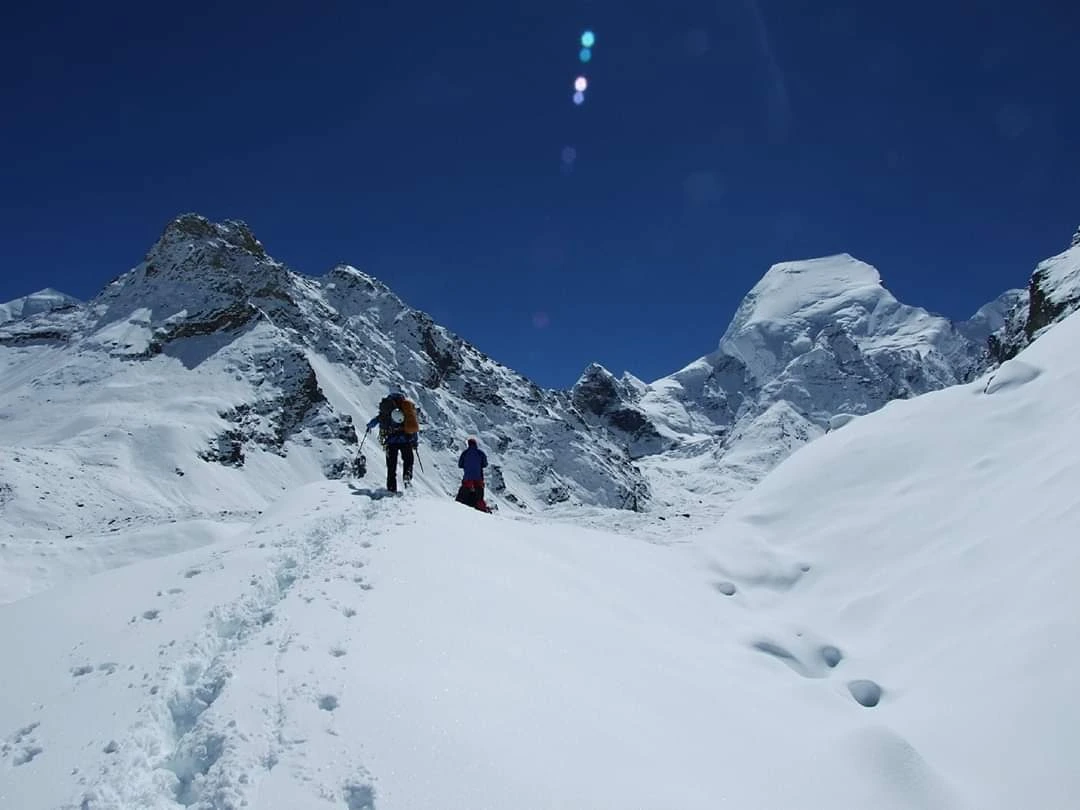
The most important thing to understand about summit windows is that they are not fixed calendar appointments.
A summit window exists when enough variables align.
The weather has to be acceptable.
The route has to be usable.
The team has to be acclimatised.
The climbers have to be physically ready.
The camps and equipment have to be operational.
And there has to be enough time to climb and descend within acceptable conditions.
Whether you are considering Himalayan Expeditions from Dehradun, Himalayan Expeditions from Manali or Himalayan Expeditions from Leh, the summit date printed on an itinerary is only the starting framework.
The final decision belongs to the conditions encountered on the mountain.
A professional Himalayan Expedition Company can prepare for that decision, while experienced Himalayan Expedition Guides can interpret the information available to them.
But neither can manufacture a perfect summit window.
That uncertainty is part of Himalayan mountaineering.
Good expedition planning does not remove uncertainty. It creates enough preparation, flexibility and decision-making capacity to respond to it.
Frequently Asked Questions
1. What does a summit window mean in mountaineering?
A summit window is a period when weather, route conditions, team acclimatisation and other operational factors may provide an acceptable opportunity for a summit attempt. It is not simply a day with clear weather.
2. How do Himalayan expedition teams choose a summit day?
Teams consider weather forecasts, observed conditions, wind, snowfall, route status, snow stability, climber health, acclimatisation, climbing speed and expected descent conditions. The final timing can change during the expedition.
3. Can the summit date mentioned in an itinerary change?
Yes. The summit date in an itinerary is generally a planned target. Weather, acclimatisation, route conditions and other factors can require the expedition leader to move or cancel the attempt.
4. Why do Himalayan summit attempts often start at night?
Early starts provide more time for both ascent and descent. On some routes, colder early-morning conditions can also affect snow conditions favourably. The exact departure time depends on the mountain, route and current conditions.
5. What is a turnaround time?
A turnaround time is a predetermined or operationally determined point after which the team stops climbing upward and begins descending, even if the summit has not been reached. It helps preserve sufficient time for descent.
6. Can a summit attempt happen during snowfall?
This depends on the intensity of snowfall, visibility, route, terrain, accumulation, snow stability and other conditions. There is no universal rule that applies to every mountain. Expedition guides assess the actual situation.
7. What happens if bad weather arrives during the summit attempt?
The team may turn around if conditions deteriorate beyond acceptable limits. Guides continuously reassess weather, visibility, wind, route conditions and team progress during the climb.
8. Why are buffer days included in Himalayan expeditions?
Buffer days provide flexibility for weather delays, acclimatisation needs and operational changes. They can allow a summit attempt to be shifted when the original planned date becomes unsuitable.
9. Are Himalayan Expeditions from Dehradun affected by local Dehradun weather?
The weather at the expedition gateway can affect travel logistics, but summit decisions depend primarily on conditions much higher in the mountains. Conditions at expedition altitude can be very different from those in Dehradun.
10. Do Himalayan Expeditions from Manali have fixed summit dates?
Expeditions may have planned summit dates, but responsible summit decisions remain dependent on actual mountain conditions, team readiness and the specific route.
11. Why is acclimatisation particularly important for Himalayan Expeditions from Leh?
Leh itself is located at high altitude, so climbers need to consider acclimatisation soon after arrival. Teams should allow their bodies appropriate time to adapt before progressing to more demanding elevations.
12. What role do Himalayan Expedition Guides play in summit decisions?
Himalayan Expedition Guides assess weather, route conditions, snow, team health, progress, equipment and timing. They help determine whether to continue, wait, modify the plan or retreat.
13. Can a Himalayan Expedition Company guarantee summit success?
No responsible Himalayan Expedition Company can guarantee a summit because weather, altitude response, snow conditions and other mountain variables cannot be controlled. Operators can prepare logistics and support systems, but summit conditions remain uncertain.
14. Does clear weather mean it is safe to attempt the summit?
Not necessarily. Clear skies are only one factor. Strong winds, unstable snow, difficult route conditions, extreme temperatures or poor team acclimatisation may still make an attempt inappropriate.
15. What happens if climbers are too slow on summit day?
Guides may establish or reassess turnaround criteria based on time, conditions and the remaining descent. A team may need to turn around before reaching the summit if continuing would leave insufficient time or margin for descent.
16. How far in advance can a summit window be predicted?
Forecasts can help teams identify potential opportunities several days ahead, but confidence and local relevance generally become more important as the planned attempt approaches. Mountain conditions are continually reassessed rather than relying entirely on an earlier forecast.
17. Is reaching the summit considered the end of the expedition?
No. Climbers still need to descend safely from the summit, return through higher camps and eventually reach Base Camp and the expedition exit route. This is why summit strategy always has to account for the descent.
18. What should climbers ask an expedition company about summit strategy?
Ask about acclimatisation days, contingency days, guide experience, weather information, communication systems, turnaround procedures, emergency planning and what happens if the original summit date becomes unsuitable. These details provide a clearer picture of how the expedition is actually managed.