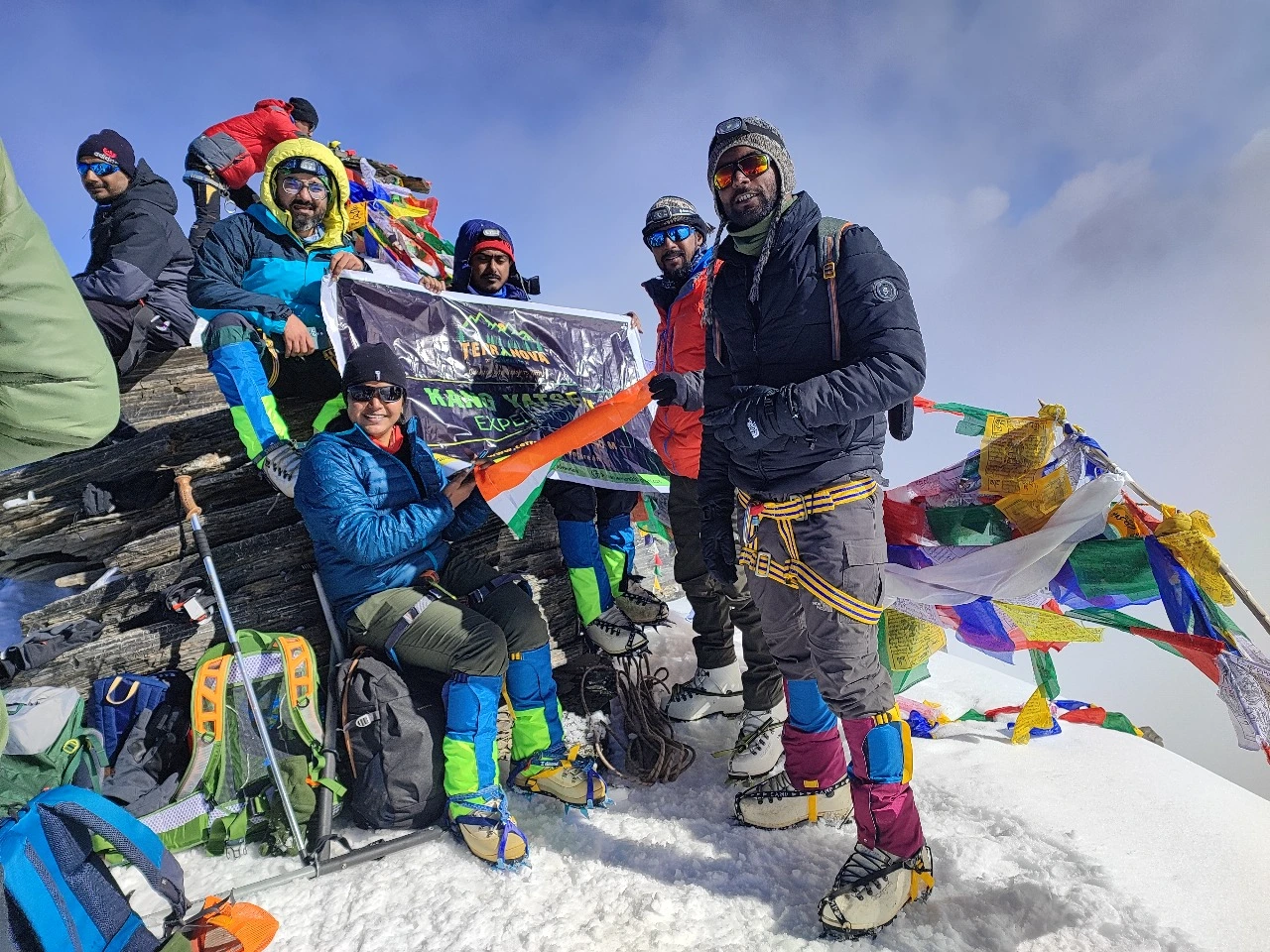
Climbing a Himalayan peak is often imagined as the moment when a mountaineer stands on a snow-covered summit with endless mountain ranges stretching into the horizon. In reality, a successful expedition begins much earlier—long before crampons touch the glacier or ropes are fixed on steep snow slopes. It begins in Leh, the high-altitude capital of Ladakh.
Whether you’re planning to climb Kang Yatse I, attempt Kang Yatse II, or prepare for other 6,000-metre expedition peaks in India, your first and most important destination isn’t the mountain—it’s Leh. Sitting at an altitude of approximately 3,500 metres (11,500 ft), Leh serves as the gateway to some of the most spectacular mountaineering expeditions in the Indian Himalayas. Every year, climbers from across India and around the world arrive here, not to start climbing immediately, but to give their bodies time to adapt to the thinner mountain air.
Many first-time climbers believe that physical fitness alone determines summit success. While endurance, strength, and mental resilience are essential, experienced expedition leaders know that proper acclimatization is often the biggest factor separating successful expeditions from unsuccessful ones. Your body needs time to adjust to reduced oxygen levels before it can safely move higher into the mountains. This is why reputable expedition operators, including Terranova Expedition, build acclimatization days into every Ladakh itinerary rather than rushing towards Base Camp.
For climbers heading towards Kang Yatse I or Kang Yatse II, Leh is much more than a transit city. It is where expedition equipment is checked, weather conditions are reviewed, permits are confirmed, and the entire team prepares for the challenges ahead. These seemingly simple preparations play a critical role in reducing risks and increasing the likelihood of reaching the summit safely.
Why Leh is the Gateway to Himalayan Expeditions
Leh has earned its reputation as the starting point for Himalayan expeditions because of its unique combination of geography, accessibility, and altitude. Surrounded by the Ladakh and Zanskar ranges, the town provides direct access to iconic expedition routes leading into Markha Valley, Hemis National Park, and several renowned climbing destinations.
Unlike many mountain regions where Base Camps are reached after days of trekking, Leh allows climbers to begin their journey from an established town with reliable accommodation, medical facilities, equipment rental options, transportation services, and experienced local support teams. This makes expedition logistics far more efficient while ensuring climbers have access to everything they need before heading into remote terrain.
The routes to Kang Yatse I and Kang Yatse II begin from Leh before entering the breathtaking landscapes of Markha Valley. The gradual transition from Leh to higher camps is intentional. Rather than gaining altitude too quickly, climbers move through scenic villages, river crossings, alpine meadows, and mountain passes, allowing their bodies to adapt naturally while enjoying one of the most beautiful trekking routes in the Himalayas.
Leh also acts as the operational base for several high-altitude expeditions beyond the Kang Yatse massif. Climbers attempting peaks such as Yunam Peak often begin their journey from Leh as well, making the town an important hub for mountaineering in Ladakh. For many experienced climbers, Leh becomes the starting point of multiple expeditions over the years, each building the skills and confidence needed for increasingly challenging Himalayan objectives.
Acclimatization: The Real Foundation of Summit Success
One of the most common misconceptions among aspiring climbers is that spending a single night in Leh is enough before heading to the mountains. In reality, the human body requires time to adapt to lower oxygen levels, and rushing this process can significantly increase the risk of Acute Mountain Sickness (AMS).
At sea level, oxygen is abundant, allowing the body to function efficiently with minimal effort. At an altitude of around 3,500 metres, however, every breath contains considerably less available oxygen. Your body responds by increasing breathing rate, producing more red blood cells over time, and gradually adjusting to the new environment. These adaptations cannot be forced—they require patience.
This is why experienced expedition leaders encourage climbers to spend at least two to three days in Leh before moving higher. During this period, activities remain deliberately light. Short walks through the local market, visits to nearby viewpoints, and gentle movement help the body adjust without unnecessary physical stress.
Hydration also becomes critically important. The dry mountain climate causes the body to lose fluids more rapidly than many people realize. Drinking plenty of water, maintaining balanced nutrition, avoiding alcohol, and getting adequate sleep all contribute to better acclimatization. These simple habits often have a greater impact on summit success than intense physical training during the expedition itself.
For Kang Yatse I, where technical climbing above 6,000 metres demands excellent physical adaptation, proper acclimatization is absolutely essential. Even for Kang Yatse II, widely regarded as one of the best introductory 6,000-metre expedition peaks in India, climbers who rush through Leh often struggle with fatigue, headaches, or reduced performance before they even reach Base Camp.
At Terranova Expeditions, acclimatization is never treated as an optional extra—it is a core part of every expedition plan. Rather than chasing quick itineraries, we prioritize gradual altitude gain, continuous health monitoring, and conservative decision-making. This approach not only improves safety but also gives climbers the best possible chance of standing on the summit while enjoying the journey every step of the way.
How to Reach Leh for a Himalayan Expedition
Reaching Leh is the first logistical step of any Ladakh expedition. While the destination itself is easily accessible, choosing the right mode of travel depends on your schedule, acclimatization plan, and overall expedition objectives.
By Air – The Fastest and Most Popular Option
Most climbers prefer flying to Kushok Bakula Rimpochee Airport (IXL) in Leh from Delhi, Mumbai, Bengaluru, or other major Indian cities. The flight takes you from near sea level to an altitude of approximately 3,500 metres in just over an hour, making it one of the quickest altitude gains possible.
While convenient, this sudden change in elevation is exactly why acclimatization becomes critical. It is common to feel slightly breathless, fatigued, or experience a mild headache on arrival. Rather than planning sightseeing or strenuous activity, experienced expedition leaders recommend spending the first 24–48 hours resting, staying hydrated, and allowing your body to adjust naturally.
By Road – Gradual Altitude Gain
Some climbers prefer reaching Leh by road via Manali–Leh Highway or Srinagar–Leh Highway. Besides offering spectacular Himalayan scenery, these routes allow for a more gradual gain in altitude, which may help some travellers acclimatize more comfortably.
However, road journeys require several days and are usually suitable for those with additional time before the expedition begins. Most organised expeditions, including Kang Yatse I and Kang Yatse II, are designed around flight arrivals due to tighter schedules and operational efficiency.
Regardless of how you arrive, your expedition doesn’t truly begin until your body has adapted to Leh’s altitude.
Best Time to Visit Leh for Himalayan Expeditions
Leh experiences extreme seasonal variations, making the timing of your expedition an important factor.
For climbers planning Kang Yatse I, Kang Yatse II, or other 6,000-metre expedition peaks in India, the ideal season generally falls between June and September.
| Month | Conditions | Expedition Suitability |
| June | Snow begins melting, pleasant days | Excellent |
| July | Stable weather and longer daylight | Excellent |
| August | Clear mornings with comfortable temperatures | Excellent |
| September | Crisp weather, fewer crowds, outstanding visibility | Excellent |
These months provide relatively stable weather windows, safer glacier conditions, and comfortable trekking temperatures. Although mountain weather can change rapidly at any time, this period offers the best balance between accessibility and climbing conditions.
Outside this season, heavy snowfall, blocked mountain passes, and extremely low temperatures make many expedition routes inaccessible or significantly more challenging.
Markha Valley – The Journey Before the Summit
Long before climbers stand on the summit of Kang Yatse I or Kang Yatse II, they experience one of the most beautiful trekking routes in the Indian Himalayas—the Markha Valley.
Often described as the heart of Ladakh’s trekking landscape, Markha Valley is much more than an approach trail. It is an essential part of the expedition itself.
The route winds through traditional Ladakhi villages, ancient monasteries, narrow river gorges, colourful prayer flags, and vast alpine meadows surrounded by towering peaks. Every day introduces a new landscape, gradually taking climbers from inhabited valleys into remote mountain wilderness.
One of the highlights of this journey is Nimaling, a spectacular high-altitude meadow located beneath the imposing Kang Yatse massif. Surrounded by snow-covered mountains and open grasslands, Nimaling serves as one of the most memorable camps during both Kang Yatse I and Kang Yatse II expeditions.
From here, the mountains no longer feel distant—they dominate the skyline, offering the first true glimpse of the challenge ahead.
Unlike expeditions that involve a rapid approach to Base Camp, trekking through Markha Valley allows climbers to gain altitude gradually. This measured progression not only improves acclimatization but also gives the team time to settle into expedition life, test equipment, establish a comfortable walking rhythm, and prepare mentally for the higher camps.
For many mountaineers, the Markha Valley trek becomes one of the defining memories of the expedition, combining dramatic Himalayan scenery with rich Ladakhi culture.
Hemis National Park – India’s High-Altitude Mountain Wilderness
The route to Kang Yatse passes through Hemis National Park, one of the largest protected high-altitude national parks in South Asia and one of Ladakh’s greatest natural treasures.
Spread across rugged valleys, glaciers, alpine meadows, and rocky mountain slopes, Hemis National Park is internationally recognised for its extraordinary biodiversity despite the harsh Himalayan environment.
It is famously known as one of the best places in the world to spot the elusive snow leopard, although sightings remain rare due to the animal’s secretive nature. The park is also home to Himalayan blue sheep (bharal), Tibetan wolves, red foxes, Himalayan marmots, golden eagles, and numerous high-altitude bird species.
For climbers, however, Hemis National Park represents much more than wildlife.
Its protected landscape preserves the pristine mountain environment through which many of Ladakh’s finest expeditions pass. Walking through these valleys offers a unique opportunity to experience untouched Himalayan ecosystems where dramatic cliffs, glacial streams, and vast open terrain create an unforgettable expedition setting.
The park also plays an important role in responsible adventure tourism. Climbers are expected to minimise waste, respect local ecosystems, and follow Leave No Trace principles throughout their journey. Protecting this fragile environment ensures that future generations can continue to explore the same spectacular landscapes.
At Terranova Expeditions, environmental responsibility is an integral part of every expedition. From careful campsite management to responsible waste disposal and respect for local communities, we believe that successful mountaineering should leave behind memories—not environmental impact.
By the time climbers leave Leh, cross the breathtaking landscapes of Markha Valley, and enter the rugged terrain of Hemis National Park, they have already completed one of the most important stages of the expedition. The summit may still lie ahead, but the foundation for success has already been built through careful preparation, gradual acclimatization, and respect for the mountains.
Choosing the Right Himalayan Expedition
By the time you reach Base Camp after trekking through Markha Valley, the next question becomes increasingly important—which summit are you aiming for?
The Kang Yatse massif offers two distinct climbing objectives: Kang Yatse I and Kang Yatse II. Although they share the same mountain range and expedition approach, they are designed for climbers with different levels of experience, technical ability, and mountaineering goals.
Choosing the right expedition is about far more than altitude. It is about selecting a mountain that matches your current skills while helping you progress safely in your Himalayan mountaineering journey.
Which Expedition Should You Choose?
Both expeditions begin in Leh, follow the scenic route through Markha Valley, and pass through Hemis National Park. However, the climbing experience changes significantly once you move beyond Base Camp.
| Feature | Kang Yatse I | Kang Yatse II |
| Height | 6,400 m | 6,250 m |
| Difficulty | Difficult | Moderate to Difficult |
| Technical Level | Technical Mountaineering | Semi-Technical Expedition |
| Previous Experience | Mandatory | Strongly Recommended |
| Glacier Travel | Yes | Yes |
| Fixed Rope Sections | Extensive | Limited |
| Best For | Experienced Mountaineers | First 6,000 m Expedition |
The Ideal First 6,000-Metre Expedition
For many experienced trekkers, Kang Yatse II is the natural next step into Himalayan mountaineering.
It combines everything that makes a high-altitude expedition memorable—glacier travel, snow climbing, breathtaking alpine scenery, and the challenge of crossing the 6,000-metre mark—without demanding advanced technical climbing skills.
While the summit day remains physically demanding, climbers receive instruction in the use of crampons, ice axe, harness, and rope techniques before attempting the final ascent.
For trekkers who have previously completed demanding high-altitude routes and want to transition into mountaineering, Kang Yatse II provides an excellent learning experience.
A True Technical Himalayan Expedition
Standing slightly higher than Kang Yatse II, Kang Yatse I represents a significant increase in difficulty.
This expedition is intended for climbers who already possess mountaineering experience and are comfortable travelling on glaciers, negotiating steep snow slopes, and using fixed ropes in exposed terrain.
The summit route demands strong technical ability, excellent endurance, and confident decision-making in a high-altitude environment.
Rather than serving as a first expedition, Kang Yatse I is often chosen by mountaineers preparing for more advanced Himalayan objectives in the future.
Every Climber Has a Different Himalayan Journey
One of the biggest mistakes aspiring mountaineers make is comparing mountains only by their height.
In reality, the right expedition depends on:
- Previous trekking experience
- High-altitude exposure
- Technical climbing ability
- Physical fitness
- Long-term mountaineering goals
- Comfort on snow and glacier terrain
At Terranova Expeditions, we encourage climbers to choose a mountain that matches their current abilities instead of simply chasing a higher summit. A successful expedition is measured not only by reaching the top but by climbing safely, learning continuously, and building confidence for future objectives.
Sometimes the smartest decision is selecting a slightly less technical mountain today so you can confidently attempt a more challenging expedition tomorrow.
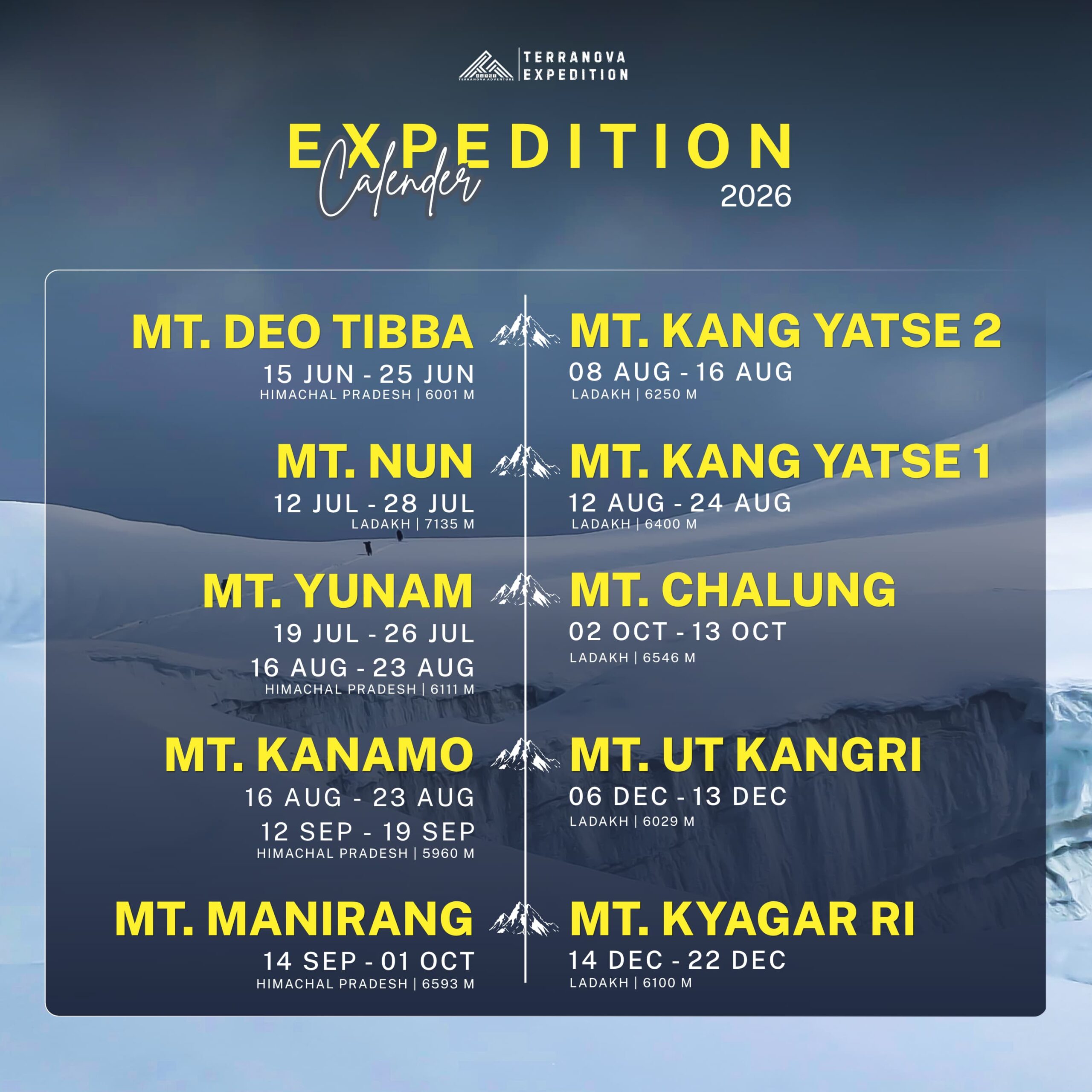
Beyond Kang Yatse – Other Himalayan Expeditions with Terranova
If you’re planning a long-term journey into Himalayan mountaineering, Kang Yatse I and Kang Yatse II are only the beginning. As your experience grows, the Indian Himalayas offer a variety of expeditions that develop different climbing skills and prepare you for increasingly technical objectives.
Friendship Peak Expedition
Often considered one of the best introductory mountaineering expeditions in Himachal Pradesh, Friendship Peak (5,289 m) combines glacier travel, snow climbing, and high-altitude camping. It is an excellent progression for trekkers who want to build confidence before attempting more demanding 6,000-metre expeditions.
Yunam Peak Expedition
Located in Ladakh, Yunam Peak (6,111 m) is one of the finest non-technical 6,000-metre expedition peaks in India. Although the climb does not involve advanced technical sections, the altitude itself presents a significant challenge. It is an ideal expedition for climbers who want to experience crossing the 6,000-metre mark while focusing on endurance, acclimatization, and pacing.
Kanamo Peak Expedition
Another outstanding Ladakh objective, Kanamo Peak (5,970 m) offers spectacular panoramic views over the Spiti and Ladakh regions. Its relatively straightforward terrain makes it an excellent stepping stone for trekkers preparing for more demanding peaks like Kang Yatse II.
Black Peak Expedition
For climbers seeking a true alpine challenge, the Black Peak (Kalanag) Expedition in Uttarakhand introduces advanced glacier travel, technical climbing, and longer summit days. It is one of India’s most respected mountaineering objectives and a natural progression after gaining experience on semi-technical expeditions.
Mt. Kun & Mt. Nun Expeditions
Among the highest expedition peaks in the Indian Himalayas, Mt. Kun (7,077 m) and Mt. Nun (7,135 m) are designed for experienced mountaineers with a strong technical background. These expeditions demand advanced glacier travel, multiple high camps, and careful expedition planning over several weeks.
Hanuman Tibba & Shinkun West Expeditions
For climbers looking to expand their technical skills before attempting larger Himalayan objectives, Hanuman Tibba and Shinkun West provide outstanding opportunities to experience mixed terrain, glacier travel, and alpine climbing in challenging mountain environments.
Why Choosing the Right Expedition Matters
Every successful mountaineer starts somewhere.
The strongest climbers are rarely those who progress the fastest—they are those who build experience gradually, respect the mountains, and continue learning with every expedition.
Whether your goal is standing on the summit of Kang Yatse II, tackling the technical challenges of Kang Yatse I, or eventually climbing peaks like Black Peak, Mt. Kun, or Mt. Nun, each expedition contributes valuable lessons that prepare you for the next.
At Terranova Expeditions, we don’t simply guide climbers to summits. We help them build the knowledge, confidence, and mountain judgment needed for a lifetime of safe and rewarding Himalayan adventures.
Expert Preparation Tips Before Leaving Leh
A Himalayan expedition doesn’t begin at Base Camp—it begins with the decisions you make in Leh. Proper preparation during these first few days can significantly improve your comfort, confidence, and chances of a successful summit.
Prioritize Acclimatization
The excitement of being in Ladakh often encourages people to explore immediately after arrival. However, your first priority should always be allowing your body to adapt to the altitude.
Spend your first day resting, taking short walks, and drinking plenty of water. If your itinerary includes acclimatization hikes, treat them as an important part of your expedition rather than optional activities.
Check Every Piece of Equipment
Before leaving Leh, inspect every item in your gear.
Ensure your boots fit comfortably, your headlamp works properly, batteries are fully charged, trekking poles are adjusted correctly, and all clothing layers are easily accessible. Solving small equipment issues in Leh is far easier than discovering them at Base Camp.
Stay Hydrated and Eat Well
The dry mountain climate causes dehydration much faster than many climbers expect.
Drink water regularly throughout the day, include electrolytes if recommended, and avoid skipping meals. Proper nutrition helps your body adapt to altitude and provides the energy needed for long trekking days.
Respect the Mountain Weather
Mountain weather can change within minutes.
A clear morning can quickly turn into snowfall or strong winds, especially above Base Camp. Always follow the instructions of your expedition leader and remain flexible with summit plans. Waiting for a better weather window is often the safest decision.
Prepare Mentally
Physical fitness alone does not guarantee success.
Long summit days, cold temperatures, changing weather, and thin air demand patience and resilience. Successful climbers remain calm, follow instructions, conserve energy, and focus on steady progress instead of rushing toward the summit.
Remember, the objective is not simply to stand on the top—it is to return safely with unforgettable memories and valuable mountain experience.
Why Choose Terranova Expeditions?
Every mountain presents its own challenges, but the quality of your expedition team often determines how confidently you face them.
At Terranova Expeditions, our philosophy is simple: safety, preparation, and responsible mountaineering come before the summit.
Every itinerary is designed with gradual altitude gain to help climbers acclimatize naturally before attempting higher camps. We avoid rushed schedules because proper adaptation significantly improves both safety and summit success.
Our experienced expedition leaders continuously monitor weather conditions, route safety, and the well-being of every team member. Technical training sessions before summit day ensure climbers are comfortable using essential equipment such as crampons, ice axes, harnesses, and ropes.
Small group sizes allow for better communication, personalised guidance, and a more enjoyable expedition experience. Whether you’re attempting Kang Yatse II as your first 6,000-metre expedition peak in India or preparing for the technical challenges of Kang Yatse I, our goal is to help you climb responsibly while building the skills and confidence needed for future Himalayan expeditions.
Conclusion
Every successful Himalayan expedition is built on careful preparation rather than last-minute determination.
Leh provides the perfect foundation for that preparation. From gradual acclimatization and equipment checks to the stunning journey through Markha Valley and Hemis National Park, every stage helps your body and mind prepare for the challenges that lie ahead.
Whether your ambition is to climb Kang Yatse II, progress to the technical terrain of Kang Yatse I, or eventually attempt mountains such as Yunam Peak, Black Peak, Mt. Kun, or Mt. Nun, success always begins with respecting the fundamentals of high-altitude mountaineering.
The summit is only one part of the journey. The real achievement lies in preparing well, climbing responsibly, and returning with the experience to take on even greater Himalayan challenges in the future.
If you’re ready to begin your next adventure, explore Terranova Expeditions’ carefully planned Himalayan expeditions and take the first step towards your next summit.
Frequently Asked Questions
1. Why do most Himalayan expeditions in Ladakh begin in Leh?
Leh sits at approximately 3,500 metres, making it the ideal location for acclimatization before moving to higher camps. It also serves as the main logistical hub for expeditions across Ladakh.
2. How many days should I spend in Leh before starting an expedition?
Most climbers should spend 2–3 days in Leh to acclimatize before beginning a high-altitude expedition.
3. What is the altitude of Leh?
Leh is located at approximately 3,500 metres (11,500 ft) above sea level.
4. Can I get altitude sickness in Leh?
Yes. Some people experience mild symptoms of Acute Mountain Sickness (AMS) even in Leh. Proper rest, hydration, and gradual acclimatization help reduce the risk.
5. What is the best time to visit Leh for mountaineering expeditions?
The best season is June to September, when weather conditions are generally stable and most expedition routes are accessible.
6. Why is acclimatization so important?
Acclimatization allows your body to adjust to reduced oxygen levels, reducing the risk of altitude-related illnesses and improving your ability to perform at higher elevations.
7. Where are Kang Yatse I and Kang Yatse II located?
Both peaks are located within Hemis National Park in Ladakh and are approached through the scenic Markha Valley.
8. What is the difference between Kang Yatse I and Kang Yatse II?
Kang Yatse II is a semi-technical expedition suitable for experienced trekkers progressing into mountaineering, while Kang Yatse I is a technical climb designed for experienced mountaineers.
9. Is Kang Yatse II suitable for beginners?
Kang Yatse II is better suited to trekkers with prior high-altitude experience rather than complete beginners.
10. Is Kang Yatse I a technical expedition?
Yes. Kang Yatse I involves glacier travel, fixed ropes, steep snow slopes, and advanced mountaineering techniques.
11. What is Markha Valley famous for?
Markha Valley is known for its dramatic Himalayan landscapes, traditional Ladakhi villages, high-altitude meadows, and as the approach route to Kang Yatse expeditions.
12. Why is Hemis National Park important for mountaineers?
Besides protecting unique Himalayan wildlife, Hemis National Park provides access to some of Ladakh’s finest trekking and mountaineering routes, including Kang Yatse.
13. Which is the best first 6,000-metre expedition peak in India?
Many experienced trekkers consider Kang Yatse II and Yunam Peak among the best introductory 6,000-metre expedition peaks in India, depending on their experience and objectives.
14. What fitness level is required for a Himalayan expedition?
Good cardiovascular endurance, leg strength, and prior trekking experience are essential. A structured fitness programme of at least 8–12 weeks is recommended before attempting a high-altitude expedition.
15. What equipment is required for Kang Yatse expeditions?
Essential equipment includes mountaineering boots, crampons, an ice axe, a harness, a helmet, layered clothing, gloves, trekking poles, and a suitable sleeping bag. Technical equipment requirements vary depending on the expedition.
16. Which Terranova expedition should I choose after Kang Yatse II?
Depending on your goals and experience, climbers often progress to Black Peak Expedition, Kang Yatse I Expedition, or higher technical objectives such as Mt. Kun and Mt. Nun.
17. Is previous mountaineering experience necessary for Kang Yatse I?
Yes. Previous experience on technical or high-altitude expeditions is strongly recommended before attempting Kang Yatse I.
18. How long does a Kang Yatse expedition usually take?
Most expeditions take 10–14 days, including acclimatization, trekking through Markha Valley, summit preparation, and the return journey.
19. Why choose Terranova Expeditions?
Terranova Expeditions focuses on gradual acclimatization, experienced leadership, small group sizes, technical training, and responsible mountaineering practices to provide safe and rewarding Himalayan expeditions.
20. What is the most important lesson for a successful Himalayan expedition?
The most important lesson is simple: don’t rush the mountain. Respect the altitude, trust the acclimatization process, prepare thoroughly, and make decisions that prioritise safety over reaching the summit. A successful expedition is one where every climber returns with valuable experience and unforgettable memories.