Standing on a Himalayan summit is the part everyone sees. What usually remains invisible is everything that has to happen before a climbing team gets anywhere near the summit.
A serious Himalayan Expedition in India can involve weeks or months of preparation. Permissions have to be checked, the climbing team assembled, technical equipment organised, transportation coordinated, food and fuel calculated, loads moved into the mountains, camps established and acclimatisation schedules planned.
And even after all that preparation, the original plan may have to change once the team reaches the mountain.
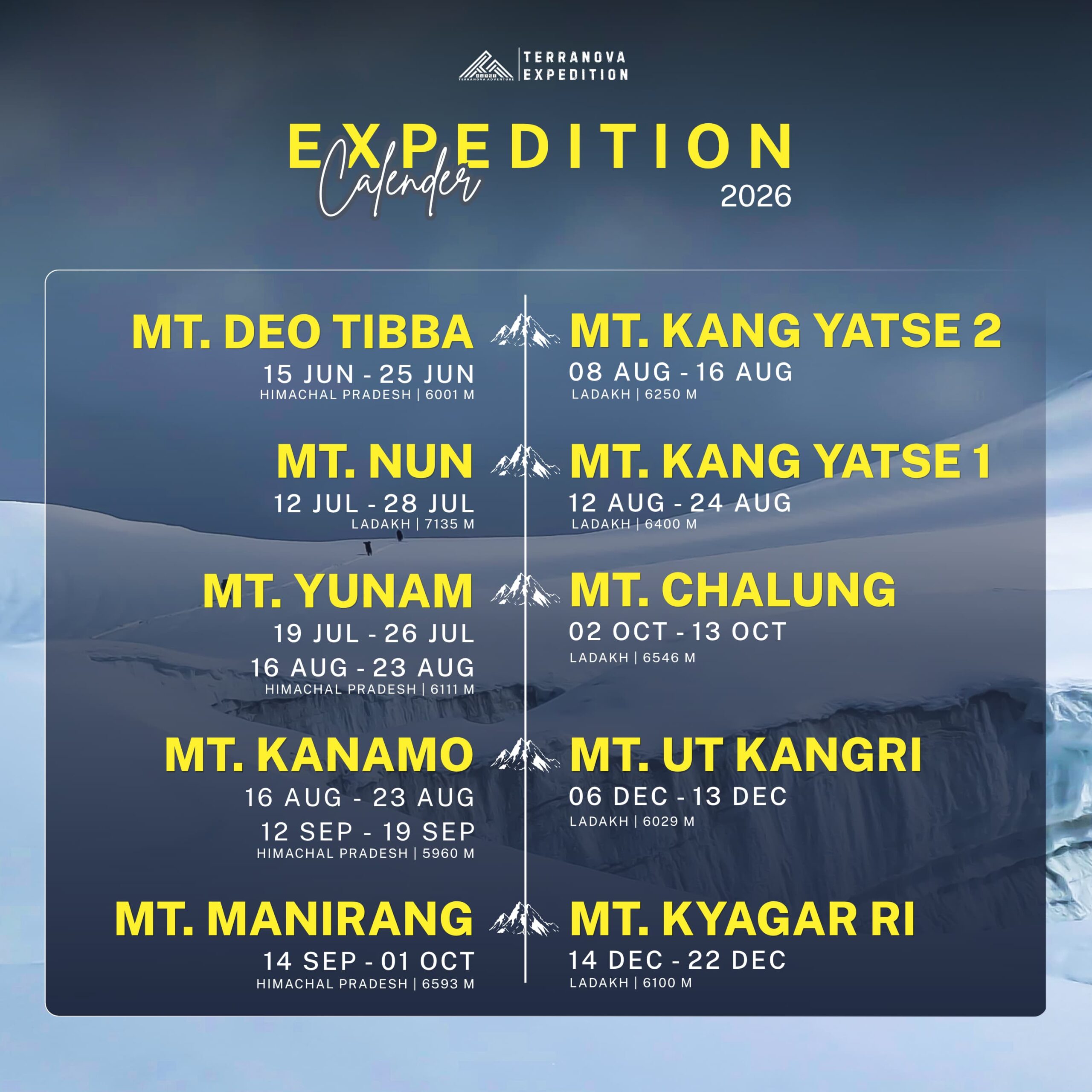
This is true whether you are preparing for a Black Peak Expedition in Uttarakhand, a Friendship Peak Expedition from Manali or a Kang Yatse Expedition in Ladakh. Each mountain has its own approach, altitude profile, terrain and logistical challenges.
For climbers researching Upcoming Himalayan Expeditions, understanding this behind-the-scenes organisation is just as important as comparing summit heights or itineraries.
Here is how a Himalayan expedition actually comes together.
1. Expedition Planning Starts Months Before the Climb
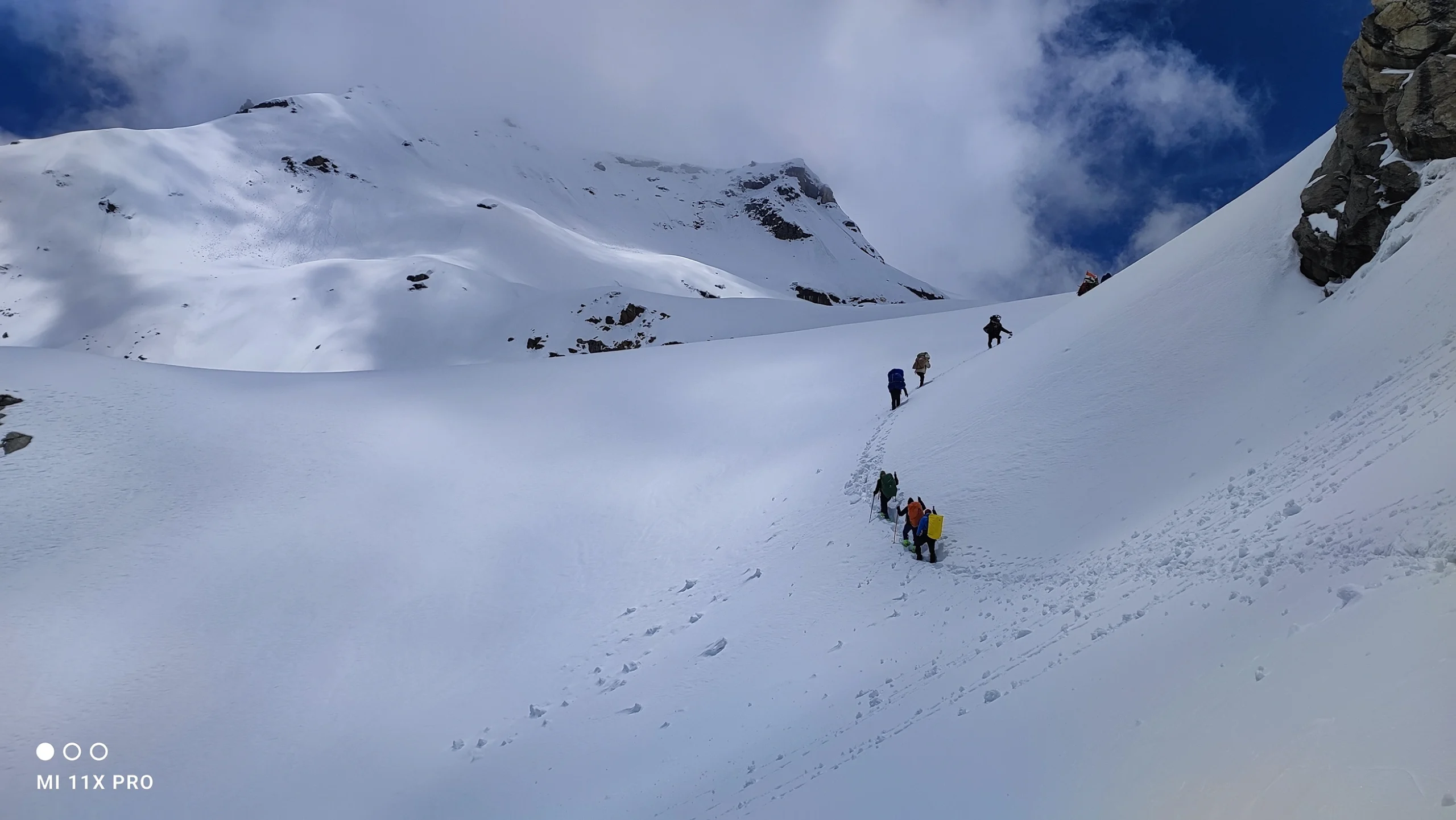
The expedition does not begin when climbers put on their backpacks.
It begins with planning.
The first step is choosing an objective that matches the team’s experience, technical ability, available time and expected mountain conditions.
An expedition organiser has to consider questions such as:
- What technical skills does the mountain require?
- How many acclimatisation days are necessary?
- How will the team reach the roadhead?
- How will equipment reach Base Camp?
- Are additional camps required above Base Camp?
- What climbing equipment will be needed?
- What permissions or registrations apply?
- What emergency resources are available in the region?
- How many guides and support staff will be required?
- How much food, fuel and equipment must be transported?
These decisions influence almost every other part of the expedition.
A Friendship Peak Expedition, for example, is approached through the Manali region, while a Kang Yatse Expedition involves operating in Ladakh, where acclimatisation after arriving in Leh becomes an important part of the schedule.
A Black Peak Expedition involves a completely different approach through the Garhwal Himalayas.
The summit may be the objective, but the organisation begins much farther away.
2. Permits, Permissions and Documentation
Mountaineering expeditions in India can involve several layers of documentation depending on the peak, region, nationality of participants and current regulations.
Requirements can differ substantially between one expedition and another. Organisers therefore need to verify the rules applicable to the specific peak and season rather than assuming that the documentation for one mountain applies to another.
Depending on the expedition, documentation may involve mountaineering permissions, local administration requirements, forest or protected-area permissions, identification documents and other registrations.
Foreign climbers can face additional formalities in certain regions.
This is one reason climbers should begin documentation well before departure.
Leaving permissions until the last moment can affect the entire expedition schedule.
A professional expedition team normally confirms applicable requirements before the group arrives at the expedition starting point.
For anyone planning a Himalayan Expedition in India, understanding how Himalayan expeditions are organised by Terranova Expeditions is important, as documentation should be treated as an integral part of expedition planning rather than a small administrative task before departure.
3. Building the Expedition Team
A Himalayan expedition is rarely the work of a single guide.
Behind a climbing team can be an entire support structure.
Depending on the expedition, this may include an expedition leader, climbing guides, high-altitude support staff, cooks, porters, mule handlers, drivers and local logistical coordinators.
Each has a different responsibility.
Expedition Leader
The expedition leader coordinates the overall operation.
This can include managing the itinerary, monitoring team progress, coordinating with guides, assessing mountain conditions and participating in decisions about acclimatisation, camp movement and summit attempts.
Climbing Guides
Guides are responsible for much of the technical mountain operation.
Depending on the route, their responsibilities may include assessing terrain, assisting with rope systems, guiding climbers through difficult sections and helping the team move safely between camps.
Support Staff
Support staff keep the expedition functioning.
Food has to be prepared, tents established, loads moved and camp systems maintained.
The work may appear routine compared with summit climbing, but an expedition cannot function efficiently without it.
A well-organised support team allows climbers to focus their energy on acclimatisation, recovery and climbing.
4. Logistics: Moving an Expedition into the Himalayas
One of the biggest differences between trekking and expedition climbing is the amount of equipment involved.
A trekking group may primarily carry personal clothing, sleeping gear and standard trekking equipment.
An expedition can require considerably more.
Depending on the mountain, equipment may include ropes, harnesses, helmets, crampons, ice axes, climbing hardware, technical boots, tents, kitchen equipment, fuel, food supplies, communication equipment and emergency resources.
Everything has to move from the city to the expedition roadhead and eventually into the mountains.
The logistical chain may look something like this:
City → Roadhead → Approach Route → Base Camp → Higher Camps → Summit Route
Different stages may use different transportation systems.
Vehicles may carry equipment to the final accessible settlement or roadhead. From there, loads may be moved using porters, pack animals or expedition staff, depending on the terrain and local arrangements.
The farther Base Camp is from road access, the more complex this operation becomes.
Even small planning mistakes become significant in remote terrain.
A missing piece of technical equipment cannot simply be purchased once the team is several days into the mountains.
5. Food Planning Is More Complicated Than It Looks
Food logistics are a major part of expedition planning.
Organisers need to calculate food for the expected expedition duration while also allowing for delays.
Weather can hold a team at Base Camp for additional days. Summit attempts can be postponed. Approach schedules can change.
Food therefore has to be planned with reasonable contingencies.
Base Camp meals and food carried to higher camps may also differ.
At Base Camp, the team may have access to a more established kitchen setup. Higher on the mountain, climbers need lighter and simpler food that can be prepared with limited equipment.
Fuel is another critical consideration.
At altitude, melting snow may become an important source of water, particularly at higher camps. That requires adequate fuel.
Food, hydration and fuel planning are therefore interconnected parts of the expedition system.
6. Reaching and Establishing Base Camp
Reaching Base Camp is an important milestone, but it is not simply a place where tents happen to be pitched.
A functional expedition Base Camp has to support a team for an extended period.
Depending on the expedition and terrain, the setup can include sleeping tents, a kitchen area, dining space, equipment storage and designated areas for expedition operations.
The site itself has to be selected carefully.
Factors such as terrain stability, drainage, water availability, exposure to wind and surrounding mountain hazards can influence camp placement.
Once Base Camp is established, it becomes the operational centre of the expedition.
Climbers return here to eat, rest, recover, monitor conditions and prepare equipment.
For longer expeditions, Base Camp begins to feel less like a temporary campsite and more like a small working settlement.
7. Base Camp Is Not the Summit Launch Point on Every Mountain
A common misconception is that climbers arrive at Base Camp, sleep there for a night and then head directly to the summit.
On many expedition-style climbs, the process is considerably more gradual.
Depending on the mountain and route, teams may establish one or more camps above Base Camp.
These camps reduce the distance that has to be covered during the final summit push and help teams progressively operate at higher elevations.
Camp structure depends on the mountain.
There is no universal formula saying that every Himalayan expedition requires the same number of camps.
Route length, altitude, terrain, technical difficulty and current conditions all influence the strategy.
This is why two expeditions reaching similar altitudes can still have very different itineraries.
8. Acclimatisation: The Part That Cannot Be Rushed
One of the most important elements of any high-altitude expedition is acclimatisation.
As altitude increases, atmospheric pressure falls and less oxygen is available with each breath. The body needs time to adapt to these conditions.
That adaptation cannot simply be replaced by fitness.
A strong runner or gym athlete can still struggle at altitude if ascent is too rapid.
Expedition schedules therefore include progressive altitude gain, rest and acclimatisation periods.
The exact strategy varies according to the expedition.
For a Kang Yatse Expedition, acclimatisation begins before climbers are anywhere near the mountain itself. Leh is already at significant altitude, so teams generally spend time adjusting before progressing deeper into Ladakh.
On other expeditions, acclimatisation occurs progressively during the approach and through movement between camps.
Guides monitor how team members are responding.
Headaches, unusual fatigue, loss of appetite, poor sleep and other symptoms have to be taken seriously rather than hidden in an attempt to remain on schedule.
The mountain does not care about the itinerary printed before departure.
If the team needs more time, the schedule may have to change.
9. How a Black Peak Expedition Is Organised
A Black Peak Expedition, also known as an expedition to Kalanag, takes climbers into the Garhwal Himalayas of Uttarakhand.
Unlike a short trekking itinerary, the expedition involves a substantial approach before the summit phase begins.
Equipment, food and expedition supplies must move through the approach route before the team establishes its operational camps.
As altitude increases, the focus gradually changes.
The first stage is largely about reaching the mountain and acclimatising.
The next stage involves preparing the climbing route, organising technical equipment and establishing the required camp structure.
Finally, the team begins evaluating summit conditions.
Snow, ice, weather and route conditions can vary between seasons and even between different weeks of the same season.
This means that a Black Peak itinerary should be understood as an operational framework rather than a guarantee that every movement will happen on a predetermined date.
10. How a Friendship Peak Expedition Is Organised
A Friendship Peak Expedition is generally approached through the Manali region of Himachal Pradesh.
Its accessibility makes it a well-known Himalayan climbing objective, but that should not be confused with an ordinary trek.
Climbers still need appropriate preparation for altitude, snow and mountain terrain.
Manali acts as an important logistical base.
Teams can assemble here, complete equipment checks and organise transportation before moving towards the approach trail.
As the expedition progresses, climbers transition from trekking terrain towards the mountain environment.
This transition is important.
The skills and equipment required near the summit can be very different from those needed during the initial approach.
The final strategy depends on mountain and snow conditions encountered by the team.
11. How a Kang Yatse Expedition Is Organised
The Kang Yatse Expedition takes place in the high-altitude environment of Ladakh.
One of the biggest logistical considerations here is altitude from the beginning.
Most teams arrive through Leh.
Rather than immediately beginning strenuous activity, expedition schedules normally allow time for acclimatisation before the team continues towards the mountain.
The approach through the region also provides additional progressive altitude exposure.
Once the team reaches the mountain, Base Camp operations and summit preparations begin.
Kang Yatse has different climbing objectives and route characteristics, so climbers should understand exactly which objective their itinerary refers to rather than treating “Kang Yatse” as one generic climb.
As with other Himalayan expeditions, weather, snow conditions, team acclimatisation and route conditions ultimately influence the summit plan.
12. Equipment Checks Before the Summit Phase
Before moving higher, guides and climbers check technical equipment carefully.
This may include inspecting:
- Mountaineering boots
- Crampons
- Ice axes
- Harnesses
- Helmets
- Carabiners and climbing hardware
- Ropes
- Headlamps
- Gloves
- High-altitude clothing
- Sleeping systems
- Personal medical supplies
Equipment should not be used for the first time on summit night.
Climbers should already understand how their essential equipment works and how it feels while wearing gloves and heavy clothing.
This is particularly important with crampons, harnesses and layering systems.
Small equipment problems become much harder to solve in darkness, cold and wind.
13. How Summit Strategy Is Decided
The summit day written in an itinerary is normally a planned target, not an appointment with the mountain.
The final decision depends on actual conditions.
Expedition leaders and guides consider several factors before launching a summit attempt.
Weather
Wind, snowfall, temperature, visibility and incoming weather systems can influence the decision.
Route Conditions
Fresh snow, unstable sections, ice conditions or other changes can affect both climbing speed and safety.
Team Condition
The team must be sufficiently acclimatised and physically capable of making the attempt.
Timing
Many summit pushes begin at night or very early in the morning.
This allows teams to use the available climbing window and gives them time to descend after reaching their highest point.
Turnaround Time
One of the most important concepts in summit strategy is turnaround time.
Reaching the summit is only half of the climb.
The team still has to descend.
If progress is too slow, guides may decide to turn around even when the summit appears close.
That decision can be disappointing, but expedition strategy has to account for the return journey rather than treating the summit as the end of the climb.
14. Why Buffer Days Matter
A tightly packed itinerary may look efficient on paper, but mountains rarely operate according to fixed schedules.
Weather changes.
A team member may require additional acclimatisation.
Snow conditions may slow movement.
A summit window may arrive a day later than expected.
Buffer days give the expedition some flexibility to respond.
They do not guarantee a summit, but they can prevent a minor delay from immediately ending the expedition.
When comparing Upcoming Himalayan Expeditions, climbers should therefore look beyond the total number of days and understand how those days are distributed.
A realistic itinerary needs time for approach, acclimatisation, camp establishment, summit operations and descent.
15. Communication and Emergency Planning
Remote Himalayan environments can have limited or inconsistent mobile connectivity.
Expedition teams therefore need a communication plan appropriate to the region and nature of the climb.
Emergency planning is equally important.
Organisers should know evacuation possibilities, nearby medical resources and the practical limitations of rescue in remote mountain terrain.
A helicopter should never be treated as an automatic rescue solution.
Weather, visibility, altitude, landing possibilities, availability and local conditions can all affect aerial evacuation.
This is why prevention, acclimatisation and early identification of problems remain critical.
The best emergency is the one that can be prevented through good planning and timely decisions.
16. What Happens When the Original Plan Changes?
Almost every serious expedition plan needs some flexibility.
A team may spend an additional day at Base Camp.
A camp movement may be postponed.
The summit attempt may begin earlier or later than originally planned.
The team may even have to retreat.
These changes do not automatically mean that the expedition has been poorly organised.
In many cases, changing the plan is evidence that the team is responding to actual mountain conditions instead of blindly following a printed itinerary.
Good expedition management is not about following the original schedule at all costs.
It is about making appropriate decisions as new information becomes available.
17. Choosing Among Upcoming Himalayan Expeditions
Climbers researching Upcoming Himalayan Expeditions often begin by comparing altitude.
But altitude alone tells only part of the story.
Before selecting an expedition, consider:
- Previous high-altitude experience
- Technical climbing requirements
- Expedition duration
- Approach length
- Acclimatisation schedule
- Camp structure
- Expected weather
- Seasonal conditions
- Guide-to-climber support
- Emergency planning
- Equipment requirements
Someone ready for one 6,000-metre objective is not automatically ready for every mountain of approximately the same altitude.
Terrain and technical complexity matter.
So do previous experience and comfort using mountaineering equipment.
A responsible progression through increasingly demanding objectives is generally more useful than choosing expeditions purely according to summit elevation.
18. The Summit Is Only One Part of a Himalayan Expedition
When photographs from an expedition are published, the summit usually receives the attention.
But the summit represents only a small fraction of the work.
Long before that photograph is taken, people have been coordinating transportation, checking equipment, preparing food, carrying loads, establishing camps, monitoring weather and helping climbers acclimatise.
That is what makes expedition climbing different from simply travelling to a mountain.
Whether it is a Black Peak Expedition, Friendship Peak Expedition, Kang Yatse Expedition or another Himalayan Expedition in India, successful organisation depends on dozens of interconnected decisions.
Some are made months before departure.
Others are made at Base Camp.
And some have to be made in the middle of the night while the team is already climbing.
The strongest expedition plans therefore combine preparation with flexibility.
Because in the Himalayas, the objective may be fixed, but the strategy often has to adapt to the mountain.
Frequently Asked Questions
1. What is required to organise a Himalayan expedition in India?
Requirements vary according to the mountain, region, participant nationality and current regulations. Planning can involve permissions, registrations, guides, transportation, technical equipment, food logistics, support staff, Base Camp arrangements, acclimatisation planning and emergency procedures. Requirements should always be checked for the specific expedition before departure.
2. How is a Himalayan expedition different from a trek?
A trekking itinerary generally involves following established trails without the same level of technical mountaineering operations. An expedition may involve glaciers, snow, climbing equipment, ropes, multiple camps, load movement and more complex summit planning. However, difficulty varies considerably, so the exact route should always be assessed individually.
3. Why are guides important on Himalayan expeditions?
Guides help manage route decisions, technical climbing procedures, team movement and changing mountain conditions. Experienced expedition teams can also identify problems early and modify plans when weather, route conditions or climber health requires it.
4. What is Base Camp?
Base Camp is the main operational camp used by an expedition near the mountain. Climbers generally use it for rest, meals, equipment organisation and preparation before moving towards higher camps or beginning the summit phase.
5. Does every expedition have multiple camps?
No. Camp structure depends on the mountain, route, altitude and expedition strategy. Some objectives can use a relatively simple camp system, while longer or more technical expeditions may establish several camps above Base Camp.
6. How many days does acclimatisation take?
There is no single number that applies to every expedition. Acclimatisation depends on the starting altitude, rate of ascent, maximum sleeping altitude, itinerary and individual response. A properly planned expedition allows progressive altitude exposure and enough flexibility to respond to the team’s condition.
7. Can a very fit person skip acclimatisation?
No. Physical fitness and altitude acclimatisation are different processes. Strong cardiovascular fitness can help with the physical demands of climbing, but it does not eliminate the need for gradual altitude adaptation.
8. When is the summit attempt decided?
An itinerary may contain a planned summit day, but the final decision is normally influenced by weather, route conditions, team health, acclimatisation and other operational factors. Expedition leaders may change the planned summit timing when conditions require it.
9. What happens if the weather is bad on summit day?
The team may wait for another suitable window if the itinerary, supplies and conditions allow. If conditions remain unsuitable, the summit attempt may have to be abandoned. Buffer days provide flexibility but cannot guarantee that an acceptable summit window will appear.
10. Is the Black Peak Expedition suitable for beginners?
Black Peak should not be selected solely because a climber is physically fit. Prospective participants should assess the current route, technical requirements, altitude, expedition duration and required mountaineering experience with a qualified expedition operator before deciding whether it matches their experience.
11. Is Friendship Peak a trek or an expedition?
Friendship Peak is generally treated as a mountaineering objective rather than an ordinary trekking route. Depending on current conditions, climbers may encounter snow and terrain requiring mountaineering equipment and appropriate skills.
12. What should I know before planning a Kang Yatse Expedition?
The first consideration is the exact Kang Yatse objective and route being attempted. Climbers should then evaluate altitude, technical requirements, acclimatisation, expedition duration, equipment and current local requirements. Time spent acclimatising after arriving in Ladakh is an important part of planning.
13. How should I choose from upcoming Himalayan expeditions?
Do not compare expeditions by summit altitude alone. Look at technical difficulty, previous experience required, approach, acclimatisation, duration, terrain, seasonal conditions, guide support and emergency planning. The expedition should match your existing experience rather than simply your desired summit height.
14. Can a Himalayan expedition guarantee a summit?
No responsible expedition plan can guarantee a summit. Weather, mountain conditions, acclimatisation, health and route conditions can all affect the final outcome. The summit remains an objective, while safe decision-making has to continue throughout the expedition.
15. How early should I start preparing for a Himalayan expedition?
Preparation should ideally begin well before departure. The exact period depends on the objective and your existing experience. Training, equipment selection, mountaineering skills, documentation and logistical preparation all need sufficient time. More technical or higher-altitude objectives generally require more extensive preparation.