Friendship Peak is entering an important transition period for the 2026–27 climbing season. After the summer and monsoon months, fresh snow has started returning to the higher reaches around Manali, Beas Kund and the Pir Panjal mountains, changing conditions on the approach as well as the upper sections of Friendship Peak.
As of September 2026, climbers planning a Friendship Peak Expedition should no longer assume predominantly dry autumn terrain. Recent weather developments in the Kullu–Manali region indicate that the first significant high-altitude snowfall of the approaching winter has arrived.
On September 17–18, fresh snow was reported across the higher reaches of Kullu-Manali. Rohtang Pass received approximately four inches of snow, while Baralacha and Shinkula also received fresh snowfall. Trekking reports from September 18 additionally reported snowfall at Beas Kund, which is particularly relevant because the Friendship Peak approach lies in the same high-altitude mountain sector above Solang and Dhundi.
However, there is an important distinction.
Snowfall near Beas Kund or Rohtang does not automatically tell us the exact snow depth on Friendship Peak. There is currently no dependable public automatic snow station publishing daily measurements from Friendship Peak Base Camp or the summit ridge.
Therefore, this Friendship Peak Snow Report 2026–27 combines verified regional weather observations with the terrain and altitude characteristics of the expedition to explain what climbers should realistically expect.
This page will cover:
- Current Friendship Peak snow conditions
- Base Camp and upper-mountain conditions
- Recent snowfall around Manali and Beas Kund
- Expected snow development from September 2026 to spring 2027
- Summit-day terrain
- Temperature and weather considerations
- Equipment requirements
- Friendship Peak Preparation
- Best climbing windows
- How to use a Himalayan Expedition Calendar when planning your climb
Friendship Peak: Current Status at a Glance
Report period: September 2026
Mountain: Friendship Peak
Region: Pir Panjal Range, Himachal Pradesh
Approach: Manali – Solang/Dhundi – Bakarthach/Raoli Thatch – Lady Leg – higher camp – Friendship Peak
Summit altitude: Approximately 5,289 metres / 17,350 feet
Current seasonal phase: Post-monsoon transitioning into early autumn snow conditions
The most important development is the arrival of fresh snow across the higher reaches of the Kullu-Manali region in mid-September.
On September 18, reports described the season’s first significant snowfall over high-altitude passes including Rohtang. Snowfall was also reported around Beas Kund in trekking updates. Lower down, Manali experienced rain rather than snow; the IMD’s Manali observation showed 17 mm of rainfall and a minimum temperature of 9.9°C for the September 18 report.
This is a classic example of why Friendship Peak conditions cannot be judged from Manali weather alone.
At roughly 2,000 metres, Manali may experience rain and relatively mild temperatures while terrain above 4,000–5,000 metres can simultaneously experience freezing temperatures, fresh snow, strong wind and icing.
Latest Snowfall Update: September 2026
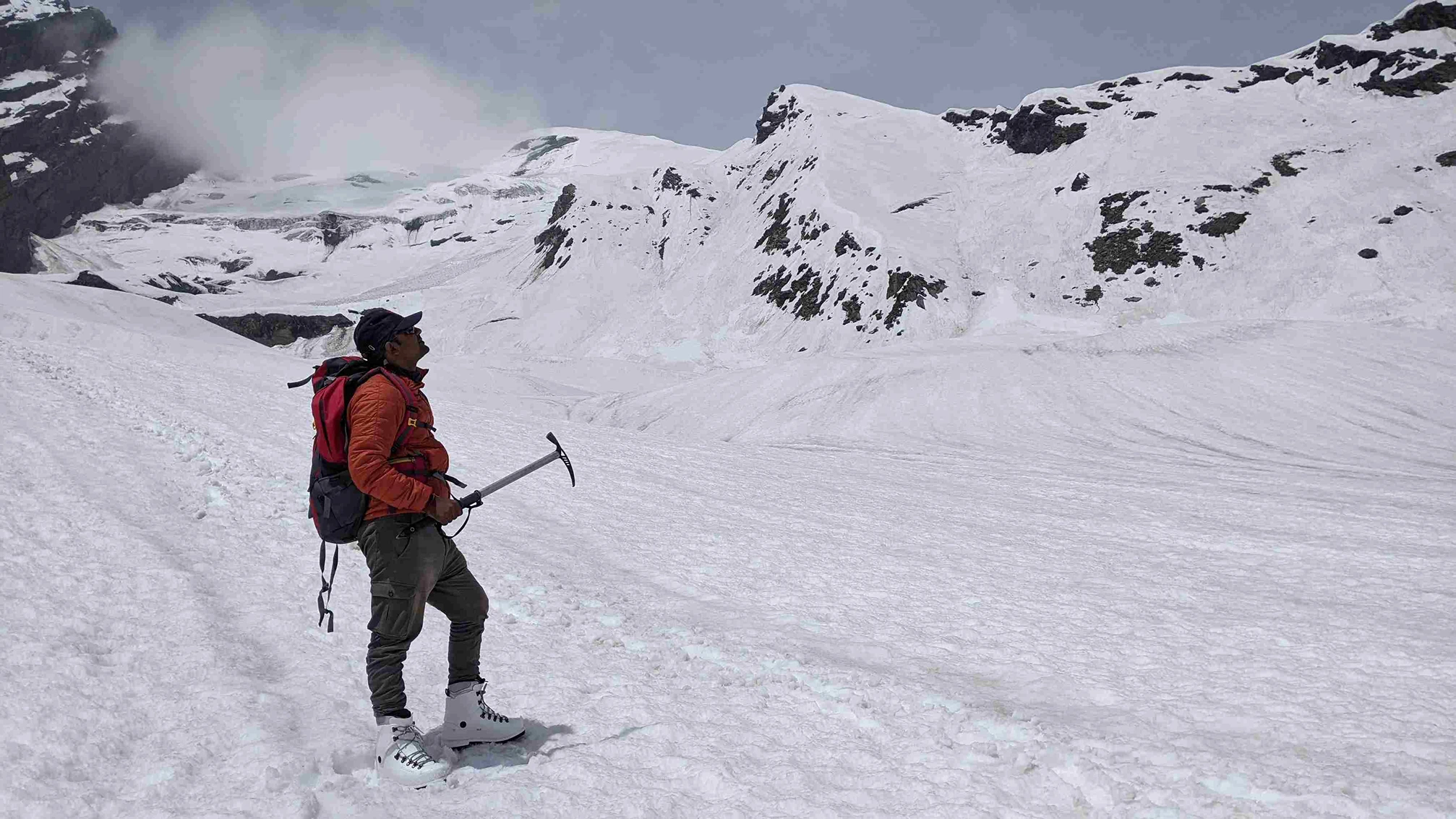
The first important snow event of the approaching season occurred around September 17, 2026.
Reports from Himachal Pradesh indicated fresh snowfall in the higher reaches of Kullu-Manali and Lahaul-Spiti. Rohtang Pass reportedly received around four inches of snow, with fresh snowfall also recorded at Baralacha and Shinkula.
The event brought a noticeable temperature drop across the region.
More importantly for Friendship Peak climbers, trekking reports dated September 18 recorded snowfall around Beas Kund and Bhrigu Lake.
This matters because Friendship Peak rises above the Solang–Beas Kund side of the Pir Panjal Range. The normal expedition approach moves from the Manali/Solang side towards Dhundi and higher camps before climbers move onto the upper mountain.
The September snowfall therefore indicates that fresh seasonal snow is already beginning to affect high-altitude terrain around the Friendship Peak approach.
It should not, however, be interpreted as proof of a particular snow depth at Lady Leg Base Camp or on the summit ridge.
Snow accumulation varies dramatically with:
- altitude,
- slope orientation,
- wind,
- sun exposure,
- terrain shape,
- temperature,
- and subsequent melting.
A wind-loaded gully may contain substantially deeper snow than an exposed ridge only a short distance away.
Friendship Peak Base Camp Conditions
The commonly used Friendship Peak Base Camp area is around Lady Leg, at approximately 3,800–3,900 metres depending on the exact campsite selected.
A typical approach may follow:
Manali → Dhundi → Bakarthach/Raoli Thatch → Lady Leg Base Camp → Advance/Summit Camp → Friendship Peak
Different expedition operators use slightly different camp locations and names.
One current 2026 expedition itinerary, for example, places Lady Leg Base Camp at approximately 3,840 metres before climbers conduct load ferries and acclimatisation towards an advance camp.
What can climbers expect at Base Camp now?
During the September transition period, conditions can change rapidly.
Lower approaches may still contain wet grass, mud, exposed moraine and rocky trails, while colder nights can produce frost and frozen ground.
Fresh snowfall may temporarily cover the higher camps, but early-season snow at this altitude can melt rapidly when followed by clear sunny weather.
This creates a particularly tricky surface:
snow → daytime melting → overnight refreezing → hard or icy ground
Consequently, even a small snowfall can change walking conditions significantly.
Climbers should not judge the mountain simply by whether Base Camp appears “snowy.”
The more important questions are:
- Has the upper mountain received fresh snow?
- Has that snow bonded with the older surface?
- Are temperatures dropping below freezing overnight?
- Has meltwater refrozen?
- Are slopes becoming wind-loaded?
- Is the summit ridge icy?
- Are crevasses or gaps obscured by fresh snow?
These factors matter much more than photographs of the campsite.
Friendship Peak Summit Conditions
Friendship Peak rises to approximately 5,289 metres, although published sources sometimes differ by a few metres.
The summit section is considerably more serious than the approach trek.
A typical summit attempt starts late at night or very early in the morning so climbers can take advantage of colder, firmer snow conditions and maximise the available daylight for descent.
The upper climb may involve a combination of:
- scree,
- moraine,
- steep snow,
- hard snow or ice,
- exposed slopes,
- and mixed mountain terrain.
A current 2026 expedition description notes that the summit approach passes through scree and moraine before reaching snow-covered upper sections.
The exact line changes according to seasonal snow.
That is an important point for anyone researching a Friendship Peak Expedition online.
There is no single permanent “Friendship Peak trail” to the summit.
A route used during one expedition may not be the safest route several weeks later.
Snow bridges, hard ice, exposed rock, cornice development and snow loading can all influence route selection.
The final decision therefore belongs to the expedition leader and mountain guides assessing the conditions on the ground.
Is Friendship Peak Snow-Covered Right Now?
Fresh snow has returned to the higher Kullu-Manali/Beas Kund region, but publicly verifiable data does not currently provide a precise Friendship Peak summit snow depth.
This distinction is essential.
A Solang Valley snow report dated September 19 showed no recent measurable snowfall at the ski area’s mid-mountain reporting level around 2,975 metres, while high-altitude reports simultaneously documented snow at Beas Kund and major passes.
That apparent contradiction is actually normal in the Himalayas.
The freezing level can sit between the two elevations.
Rain can fall around Manali and Solang while snow falls several hundred or thousand metres higher.
Therefore:
Do not use snowfall in Manali or Solang Valley as a direct proxy for Friendship Peak summit conditions.
Friendship Peak’s upper slopes are more than 2,000 metres above parts of the Solang Valley approach.
Friendship Peak Snow Conditions by Month: 2026–27
The following timeline should be treated as a seasonal planning framework, not a guarantee. Himalayan weather can shift quickly and actual conditions should always be checked immediately before an expedition.
September 2026 — First Autumn Snow
September represents the transition from monsoon conditions towards the autumn climbing season.
The September 17–18 event has already brought fresh snowfall to higher Kullu-Manali terrain.
Climbers can encounter:
- fresh snow on upper slopes,
- exposed moraine lower down,
- wet approach trails,
- overnight frost,
- mixed rock-and-snow terrain,
- and rapidly changing cloud conditions.
The biggest challenge is variability.
One week may feel relatively dry and autumnal; a western disturbance or sudden cold spell can transform the mountain within hours.
October 2026 — Important Autumn Expedition Window
October is traditionally an important post-monsoon climbing period in this part of Himachal Pradesh.
A current organised Friendship Peak programme is scheduled for October 2–10, 2026, illustrating that expedition activity is planned during this period.
October can offer clearer post-monsoon visibility, but temperatures decline as the month progresses.
Climbers should expect increasingly cold nights and the possibility of new snow.
Upper slopes may consist of hard snow in the early morning, particularly after repeated melt-freeze cycles.
This is where proper Friendship Peak Preparation becomes critical.
A climber must be comfortable with:
- crampons,
- an ice axe,
- roped movement,
- steep snow,
- cold conditions,
- and long summit days.
Good trekking fitness alone is not enough.
November 2026 — Winter Transition
By November, the mountain moves towards winter conditions.
Temperatures drop considerably and snowfall events become more consequential.
Fresh snow may begin accumulating rather than disappearing quickly.
The approach itself can become more demanding, and expedition logistics become more weather-dependent.
Daylight also decreases, giving teams less margin during summit attempts.
For these reasons, expeditions during this period require much more conservative decision-making.
December 2026 — Winter Conditions
December should be regarded as a winter mountaineering environment.
Potential conditions include:
- persistent snow,
- sub-zero temperatures,
- frozen water sources,
- hard ice,
- wind chill,
- deep snow after storms,
- and greater avalanche concerns on loaded slopes.
Winter conditions dramatically increase the seriousness of a 5,000-metre mountain.
Anyone comparing Friendship Peak with a normal winter trek should understand that they are very different activities.
January 2027 — Deep Winter
January is typically one of the coldest periods in Himachal’s high mountains.
The main challenges are likely to be cold, accumulated snow and weather instability.
Heavy snowfall can create deep trail-breaking conditions, while repeated snowfall and wind can increase avalanche hazard.
The lower Solang-Manali region may attract winter tourists, but that should not be confused with safe climbing conditions on Friendship Peak.
The summit sits thousands of metres higher.
February 2027 — Snow Remains Significant
February can continue to bring substantial snowfall from western disturbances.
Even when weather is clear, large quantities of accumulated winter snow may remain.
Climbers need to consider both recent snowfall and the existing snowpack.
A clear morning does not automatically mean stable slopes.
March 2027 — Early Spring Transition
March begins the gradual transition towards spring, but Friendship Peak can still remain heavily snow-covered.
Increasing solar radiation begins affecting the snowpack.
This creates another important pattern:
firm snow early in the morning → softer snow later in the day
Timing becomes increasingly important.
Climbers generally want to move through snow terrain while it remains supportive rather than after prolonged daytime warming.
April–May 2027 — Spring Mountaineering Window
Spring is one of the periods climbers commonly consider for Friendship Peak.
Temperatures gradually improve, but substantial snow can remain high on the mountain.
Depending on the preceding winter, spring may provide extensive snow climbing conditions.
This can be preferable to loose scree in some sections, but only when the snowpack is stable and the climber has the necessary skills.
Anyone consulting a Himalayan Expedition Calendar should compare Friendship Peak with other spring objectives based not only on altitude but also on technical requirements and recent snow conditions.
How Difficult Is Friendship Peak?
Friendship Peak is sometimes promoted as a beginner Himalayan summit.
That description needs context.
It can be suitable as an introductory mountaineering objective for a properly prepared climber under experienced leadership, but it is not equivalent to a beginner trekking route.
Current expedition descriptions classify it as a high-altitude climbing expedition involving steep terrain and crampon use. One 2026 programme describes the grade as moderate to challenging and recommends prior high-altitude trekking experience.
The summit is above 5,000 metres.
That introduces three major challenges simultaneously:
Altitude
The reduced oxygen availability affects pace, recovery, sleep and physical performance.
Technical terrain
Snow and ice may require specialised equipment and movement techniques.
Weather
Conditions can deteriorate quickly.
A climber who can comfortably trek for eight hours at lower altitude may still struggle during a long summit push above 4,500 metres.
Friendship Peak Preparation: What Climbers Should Focus On
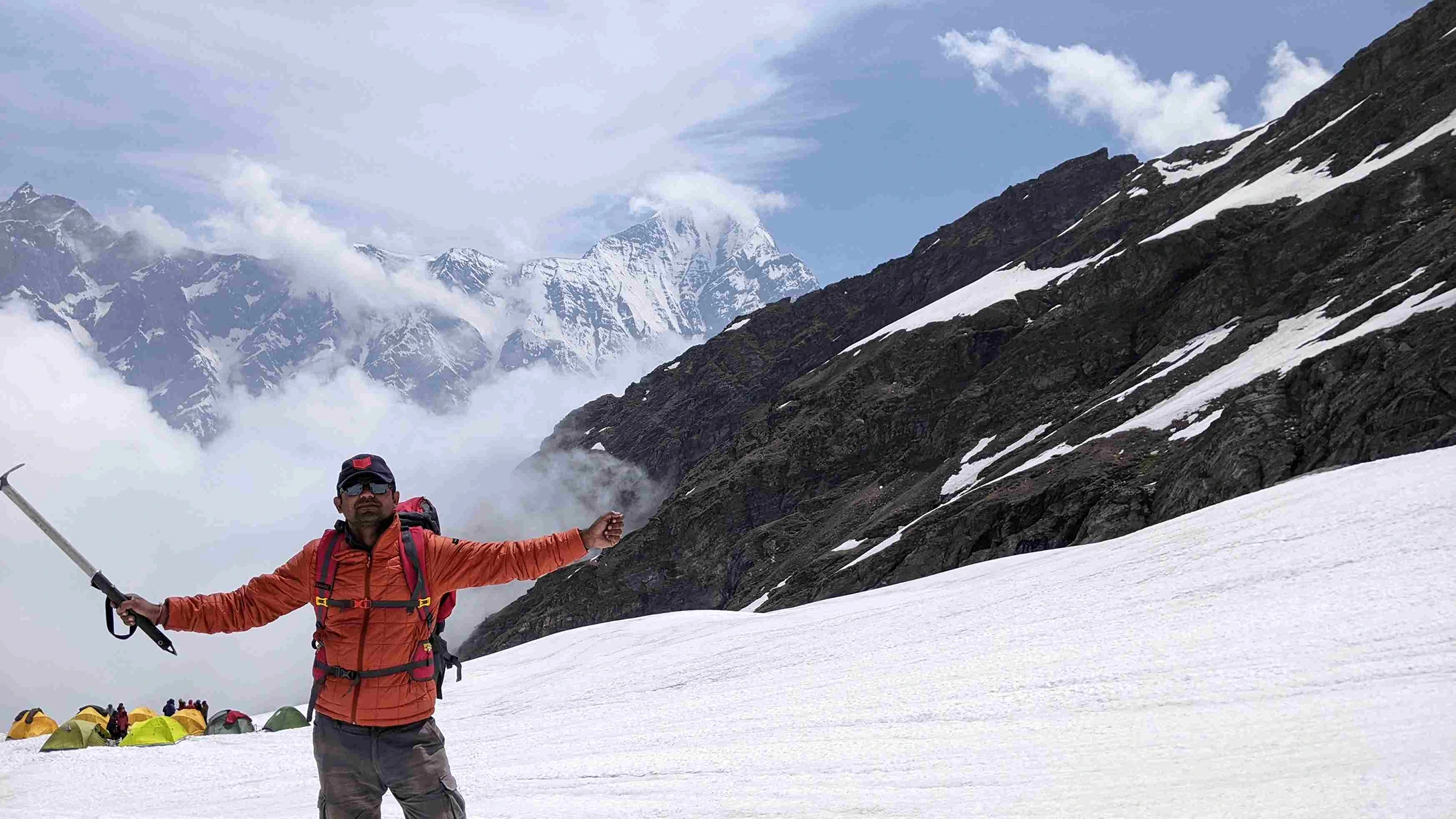
Proper Friendship Peak Preparation should begin well before reaching Manali.
Fitness should combine cardiovascular endurance, leg strength, climbing-specific conditioning and recovery.
A useful training programme can include:
- running,
- stair climbing,
- incline walking,
- cycling,
- weighted hikes,
- squats and lunges,
- core training,
- and progressively longer endurance sessions.
The objective is not simply speed.
You need the ability to sustain a steady climbing pace for many hours while carrying personal equipment at altitude.
Technical Preparation
Before the summit attempt, climbers should understand:
Crampon movement
Walking efficiently on firm snow without catching crampon points.
Ice-axe use
Correct carrying position and basic self-arrest principles.
Rope movement
Maintaining spacing and rhythm while travelling as part of a rope team.
Ascending steep snow
Using appropriate footwork depending on slope angle and snow hardness.
Descending safely
Many accidents happen during descent when climbers are tired.
Expedition teams normally conduct training and acclimatisation before moving towards summit camp.
Essential Equipment for Friendship Peak Snow Conditions
Actual equipment should always be confirmed with the expedition operator because requirements change according to conditions.
Typical mountaineering equipment may include:
- mountaineering boots,
- crampons,
- climbing harness,
- helmet,
- ice axe,
- locking carabiners,
- gaiters,
- trekking poles,
- headlamp with spare batteries,
- insulated gloves,
- waterproof shell,
- down jacket,
- thermal layers,
- snow-compatible sunglasses or glacier glasses,
- sunscreen,
- and a properly rated sleeping bag.
Layering is particularly important.
During a summit attempt, the temperature difference between standing still and climbing steeply can be substantial.
Overheating can soak base layers with sweat; stopping afterwards can then cause rapid cooling.
Effective cold management means adjusting layers before you become excessively hot or cold.
Why Acclimatisation Matters on Friendship Peak
Altitude is one of the most underestimated components of the expedition.
A typical itinerary gradually moves from Manali towards higher camps before the summit attempt.
One published itinerary places:
- Manali around the starting altitude,
- Dhundi around 2,960 m,1
- Lady Leg Base Camp around 3,840 m,
- and the summit around 5,289 m.
Some operators also establish an advance or summit camp above Base Camp.
This gradual progression gives the body time to adapt.
Rushing the itinerary can compromise acclimatisation.
Climbers should report symptoms honestly to the expedition leader. Persistent headache, nausea, unusual fatigue, dizziness or deterioration at altitude should never be hidden simply to protect a summit attempt.
The mountain will remain there.
How Fresh Snow Changes the Friendship Peak Expedition
Fresh snowfall does more than make the mountain look different.
It changes the climbing surface.
A previously visible rocky route may become covered.
Tracks can disappear.
Small holes and uneven terrain can become concealed.
Fresh snow can accumulate over hard older snow.
Wind can transport snow from one side of the mountain to another.
This is why the statement “only 10 cm of snow fell” tells climbers surprisingly little on its own.
Ten centimetres falling vertically can be redistributed by wind into substantially deeper deposits on lee slopes.
Conversely, exposed ridges can be stripped almost completely.
For an expedition team, snow assessment must therefore happen continuously.
Weather vs Snow Conditions: Understand the Difference
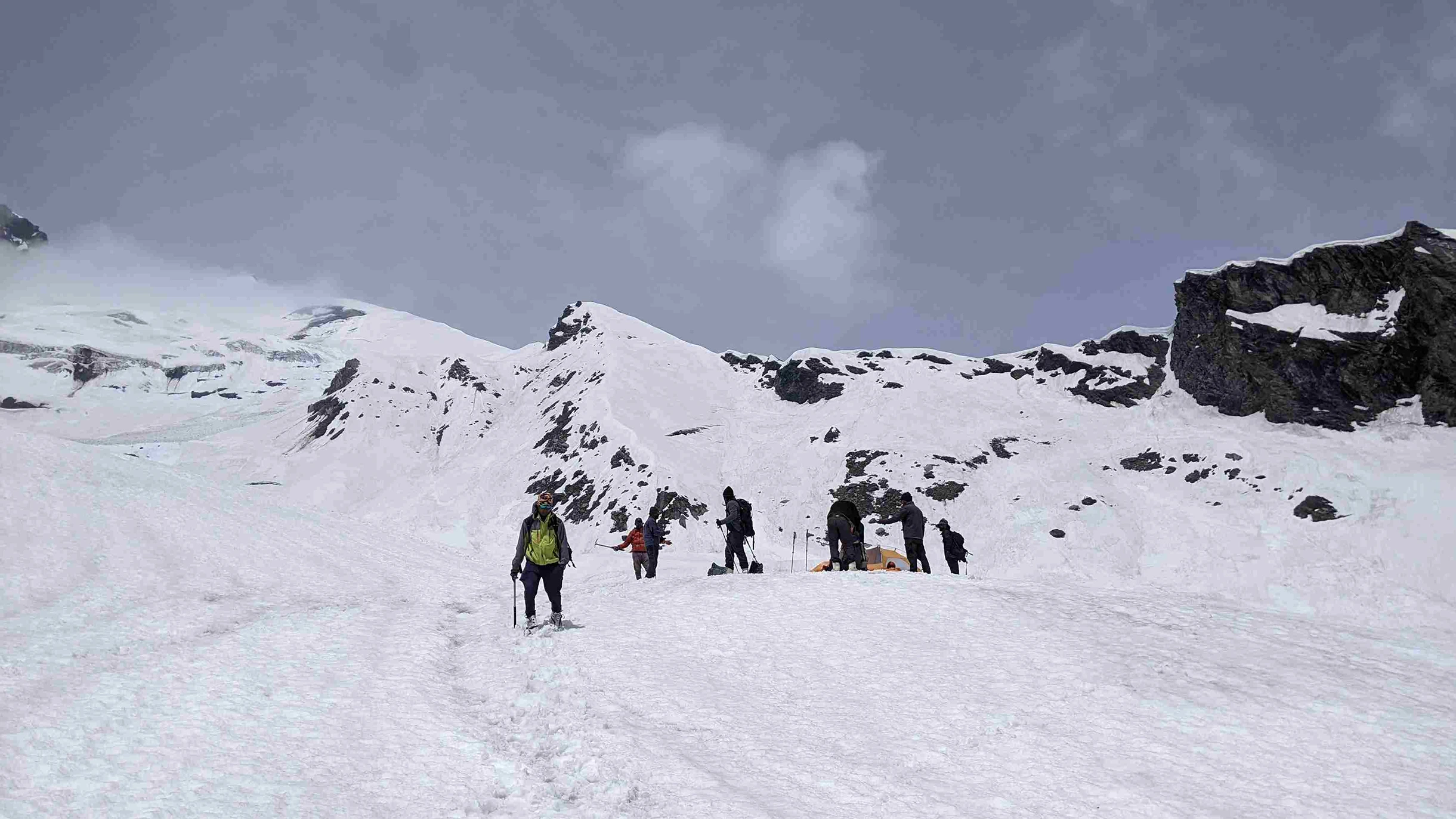
One of the most common mistakes made when planning a Himalayan expedition is checking a weather app and assuming it represents mountain conditions.
It does not.
A forecast saying:
Manali: 15°C, partly cloudy
does not tell you the temperature at 5,289 metres.
Similarly, “no snowfall forecast today” does not tell you whether the summit route contains old snow, hard ice or wind-loaded terrain from an earlier storm.
For Friendship Peak, climbers need to consider:
- Recent precipitation
- Freezing level
- Wind speed and direction
- Overnight temperatures
- Snow accumulation
- Snowpack stability
- Visibility
- Forecast precipitation
- Route observations from guides
- Conditions at higher camps
This combination provides a much better picture than a generic weather forecast.
Latest Regional Weather: What September 2026 Tells Us
The current September pattern demonstrates how quickly Himalayan conditions can diverge by altitude.
On September 18, Manali’s IMD report recorded a minimum temperature of approximately 9.9°C and 17 mm of rain.
At the same time, the higher mountains were receiving snow.
Rohtang received around four inches during the recent spell, while snow was reported around Beas Kund.
This is precisely the type of weather transition Friendship Peak climbers must monitor.
The mountain may be entering snow conditions even while Manali remains comparatively mild.
When Is the Best Time for a Friendship Peak Expedition?
There is no single date that guarantees good summit conditions.
Broadly, climbers often consider the spring/pre-monsoon and autumn/post-monsoon periods, but actual suitability depends on the year’s snowpack and weather.
An expedition should not be selected solely because the dates appear on a website.
Before booking, ask:
- What were the conditions during the previous expedition?
- Where is the current snowline?
- Has there been recent snowfall?
- Is a high camp being established?
- What technical equipment is being carried?
- What is the guide-to-climber ratio?
- How many acclimatisation days are included?
- What is the turnaround-time policy?
- What happens if the summit attempt is cancelled by weather?
These questions tell you much more about expedition quality than a guaranteed-summit claim.
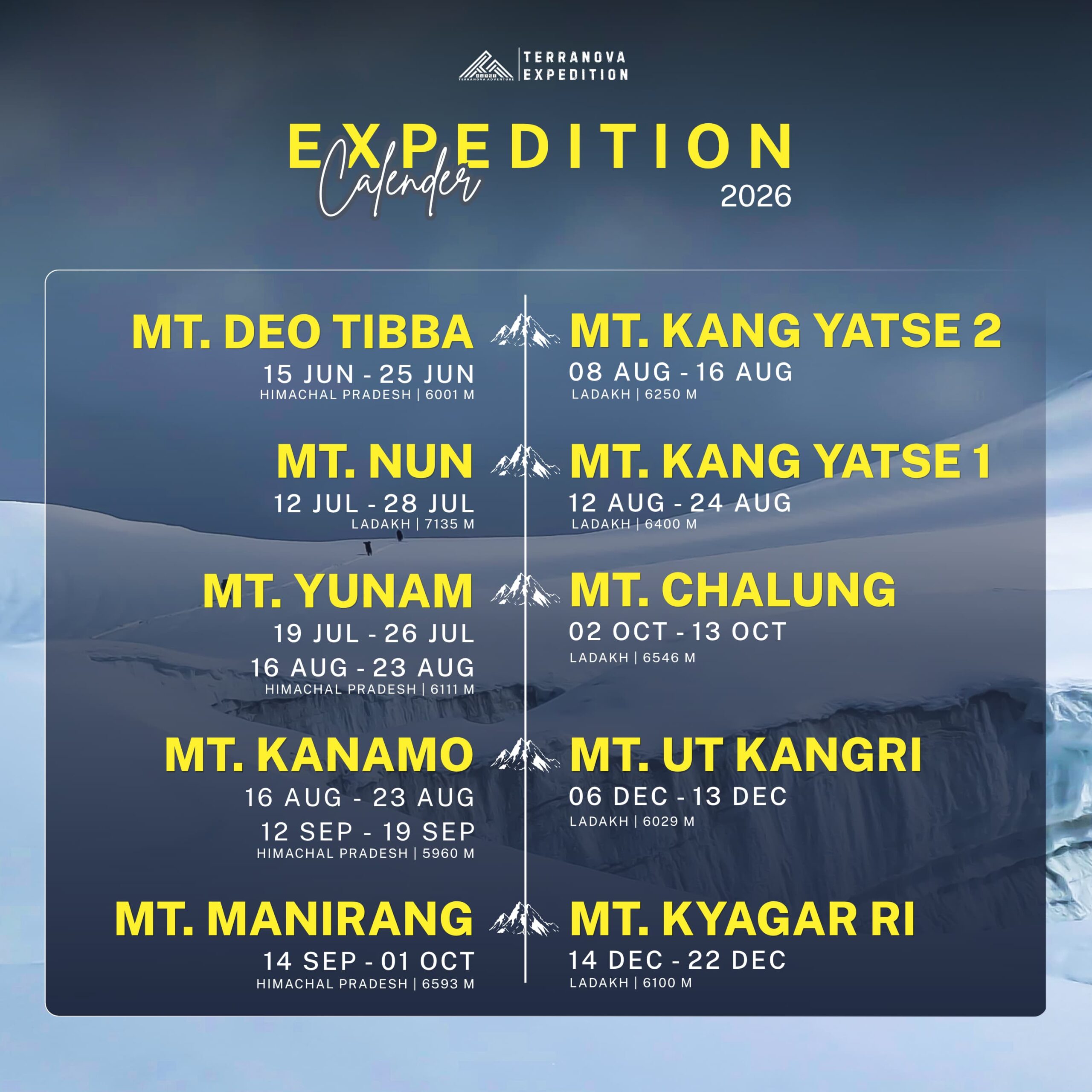
Friendship Peak and the Himalayan Expedition Calendar
Friendship Peak can be an excellent mountain to include when building a progressive Himalayan Expedition Calendar.
Instead of choosing peaks randomly, climbers can progress through increasingly demanding objectives.
For example:
high-altitude trekking → snow trekking → basic mountaineering skills → introductory 5,000 m expedition → higher or more technical expeditions.
Friendship Peak fits naturally into this progression because it introduces climbers to expedition-style movement, high camps, technical equipment, summit-day discipline and high-altitude decision-making.
But the calendar should remain flexible.
Himalayan climbing seasons are controlled by weather—not marketing dates.
Friendship Peak Snow Report 2026–27: Final Assessment
As of 19 September 2026, the most important development is the arrival of fresh seasonal snow across the higher Kullu-Manali region.
Significant snowfall was reported at high passes including Rohtang on September 17–18, while trekking reports also recorded snowfall around Beas Kund. Meanwhile, Manali itself experienced rain and comparatively mild temperatures.
For Friendship Peak, this indicates a transition towards autumn snow conditions at high altitude.
However, there is not enough publicly verified information to responsibly state an exact current snow depth at Friendship Peak Base Camp or on the summit.
Climbers should therefore obtain recent field observations from expedition teams before departure.
For anyone planning a Friendship Peak Expedition, the coming weeks should be monitored for:
- additional snowfall,
- overnight freezing,
- snowline movement,
- summit-route icing,
- wind loading,
- and changes caused by western disturbances.
This is also why Friendship Peak Preparation should focus on more than fitness. Climbers need altitude awareness, cold-weather experience and basic snow-climbing competence.
Keep checking this Friendship Peak Snow Report 2026–27 as the season progresses. Updating actual observations from Base Camp, summit camp and summit attempts throughout autumn, winter and spring can turn this page into a useful reference for climbers planning Friendship Peak through the Himalayan Expedition Calendar.
FAQs — Friendship Peak Snow Report 2026–27
1. Is there snow on Friendship Peak in September 2026?
Fresh snowfall has been reported across the higher Kullu-Manali region in mid-September 2026, including around Beas Kund. This strongly indicates the beginning of fresh seasonal snow at high elevations, although exact snow depth on Friendship Peak itself should be confirmed through current field reports.
2. What are the latest Friendship Peak snow conditions?
As of September 19, 2026, the higher Kullu-Manali region has received fresh snow. Rohtang Pass received around four inches during the September 17–18 spell, and snow was also reported around Beas Kund. Exact Friendship Peak Base Camp and summit snow depths are not publicly measured by a dedicated live snow station.
3. What is the height of Friendship Peak?
Friendship Peak is approximately 5,289 metres (about 17,350 feet) above sea level and lies in the Pir Panjal Range near Manali in Himachal Pradesh.
4. Is Friendship Peak suitable for beginners?
Friendship Peak may be suitable for physically fit climbers beginning their mountaineering progression under qualified leadership, but it should not be treated like an ordinary beginner trek. The climb can involve steep snow, crampons, an ice axe, roped movement and a demanding summit day above 5,000 metres.
5. What is the best time for the Friendship Peak Expedition?
Spring/pre-monsoon and autumn/post-monsoon periods are commonly considered for the Friendship Peak Expedition. Exact conditions vary each year according to snowfall, temperature, wind and mountain weather, so recent field reports should be checked before choosing dates.
6. Does Friendship Peak require technical climbing?
Friendship Peak is generally considered a semi-technical mountaineering objective. Depending on conditions, climbers may need crampons, an ice axe, harnesses and rope techniques for steep snow sections.
7. How should I start Friendship Peak Preparation?
Friendship Peak Preparation should include cardiovascular endurance, strength training, weighted uphill walking and previous high-altitude trekking experience. Climbers should also learn basic crampon, ice-axe and rope techniques before the summit attempt.
8. Is Friendship Peak covered with snow throughout the year?
Snow coverage varies significantly by season and year. Winter usually brings greater accumulation, while late summer and early autumn can expose more rock and moraine before fresh autumn snowfall begins. Upper sections can retain snow even when lower approaches are largely snow-free.
9. Where is Friendship Peak Base Camp?
The commonly used Base Camp is around the Lady Leg area, generally around 3,800–3,900 metres. Exact campsite locations can change according to the operator, snow conditions, water availability and expedition logistics.
10. How long does the Friendship Peak Expedition take?
Many itineraries take approximately 7–9 days from Manali to Manali, although schedules vary. Extra acclimatisation or contingency days can improve safety and provide greater flexibility around weather.
11. Can Friendship Peak be climbed in October?
Yes, October is used for post-monsoon Friendship Peak expeditions, and organised expeditions are scheduled during October 2026. Conditions become colder as the month progresses, and fresh snowfall can substantially alter the summit route.
12. Does Friendship Peak receive snow in September?
Yes. High elevations around Friendship Peak can receive snow in September. In September 2026, fresh snowfall was reported in the higher Kullu-Manali region and around Beas Kund.
13. Is Friendship Peak included in a Himalayan Expedition Calendar?
Friendship Peak is commonly considered an introductory 5,000-metre mountaineering objective and can fit into a Himalayan Expedition Calendar for climbers progressing from high-altitude trekking towards more technical expeditions.
14. What equipment is required for Friendship Peak?
Depending on conditions, equipment can include mountaineering boots, crampons, an ice axe, harness, helmet, carabiners, trekking poles, gaiters, cold-weather clothing, glacier sunglasses and a suitable sleeping bag. The final list should always come from the expedition leader.
15. Is Friendship Peak harder when there is fresh snow?
It can be. Fresh snow may hide rocks, create deeper trail-breaking, obscure existing tracks and produce unstable wind-loaded areas. However, difficulty depends on snow depth, bonding, temperature, slope angle and the condition of the underlying surface.
16. What is the current snow depth at Friendship Peak Base Camp?
There is currently no reliable public monitoring station providing a verified daily snow-depth measurement from Friendship Peak Base Camp. Any exact figure should therefore come from a recent on-ground expedition report rather than a general Manali forecast.
17. How cold is Friendship Peak summit day?
Temperatures vary substantially with season, time of day, wind and weather systems. Summit attempts generally begin at night or before dawn, so climbers should be prepared for sub-zero conditions and significant wind chill even when Manali is comparatively warm.
18. Why should I check a Friendship Peak snow report before the expedition?
Snow conditions determine route difficulty, equipment requirements, summit timing and sometimes whether a summit attempt is practical at all. Checking recent snow and weather information is therefore an important part of Friendship Peak Preparation.
19. Is snowfall in Manali a reliable indicator of Friendship Peak conditions?
No. Friendship Peak’s summit is more than 5,000 metres high, while Manali is around 2,000 metres. It can rain in Manali while snow falls on the upper mountain. High-altitude reports from the Beas Kund/Friendship Peak sector are more useful.
20. Will Friendship Peak have more snow during winter 2026–27?
Snow accumulation would normally be expected to increase as the region moves into winter, but the timing and quantity of future snowfall cannot be guaranteed. Climbers should follow actual snowfall events, western disturbances and recent expedition observations rather than relying on seasonal assumptions alone.