The arrival of winter in the Garhwal Himalayas marks a major turning point for mountaineering expeditions. As October progresses, falling temperatures, changing snow conditions and increasingly unpredictable weather begin transforming the climbing routes of some of Uttarakhand’s most challenging mountains. Among them is Black Peak, also known as Kalanag, a technically demanding Himalayan summit that requires far more preparation than an ordinary high-altitude trek.
Standing at approximately 6,387 metres (20,955 feet), Black Peak is part of the Bandarpunch massif in Uttarkashi district. The mountain is known for its glaciers, steep snow and ice sections, crevasse systems and demanding high-altitude camps. While May–June and September–October are generally considered the main climbing periods, conditions after October can make the route substantially more difficult and less suitable for standard commercial expeditions.
For mountaineers planning a Black Peak Expedition in late 2026 or preparing for the 2027 climbing season, understanding these seasonal changes is essential. Winter does not simply bring more snow to Kalanag. It changes how the mountain must be approached, how the climbing route is assessed, how expedition teams manage risk and whether a summit attempt is practical at all.
Recent weather developments in Uttarkashi have made these questions particularly relevant. This article examines what happens to the Black Peak climbing route after October, the latest regional weather updates, winter mountaineering risks, expedition costs and how Kalanag compares with the Yunam Peak Expedition in Himachal Pradesh.
Latest October 2026 Update: Why Winter Expedition Planning Needs Extra Caution
The transition from September to October 2026 has brought important weather-related developments across parts of the Uttarkashi region. On 1 October 2026, reports confirmed that trekking routes within Gangotri National Park had been temporarily suspended following heavy rainfall and snowfall on 26–27 September. Routes affected included Gaumukh–Tapovan, Kedartal and Gartang Gali, where weather-related damage created safety concerns.
Although these restrictions concerned Gangotri National Park rather than the Black Peak climbing route, the developments illustrate how rapidly conditions can change in the higher Garhwal Himalayas. Heavy precipitation, damaged approach trails, unstable slopes and fresh snow can all disrupt mountaineering schedules, even before the main winter season begins.
Black Peak lies in the Govind Pashu Vihar protected-area region, and its access arrangements must be verified separately. The Gangotri restrictions should not be interpreted as confirmation that the Black Peak route has been officially closed.
Another important development comes from the Black Peak Snow Report published on 22 September 2026. That report identified unsettled late-monsoon conditions in Uttarkashi but also acknowledged that reliable, publicly verifiable snow-depth measurements from Black Peak’s upper camps were unavailable.
As of 13 October 2026, the publicly available information reviewed for this article does not establish a verified, current snow depth at Kyarkoti Base Camp, Camp 1, the summit camp or the summit. It also does not establish a mountain-specific winter closure order or confirm that the route is currently safe for climbing.
This distinction is important. Regional snowfall reports help expedition teams understand developing weather patterns, but they cannot replace actual route reconnaissance, local permit verification and professional assessment of conditions on the mountain.
For anyone considering a late-season Kalanag Expedition, the immediate priority should be obtaining current information from local authorities, qualified mountain guides and teams that have recently inspected the approach and upper climbing route.
What Happens to the Black Peak Climbing Route After October?
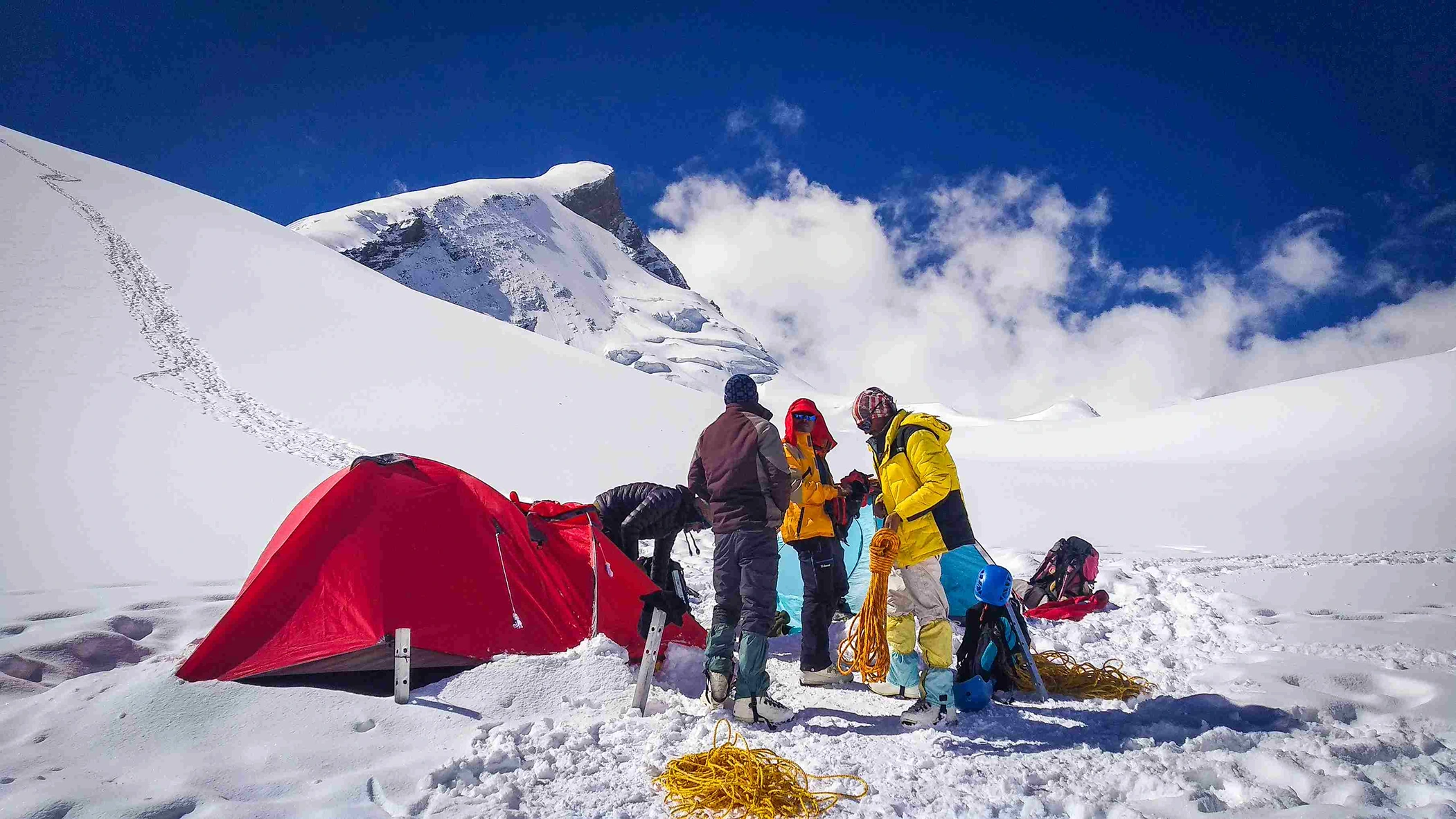
The Black Peak climbing route undergoes several important changes as the mountain moves from the post-monsoon climbing period into early winter. During favourable autumn conditions, teams may benefit from relatively clear skies, improved visibility and established approaches. However, the onset of colder weather can alter the snow surface, expose hard ice, conceal crevasses beneath fresh snowfall and make movement between high camps increasingly demanding.
The standard approach generally begins at Sankri and continues through Taluka, the Osla or Seema region, Ruinsara Tal and Kyarkoti before reaching the higher climbing camps. Above the base camp, the expedition enters increasingly technical terrain involving moraine, glacier travel, steep snow and ice, and exposed mountain slopes.
After October, even sections that were manageable earlier in the season may require different techniques, additional equipment or more time. Fresh snowfall can obscure the established trail, while strong winds may redistribute snow onto exposed slopes and gullies. A previously visible crevasse may become hidden beneath a fragile snow bridge, and steep sections may develop hard, icy surfaces that demand secure crampon technique and rope protection.
The condition of the route cannot be judged from the amount of snow alone. A mountain with relatively little fresh snowfall may still have dangerous hard ice, while a heavily snow-covered route may present serious avalanche and snow-bridge hazards. The distribution, structure and stability of snow are often more important than its apparent depth.
For these reasons, the transition into winter can make Black Peak a significantly more complex mountaineering objective than it is during an established climbing window.
How Winter Changes the Route from Sankri to Kyarkoti Base Camp
The approach to Black Peak is a substantial part of the expedition. Unlike mountains that can be reached by road near their base camps, Kalanag requires several days of travel through remote Himalayan terrain before technical climbing begins.
During the main trekking and climbing periods, teams generally follow the approach through the upper Tons Valley region towards Ruinsara Tal and Kyarkoti. This journey involves forest trails, mountain streams, rocky terrain, alpine landscapes and progressively higher elevations.
As November approaches, colder temperatures and snowfall may affect the upper sections of the route. Snow-covered trails become more difficult to identify, particularly where the route crosses open slopes or moraine. Frozen ground and icy surfaces can reduce traction, while shorter daylight hours leave less time to complete each day’s movement.
Fresh snow can also complicate the transportation of expedition equipment. Black Peak requires substantial logistical support, including climbing ropes, technical equipment, high-altitude tents, food supplies, fuel and emergency resources. Any difficulty in moving these supplies towards base camp can affect the entire expedition schedule.
At Kyarkoti, winter conditions can create additional problems. Snow accumulation may make it harder to identify suitable campsites, while persistent cold can complicate cooking, water collection and equipment management. Teams may need to melt snow for drinking water, increasing fuel consumption and the time required for routine camp activities.
The approach must therefore be assessed as carefully as the summit route. Even if upper-mountain conditions appear potentially climbable, unsafe access to base camp may make an expedition impractical.
What Happens to the Glacier and Crevasse Sections in Winter?
One of the defining characteristics of the Black Peak Expedition is the presence of technical glacier terrain. Above the lower camps, climbers must negotiate snow-covered glacier surfaces, moraine and sections where crevasses present a serious hazard.
During winter, fresh snow may accumulate over existing crevasses and create snow bridges. Some bridges can be sufficiently consolidated to support carefully managed travel, while others may be thin or unstable. Their strength depends on snow structure, temperature history, loading and the geometry of the underlying crevasse.
This makes visual route identification particularly difficult. A smooth white surface does not necessarily indicate safe terrain.
Cold temperatures can also transform exposed snow and ice surfaces. Melt-freeze cycles may produce hard crusts, while wind can strip snow from ridges and expose underlying ice. On steep sections, these conditions increase the importance of precise footwork, crampon technique and secure rope systems.
For experienced mountaineers, glacier travel involves much more than walking with crampons. It requires knowledge of rope-team movement, crevasse rescue, anchor construction, hazard identification and the ability to make conservative decisions when conditions deteriorate.
Winter adds uncertainty to each of these tasks. Fresh snowfall can erase previously established tracks, and teams may need to spend additional time evaluating the route rather than relying on conditions reported during earlier expeditions.
This is one reason why Black Peak should never be treated as a conventional winter trekking destination.
Why the Summit Push Becomes More Difficult After October
The final stages of a Black Peak Expedition involve demanding high-altitude mountaineering, where physical fatigue, low oxygen availability and technical terrain combine to make progress difficult even in favourable weather.
During the colder months, these challenges become more pronounced.
Temperatures can fall substantially, particularly during nighttime summit attempts. Wind exposure increases heat loss and can make it difficult to manage gloves, ropes, carabiners and other equipment. The combination of severe cold and reduced dexterity can slow technical operations at precisely the time when efficiency matters most.
Shorter winter days also reduce the margin available for climbing and descent. Although summit teams often begin before sunrise, the overall time available for safe movement remains a critical consideration.
Fresh snow or wind-loaded slopes may require additional assessment before climbing. Hard ice can increase the technical demands of steep sections, while changing visibility may make navigation and descent more difficult.
Another important factor is the condition of fixed ropes. Equipment installed during an earlier expedition should never be assumed safe for reuse. Snow movement, ice formation, rockfall and exposure can affect anchors and ropes. Qualified climbing teams must inspect, replace or establish protection appropriate to the conditions they encounter.
At an altitude exceeding 6,000 metres, these complications can quickly compound. Slower progress increases exposure to cold, while delays may reduce the time available for descent.
For this reason, summit success should never be the primary measure of a well-managed Black Peak Expedition. The ability to recognize deteriorating conditions and turn around safely is equally important.
Can Black Peak Be Climbed Between November 2026 and February 2027?
Technically, winter ascents of major Himalayan mountains are possible for highly experienced mountaineers operating with specialized equipment, extensive logistical support and suitable permissions. However, this does not mean that Black Peak should be considered a normal winter climbing destination.
November through February falls outside the mountain’s commonly advertised commercial climbing windows. During this period, deep snow, severe cold, wind loading and difficult access can make expedition operations considerably more complicated.
A winter attempt would require a different level of planning from a standard autumn expedition. Teams would need to evaluate snow stability, establish safe camp locations, account for difficult evacuation conditions and carry equipment appropriate for sustained exposure to extreme cold.
It is also important to distinguish between technical possibility and commercial availability. The fact that a mountain can theoretically be climbed during winter does not mean that authorities will permit an expedition, that local support will be available or that conditions will allow a responsible summit attempt.
For most experienced trekkers progressing into technical mountaineering, the more practical option is to use the winter months for training and prepare for the next established Black Peak climbing window.
Black Peak Expedition Package: What Should Climbers Check for 2027?
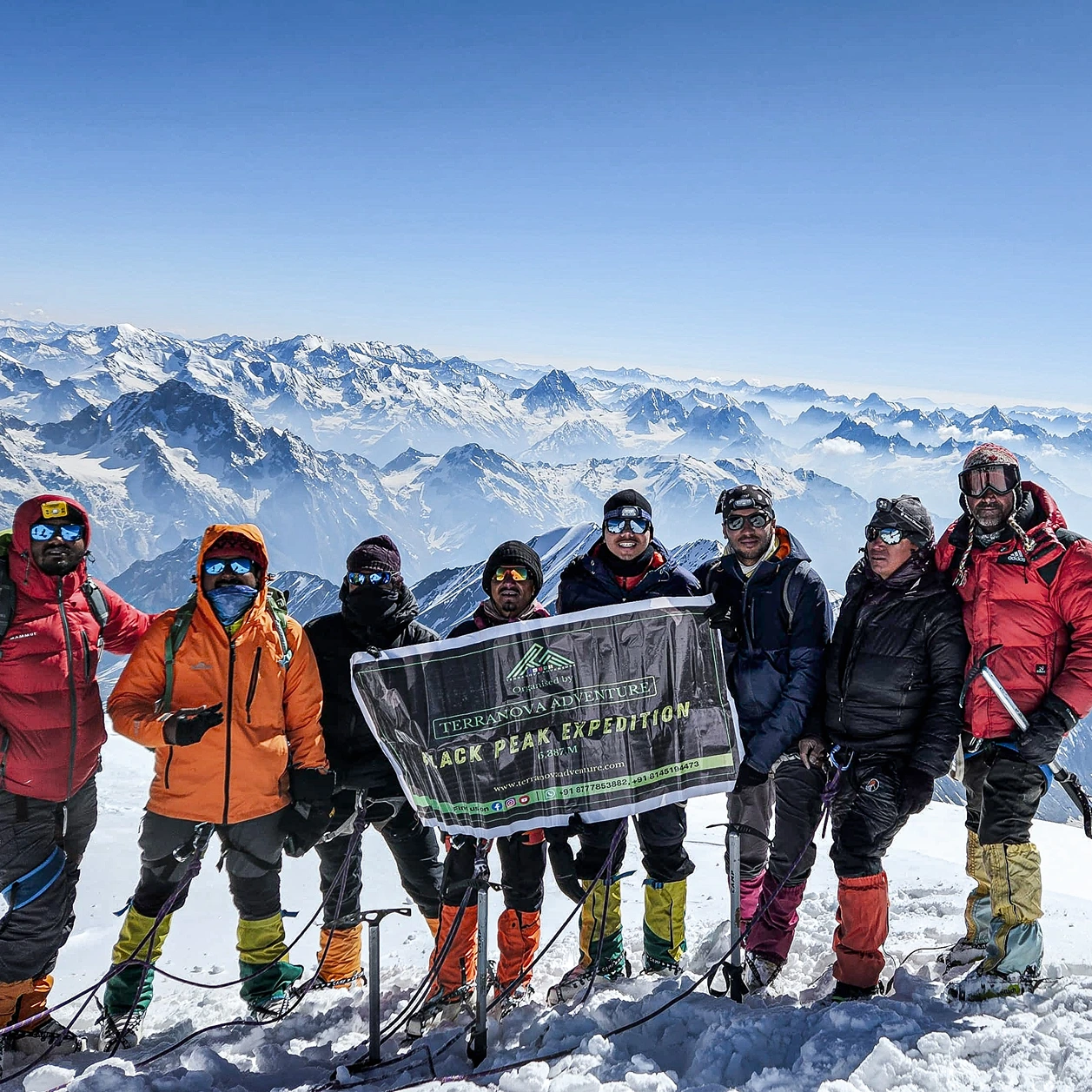
Choosing the right Black Peak Expedition Package requires considerably more attention than comparing itineraries or advertised prices. Black Peak is a technical mountain where expedition leadership, acclimatization schedules, route management and emergency preparedness directly affect the quality and safety of the experience.
A well-planned package should clearly explain how the team travels from Dehradun to Sankri, how many days are allocated to the approach, where the higher camps will be established and how much time is reserved for acclimatization and possible weather delays.
The package should also identify the technical equipment provided, including ropes, crampons, ice axes, helmets, harnesses and other climbing systems. Climbers should confirm whether specialized mountaineering boots and personal cold-weather equipment are included or must be arranged separately.
Permits are another essential consideration. The approach passes through the Govind Pashu Vihar protected-area region, where applicable entry permissions and expedition requirements must be satisfied. Uttarakhand Tourism identifies a registration and permit process for visitors to the protected area.
A responsible operator should also explain the experience and qualifications of the expedition leader, the guide-to-climber ratio, emergency communication arrangements, evacuation planning and insurance requirements.
For the 2027 season, climbers should give particular attention to weather contingency days. Snowfall and glacier conditions can change quickly, and an itinerary with insufficient flexibility may create unnecessary pressure to continue climbing when conditions are unsuitable.
Black Peak Expedition Cost and Price for 2027
The Black Peak Expedition Cost depends on several factors, including expedition duration, group size, technical equipment, permits, guide services, high-altitude support and transportation arrangements.
Published commercial listings reviewed in October 2026 illustrate the variation. One operator advertises a 15-day Black Peak expedition at ₹60,000 plus GST, while another lists a package at ₹80,000. These are advertised operator rates, not a confirmed market-wide price or a quotation for the 2027 season.
The black peak expedition price may also increase when additional services are required, such as personal equipment rental, high-altitude insurance, extra porters, specialized support or changes caused by weather delays.
Climbers comparing packages should therefore examine the total expected expenditure rather than the initial booking amount alone. A lower-priced expedition is not necessarily better value if important technical services, permits or essential safety arrangements are excluded.
For winter planning, the financial implications can be even greater. Additional cold-weather equipment, longer logistical schedules and more demanding access conditions may increase costs. Any specialized winter proposal should be evaluated separately from a standard pre-monsoon or post-monsoon expedition.
Black Peak Expedition vs Yunam Peak Expedition: Which Is More Challenging?
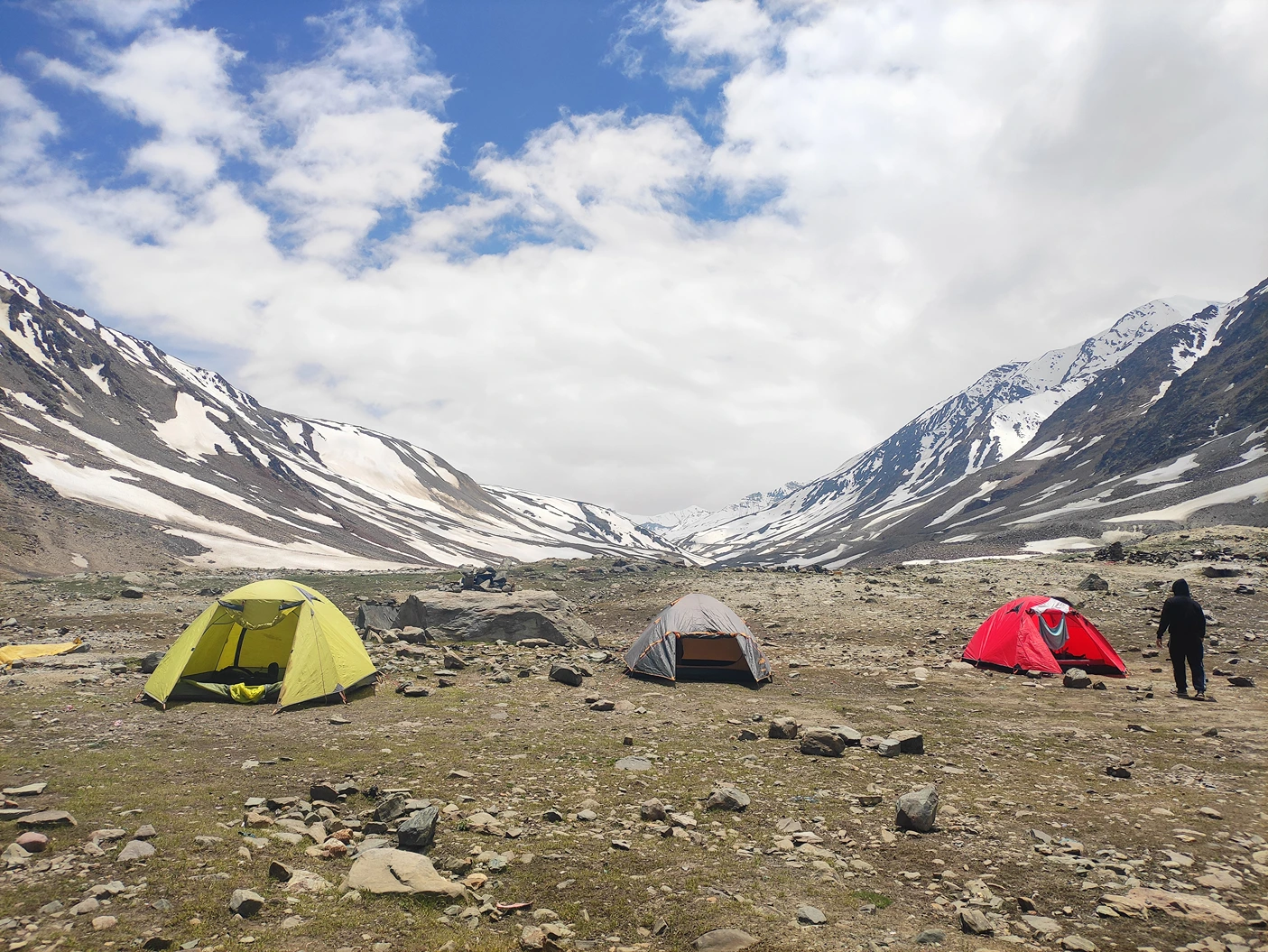
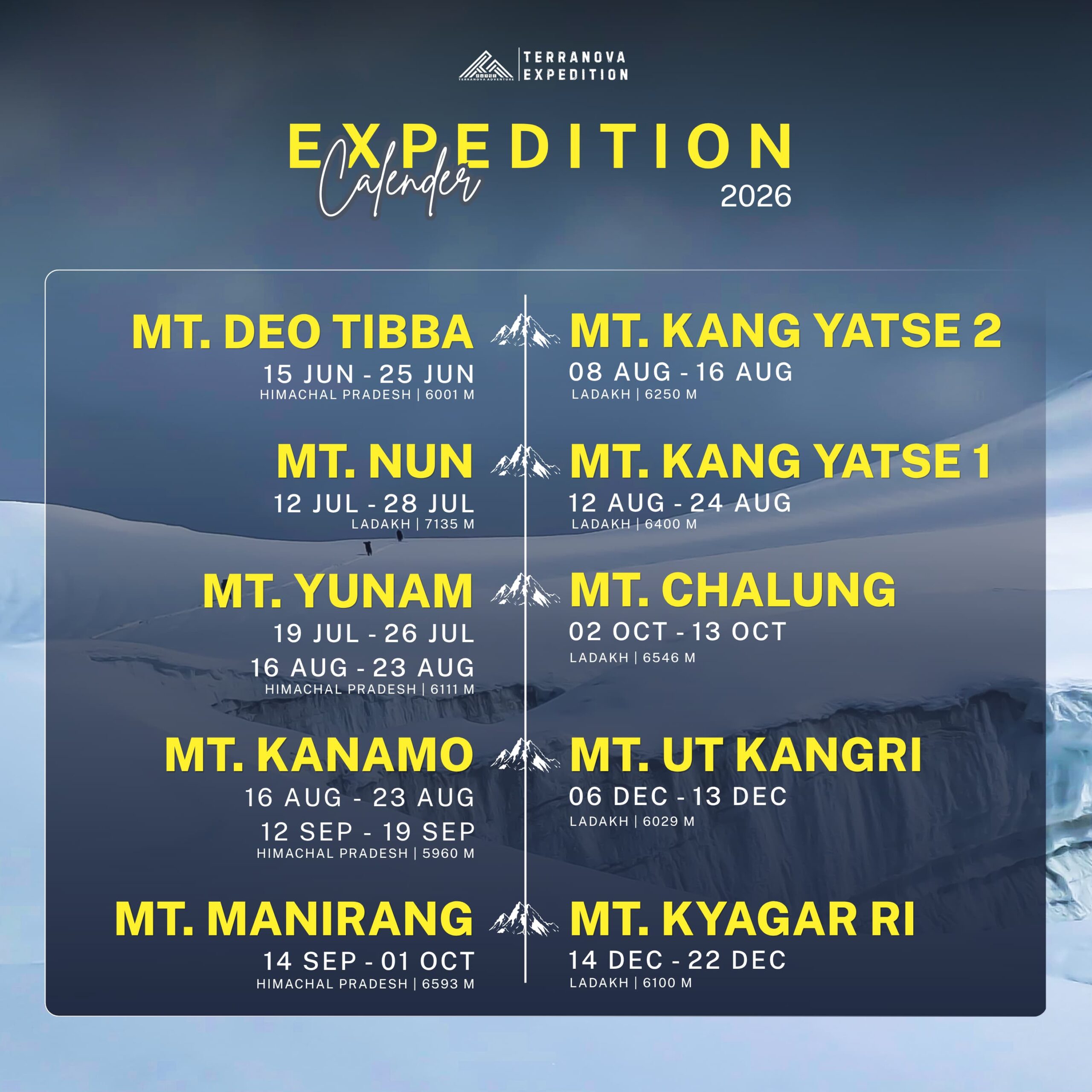
The Yunam Peak Expedition and Black Peak Expedition both offer the opportunity to climb above 6,000 metres in the Indian Himalayas, but they differ substantially in terrain, technical difficulty and expedition logistics. Yunam Peak, at approximately 6,111 metres in Himachal Pradesh’s Lahaul region, is generally approached from the Bharatpur – Baralacha La area and is often considered a suitable progression for experienced high-altitude trekkers.
The standard Yunam peak trek route is primarily associated with steep scree, rocky slopes, loose terrain and occasional snow, although altitude and weather remain serious challenges. Black Peak, at 6,387 metres in Uttarakhand, involves a longer wilderness approach and more sustained technical mountaineering, including glacier travel, crevasse hazards, steep snow and ice, and rope-based climbing.
The Yunam Peak Expedition Cost is generally lower because the standard expedition requires a different logistical and technical setup. Published Yunam package estimates commonly fall around ₹30,000, although the actual Yunam Peak Trek Cost depends on the operator, duration, inclusions and season. For mountaineers seeking their first 6,000-metre summit, Yunam may be a more appropriate progression after adequate preparation, whereas Black Peak is better suited to climbers with technical mountaineering training and experience. Neither should be considered an easy winter climb.
Why Winter 2026–27 Is an Important Preparation Period for Black Peak Climbers
For mountaineers planning a Black Peak Expedition in 2027, the approaching winter offers an opportunity to improve the skills and physical conditioning required for a successful expedition.
Preparation should begin with an honest assessment of previous high-altitude experience. Completing difficult Himalayan treks is valuable, but trekking experience alone does not automatically provide the technical competence needed for Black Peak.
Climbers should be familiar with crampon movement, ice-axe techniques, rope systems, glacier travel and basic crevasse rescue procedures. Formal mountaineering training is strongly recommended, particularly for those who have not previously climbed a technical Himalayan peak.
Physical conditioning should focus on cardiovascular endurance, leg strength, load-carrying capacity and recovery between demanding days. Black Peak requires sustained effort over multiple days, and climbers must remain capable of performing technical tasks while fatigued and operating at high altitude.
Winter can also be a useful period for developing cold-weather judgment through suitable, professionally managed training activities. Understanding clothing systems, equipment handling, hydration, navigation and decision-making in snow is an important part of mountaineering preparation.
However, winter trekking experience should not be confused with the ability to climb a technical 6,000-metre peak. A progressive training approach, supported by qualified instructors and realistic expedition objectives, remains the safest route towards more demanding mountains.
Will Changing Snowfall Patterns Affect the Black Peak Expedition in 2027?
Changing mountain weather patterns are becoming an increasingly important consideration for Himalayan expedition planning. For Black Peak, the practical concern is how snow accumulation, precipitation timing, temperature fluctuations and seasonal melting affect the climbing route.
A season with heavy winter snowfall may leave extensive snow coverage on the mountain during spring. This can conceal crevasses and influence avalanche conditions, depending on the structure and stability of the snowpack.
Conversely, periods of reduced snow accumulation or unusually warm temperatures may expose more glacier ice and alter the condition of steep climbing sections. Neither scenario can automatically be described as safer.
It is important not to confuse individual snowfall events with evidence of a long-term climate trend. Establishing how climate change is affecting Black Peak specifically would require sustained observations of snowfall, temperature, glacier mass and route conditions over multiple years.
For the 2027 expedition season, current field observations will therefore be more useful than generalized predictions about whether the mountain will have more or less snow than previous years.
Professional expedition teams should review the condition of the approach, glacier, snow bridges, high camps and summit slopes before committing to a route. They should also monitor official weather forecasts and remain prepared to modify the expedition schedule if conditions change.
When Is the Best Time to Plan the Next Black Peak Expedition?
For most commercial mountaineering teams, May–June and September–October remain the commonly advertised climbing windows for Black Peak, subject to weather, route conditions and permissions.
The pre-monsoon period often provides an opportunity to climb after the winter snow accumulation season, although extensive snow coverage, concealed crevasses and unstable slopes may still present serious hazards.
The post-monsoon period can offer clear mountain views and relatively favourable visibility. However, exposed ice, changing glacier conditions and increasingly cold temperatures can make the technical sections demanding.
Neither period guarantees a successful or safe summit attempt. The best climbing window is ultimately determined by actual conditions on the mountain rather than a fixed calendar date.
For mountaineers planning a 2027 expedition, early preparation allows sufficient time to arrange technical training, equipment, permits, travel and acclimatization planning.
It also provides an opportunity to choose an expedition operator with appropriate experience and a clear approach to risk management.
Conclusion: After October, Black Peak Demands a Different Approach
The transition from autumn to winter fundamentally changes the nature of mountaineering on Black Peak. What may be a demanding but manageable technical route during an established climbing window can become considerably more complex when fresh snowfall, severe cold, unstable snow conditions and difficult access begin affecting the mountain.
The weather-related disruptions reported in Uttarkashi during late September and early October 2026 are an important reminder that Himalayan expedition planning must remain flexible. Although those reports do not establish a closure or precise conditions on Kalanag itself, they reinforce the importance of obtaining current, mountain-specific information before beginning an expedition.
For climbers planning the next Black Peak Expedition, winter 2026–27 is best viewed as a period for preparation, technical training and careful planning for the 2027 climbing season.
The objective should never be to reach the summit at any cost. Successful mountaineering depends on understanding the mountain, respecting seasonal conditions and making informed decisions about when to climb—and when to wait.
Frequently Asked Questions About Black Peak Expedition After October
1. Is Black Peak Expedition possible after October?
A specialized winter ascent may be technically possible for experienced mountaineers, but November through February is not a standard commercial climbing period. Any attempt requires suitable permissions, experienced leadership and favourable route conditions.
2. Does Black Peak officially close after October?
There is no verified mountain-specific closure order established by the sources reviewed for this article. Access depends on applicable protected-area regulations, expedition permissions and prevailing conditions. Climbers should verify the latest position with the relevant authorities.
3. What happens to the Kalanag climbing route during winter?
Winter can bring snow accumulation, concealed crevasses, wind-loaded slopes, hard ice, extreme cold and more difficult access to high camps. These conditions can significantly increase the complexity of the climb.
4. What is the best time for Black Peak Expedition in 2027?
May–June and September–October are the commonly advertised climbing windows. The actual suitability of any departure depends on weather, snow stability, glacier conditions and official permissions.
5. What is the Black Peak Expedition cost?
Published 2026 commercial packages reviewed for this article range from approximately ₹80,000 to over ₹1,60,000 per person, depending on the operator and inclusions. The final price for 2027 should be confirmed directly before booking.
6. Is Black Peak more difficult than Yunam Peak?
Generally, yes. Black Peak involves more technical glacier and ice climbing, while Yunam Peak’s standard route is usually less technical but remains physically demanding because of its altitude, loose terrain and weather exposure.
7. Can beginners attempt the Black Peak Expedition?
Black Peak is not recommended as a first technical mountaineering expedition. Climbers should gain appropriate training, high-altitude experience and practical rope and glacier-travel skills before attempting it.
8. How long does the Black Peak Expedition take?
Commercial itineraries commonly allocate approximately 15–17 days, although duration varies according to the operator, route, acclimatization plan and contingency days.
9. Is the Yunam Peak Trek suitable during winter?
The standard Yunam Peak climbing season is generally during the warmer months, particularly July–September. Winter conditions and access limitations can make a normal commercial ascent impractical.
10. What should climbers verify before booking a Black Peak Expedition package?
Climbers should verify permits, guide qualifications, technical equipment, acclimatization schedules, insurance, emergency evacuation arrangements, exclusions and the operator’s policy for weather-related changes.