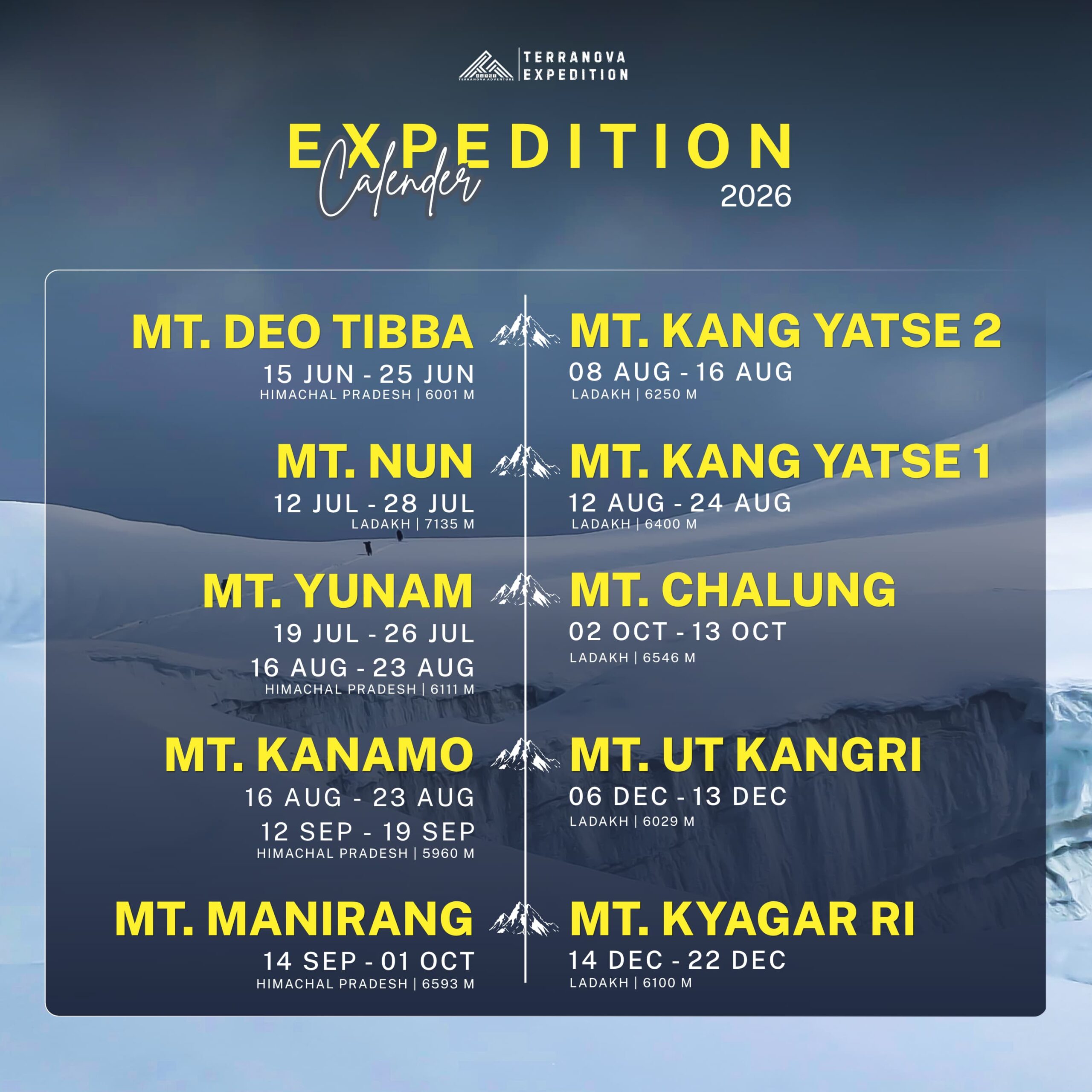
Kang Yatse II (6,250 metres / 20,505 ft) is one of the most popular and rewarding 6,000-metre expedition peaks in India. Located in the heart of Hemis National Park in Ladakh, the mountain rises above the spectacular Markha Valley, offering a perfect introduction to Himalayan mountaineering. Unlike Kang Yatse I, which demands advanced technical climbing, Kang Yatse II is a semi-technical expedition that combines high-altitude trekking, glacier travel, snow climbing, and basic mountaineering techniques. It is widely regarded as one of the best first 6,000-metre summits for experienced trekkers looking to transition into mountaineering.
The expedition begins with acclimatization in Leh before entering the scenic Markha Valley. The trail passes through traditional Ladakhi villages, Buddhist monasteries, river crossings, alpine meadows, and high-altitude camps at Nimaling and Base Camp. This gradual approach allows climbers to acclimatize naturally while enjoying breathtaking views of Kang Yatse, Dzo Jongo, and the surrounding Zanskar Range. Every day of the approach is carefully planned to prepare the body for the challenges of climbing above 6,000 metres.
Above Base Camp, the terrain transforms into snowfields, moraines, and glaciers. Climbers receive training in the use of crampons, ice axe, harness, and rope techniques before beginning the summit push. Although Kang Yatse II does not involve sustained technical rock climbing, the altitude, cold temperatures, steep snow slopes, and long summit day make it a physically demanding objective. Summit day typically begins before midnight and can take 10–14 hours, requiring endurance, determination, and disciplined pacing.
At Terranova Expeditions, our Kang Yatse II Expedition follows a structured itinerary with proper acclimatization, technical training sessions, experienced mountain guides, and conservative summit planning. We believe that success on a 6,000-metre mountain comes from preparation, not speed. Every aspect of the expedition is designed to maximize safety while providing climbers with an authentic Himalayan mountaineering experience.
Whether you are preparing for future technical expeditions or looking to climb your first Himalayan 6,000-metre peak, the Kang Yatse II Expedition offers an unforgettable combination of adventure, alpine scenery, and high-altitude achievement.
Kang Yatse II Expedition FAQs
1. Where is Kang Yatse II located?
Kang Yatse II is located in Hemis National Park in the Markha Valley of Ladakh, India. It is the western summit of the Kang Yatse massif and one of the most climbed 6,000-metre peaks in the Indian Himalayas.
2. What is the height of Kang Yatse II?
Kang Yatse II stands at 6,250 metres (20,505 feet) above sea level.
3. How difficult is the Kang Yatse II Expedition?
Kang Yatse II is graded Moderate to Difficult (Semi-Technical). While it does not require advanced technical climbing, it involves glacier travel, snow slopes, high altitude, and a demanding summit push.
4. Is Kang Yatse II suitable for beginners?
Kang Yatse II is not recommended for complete beginners. Climbers should have prior experience on at least one high-altitude trek above 4,500–5,000 metres and possess excellent physical fitness. Basic mountaineering skills are taught during the expedition.
5. What is the difference between Kang Yatse I and Kang Yatse II?
Kang Yatse II is a semi-technical trekking peak suitable for experienced trekkers aiming for their first 6,000-metre summit. Kang Yatse I is the higher and significantly more technical summit, involving steeper terrain, fixed ropes, and advanced mountaineering techniques.
6. What is the best time to climb Kang Yatse II?
The best climbing season is July to September, when Ladakh experiences relatively stable weather and favorable snow conditions.
7. How many days are required for the Kang Yatse II Expedition?
Most expeditions take 10–12 days, including acclimatization, technical training, summit attempt, and return to Leh.
8. What fitness level is required?
You should be able to:
- Trek for 8–10 hours a day
- Carry a loaded backpack
- Run 5–10 km comfortably
- Follow a structured fitness program for at least 8–10 weeks before the expedition
9. Is Kang Yatse II a technical climb?
Kang Yatse II is semi-technical. Climbers use crampons, ice axes, harnesses, and ropes on summit day, but there is no advanced rock or ice climbing involved. Training is usually provided before the summit attempt.
10. Is there a risk of altitude sickness?
Yes. Since the summit reaches 6,250 metres, proper acclimatization, hydration, gradual ascent, and following your expedition leader’s guidance are essential to reduce the risk of Acute Mountain Sickness (AMS).
11. Which permits are required?
The expedition requires permits for Hemis National Park and local administrative permissions. These are generally arranged by the expedition operator.
12. What equipment is required?
Essential equipment includes:
- Double-layer trekking or mountaineering boots
- Crampons
- Ice axe
- Harness
- Helmet
- Down jacket
- Glacier sunglasses
- Headlamp
- Sleeping bag
- Trekking poles
13. How long is the summit day?
Summit day generally begins around midnight and lasts 10–14 hours, depending on weather, snow conditions, and the pace of the group.
14. Is previous mountaineering experience necessary?
A formal mountaineering course is not mandatory, but previous experience on high-altitude treks above 5,000 metres is strongly recommended for a safe and enjoyable expedition.
15. What accommodation is provided during the expedition?
Accommodation usually includes:
- Hotels or guesthouses in Leh
- Alpine tents at higher camps
- Expedition tents at Base Camp
16. Is mobile network available during the expedition?
Mobile networks work in Leh, but connectivity becomes extremely limited after entering the Markha Valley.
17. What are the chances of reaching the summit?
Summit success depends on weather, fitness, acclimatization, and safe decision-making. A responsible expedition team never guarantees the summit, as safety always comes first.
18. How cold does it get on Kang Yatse II?
Temperatures at higher camps and during summit night can fall between -10°C and -20°C, with lower wind-chill temperatures.
19. What is the standard route for Kang Yatse II?
The standard route is:
Leh → Skiu → Markha → Hankar → Nimaling → Base Camp → Kang Yatse II Summit → Return to Leh.
20. Why choose Kang Yatse II as your first 6,000-metre expedition?
Kang Yatse II offers the perfect balance of high-altitude trekking, glacier travel, snow climbing, and basic mountaineering techniques without the advanced technical challenges of larger Himalayan peaks. It is widely regarded as one of the best stepping stones for climbers preparing for future technical expeditions.