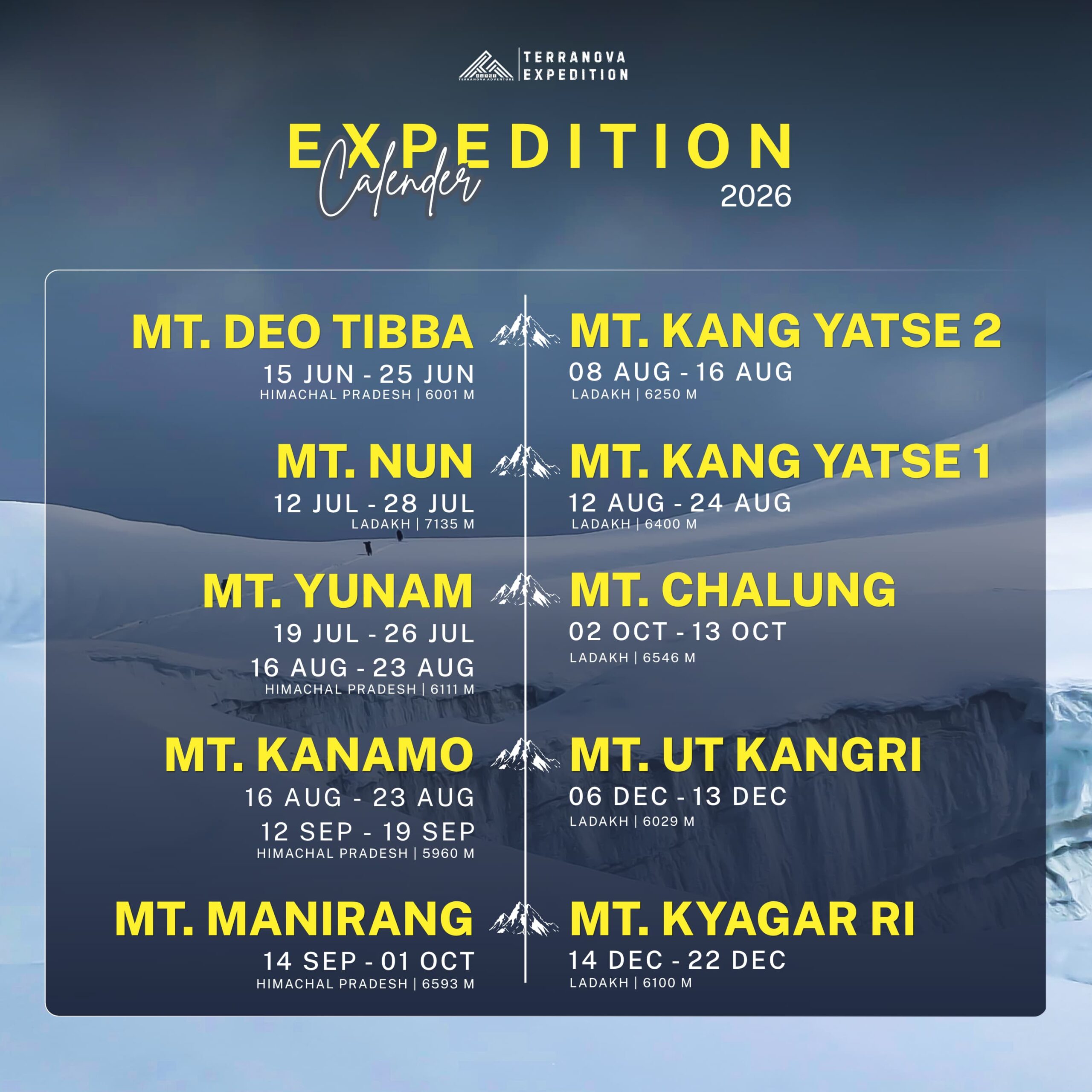
The Kang Yatse I Expedition is one of India’s most prestigious mountaineering adventures, offering experienced trekkers and aspiring alpinists the opportunity to climb a true Himalayan expedition peak at an elevation of 6,400 metres (20,997 ft). Located deep within the breathtaking Markha Valley National Park in Ladakh, Kang Yatse I combines stunning landscapes, high-altitude trekking, glacier travel, and technical snow climbing into one unforgettable Himalayan journey.
The Kang Yatse I Expedition 2026 is expected to attract climbers from India and around the world due to favourable climbing conditions, increasing interest in Himalayan mountaineering, and improved expedition logistics in Ladakh. Unlike trekking peaks that can often be climbed with limited technical experience, Kang Yatse I requires structured acclimatization, snow craft, glacier movement, and disciplined expedition planning.
For climbers who have already completed peaks such as Friendship Peak or Yunam Peak and are looking to progress towards more technical Himalayan expeditions, Kang Yatse I offers the perfect next challenge.
Bookings for Kang Yatse I Expedition 2026 Are Now Open
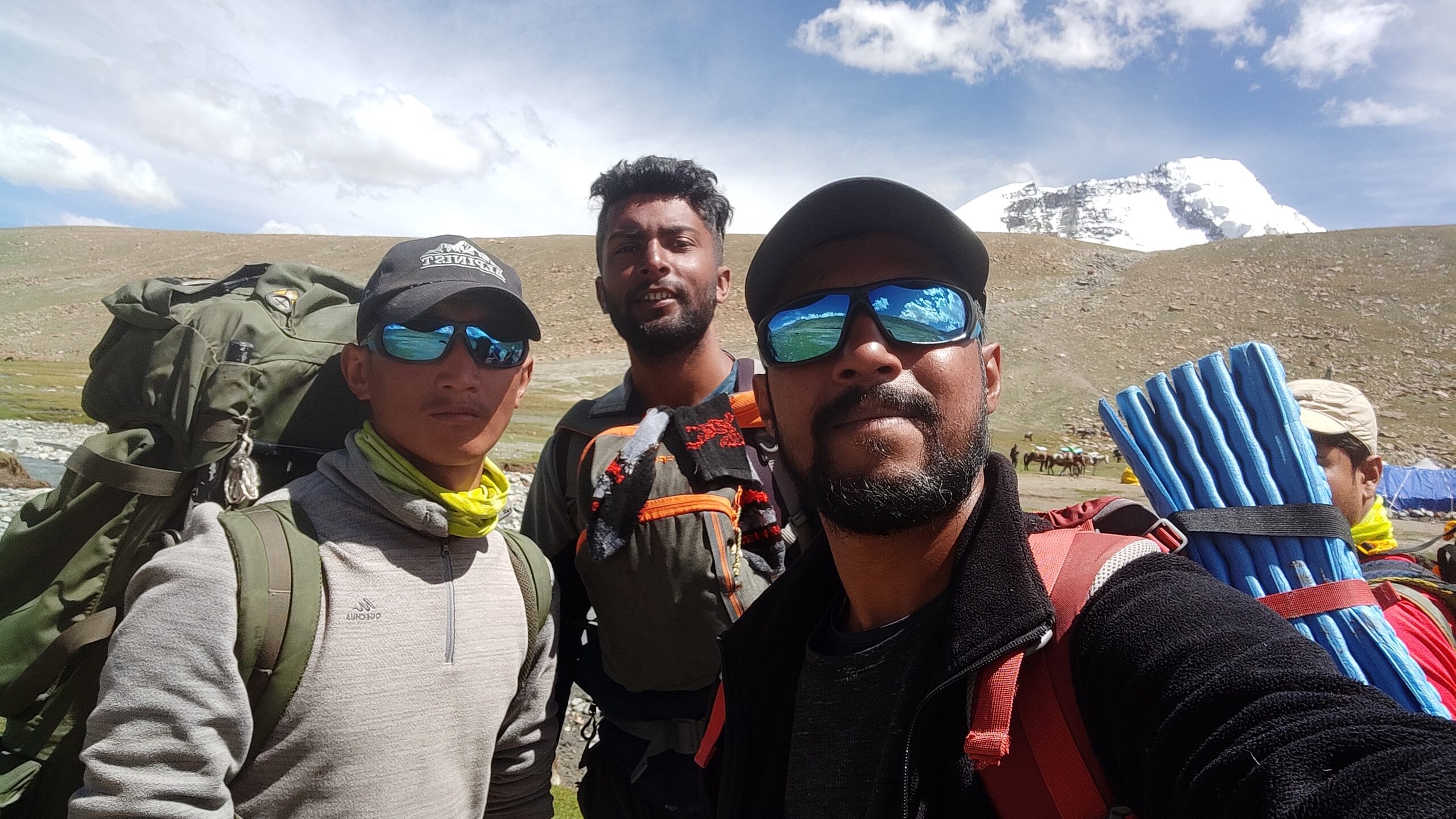
The Kang Yatse I Expedition 2026 with Terranova Expeditions is now open for bookings.
Our professionally guided expeditions are carefully designed to maximise safety, acclimatization, and summit success while providing participants with a genuine Himalayan mountaineering experience.
Every expedition includes:
- Certified expedition leaders
- Experienced climbing guides
- Complete expedition logistics
- High-altitude camping equipment
- Technical climbing support
- Fixed rope management
- Medical backup and oxygen support
- Nutritious expedition meals
- Weather forecasting and summit planning
- Small expedition teams for personalised guidance
Whether your goal is to complete your first technical Himalayan expedition or prepare for larger objectives such as Mt. Kun, Mt. Nun, Satopanth, or Shivling, the Kang Yatse I Expedition provides exceptional high-altitude experience.
Why the Kang Yatse I Expedition 2026 Season Is Special
The Kang Yatse I Expedition 2026 season promises excellent opportunities for climbers due to several favourable factors.
Stable Climbing Season
Between June and September, Ladakh experiences relatively stable weather compared to many other Himalayan regions. Longer periods of clear skies and reduced precipitation improve climbing conditions and increase the likelihood of successful summit attempts.
Exceptional Acclimatization Route
Unlike many expeditions that move rapidly to higher camps, Kang Yatse I follows the beautiful Markha Valley route. The gradual altitude gain through villages such as Sara and Markha allows climbers to acclimatize naturally while enjoying one of the most scenic trekking routes in the Indian Himalayas.
A True Himalayan Expedition
The Kang Yatse I Expedition introduces participants to all the essential aspects of expedition mountaineering, including:
- Glacier travel
- Snow climbing
- Fixed rope techniques
- Camp establishment
- High-altitude logistics
- Summit strategy
- Team coordination
These experiences prepare climbers for more demanding Himalayan peaks in the future.
Incredible Himalayan Views
From the summit, climbers are rewarded with panoramic views of:
- Kang Yatse II
- Stok Kangri region
- Karakoram Range
- Zanskar Mountains
- Markha Valley
- Endless snow-covered Himalayan peaks stretching across Ladakh
About the Kang Yatse I Expedition
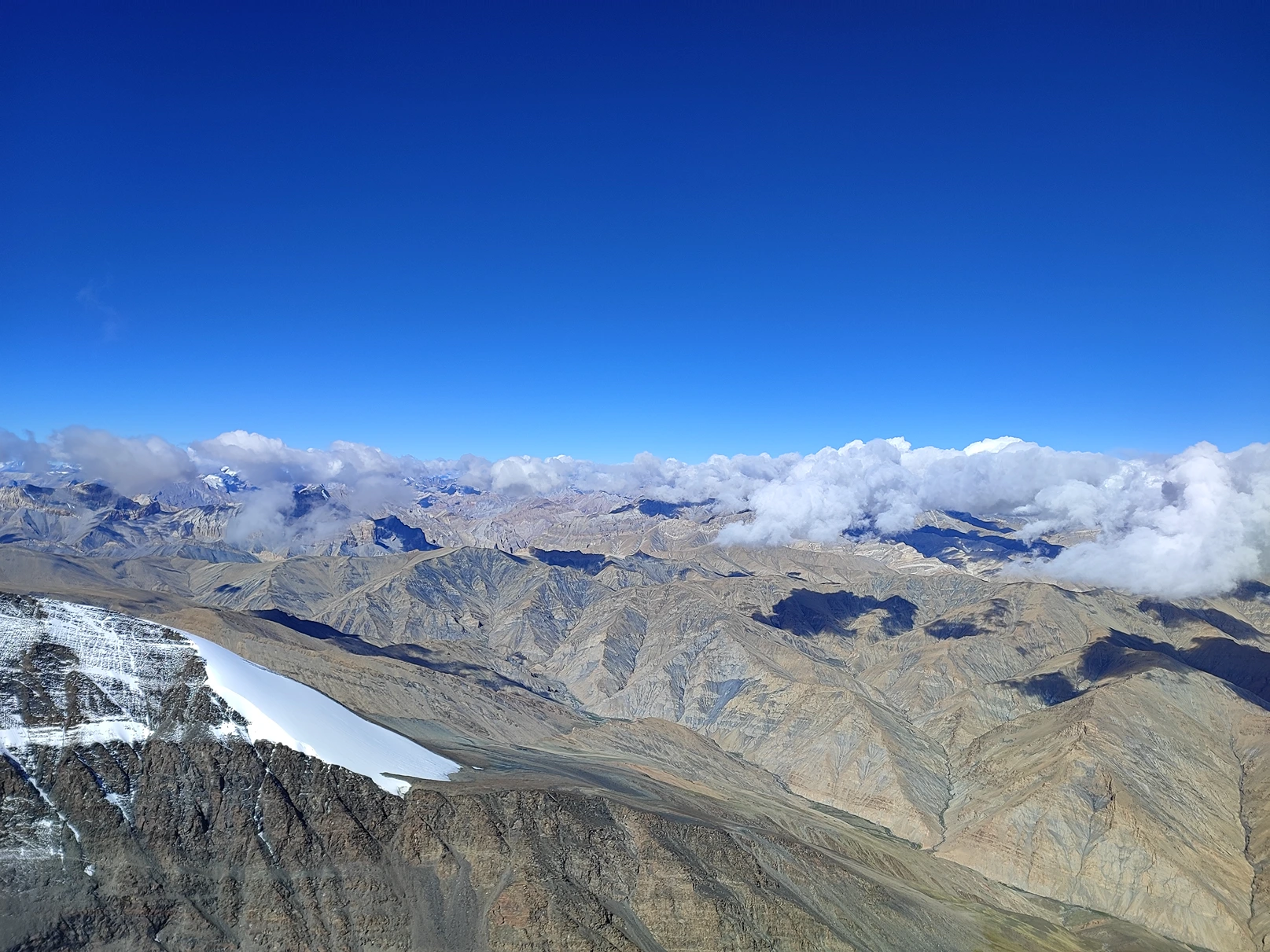
Standing proudly at 6,400 metres (20,997 feet), Kang Yatse I is one of the most sought-after expedition peaks in Ladakh. Located within the Hemis National Park, it rises dramatically above the famous Markha Valley, offering a spectacular combination of cultural trekking and technical mountaineering.
Unlike standard trekking routes, the Kang Yatse I Expedition is a complete alpine experience. Climbers spend several days gradually approaching Base Camp through remote Ladakhi villages before entering a high-altitude environment of glaciers, snowfields, and steep summit slopes.
Although the expedition is considered achievable for experienced trekkers with prior mountaineering training, it demands excellent physical fitness, mental resilience, and proper acclimatization. Climbers must be prepared for long summit days, technical snow sections, and the challenges of operating above 6,000 metres.
For those looking to progress from trekking into serious Himalayan climbing, Kang Yatse I represents a significant and rewarding milestone.
Location of Kang Yatse I
Kang Yatse I is situated in the Markha Valley of Ladakh, within the protected boundaries of Hemis National Park.
The expedition follows one of the most scenic routes in the Indian Himalayas:
Leh → Skiu → Sara → Markha → Thochungtsey → Kang Yatse I Base Camp → Camp I → Summit Camp → Kang Yatse I Summit → Kongmaru La → Chokdo → Leh
This gradual approach provides excellent acclimatization while allowing climbers to experience Ladakh’s unique blend of Himalayan landscapes, Buddhist culture, traditional villages, and high-altitude wilderness.
Quick Facts About Kang Yatse I Expedition
| Detail | Information |
| Peak Name | Kang Yatse I |
| Elevation | 6,400 m (20,997 ft) |
| Mountain Range | Zanskar Range |
| Region | Markha Valley, Ladakh |
| National Park | Hemis National Park |
| Starting Point | Leh |
| Base Camp | Kang Yatse I Base Camp |
| Expedition Duration | 12 Days |
| Maximum Altitude | 6,400 m |
| Difficulty | Difficult (Technical Expedition) |
| Best Season | June to September |
| Expedition Style | High-Altitude Mountaineering |
History of Kang Yatse I
Kang Yatse I has earned a respected place among India’s classic Himalayan expedition peaks. Rising above the Markha Valley, it has long attracted mountaineers seeking a challenging ascent in one of Ladakh’s most spectacular mountain regions.
Unlike many trekking peaks, Kang Yatse I demands a combination of endurance, technical ability, and high-altitude experience. Over the years, it has become a preferred objective for climbers preparing for more advanced expeditions across the Himalayas.
The mountain’s location within Hemis National Park adds another dimension to the expedition. The journey passes through ancient Ladakhi settlements, centuries-old monasteries, and remote valleys rich in wildlife and cultural heritage before transitioning into the snow-covered alpine world surrounding the summit.
Today, the Kang Yatse I Expedition is regarded as one of the finest progression peaks for mountaineers aiming to develop technical skills while experiencing the dramatic landscapes of Ladakh.
Why Choose the Kang Yatse I Expedition?
The Kang Yatse I Expedition offers far more than the challenge of climbing a Himalayan peak. It is a complete mountaineering experience that combines adventure, learning, culture, and personal achievement.
Experience True Himalayan Mountaineering
Unlike standard trekking adventures, Kang Yatse I introduces climbers to expedition-style mountaineering with glacier travel, snow climbing, fixed rope techniques, and high-altitude camping.
One of India’s Finest 6,400-Metre Peaks
Standing above the Markha Valley, Kang Yatse I provides an ideal progression for climbers aiming to transition from trekking peaks to more demanding alpine objectives.
Explore the Famous Markha Valley
The expedition begins with one of Ladakh’s most iconic trekking routes, passing through picturesque villages, colourful prayer flags, ancient monasteries, and dramatic mountain landscapes before reaching the expedition camps.
Learn Advanced Mountaineering Skills
Participants gain valuable experience in:
- Glacier movement
- Rope team travel
- Crampon techniques
- Ice axe use
- Fixed rope climbing
- Camp management
- Summit planning
- High-altitude decision-making
These skills become invaluable for future expeditions to higher Himalayan peaks.
Climb with Terranova Expeditions
At Terranova Expeditions, every Kang Yatse I expedition is planned with a strong emphasis on safety, acclimatization, and climber development. Our structured itinerary, experienced expedition leaders, dedicated training sessions, and carefully managed summit strategy are designed to maximise both learning and summit success while ensuring a safe and memorable Himalayan experience.
Complete Kang Yatse I Expedition Route Explained
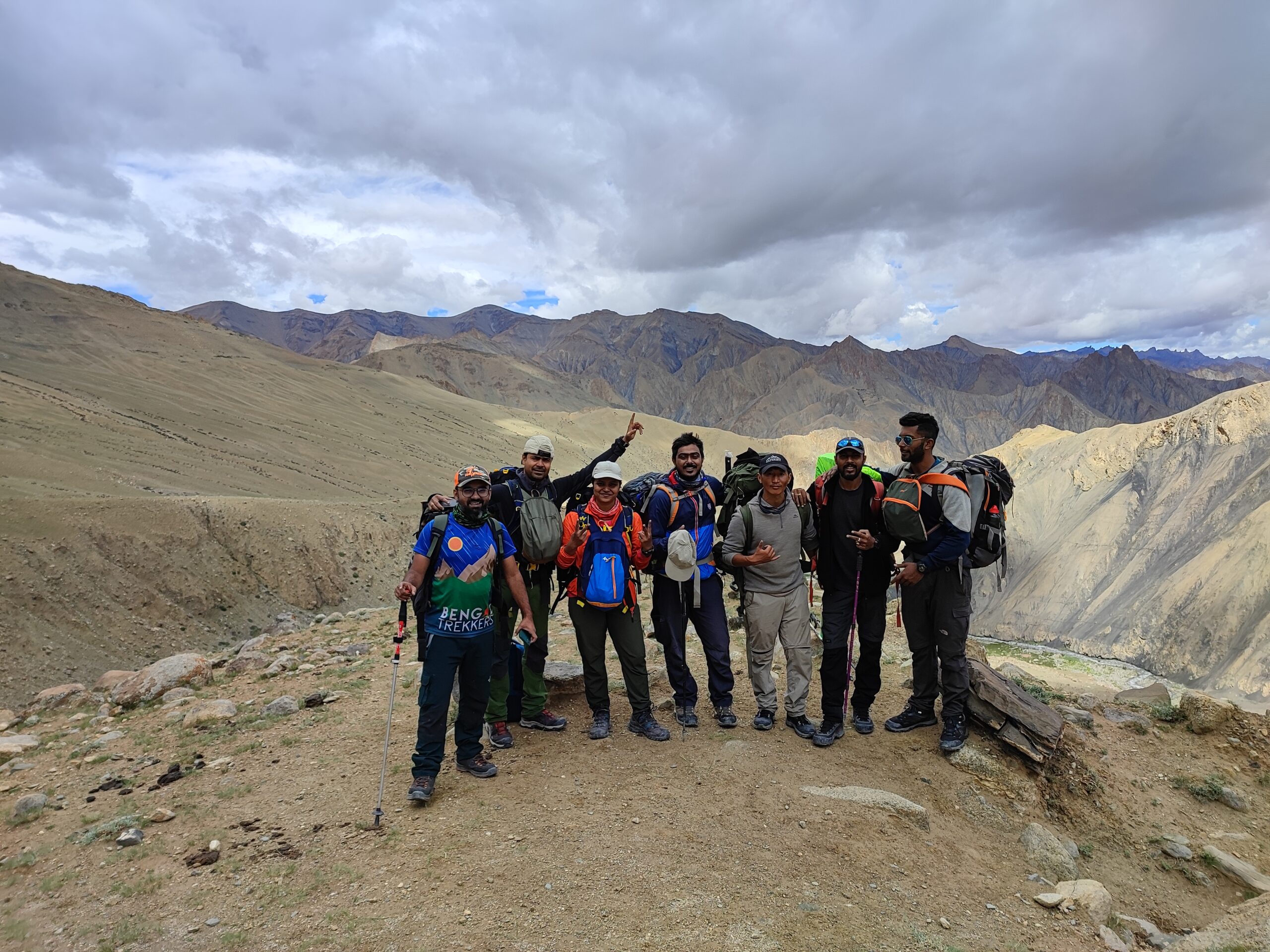
From Leh to the Summit of Kang Yatse I
The Kang Yatse I Expedition is far more than a summit climb—it’s an unforgettable journey through the heart of Ladakh. Unlike expeditions where climbers are quickly transported to Base Camp, Kang Yatse I follows the legendary Markha Valley, allowing participants to gradually adapt to altitude while experiencing the unique culture, landscapes, and wilderness of the Indian Himalayas.
The route passes through ancient Buddhist villages, river crossings, vast alpine meadows, high-altitude grazing lands, glacier valleys, and finally the snow-covered slopes leading to the majestic summit of Kang Yatse I (6,400 m).
This gradual progression is one of the biggest reasons why the Kang Yatse I Expedition 2026 enjoys a high acclimatization success rate. Every stage has been carefully designed to prepare climbers physically and mentally before entering the technical climbing phase.
Unlike shorter expeditions that rush towards higher camps, the Terranova Expeditions itinerary emphasizes proper acclimatization, technical preparation, and safe altitude gain—key factors that significantly improve the chances of a successful summit.
Kang Yatse I Expedition Route Overview
Leh → Skiu → Sara → Markha → Thochungtsey → Kang Yatse I Base Camp → Camp I → Summit Camp → Kang Yatse I Summit → Base Camp → Kongmaru La → Chokdo → Leh
This expedition combines one of Ladakh’s most beautiful trekking routes with a challenging high-altitude mountaineering objective.
Every campsite has been selected to provide gradual altitude gain, sufficient recovery, and optimal preparation before moving higher.
Day 1 – Arrival in Leh (3,500 m)
Your Kang Yatse I Expedition 2026 begins in Leh, the capital of Ladakh and one of the world’s highest permanently inhabited towns.
Surrounded by barren mountains, ancient monasteries, and the mighty Indus River, Leh serves as the perfect gateway to high-altitude expeditions across Ladakh.
After arriving, the Terranova Expeditions team welcomes participants and assists with hotel check-in before conducting the first expedition briefing.
The remainder of the day is intentionally kept light.
At 3,500 metres, the body immediately begins adapting to lower oxygen levels. Resting on the first day is essential for reducing the risk of Acute Mountain Sickness (AMS).
Participants are encouraged to:
- Stay hydrated
- Avoid strenuous activity
- Eat light but nutritious meals
- Avoid alcohol and smoking
- Take short walks around the hotel
Expedition Briefing
In the evening, the expedition leader conducts a comprehensive briefing covering:
- Complete expedition route
- Weather expectations
- High-altitude safety
- Medical protocols
- Team responsibilities
- Equipment inspection
- Communication procedures
- Waste management practices
Every participant’s gear is carefully checked to ensure it meets expedition requirements.
Why Leh Is Essential for Acclimatization
Unlike lower-altitude trekking destinations, Leh itself acts as the first acclimatization camp.
Spending the first night here allows the body to begin producing additional red blood cells, an important physiological adaptation that improves oxygen transport during higher stages of the expedition.
This gradual approach greatly increases the likelihood of a safe and successful summit.
Day 2 – Acclimatization Day in Leh (3,500 m)
The second day is entirely dedicated to acclimatization.
Although many first-time climbers are eager to begin trekking immediately, experienced mountaineers understand that patience at the beginning often determines success on summit day.
The objective is simple:
Allow the body to adapt before gaining further altitude.
Instead of remaining indoors all day, participants undertake a short acclimatization walk.
Depending on the schedule, this may include visits to nearby viewpoints or monasteries while maintaining a slow, relaxed pace.
Medical Monitoring
Throughout the day, expedition leaders monitor:
- Oxygen saturation (SpO₂)
- Pulse rate
- Hydration levels
- Appetite
- Sleep quality
- General health
Any early signs of altitude-related illness can be identified before entering remote mountain terrain.
Equipment Preparation
This is also the ideal opportunity to:
- Organize backpacks
- Adjust boot fitting
- Test trekking poles
- Arrange climbing gear
- Finalize personal clothing
- Pack expedition rations
Good organization at this stage reduces unnecessary stress later during the expedition.
Day 3 – Drive from Leh to Skiu & Trek to Sara (3,500 m)
The real expedition begins today.
After breakfast, the team drives through the spectacular Indus Valley towards Skiu, the official starting point of the trek.
The drive itself is breathtaking.
Along the route, climbers witness:
- Traditional Ladakhi villages
- Whitewashed monasteries
- Colourful prayer flags
- The Indus River
- Rugged desert mountains
- Dramatic geological formations
Upon reaching Skiu, backpacks are loaded, final adjustments are made, and the trekking phase officially begins.
Trek to Sara
The trail follows the beautiful Markha Valley, gradually ascending alongside the Markha River.
The walking is pleasant and allows participants to settle into a comfortable trekking rhythm.
The route passes through:
- Wooden bridges
- Willow groves
- Small farms
- Traditional stone houses
- Prayer wheels
- Ancient Mani walls
Unlike densely forested Himalayan trails, Ladakh presents an entirely different landscape—vast open valleys, dramatic rock formations, and endless mountain horizons.
Camp at Sara
Sara is a peaceful campsite situated beside the Markha River.
The evening offers stunning views of surrounding mountains as the first night under canvas begins.
For many participants, camping beneath Ladakh’s incredibly clear night sky becomes one of the expedition’s most memorable experiences.
Day 4 – Trek from Sara to Markha (3,900 m)
Today’s trek introduces participants to the cultural heart of the Markha Valley.
The trail follows the river while passing through traditional Ladakhi settlements that have preserved their unique Himalayan lifestyle for centuries.
The route includes:
- Suspension bridges
- River crossings
- Ancient monasteries
- Prayer walls
- Fields of barley
- Traditional mud-brick homes
The gradual altitude gain makes today’s trek particularly valuable for acclimatization.
Exploring Markha Village
Markha is the largest village in the valley and one of the most fascinating cultural highlights of the expedition.
The village features:
- Ancient monastery
- Traditional Ladakhi architecture
- Irrigated farmland
- Friendly local families
- Spectacular mountain backdrop
Here, trekkers experience a unique combination of Himalayan adventure and centuries-old Buddhist culture.
Acclimatization Continues
Although altitude now approaches 3,900 metres, the gradual progression allows most participants to adapt comfortably.
The expedition leader encourages:
- Drinking 4–5 litres of water
- Eating carbohydrate-rich meals
- Walking slowly
- Avoiding unnecessary exertion
These habits become increasingly important as the expedition moves higher.
Day 5 – Trek from Markha to Thochungtsey (4,298 m)
Today’s journey marks the transition from inhabited villages into true alpine wilderness.
As the expedition climbs above the last permanent settlements, the landscape changes dramatically.
Trees disappear.
Vegetation becomes sparse.
The valley widens into vast grasslands surrounded by towering snow-covered mountains.
The route offers increasingly spectacular views of Kang Yatse I, which now dominates the skyline.
First Close Views of Kang Yatse
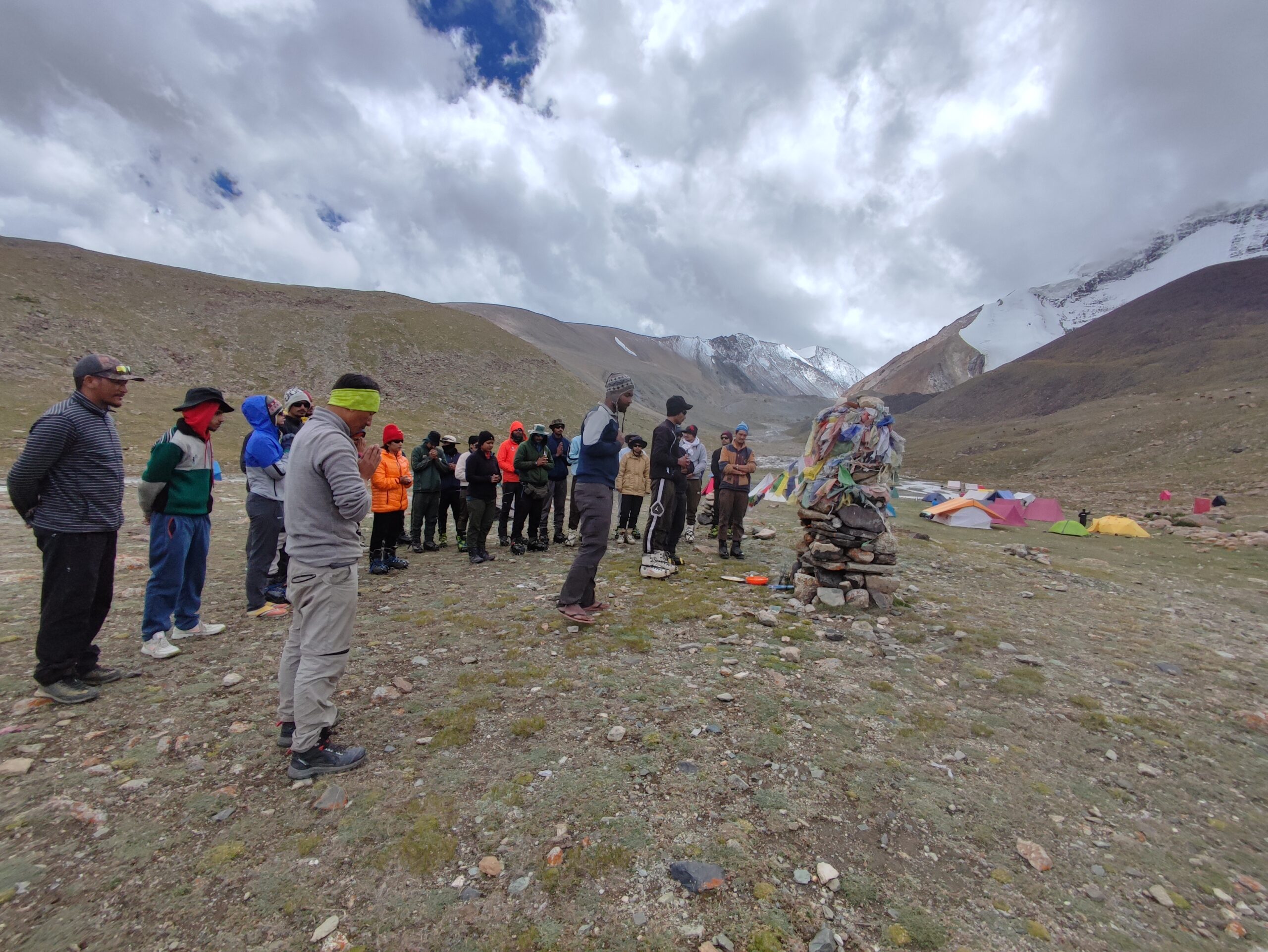
For many climbers, this is the moment when the expedition truly becomes real.
The summit that has inspired months of training now stands directly ahead.
Its snow-covered ridges, glacial slopes, and impressive summit pyramid create excitement throughout the team.
Wildlife Along the Route
The Markha Valley is part of Hemis National Park, one of India’s richest high-altitude wildlife habitats.
Depending on the season and a little luck, trekkers may encounter:
- Himalayan Blue Sheep (Bharal)
- Marmots
- Golden Eagles
- Himalayan Griffon Vultures
- Tibetan Snowcock
The elusive Snow Leopard also inhabits the region, although sightings are extremely rare.
Camp at Thochungtsey
Located in an expansive alpine meadow beneath Kang Yatse, Thochungtsey serves as the final trekking camp before entering expedition terrain.
The campsite offers panoramic views of glaciers, rocky ridges, and the towering summit above.
The atmosphere here becomes noticeably quieter.
Everyone understands that the mountaineering phase is about to begin.
Day 6 – Trek from Thochungtsey to Kang Yatse I Base Camp (5,100 m)
Today’s climb takes participants into a completely different world.
Leaving behind grassy meadows, the trail gradually transitions into rocky moraine, glacial debris, and snow patches.
Vegetation has almost completely disappeared.
The landscape is now dominated by:
- Massive glaciers
- Ice-covered slopes
- Rocky moraines
- High-altitude streams
- Snowfields
- Rugged mountain faces
Every step now reminds climbers they are entering one of the harshest yet most beautiful environments on Earth.
Arrival at Kang Yatse I Base Camp
Situated at approximately 5,100 metres, Base Camp serves as the operational centre for the expedition.
Here, climbers establish camp beneath the towering summit while preparing for the technical phase of the expedition.
The remainder of the day focuses on:
- Medical assessment
- Hydration
- Equipment organization
- Weather updates
- Team planning
- Rest and recovery
Expedition leaders carefully evaluate every participant before allowing progression to higher camps.
The mountain now stands directly overhead.
From this point onward, every decision is guided by safety, weather conditions, and the team’s readiness for the climb ahead.
Day 7 – Rest & Technical Training Day at Kang Yatse I Base Camp (5,100 m)
The seventh day of the Kang Yatse I Expedition is one of the most important stages of the entire journey. Although there is no major altitude gain, this day plays a decisive role in preparing climbers physically, mentally, and technically for the summit attempt.
Unlike trekking, where reaching camp often marks the end of the day’s activities, mountaineering demands continuous preparation. At 5,100 metres, even routine movements become more demanding due to the reduced oxygen levels. This is why the expedition deliberately pauses here—to allow the body to adapt while giving participants hands-on experience with technical climbing equipment.
The objective of the day is simple:
Build confidence before moving into the technical climbing phase.
Why a Rest Day Is Essential
Many first-time climbers wonder why an entire day is allocated to training instead of continuing directly towards the summit.
The answer lies in altitude.
At elevations above 5,000 metres, the body requires additional time to adjust to lower oxygen pressure. Rushing higher without adequate acclimatization significantly increases the risk of Acute Mountain Sickness (AMS) and reduces the likelihood of a successful summit.
This extra day allows climbers to:
- Recover from previous trekking days
- Improve acclimatization
- Practice technical climbing skills
- Test expedition equipment
- Build confidence before entering glacier terrain
- Prepare mentally for summit week
Experienced mountaineers often say:
“The summit is earned during acclimatization—not on summit day.”
Technical Mountaineering Training
The Kang Yatse I Expedition is a true mountaineering expedition rather than a high-altitude trek. Before progressing to higher camps, every participant undergoes comprehensive practical training under the supervision of experienced expedition leaders.
Training takes place on nearby snow slopes and glacier sections that closely resemble the terrain encountered during the summit climb.
Crampon Walking Techniques
Learning to walk efficiently in crampons is one of the first skills taught.
Participants practice:
- Flat-foot technique
- French technique
- Front-pointing where required
- Walking on traverses
- Descending safely on snow
Proper crampon technique conserves energy while reducing the risk of slips on steep snow slopes.
Ice Axe Techniques
The ice axe is one of the most important pieces of equipment during the Kang Yatse I Expedition.
Training includes:
- Correct grip
- Walking with an ice axe
- Self-belay techniques
- Step cutting (if required)
- Self-arrest on snow slopes
Mastering these techniques provides confidence during the summit ascent.
Rope Team Movement
As climbers move onto glaciers and steeper terrain, teamwork becomes essential.
Participants learn:
- Rope spacing
- Walking in rope teams
- Communication commands
- Efficient pacing
- Turning on steep slopes
- Managing rope tension
Good rope discipline is critical for maintaining safety on glaciated terrain.
Fixed Rope Practice
Certain sections of the Kang Yatse I Expedition Route may require fixed ropes depending on seasonal snow conditions.
Participants are introduced to:
- Clipping into fixed ropes
- Safe ascending techniques
- Descending while attached
- Anchor awareness
- Proper use of safety slings
These practical sessions ensure that every climber is comfortable before entering technical sections.
Glacier Safety
Although the glaciers on Kang Yatse are generally manageable, they still require respect and proper technique.
Training includes:
- Identifying crevasses
- Snow bridge awareness
- Safe glacier movement
- Emergency procedures
- Team coordination
Learning these skills transforms trekkers into confident expedition climbers.
Medical Monitoring
Throughout the day, expedition leaders carefully monitor every participant.
Regular health checks include:
- Oxygen saturation (SpO₂)
- Pulse rate
- Hydration status
- Appetite
- Fatigue levels
- Symptoms of altitude illness
Only participants who are acclimatizing well continue to higher camps.
Camp Life at 5,100 Metres
Life at Base Camp is very different from trekking camps lower in the valley.
Simple tasks such as:
- Walking
- Pitching tents
- Organizing equipment
- Cooking meals
require noticeably more effort due to reduced oxygen levels.
Despite these challenges, Base Camp offers an unforgettable atmosphere.
Towering glaciers surround the campsite while the magnificent summit of Kang Yatse I dominates the skyline.
As evening approaches, the mountain glows in shades of orange and gold before disappearing beneath thousands of stars.
Day 8 – Trek from Base Camp to Camp I (5,700 m)
After a successful training day, the expedition enters its technical climbing phase.
Today’s objective is to establish Camp I, situated at approximately 5,700 metres.
The route immediately becomes more demanding.
Leaving Base Camp behind, climbers enter glacial terrain where the landscape is dominated by snowfields, rocky moraine, and ice-covered slopes.
Every step now requires careful attention.
Entering High-Altitude Expedition Terrain
Unlike the trekking stages through Markha Valley, today’s route introduces participants to true alpine climbing.
Terrain includes:
- Snow slopes
- Glacier crossings
- Loose moraine
- Rocky ridges
- Ice patches
Progress becomes noticeably slower as altitude increases.
Frequent short breaks help conserve energy while allowing the body to adapt gradually.
First Views from Camp I
Upon reaching Camp I, climbers are rewarded with breathtaking views across Ladakh.
Visible peaks often include:
- Kang Yatse II
- Dzo Jongo
- Stok Kangri region
- Endless ridgelines of the Zanskar Range
The campsite itself is exposed, remote, and dramatically beautiful.
Every tent is securely anchored against strong mountain winds.
Living Above 5,700 Metres
Sleeping at nearly 5,700 metres is an entirely new experience for many climbers.
Participants often notice:
- Lighter sleep
- Faster breathing
- Reduced appetite
- Increased water requirements
Expedition leaders encourage climbers to drink plenty of fluids and consume carbohydrate-rich meals despite reduced appetite.
Proper recovery tonight plays a vital role in the following day’s ascent to Summit Camp.
Day 9 – Trek from Camp I to Summit Camp (5,900 m)
Although the altitude gain appears relatively small, today’s stage is one of the most demanding sections of the expedition.
The body is now operating in the extreme altitude zone, where oxygen levels are dramatically lower than at sea level.
Every movement requires greater effort.
The route follows:
- Steeper snow slopes
- Glacier terrain
- Rocky ridges
- Wind-exposed sections
The pace remains deliberately slow.
Expedition leaders constantly remind participants that conserving energy today is essential for summit success tomorrow.
Arrival at Summit Camp
Situated at approximately 5,900 metres, Summit Camp represents the final staging point before the ascent of Kang Yatse I (6,400 m).
Standing here, the summit appears remarkably close.
Yet every climber understands that the most difficult part of the expedition still lies ahead.
Final Summit Preparations
The remainder of the afternoon is dedicated entirely to preparing for summit day.
Participants carefully organize:
- Summit clothing
- Crampons
- Ice axe
- Helmet
- Climbing harness
- Headlamp
- Spare batteries
- High-energy snacks
- Water bottles
- Down jacket
- Emergency supplies
Every item is checked repeatedly.
Small mistakes at this altitude can have serious consequences.
Summit Strategy Briefing
Before dinner, the expedition leader conducts the final summit briefing.
Topics include:
- Weather forecast
- Departure time
- Rope team assignments
- Fixed rope sections
- Turnaround timings
- Emergency evacuation procedures
- Communication signals
- Summit etiquette
Every climber understands both the objective and the safety protocols that will guide the summit attempt.
Rest Before Summit Day
Dinner is served early to maximise rest before the midnight wake-up call.
Although sleeping at 5,900 metres is often difficult, participants are encouraged to remain inside their sleeping bags, stay hydrated, and conserve as much energy as possible.
Outside the tents, the towering silhouette of Kang Yatse I rises against the star-filled Ladakhi sky.
Tomorrow, months of preparation, days of trekking, and countless hours of training will culminate in the summit attempt.
Summit Day – Climbing Kang Yatse I (6,400 m)
Every Himalayan expedition revolves around one defining objective—the summit. During the Kang Yatse I Expedition, summit day is the culmination of months of preparation, weeks of physical training, and several days of acclimatization across the breathtaking landscapes of Ladakh. It is the day when determination, technical skill, and teamwork come together to achieve one of India’s finest mountaineering objectives.
Standing at 6,400 metres (20,997 ft), Kang Yatse I is not merely a high-altitude trek—it is a true alpine expedition. Climbers must navigate glaciers, negotiate steep snow slopes, use technical climbing equipment, and maintain focus in an environment where oxygen levels are nearly half of those at sea level.
Success on the Kang Yatse I Expedition 2026 depends on much more than fitness. Proper acclimatization, technical training, weather conditions, teamwork, and disciplined decision-making all play equally important roles.
Day 10 – Summit Day: Kang Yatse I (6,400 m) & Return to Base Camp
Summit Altitude: 6,400 metres (20,997 ft)
Total Duration: 14–18 Hours
Difficulty: Technical & Extremely Challenging
Summit day begins long before sunrise.
Most summit attempts start between 11:30 PM and 1:00 AM, when snow conditions are firm, temperatures remain stable, and the risk of snow softening is minimal.
The silence around Summit Camp is broken only by the sounds of expedition members preparing in the darkness.
Headlamps illuminate the tents as climbers quietly organize their final gear.
Outside, temperatures often fall below –15°C, while wind chill can make conditions feel considerably colder.
Final Summit Preparation
Before leaving camp, every climber performs a meticulous equipment inspection.
Nothing is left to chance.
Essential summit equipment includes:
- Double-layer mountaineering boots
- Crampons
- Ice axe
- Climbing harness
- Helmet
- Ascender (Jumar)
- Safety sling and locking carabiners
- Headlamp with spare batteries
- Down jacket
- Waterproof outer shell
- Expedition gloves
- Balaclava
- Sunglasses
- High-energy snacks
- Insulated water bottles
The expedition leader personally verifies that every participant is properly equipped before the team begins climbing.
Leaving Summit Camp
Under a sky filled with countless stars, the expedition departs Summit Camp.
The first few hundred metres allow climbers to establish a steady rhythm.
No one rushes.
Mountaineering rewards consistency, not speed.
The only sounds heard are:
- Crampons biting into frozen snow
- Ice axes striking hard ice
- Gentle instructions from climbing guides
- The crunch of boots moving across the glacier
The line of headlamps slowly climbs into the darkness, each climber maintaining a measured pace behind the person ahead.
Climbing Above 6,000 Metres
As altitude increases, the effects of thin air become increasingly noticeable.
Above 6,000 metres, oxygen availability is dramatically reduced.
Even experienced mountaineers notice:
- Slower breathing
- Increased heart rate
- Frequent rest pauses
- Reduced physical performance
- Greater mental fatigue
Simple movements require significantly more effort.
The expedition leader continually reminds everyone:
“Slow is fast in the mountains.”
Maintaining a controlled pace conserves energy for the demanding final summit ridge.
Glacier Travel
The upper mountain is dominated by glacial terrain.
Depending on seasonal conditions, climbers move together in rope teams while crossing:
- Hard snowfields
- Glacier ice
- Snow bridges
- Frozen traverses
- Wind-loaded slopes
Every climber carefully follows the footsteps of the guide while maintaining consistent rope spacing.
Good teamwork becomes one of the most important safety measures on the mountain.
Fixed Rope Sections
As the gradient steepens, the route enters more technical terrain.
Depending on snow and ice conditions, fixed ropes are installed along key sections of the climb.
Participants use their safety equipment to ascend safely while following the expedition leader’s instructions.
Key techniques include:
- Proper clipping procedures
- Maintaining three points of contact
- Efficient use of the Jumar
- Controlled movement on steep terrain
- Safe transition at rope anchors
These technical sections distinguish the Kang Yatse I Expedition from lower-altitude trekking peaks and require concentration as much as physical strength.
The Final Summit Ridge
As dawn approaches, the first rays of sunlight illuminate the surrounding peaks.
The summit ridge appears both inspiring and intimidating.
Every step now feels heavier.
Breathing slows.
Conversation disappears.
Each climber focuses entirely on:
- Foot placement
- Controlled breathing
- Rope discipline
- Efficient movement
The summit is now visible, yet the final few hundred metres often feel like the longest of the expedition.
This is where months of preparation are truly tested.
Sunrise Over the Himalayas
Few moments compare with sunrise at over 6,000 metres.
As darkness gives way to daylight, an extraordinary panorama unfolds across Ladakh.
The surrounding mountain ranges gradually emerge beneath golden morning light.
From the upper slopes of Kang Yatse I, climbers witness spectacular views of:
- Kang Yatse II
- Dzo Jongo
- Stok Kangri region
- The Markha Valley
- Zanskar Range
- Karakoram Range
- Endless snow-covered Himalayan peaks stretching to the horizon
For many climbers, this sunrise alone justifies every challenge faced during the expedition.
Reaching the Summit of Kang Yatse I
Standing atop Kang Yatse I (6,400 metres) is an unforgettable achievement.
Months of disciplined training.
Days of trekking through Markha Valley.
Technical practice at Base Camp.
The long climb through snow and ice.
Everything culminates in this extraordinary moment.
The summit offers breathtaking 360-degree views across Ladakh’s highest mountain ranges.
For many climbers, this represents their first successful ascent above 6,000 metres, marking a significant milestone in their mountaineering journey.
Summit Celebration
Although emotions run high upon reaching the summit, time spent at the top remains limited.
The expedition leader carefully manages the summit stay.
Activities generally include:
- Summit photographs
- Group celebration
- Hydration
- Short recovery
- Weather assessment
Remaining at extreme altitude for extended periods increases fatigue and unnecessary exposure to cold and changing weather.
Before long, attention shifts towards the equally important task ahead.
The descent.
Why the Descent Matters More Than the Summit
Experienced mountaineers often repeat one simple principle:
“The summit is optional. Returning safely is mandatory.”
Many mountain incidents occur during descent when fatigue begins affecting judgement and coordination.
Descending requires just as much concentration as climbing.
Potential challenges include:
- Softening snow
- Hidden ice
- Fatigue
- Loose rocks
- Weather changes
- Reduced focus
Expedition leaders carefully control the team’s pace, ensuring everyone descends safely through every technical section.
Return to Base Camp
After descending past Summit Camp and Camp I, climbers eventually return to Kang Yatse I Base Camp.
The atmosphere is completely different from previous evenings.
There is a deep sense of accomplishment.
Stories are exchanged.
Photographs are shared.
The mountain that dominated every conversation throughout the expedition now stands behind the team as a successful chapter completed.
A warm meal and well-deserved rest await after one of the most demanding days of the expedition.
Day 11 – Recovery at Base Camp
Following summit day, the expedition intentionally slows down.
The body has endured prolonged exposure to extreme altitude, freezing temperatures, and significant physical exertion.
Recovery is therefore essential.
Throughout the day, climbers:
- Rehydrate thoroughly
- Consume high-calorie meals
- Stretch tired muscles
- Organize equipment
- Share summit experiences
- Rest before beginning the return journey
Medical checks continue to ensure every participant has recovered well after the summit climb.
For many climbers, this quieter day offers an opportunity to reflect on everything accomplished over the previous week.
Day 12 – Base Camp to Chokdo via Kongmaru La (5,236 m) & Drive to Leh
The final day of the Kang Yatse I Expedition remains an adventure in itself.
After leaving Base Camp, the team ascends towards Kongmaru La (5,236 metres), one of the most scenic mountain passes in the Markha Valley.
The trail rewards climbers with magnificent views of:
- Colourful sedimentary cliffs
- Deep mountain gorges
- High-altitude grasslands
- Snow-covered peaks
- Ancient geological formations
Crossing Kongmaru La marks the final major objective of the expedition before beginning the descent towards Chokdo.
From Chokdo, vehicles transport the team back to Leh.
Expedition Closure
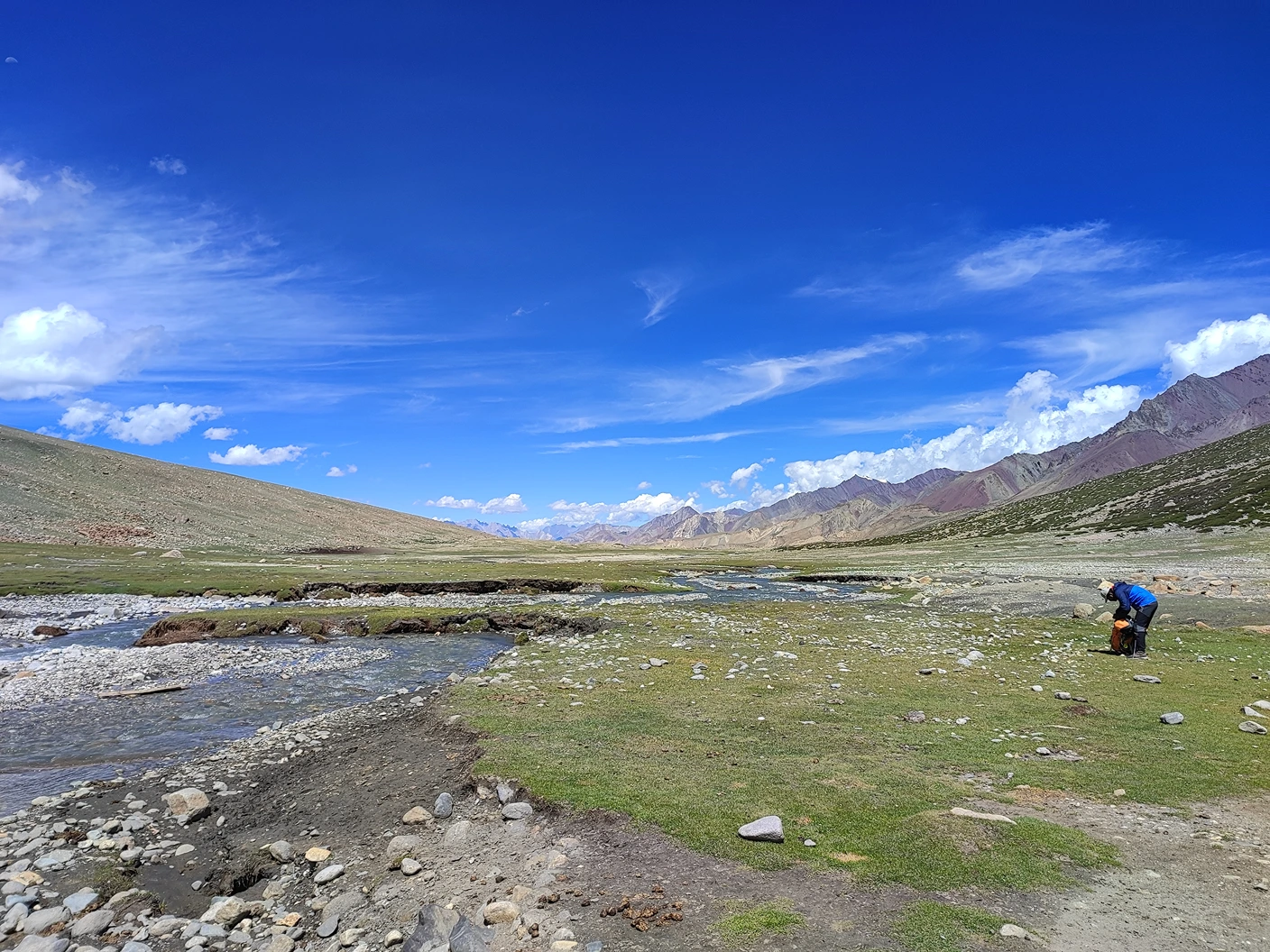
Returning to Leh marks the official conclusion of the Kang Yatse I Expedition 2026.
The closing ceremony celebrates the achievements of every participant.
It is a time to:
- Reflect on the journey
- Celebrate the summit
- Share expedition memories
- Thank guides and support staff
- Receive expedition certificates
- Capture final group photographs
Although the expedition officially ends here, the experience often inspires climbers to pursue even greater Himalayan objectives such as Mt. Nun, Mt. Kun, Satopanth, or Shivling.
For many mountaineers, Kang Yatse I is not simply another summit—it is the beginning of a lifelong relationship with the Himalayas.
Complete Kang Yatse I Expedition Itinerary
| Day | Destination | Activity |
| Day 1 | Leh | Arrival, briefing and acclimatization |
| Day 2 | Leh | Acclimatization day |
| Day 3 | Skiu – Sara | Drive and trek |
| Day 4 | Sara – Markha | Trek through Markha Valley |
| Day 5 | Markha – Thochungtsey | Trek and acclimatization |
| Day 6 | Thochungtsey – Base Camp | Trek to Kang Yatse I Base Camp |
| Day 7 | Base Camp | Technical training and acclimatization |
| Day 8 | Camp I | Trek to Camp I |
| Day 9 | Summit Camp | Trek to Summit Camp and final preparation |
| Day 10 | Kang Yatse I Summit (6,400 m) – Base Camp | Summit attempt and descent |
| Day 11 | Base Camp | Recovery and rest |
| Day 12 | Kongmaru La – Chokdo – Leh | Trek, drive and expedition closure |
Lessons Learned from the Kang Yatse I Expedition
The Kang Yatse I Expedition is about much more than climbing a 6,400-metre peak. It teaches patience during acclimatization, discipline on technical terrain, trust in teammates, and respect for the ever-changing conditions of the high Himalayas.
The journey through Markha Valley, the technical training at Base Camp, the challenge of establishing higher camps, and the final summit push together create an experience that transforms capable trekkers into confident mountaineers.
For many climbers, Kang Yatse I is not the destination—it is the gateway to even more ambitious Himalayan expeditions.
If you also wanted to do adventures activities then join us at Terranova Adventure .