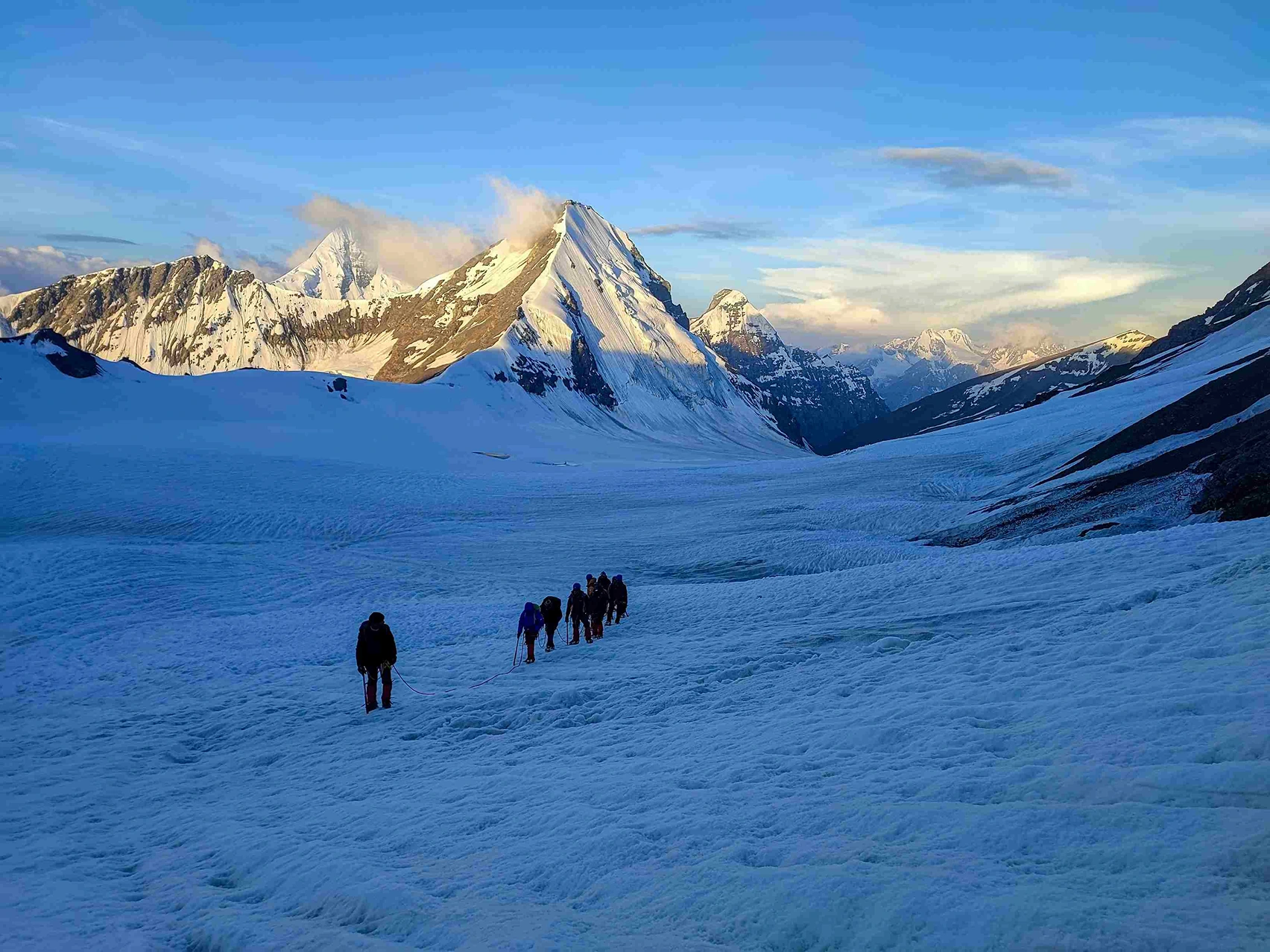
Some climbs stay with you not because they were smooth, but because they demanded everything from you. Mt. Shinkun West, rising to around 6,127 meters in the Lahaul region of Himachal Pradesh, is one such mountain.
Unlike more “popular” beginner peaks, Shinkun West Expedition does not ease you into the experience. It introduces you quickly to remote terrain, unpredictable conditions, and a blend of physical and technical challenges that test both preparation and mindset.
This success story is not about a perfect climb. It is about a real expedition—one that involved uncertainty, adjustments, fatigue, and ultimately, a summit that was earned through discipline rather than force.
The Start: A Different Kind of Mountain
From the beginning, Shinkun West felt different.
There was no large crowd, no heavily commercial route, and very little margin for casual mistakes. The approach itself hinted at the seriousness of the climb ahead.
The landscape in Lahaul is raw and exposed. Wide valleys, loose moraine, and distant snow-covered ridges create an environment that feels isolated. Unlike forested treks, there is no gradual emotional comfort here.
The mountain does not try to impress you—it simply exists, and you have to adjust.
Lesson:
Remote peaks demand more self-awareness. You cannot rely on external structure alone.
The Approach: Building Momentum Carefully
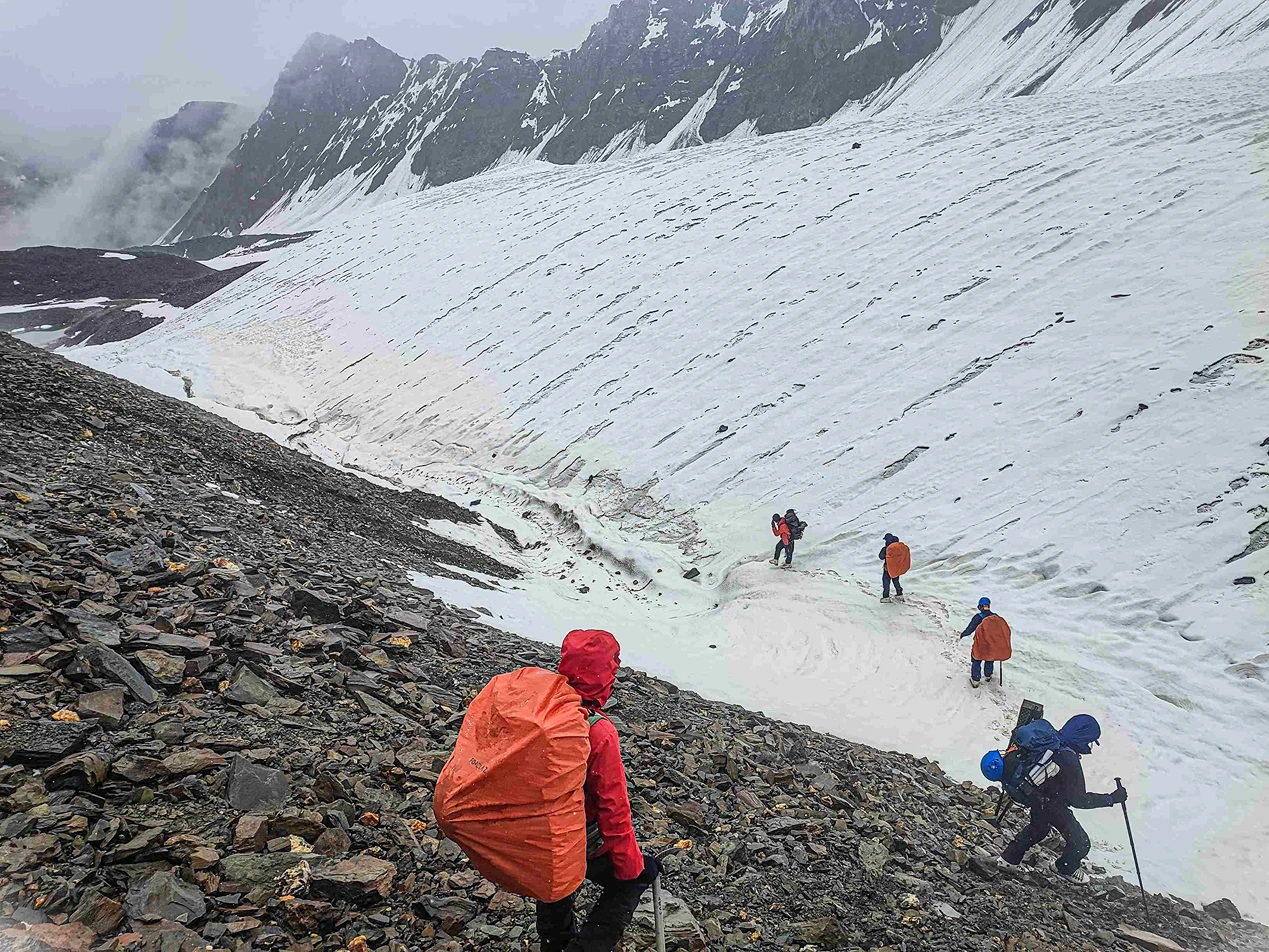
The initial days involved moving steadily through rocky terrain and glacial sections toward base camp.
At first, the body felt strong. The altitude had not yet fully taken effect, and movement felt controlled. But unlike lower-altitude treks, the fatigue here built quietly.
What helped during this phase was a conscious decision to maintain a consistent pace rather than pushing hard. Every day was approached as preparation for the next.
Hydration and nutrition were treated as priorities, even when appetite started dropping.
This stage did not feel dramatic, but it laid the foundation for everything that followed.
Lesson:
Strong beginnings are quiet. They don’t feel intense, but they set up your success.
Base Camp: Where Focus Begins
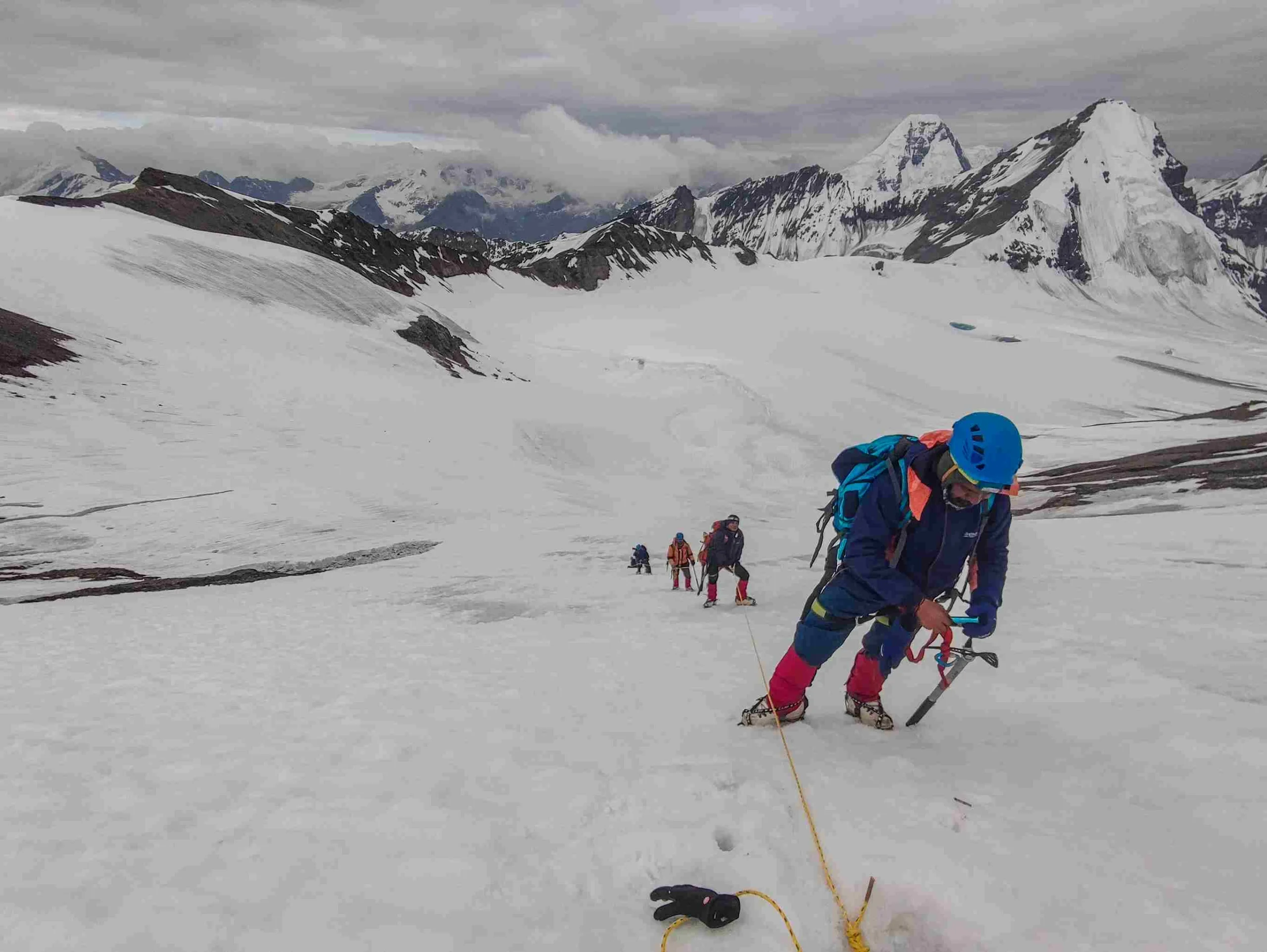
Base camp at Shinkun West marked the transition from trekking to climbing.
The terrain ahead was clearly more technical—glacier sections, snow slopes, and exposed areas that required attention. The environment felt colder and more serious.
Training sessions began again, even for those with prior experience. Practicing crampon use, rope movement, and ice axe techniques at altitude revealed small inefficiencies that needed correction.
This is where preparation shifted from general to specific.
The biggest challenge at base camp was not physical—it was mental adjustment. The realization that the summit would not come easily created a sense of pressure.
But instead of reacting to that pressure, the focus shifted to process.
Lesson:
At base camp, stop thinking about the summit. Focus on improving your system.
Acclimatization & Load Carry: The Real Work
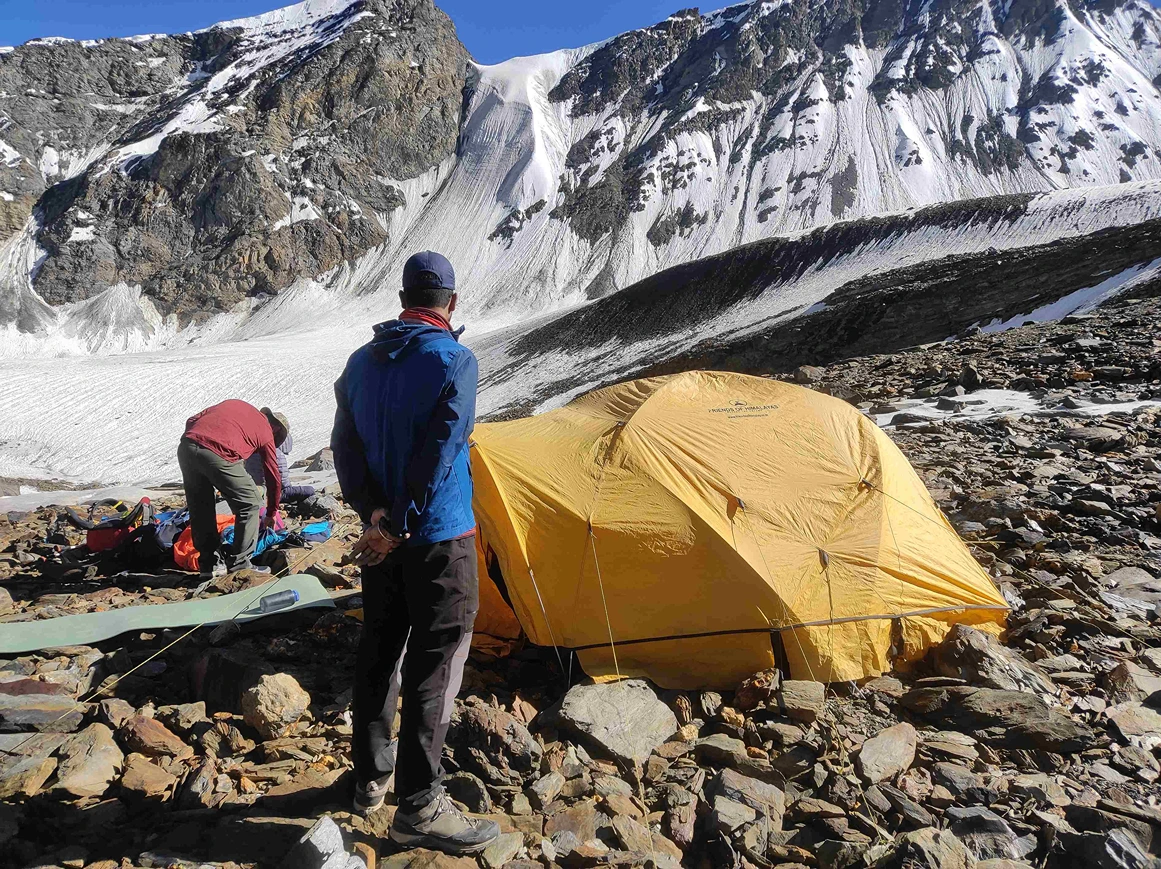
The acclimatization phase on Shinkun West was physically demanding.
Carrying loads to higher camps and returning to base camp required sustained effort at altitude. The terrain was uneven, and sections of the route demanded careful movement.
This phase tested endurance more than anything else. There were no shortcuts, no quick wins—just repeated effort.
At times, fatigue made the process feel slow and frustrating. But gradually, the body began adapting.
Breathing became more controlled. Recovery improved slightly. Confidence started building.
This was the turning point of the expedition.
Lesson:
Adaptation feels slow, but it is always happening. Trust the process.
Moving Higher: Entering Technical Terrain
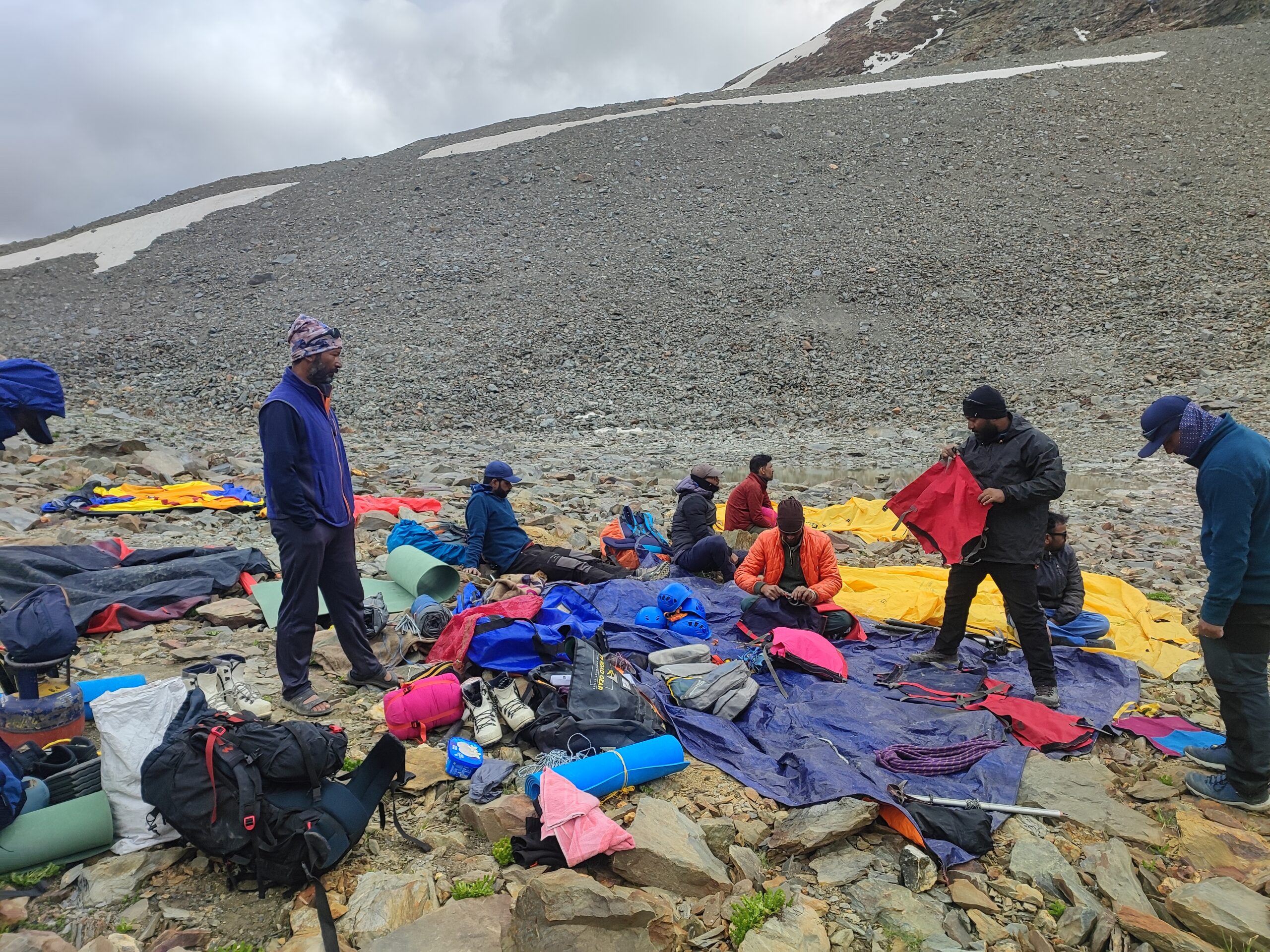
As the climb moved above base camp, the nature of the mountain became clearer.
The terrain involved a mix of glacier travel and snow slopes, with sections requiring rope support. Movement demanded attention, and mistakes were less forgiving.
The pace slowed naturally. Climbers focused more on technique than speed.
What stood out here was how important efficiency became. Every unnecessary movement cost energy. Every small mistake required correction.
This was not a place to push harder. It was a place to move smarter.
Lesson:
Technical climbing is not about strength. It is about precision.
High Camp: The Mental Shift
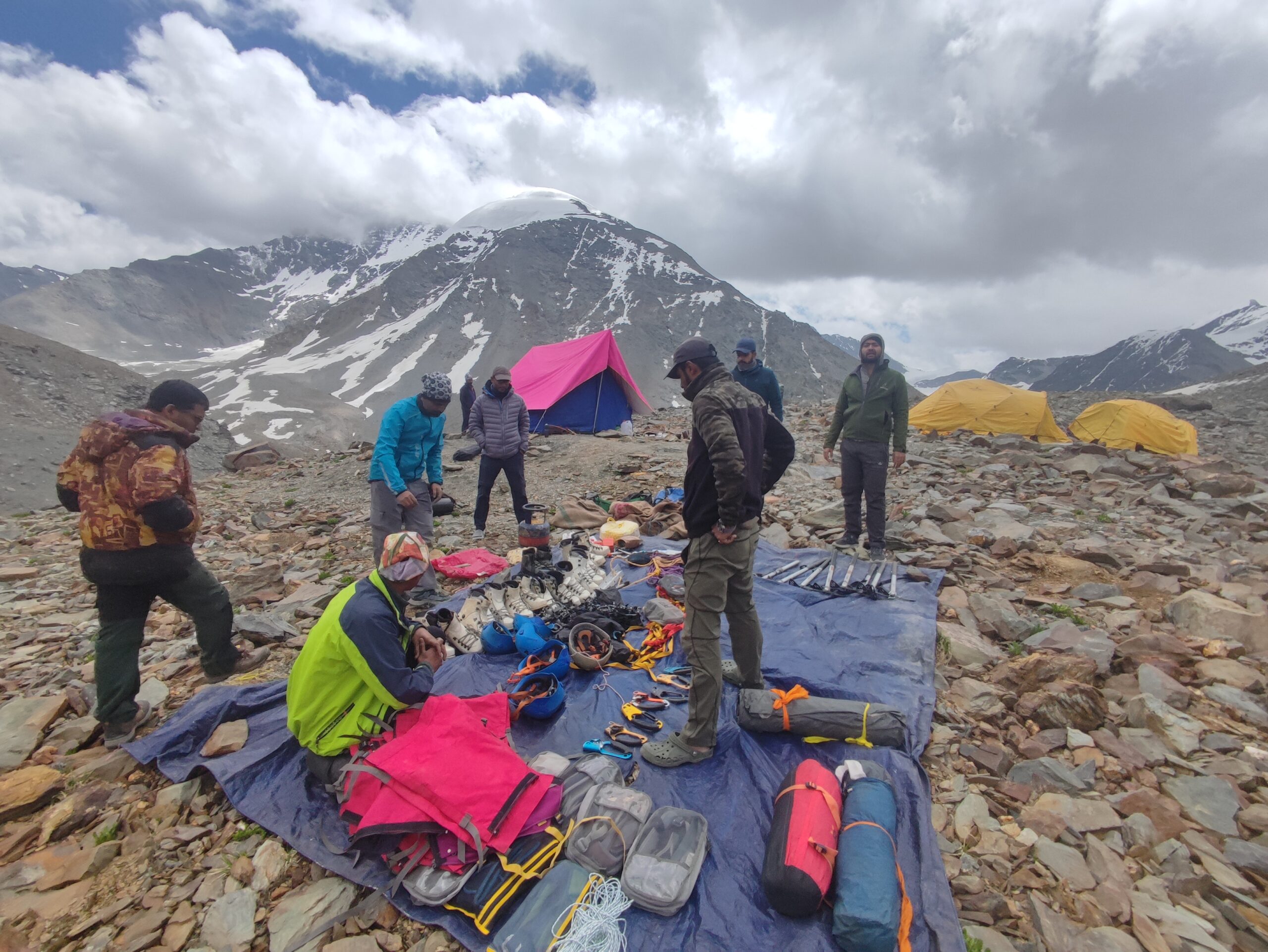
Reaching high camp brought a noticeable change in atmosphere.
The altitude was now significant. Breathing was heavier, movement slower, and energy levels lower. Even small tasks required effort.
There was also a quiet mental shift. Everyone knew the summit push was near.
Preparation became deliberate—gear organized carefully, layers planned, hydration maintained.
Sleep was limited, but rest was enough.
What mattered here was not comfort, but readiness.
Lesson:
High camp is not for recovery. It is for preparation.
Summit Push: Where Everything Comes Together
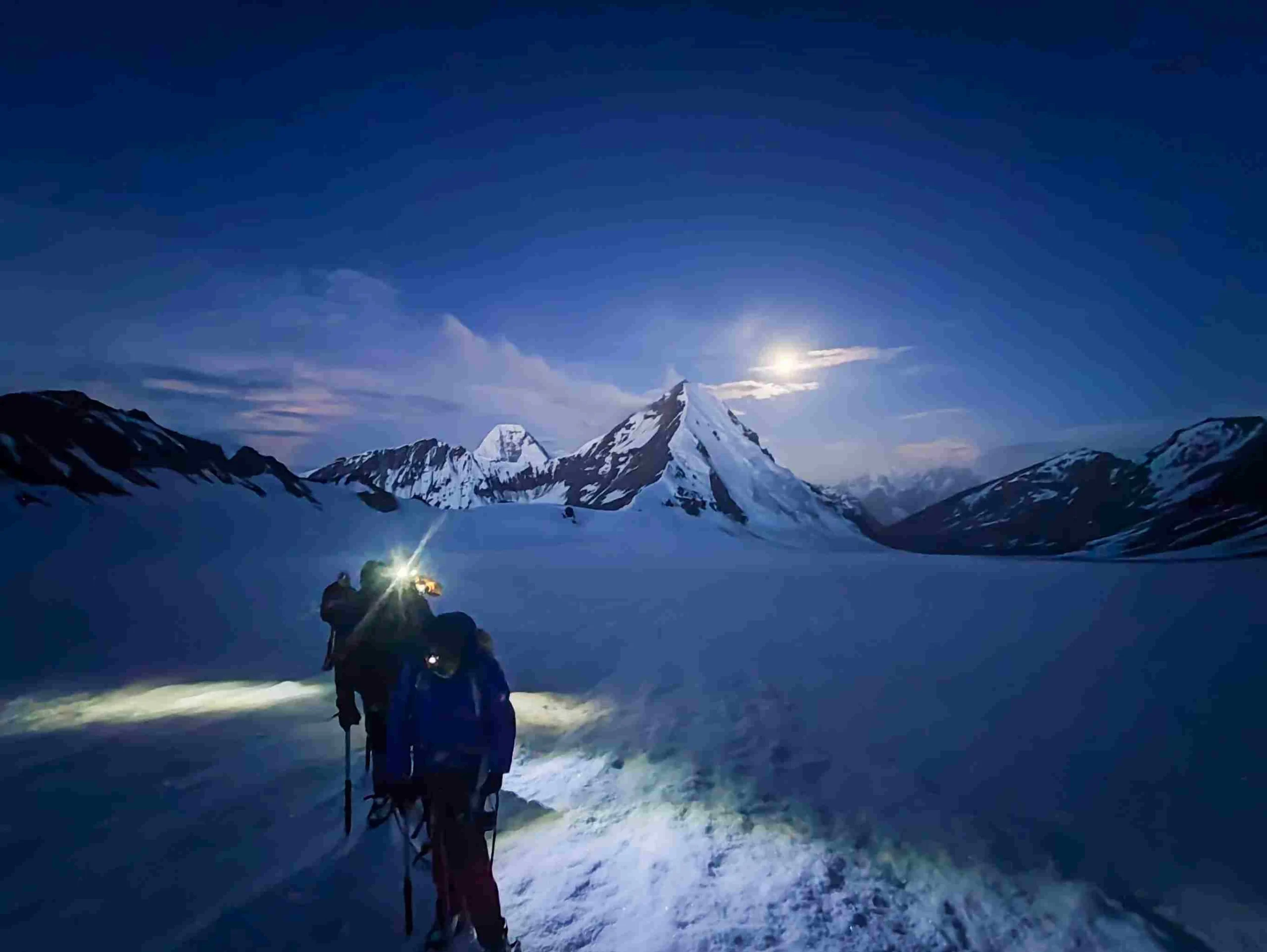
Summit day began in darkness, under cold and windy conditions.
The climb started slowly. Step by step, the team moved upward, maintaining a steady rhythm.
The terrain required focus—snow slopes, sections of firm ice, and areas where rope support was necessary. The altitude amplified every challenge.
Fatigue built up steadily. There were moments where stopping felt necessary, not optional.
But instead of pushing aggressively, the climb followed a controlled pace. Breaks were short. Movement remained consistent.
This approach made the difference.
The final stretch to the summit required full concentration. Every step mattered.
And then, after hours of effort, the summit was reached.
There was no dramatic celebration—just a quiet acknowledgment of what had been achieved.
Lesson:
At altitude, success comes from consistency, not intensity.
The Descent: Completing the Climb
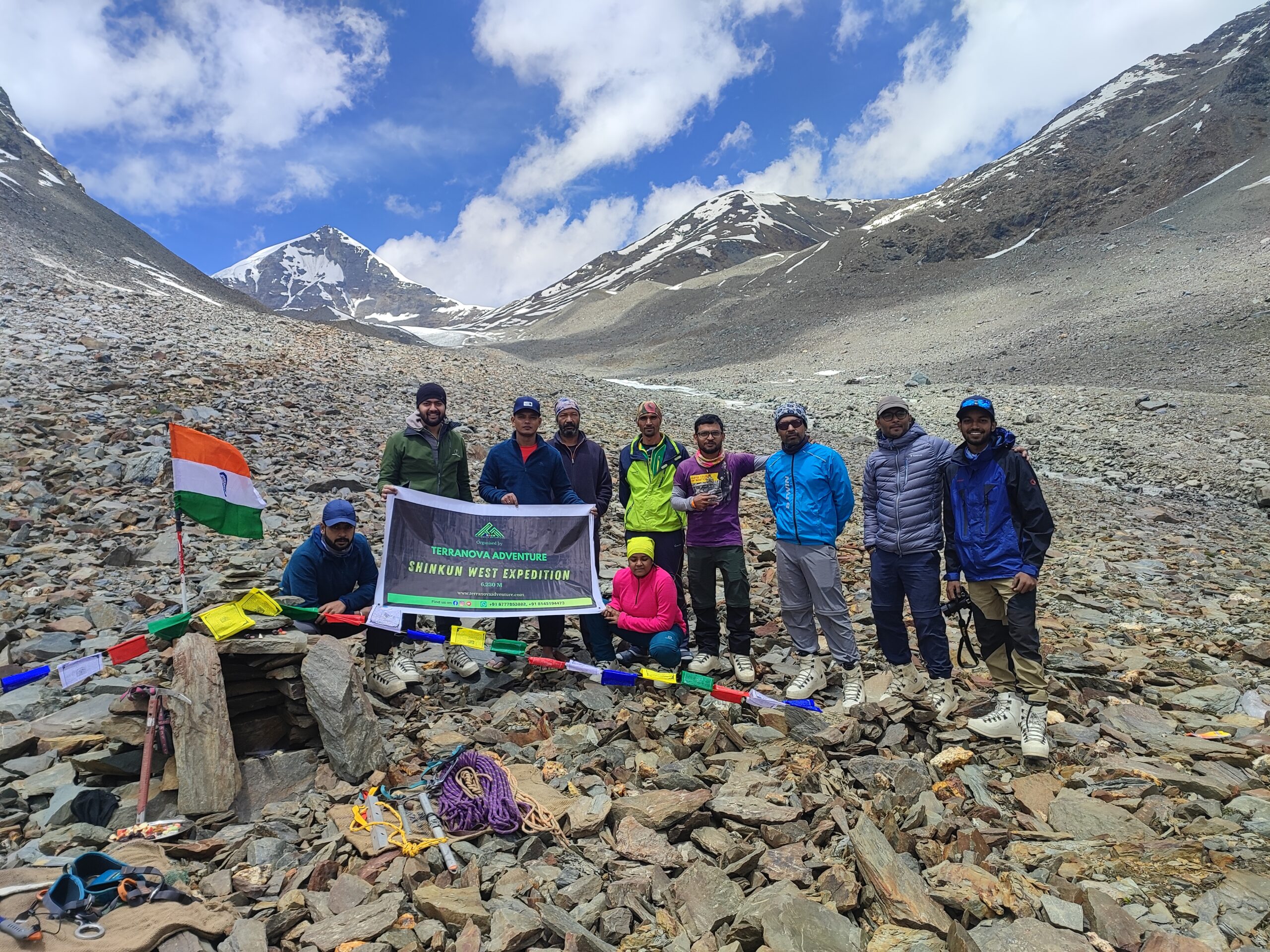
Descending from Shinkun West required just as much focus as the ascent.
Fatigue was at its highest, and concentration needed to be maintained. Loose sections and tired legs created additional challenges.
This is where discipline played a critical role. The same care taken during the climb up was applied during the descent.
There was no rush. Only controlled movement.
Reaching base camp safely marked the true completion of the expedition.
Lesson:
The climb ends only when you are back safely.
What Made This a Success
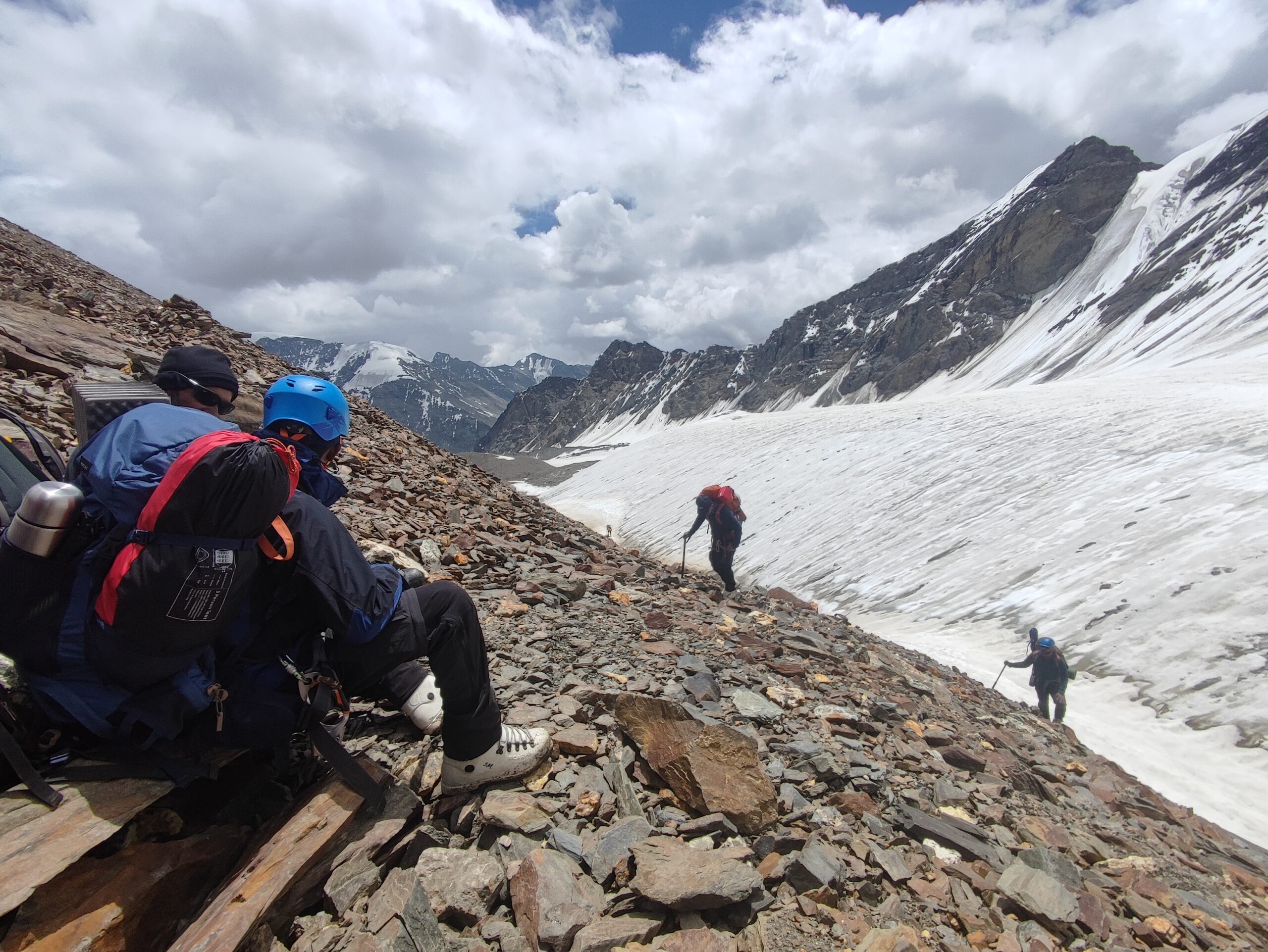
The success of this climb was not based on a single moment. It was built through multiple decisions made over several days.
Choosing to pace properly during the approach. Respecting acclimatization. Focusing on technique instead of speed. Managing energy rather than chasing progress.
Each of these decisions contributed to the final outcome.
There was no shortcut, no single breakthrough—just consistent execution.
Mistakes That Were Avoided
One of the key factors in this success was avoiding common mistakes.
There was no rushing during early days. Hydration and nutrition were maintained consistently. Symptoms were monitored and addressed early.
The team avoided unnecessary risks and stayed within controlled limits.
These choices reduced the chances of failure.
Lesson:
Avoiding mistakes is as important as making the right moves.
Who Should Attempt Shinkun West?
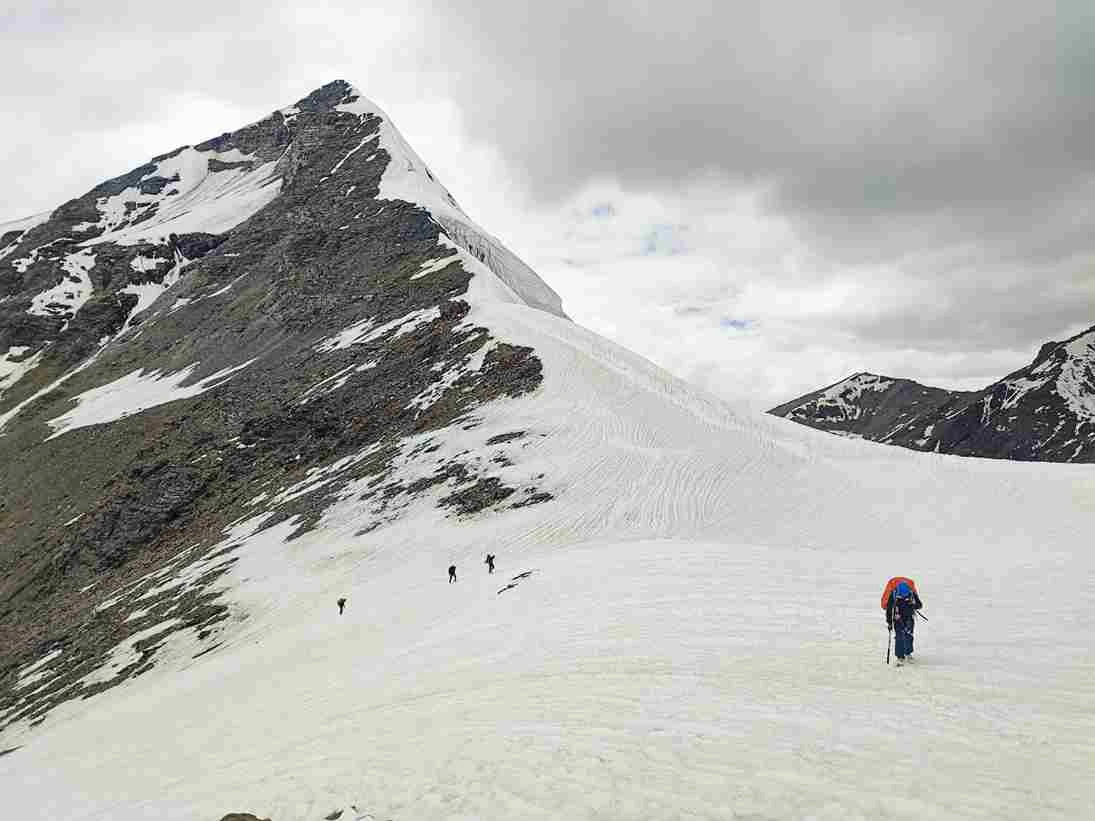
Shinkun West is suitable for climbers who have:
• Prior high-altitude experience (preferably above 5,000m)
• Basic mountaineering training
• Strong endurance and mental discipline
• Comfort with glacier and snow terrain
It is not a beginner-friendly trek. It is a serious entry-level expedition peak.
Final Takeaways
Shinkun West teaches control.
It shows you how to manage energy, how to move efficiently, and how to stay focused under pressure.
It reminds you that mountaineering is not about pushing limits blindly—it is about understanding them.
And most importantly, it reinforces the idea that success is built long before summit day.
Conclusion
The success on Mt. Shinkun West was not defined by the summit alone.
It was defined by the preparation, the discipline, and the decisions made throughout the climb.
Standing at the top was simply the visible result of everything that happened before.
Because in the mountains, success is never sudden.
It is always built—step by step.