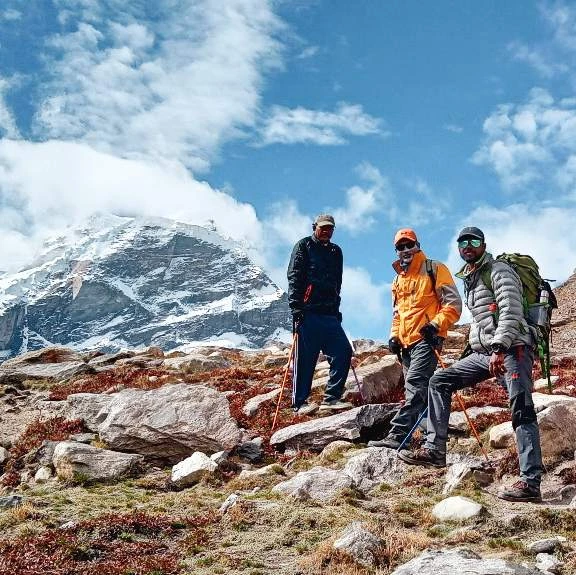
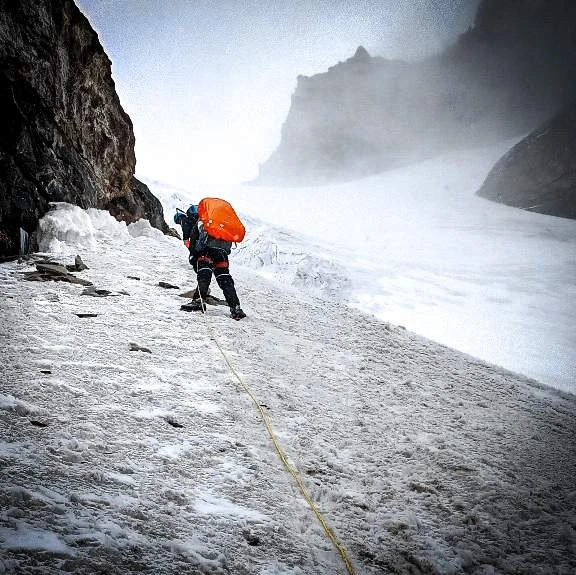
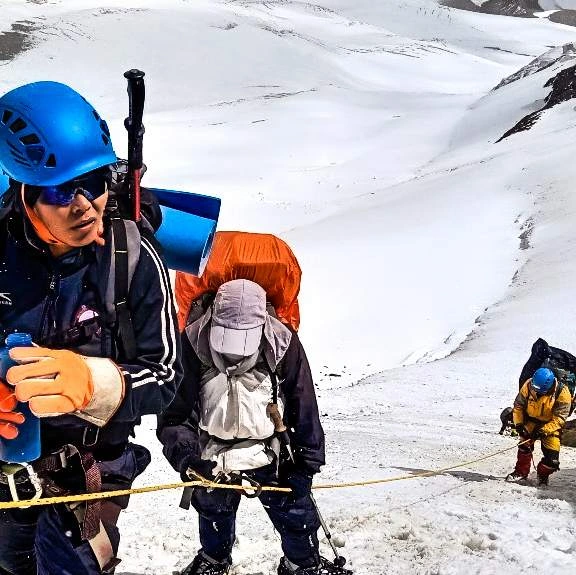
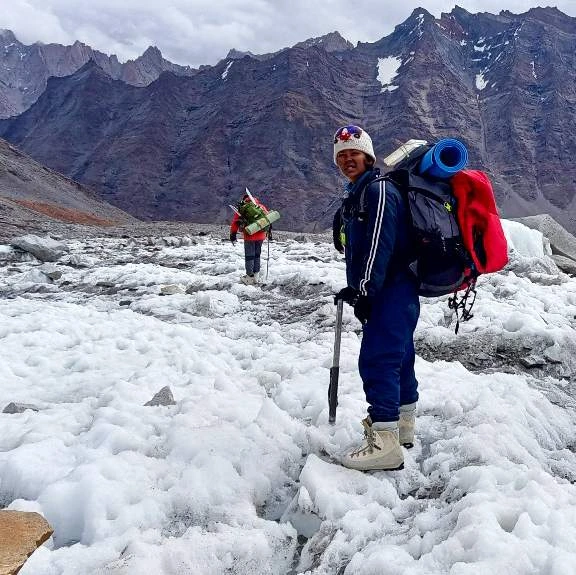
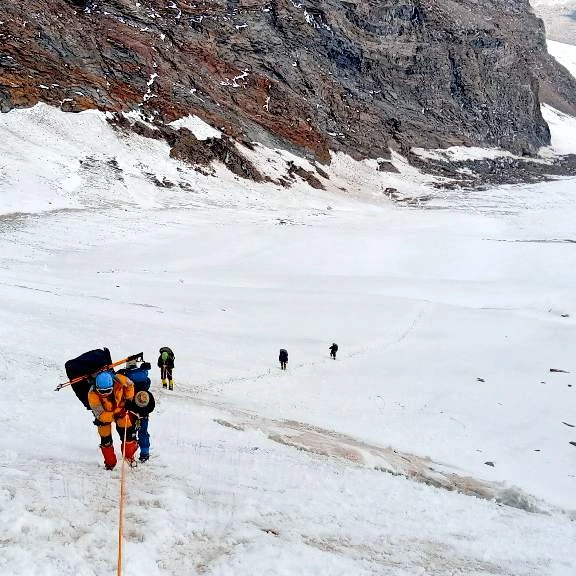
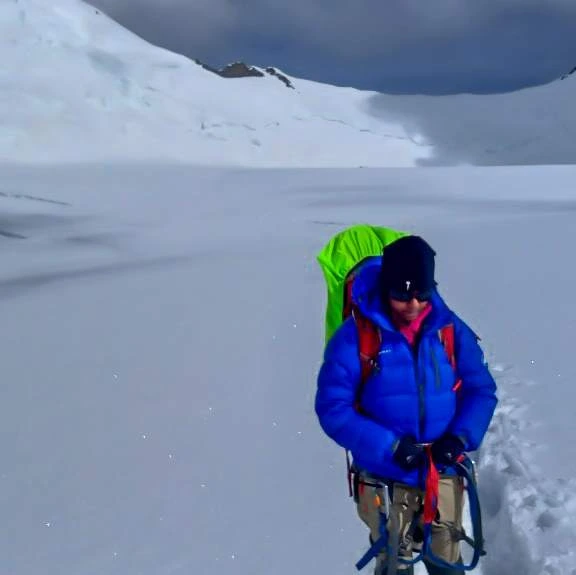
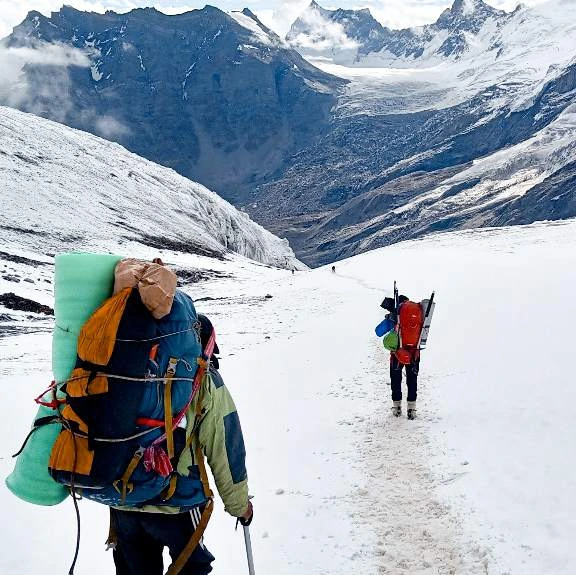
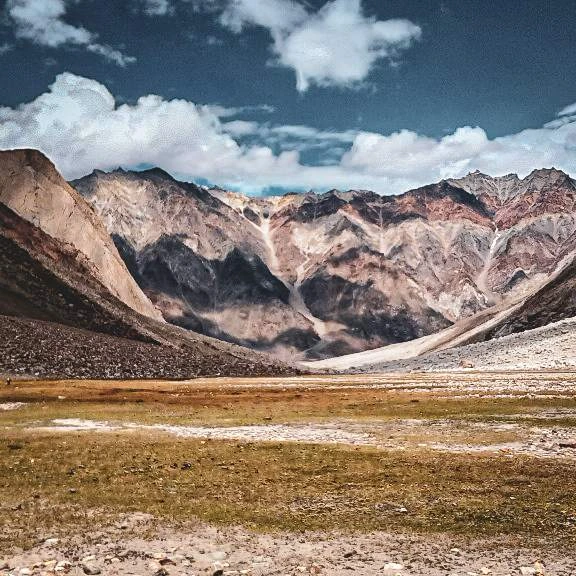
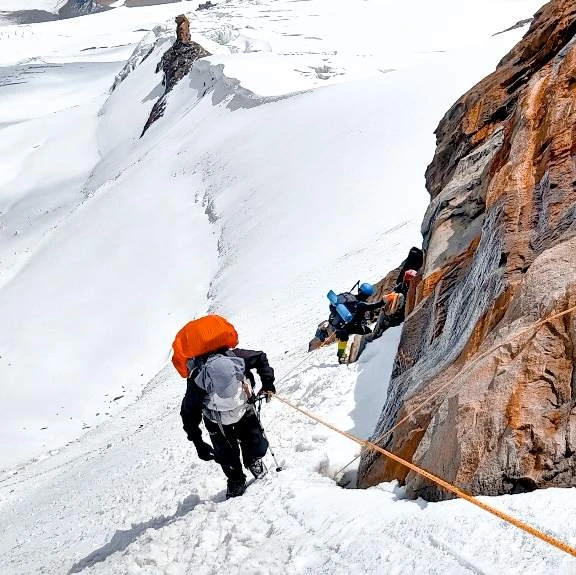
The Mt. Kun Expedition (7077 M) stands among the most demanding and prestigious 7000-meter Himalayan expeditions in India. Located in the remote and rugged Suru Valley of Ladakh, Mt. Kun is not merely a high-altitude climb—it is a true test of elite mountaineering skill, endurance, and expedition discipline.
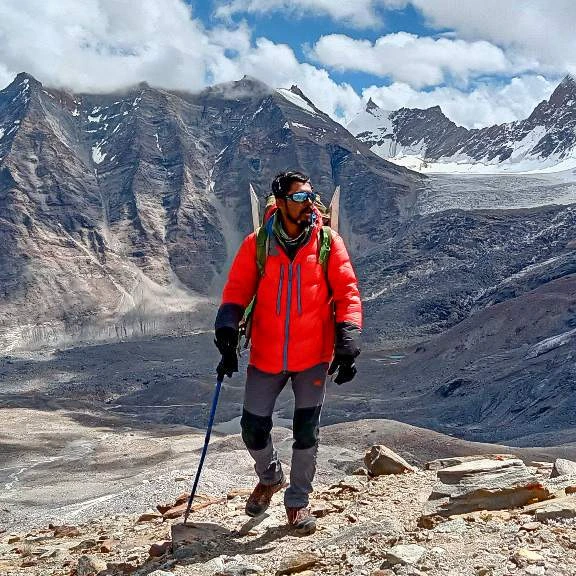
At 7,077 meters, Mt. Kun is the second highest peak entirely within Indian territory and forms part of the formidable Nun–Kun massif, which dominates the Zanskar range skyline. Unlike training peaks or introductory 6000-meter summits, Mt. Kun demands advanced technical proficiency, strong glacier travel skills, confidence on steep ice and snow faces, and the ability to operate efficiently for extended periods above 6,000 meters.
The expedition begins in Kargil (2,676 M), a historic Himalayan town that serves as the gateway to the Suru Valley. The initial days are intentionally structured for careful acclimatization, recognizing that long-term success on a 7000-meter peak depends on gradual altitude exposure rather than aggressive ascent.
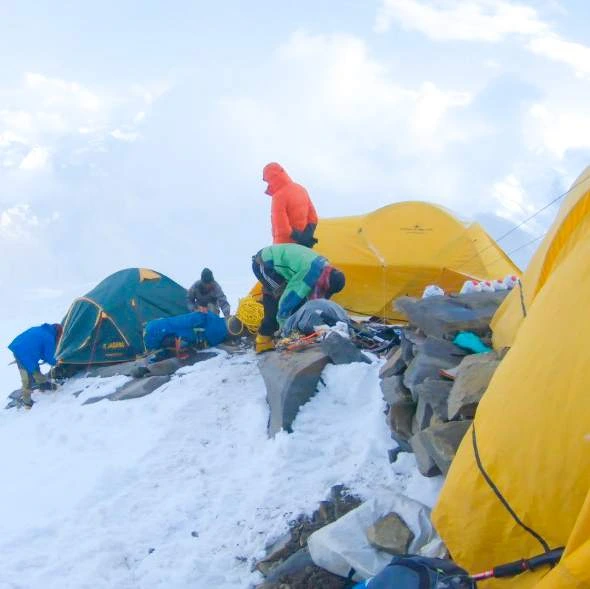
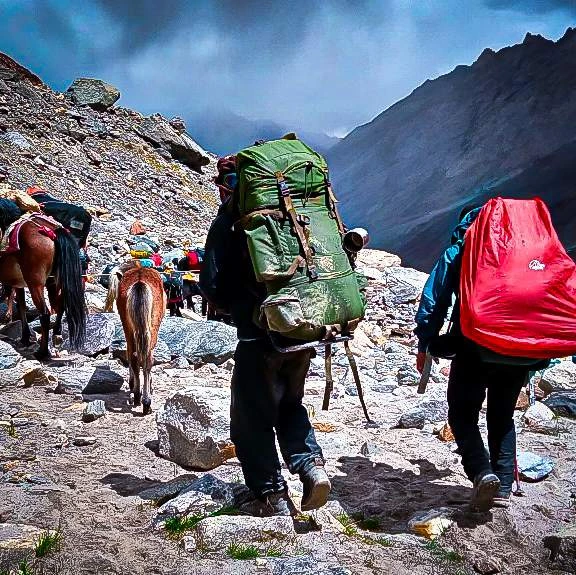
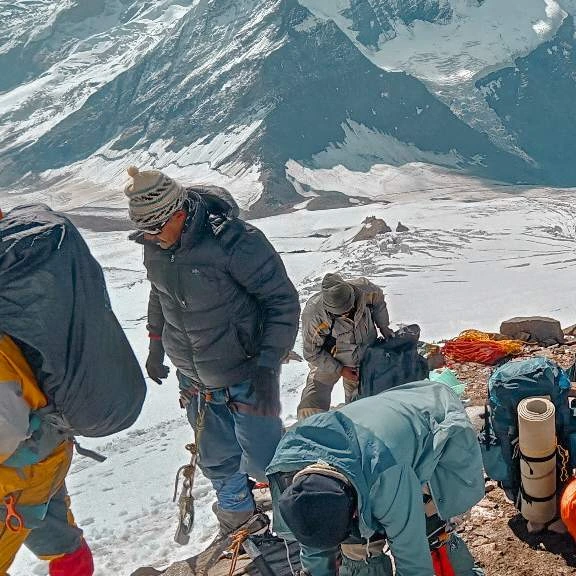
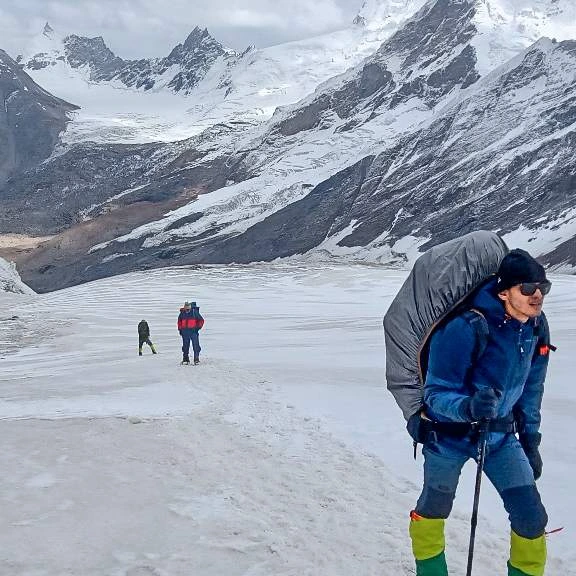
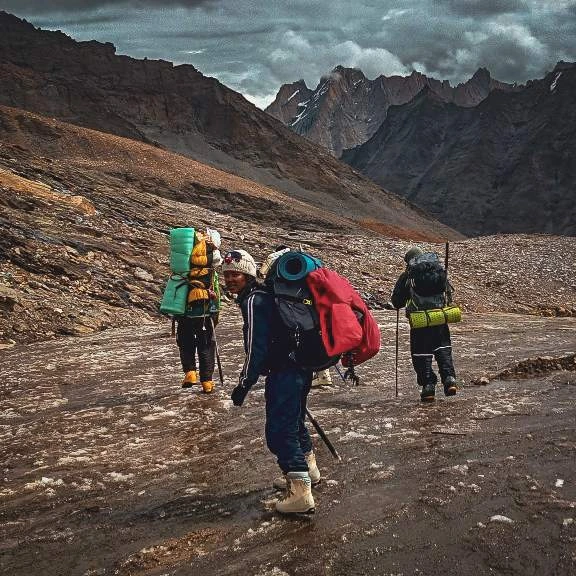
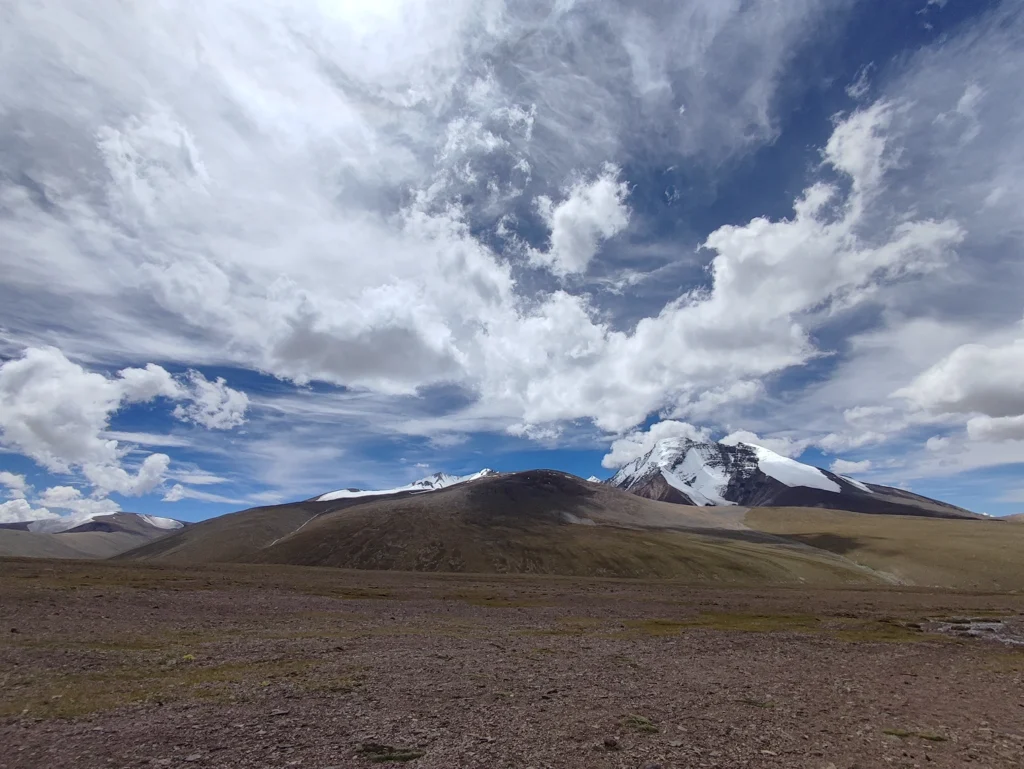
The approach route via Shafat Nala introduces trekkers to a stark alpine environment—wide glacier valleys, massive moraine systems, and towering ice walls. Establishing Base Camp at 4,540 M, the expedition enters a full alpine-style phase, involving multiple load ferry rotations, fixed route preparation, rope fixing, and staged camp movements.
Climbing Mt. Kun requires operating across three high camps:
- Camp I (5,300 M) on glaciated terrain
- Camp II (6,100 M) positioned beneath steep ice slopes
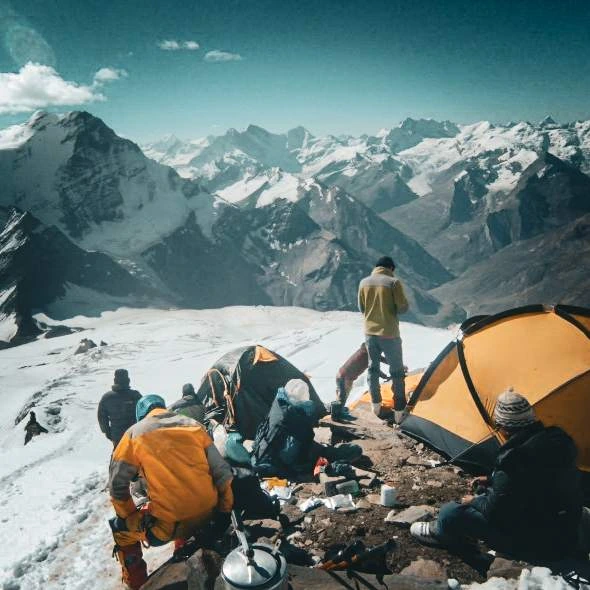
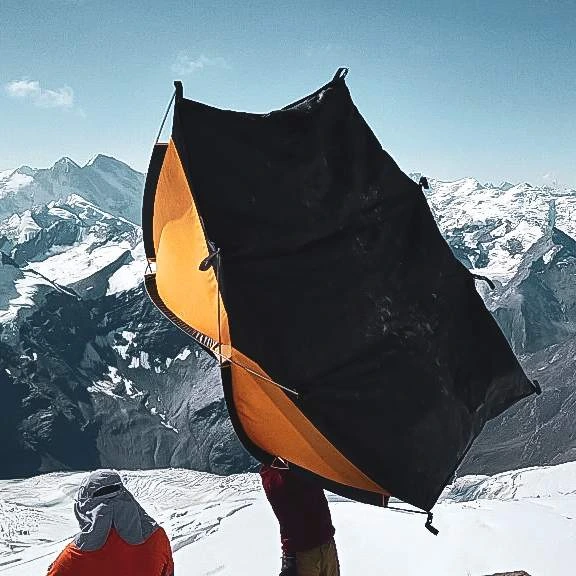
- Summit Camp (6,400 M) exposed to extreme cold and wind
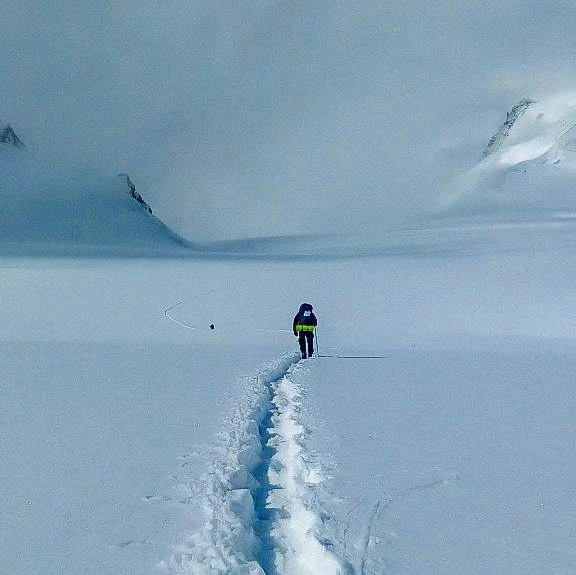
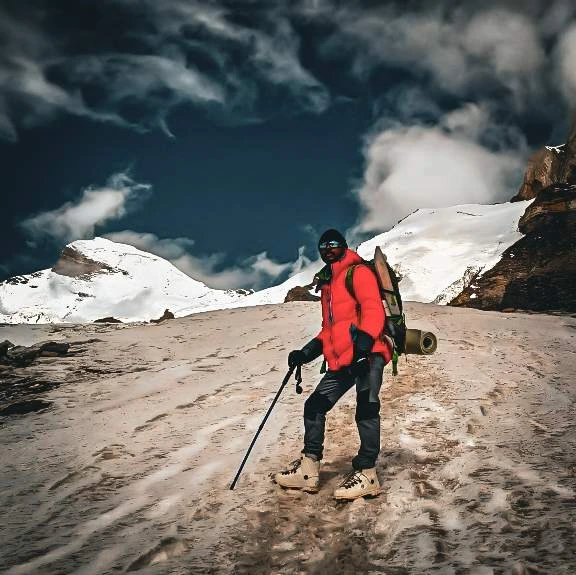
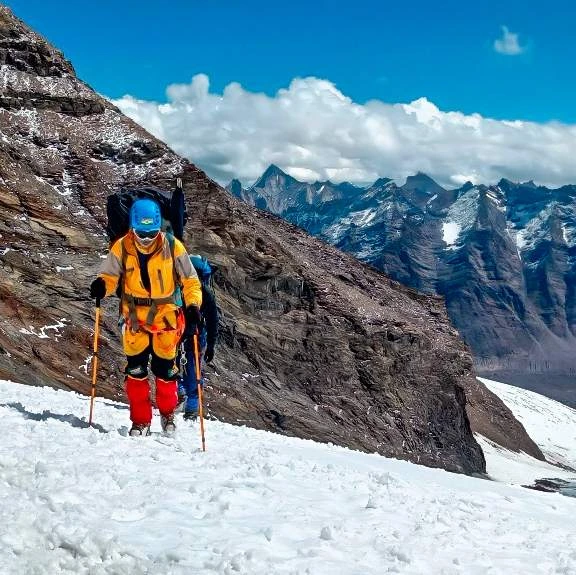
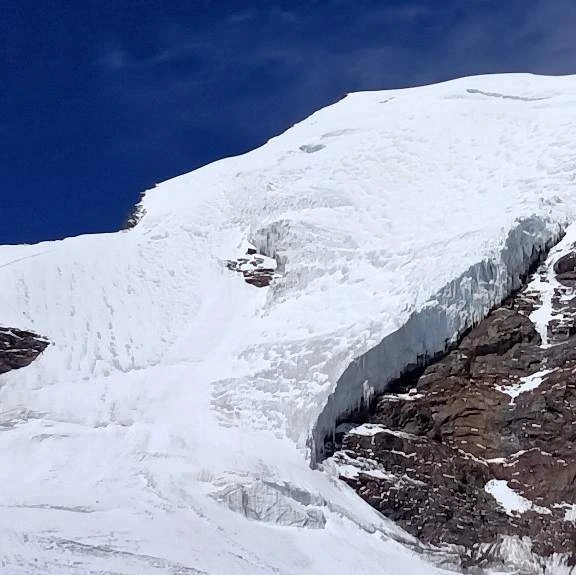
The route includes crevasse navigation, fixed rope sections, sustained snow slopes, and high-angle ice climbing, all under unpredictable weather conditions. Oxygen availability drops drastically above 6,500 meters, making pace control, hydration, and mental focuscritical.
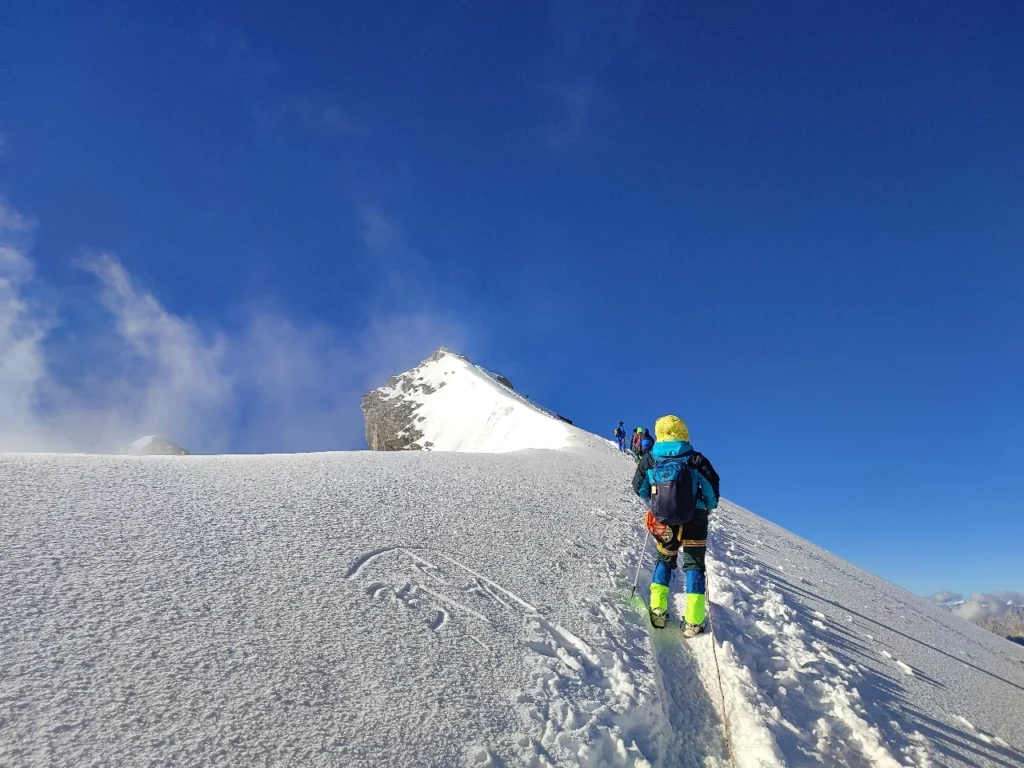
Summit day on Mt. Kun is long, unforgiving, and technically intense. Climbers leave Summit Camp well before midnight, ascending steep snow and ice faces under headlamp light, with wind chill temperatures often dropping below -25°C. The final summit ridge is narrow, exposed, and demands absolute precision.
Reaching the summit of Mt. Kun (7077 M) is a landmark achievement in any mountaineer’s career. From the top, climbers witness vast Himalayan expanses stretching across Zanskar, Karakoram foothills, and distant Greater Himalayan ranges—a reward reserved only for those who have endured weeks of disciplined preparation.
The Mt. Kun Expedition is recommended only for climbers who have:
- Successfully climbed 6000–6500 M peaks
- Experience with rope systems, fixed lines, and ice climbing
- Strong expedition mindset and altitude tolerance
Terranova Expedition conducts Mt. Kun with strict safety protocols, experienced expedition leaders, structured rotation plans, and conservative summit decision-making, ensuring that the climb prioritizes climber safety over aggressive summit attempts.
For those searching:
- Mt Kun expedition
- Mt Kun peak climb
- Mt Kun 7077m expedition
- 7000 meter peak expedition in India
- Mt Kun difficulty and route
- Mt Kun Kargil expedition
—Our itinerary is the most comprehensive and professionally structured expedition guide.
HIGHLIGHTS OF THE MT. KUN EXPEDITION
- Summit a 7,000-meter Himalayan giant
- One of the most technically demanding peaks in India
- True multi-camp alpine expedition experience
- Glacier travel, crevasse navigation & ice climbing
- Fixed rope sections & high-angle snow faces
- Extended time above 6,000 meters
- Remote and untouched Suru Valley terrain
- Elite-level mountaineering achievement