Packing for a Himalayan expedition looks simple—until you actually stand in the mountains carrying everything on your back.
Before my first serious expedition, I believed packing meant taking “everything useful.” I packed extra clothing, unnecessary gadgets, backup items for backup items, and enough random accessories to survive an imaginary emergency that never happened.
The result?
A heavy backpack, poor weight balance, faster exhaustion, and frustration every single day.
Somewhere during a long glacier approach, while struggling under unnecessary load, I realized something that eventually became one of the most important lessons in mountaineering:
Good expedition packing is not about carrying more. It is about carrying smarter.
The Himalayas punish poor packing quickly.
If your layering system fails, you freeze.
If your hydration system fails, recovery collapses.
If your technical gear is badly organized, movement becomes inefficient and dangerous.
And if your backpack becomes unnecessarily heavy, altitude magnifies every kilogram.
Over multiple Himalayan expeditions, my packing system changed completely. I stopped packing emotionally and started packing strategically.
This guide is not just a checklist.
It is a practical Himalayan expedition packing system built around real climbing experience, mountain efficiency, and the realities of high-altitude mountaineering.
Why Expedition Packing Matters So Much
Packing affects:
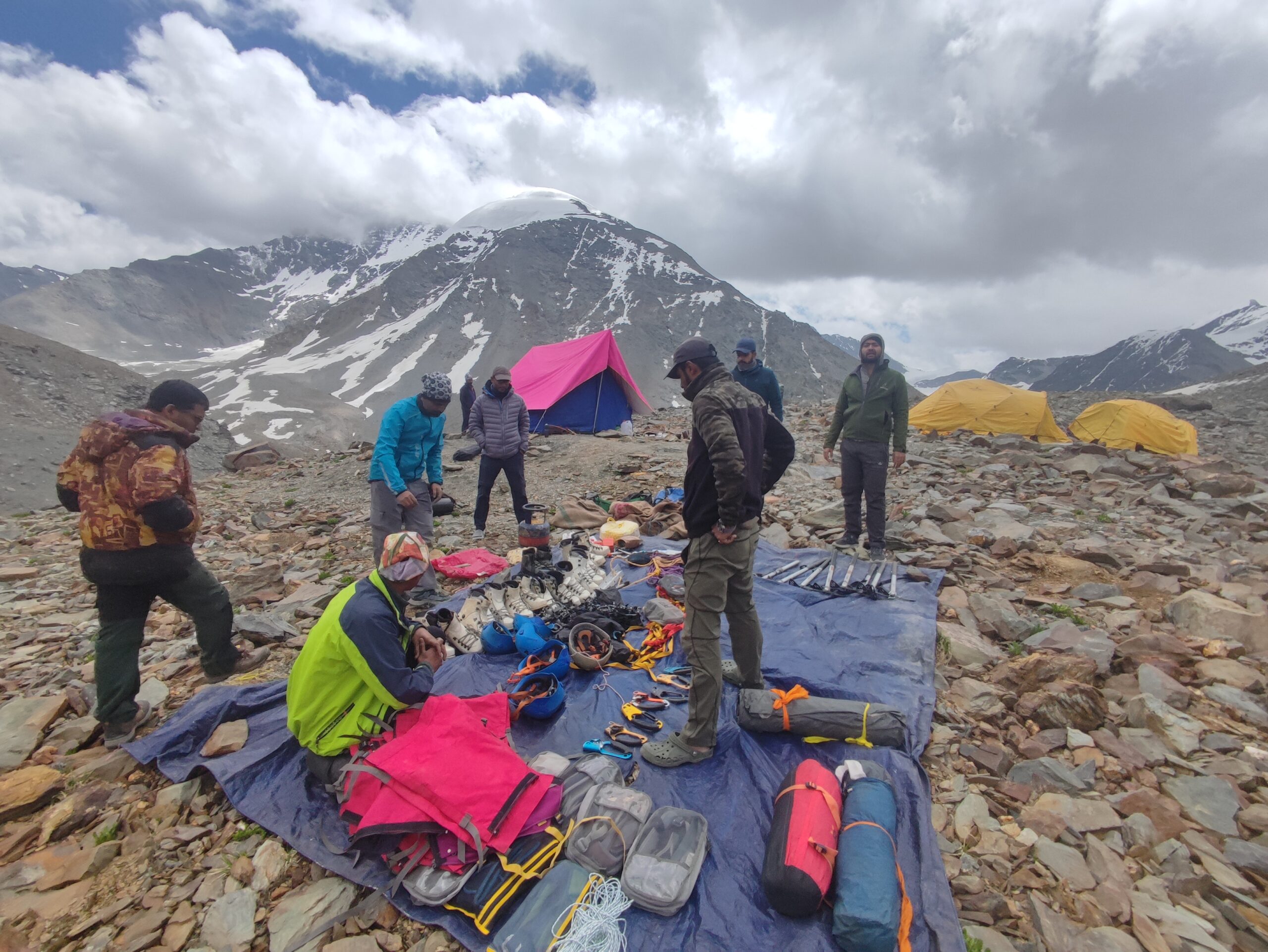
• Energy conservation
• Movement efficiency
• Cold management
• Recovery quality
• Summit performance
• Safety during emergencies
At altitude, small inefficiencies become serious problems.
One unnecessary item may seem insignificant at sea level.
Above 5,500 meters, it becomes dead weight your body must carry through low oxygen environments.
The Biggest Packing Mistake Beginners Make
Almost every beginner overpacks.
Why?
Because fear creates emotional packing.
People think:
• “What if I need this?”
• “Maybe I should carry an extra backup.”
• “One more jacket won’t matter.”
Eventually, the backpack becomes overloaded with low-priority items.
I made exactly the same mistake during my first expedition.
By the second load carry day, the extra weight felt brutal.
Most of those items were never used.
Lesson from Experience:
In mountaineering, unnecessary weight becomes cumulative suffering.
Understanding the Himalayan Layering System
The Himalayas demand a proper clothing system—not random warm clothes.
Each layer has a specific purpose.
1. Base Layer (Moisture Management)
Purpose:
• Sweat control
• Moisture movement
• Skin temperature regulation
Recommended:
• Thermal tops and bottoms
• Quick-dry synthetic or merino systems
Avoid:
• Cotton clothing
Cotton traps moisture and becomes dangerous in cold conditions.
2. Mid Layer (Insulation)
Purpose:
• Heat retention during movement
Typical options:
• Fleece jackets
• Lightweight insulated jackets
This layer should provide warmth without excessive bulk.
3. Outer Shell (Weather Protection)
Purpose:
• Wind protection
• Snow protection
• Waterproofing
Shell jackets become critical during:
• Summit pushes
• Storm conditions
• Glacier exposure
One windy summit morning taught me how quickly exposed wind can destroy body heat even when temperatures are manageable.
Lesson from Experience:
Wind often feels colder than snow itself.
4. Heavy Insulation Layer
Purpose:
• Extreme cold protection at high camp and summit conditions
Usually includes:
• Down jacket or heavy insulated parka
This becomes essential above serious altitude.
Trekking and Climbing Pants
Carry:
• Softshell trekking pants
• Waterproof shell pants
• Thermal lower layer
Avoid excessive duplicates.
One reliable system works better than carrying multiple unnecessary options.
Gloves: Never Underestimate Hand Protection
Hands fail quickly in Himalayan cold.
A proper glove system usually includes:
• Lightweight liner gloves
• Insulated climbing gloves
• Heavy outer mittens for extreme cold
During one early expedition, damp gloves nearly ruined a summit day because finger warmth disappeared rapidly in wind exposure.
Since then, glove management became non-negotiable.
Headwear and Face Protection
Carry:
• Warm beanie
• Balaclava
• Neck gaiter or buff
• Sun cap for lower altitude
High-altitude sun exposure can become intense even in freezing conditions.
Footwear: Your Most Important Investment
Nothing destroys an expedition faster than poor footwear.
Your boot system depends on:
• Peak altitude
• Snow conditions
• Technical terrain
For Trekking Peaks
Usually sufficient:
• Insulated trekking boots compatible with crampons
For Higher Expeditions
Required:
• Double mountaineering boots or high-altitude boots
Cold feet drain:
• Energy
• Morale
• Movement efficiency
And once feet become severely cold, the entire climb becomes mentally exhausting.
Socks: Small Item, Massive Difference
Carry:
• Trekking socks
• Thermal socks
• Dedicated dry camp socks
Never underestimate dry socks at altitude.
Lesson from Experience:
Dry socks feel like luxury after long snow days.
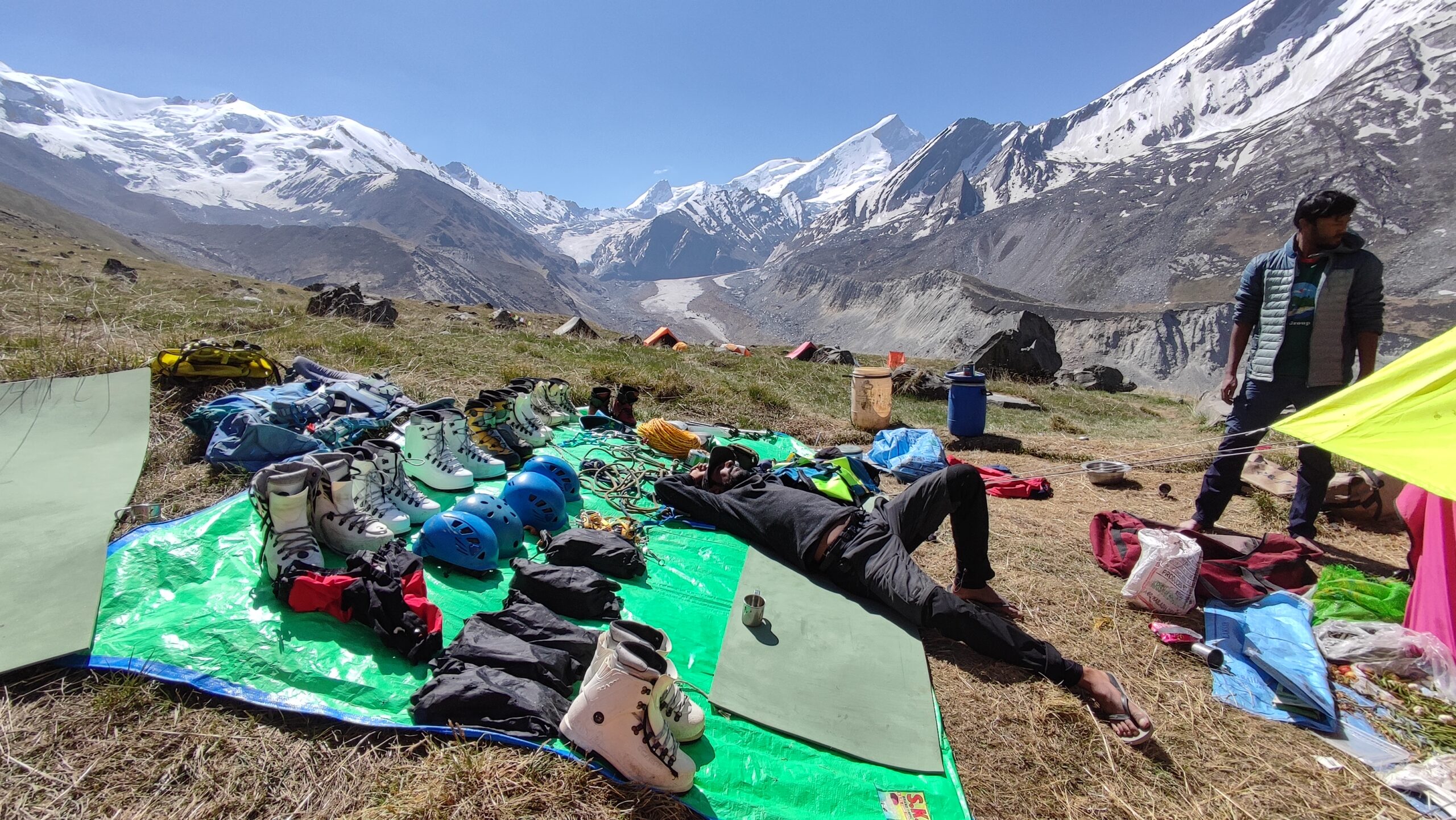
Technical Climbing Gear
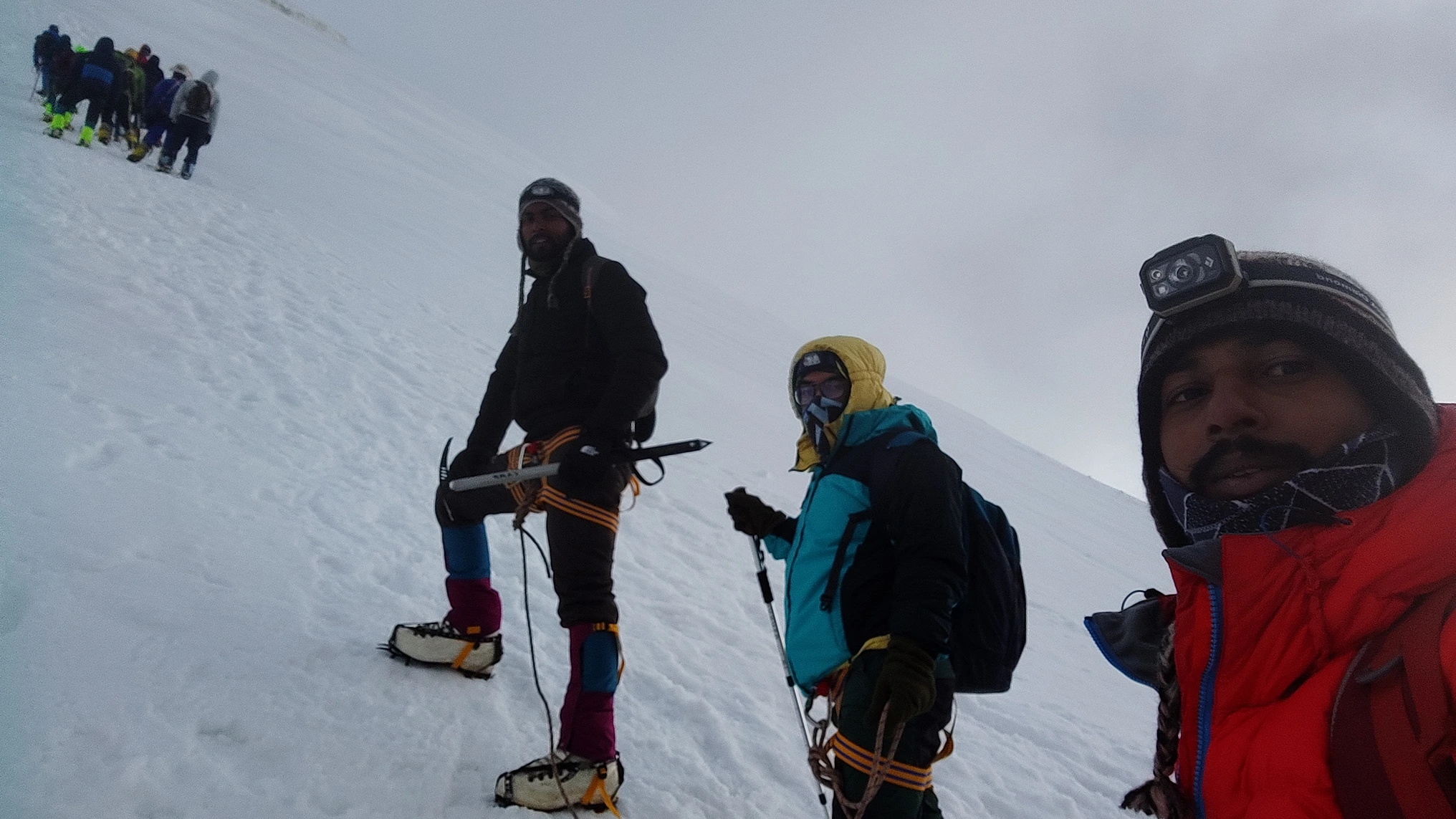
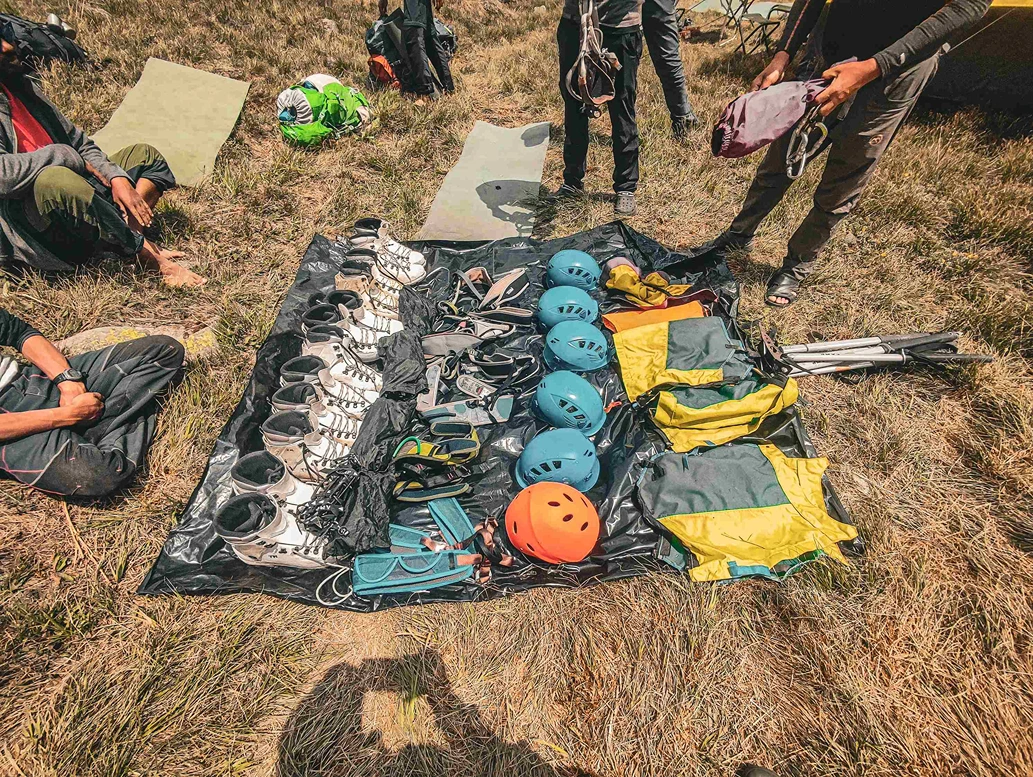
This depends on expedition type, but common essentials include:
• Ice axe
• Crampons
• Helmet
• Harness
• Carabiners
• Ascender/Jumar
• Descender device
• Safety sling systems
Always test technical gear before expedition departure.
Never use mountains as the first practice environment.
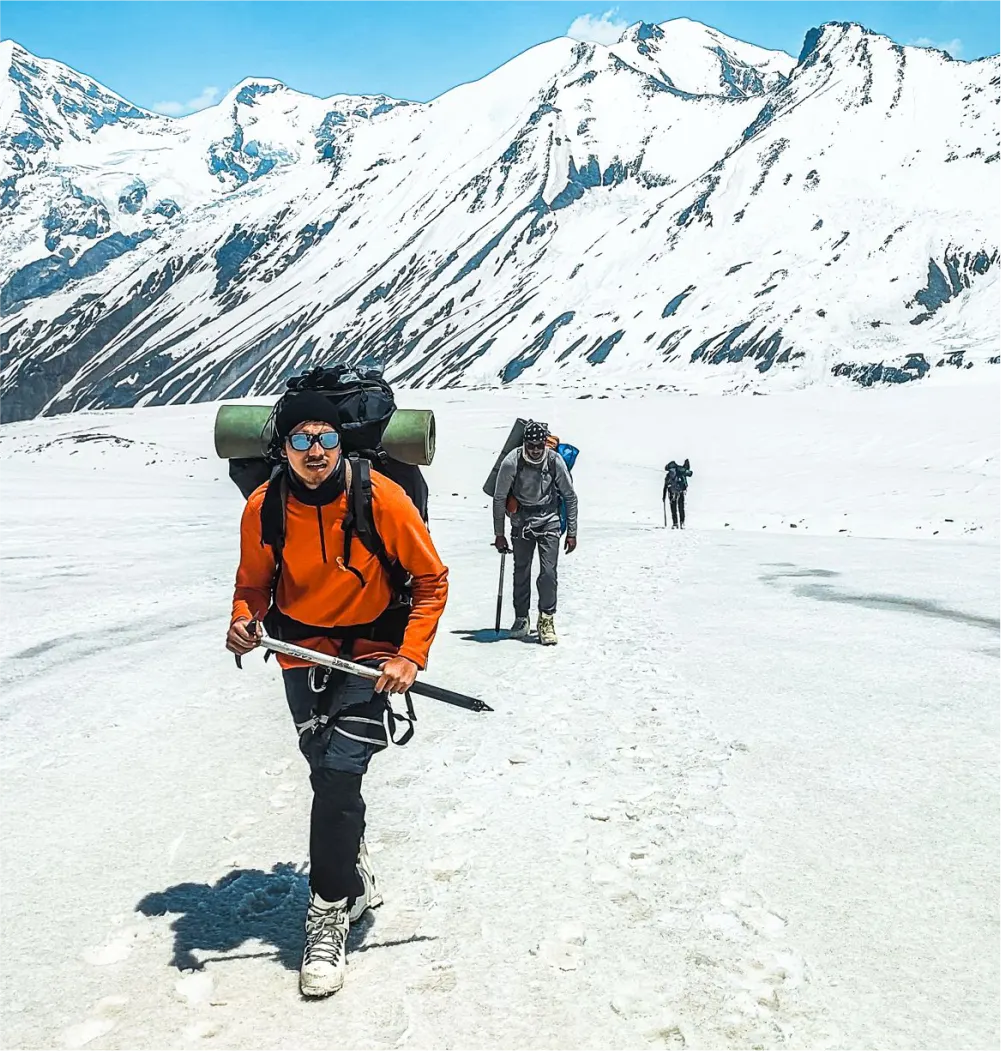
Backpack Systems
Most Himalayan expeditions require:
• Main expedition backpack
• Summit/day pack
Main Expedition Pack
Usually:
• 50L–70L depending on expedition duration
Must carry:
• Clothing systems
• Technical gear
• Sleeping systems
• Food and hydration
Summit Pack
Smaller and lighter.
Used for:
• Summit push
• Acclimatization carries
• Technical movement days
Sleeping System
Cold recovery becomes critical during expeditions.
Your sleep setup usually includes:
• Expedition sleeping bag
• Insulated sleeping mat
• Sleeping liner (optional)
Temperature ratings matter significantly in Himalayan conditions.
Hydration System
One of the most underestimated expedition systems.
Carry:
• Water bottles
• Insulated bottle covers in winter
• Electrolyte supplements
Hydration becomes difficult at altitude because:
• Cold suppresses thirst
• Respiration increases fluid loss
• Summit pushes reduce drinking frequency
During one Ladakh expedition, dehydration quietly destroyed recovery before I even realized it.
That experience permanently changed my hydration discipline.
Nutrition and Snacks
Carry:
• Energy bars
• Dry fruits
• Chocolates
• Electrolyte mixes
• Fast-access snacks
At altitude:
• Appetite drops
• Energy demand increases
Simple accessible calories become important during long summit pushes.
Medical and First Aid Kit
Every climber should carry:
• Personal medications
• Basic pain relief
• Altitude medication (if prescribed)
• Bandages and blister care
• ORS/electrolytes
Your expedition doctor or leader may carry advanced medical systems, but personal responsibility still matters.
Essential Accessories
Small items that become surprisingly important:
• Sunglasses (Category 4 preferred for glacier conditions)
• Sunscreen
• Lip balm
• Headlamp with extra batteries
• Trekking poles
• Dry bags/waterproof packing systems
High-altitude UV exposure can become extremely aggressive on snow.
Electronics and Navigation
Depending on expedition style:
• GPS devices
• Power banks
• Charging systems
• Satellite communication devices in remote regions
Cold drains batteries rapidly.
Keep electronics insulated whenever possible.
Hygiene and Comfort Items
Keep these minimal but practical:
• Toothbrush
• Wet wipes
• Quick-dry towel
• Toilet paper
• Basic toiletries
Overpacking hygiene items is extremely common among beginners.
What NOT to Pack
This is equally important.
Avoid:
• Excess casual clothing
• Heavy unnecessary gadgets
• Duplicate items without purpose
• Large luxury kits
• “Just in case” random gear
Eventually, every experienced mountaineer learns:
If something remains unused repeatedly, it probably does not belong in the pack.
How I Personally Organize My Backpack
Over time, my system became structured:
• Heavy items near spine center
• Frequently used items accessible quickly
• Emergency gear reachable immediately
• Waterproof organization for critical layers
This improved:
• Balance
• Efficiency
• Energy conservation
A well-organized backpack reduces mental fatigue enormously during expeditions.
Packing for Different Himalayan Seasons
Pre-Monsoon Expeditions
Prioritize:
• Snow systems
• Cold insulation
• Waterproof layering
Expect:
• More snow movement
• Colder summit conditions
Post-Monsoon Expeditions
Prioritize:
• Layer versatility
• Glacier movement systems
• UV protection
Expect:
• Clear skies
• More exposed terrain
Winter Expeditions
Require:
• Heavy insulation
• Strong glove systems
• Extreme cold sleeping setup
• Aggressive moisture management
Winter packing becomes a survival system rather than a comfort system.
The Psychological Side of Packing
Something interesting happens during long expeditions.
A clean, efficient packing system reduces stress dramatically.
You move better because:
• You know where everything is
• Transitions become smoother
• Energy waste decreases
Disorganized packing quietly drains mental focus.
Common Packing Mistakes Beginners Make
Overpacking Clothing
Extra layers become dead weight quickly.
Carrying Untested Gear
Never use new systems without prior practice.
Poor Weight Distribution
Heavy imbalance destroys movement efficiency.
Ignoring Waterproofing
Moisture destroys insulation systems.
Packing Emotionally Instead of Strategically
The most common mistake of all.
What Experienced Climbers Prioritize
Over time, experienced mountaineers focus on:
• Efficiency
• Reliability
• Weight balance
• Accessibility
• Layering systems
Not flashy gear volume.
My Biggest Packing Realization in the Himalayas
Eventually, I realized something simple:
Packing is not preparation for comfort.
It is preparation for function.
The goal is not carrying everything imaginable.
The goal is carrying exactly what allows you to move safely, recover efficiently, and adapt to the mountain environment.
Final Packing Advice for Himalayan Expeditions
Before every expedition:
• Repack your bag multiple times
• Remove unnecessary items honestly
• Test gear beforehand
• Prioritize systems over quantity
• Learn where every important item sits inside your pack
Because once the climb begins, poor packing decisions become difficult to fix.
Conclusion
Packing for Himalayan Peaks is far more than making a checklist.
It is a strategic system built around survival, movement efficiency, altitude adaptation, and energy conservation.
Every item affects how you climb, recover, and perform in the mountains.
After multiple expeditions, one truth became impossible to ignore:
The strongest climbers are not the ones carrying the most gear.
They are the ones carrying exactly what they need—and carrying it intelligently.