
The Himalayas have a way of calling people. For some, it begins with a trek through pine forests and alpine meadows. For others, it is the distant sight of snowbound summits rising beyond the clouds. And for a few, that quiet fascination turns into something more serious — a desire to climb.
Himalayan mountaineering is not just an extreme sport. It is a disciplined pursuit that blends endurance, technical skill, risk management, teamwork, and mental resilience. Unlike recreational trekking, mountaineering demands preparation, structured training, and the ability to operate safely in high-altitude, glacier, and snowbound environments.
If you are standing at the beginning of this journey — curious, motivated, and unsure where to start — this guide is designed for you. It breaks down the fundamentals, clears common misconceptions, and provides a practical roadmap for planning your first Himalayan expedition.
What is Himalayan Mountaineering?
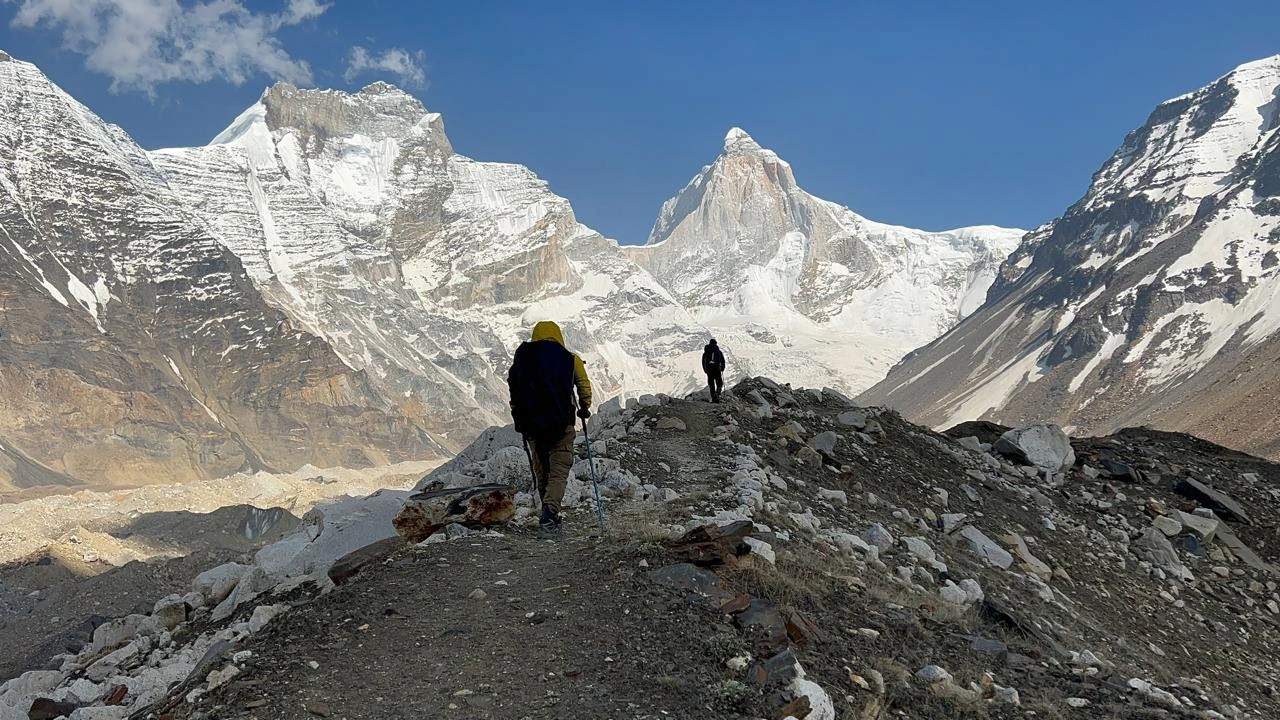
Himalayan mountaineering refers to the technical ascent of high-altitude peaks in the Himalayan mountain range using specialized climbing techniques, safety systems, and expedition logistics.
It goes beyond simply “walking to a summit.” Climbers encounter:
- Snow and ice slopes
- Glaciers and crevasses
- Rock faces
- Mixed terrain (rock + ice + snow)
- Rapid weather shifts
- Thin air at high altitude
Mountaineering involves deliberate risk management and methodical movement through terrain that cannot be navigated safely without training and equipment.
Key Characteristics
1. Technical Terrain
Climbers may use crampons, ice axes, fixed ropes, harnesses, ascenders, carabiners, and helmets. Movement requires technique — not just stamina.
2. Altitude Exposure
Most Himalayan climbs exceed 5,000 meters. Reduced oxygen levels affect performance, judgment, and recovery.
3. Expedition Structure
Unlike day hikes, mountaineering follows staged acclimatization schedules, base camps, load ferries, and summit windows based on weather.
4. Team-Based Climbing
Mountaineering is rarely solo. Rope teams, guides, and coordinated decision-making are critical.
5. Risk Awareness
Avalanches, crevasses, frostbite, altitude sickness, and storms are real hazards. Prevention and response skills are essential.
Why People Choose Himalayan Mountaineering
- To pursue high-altitude challenges
- To develop technical climbing competence
- To experience raw alpine environments
- To build resilience and mental strength
- To progress toward advanced expeditions (6000m, 7000m, 8000m peaks)
Mountaineering is less about speed and more about precision, discipline, and calculated progress.
Trekking vs Mountaineering: Understanding the Difference
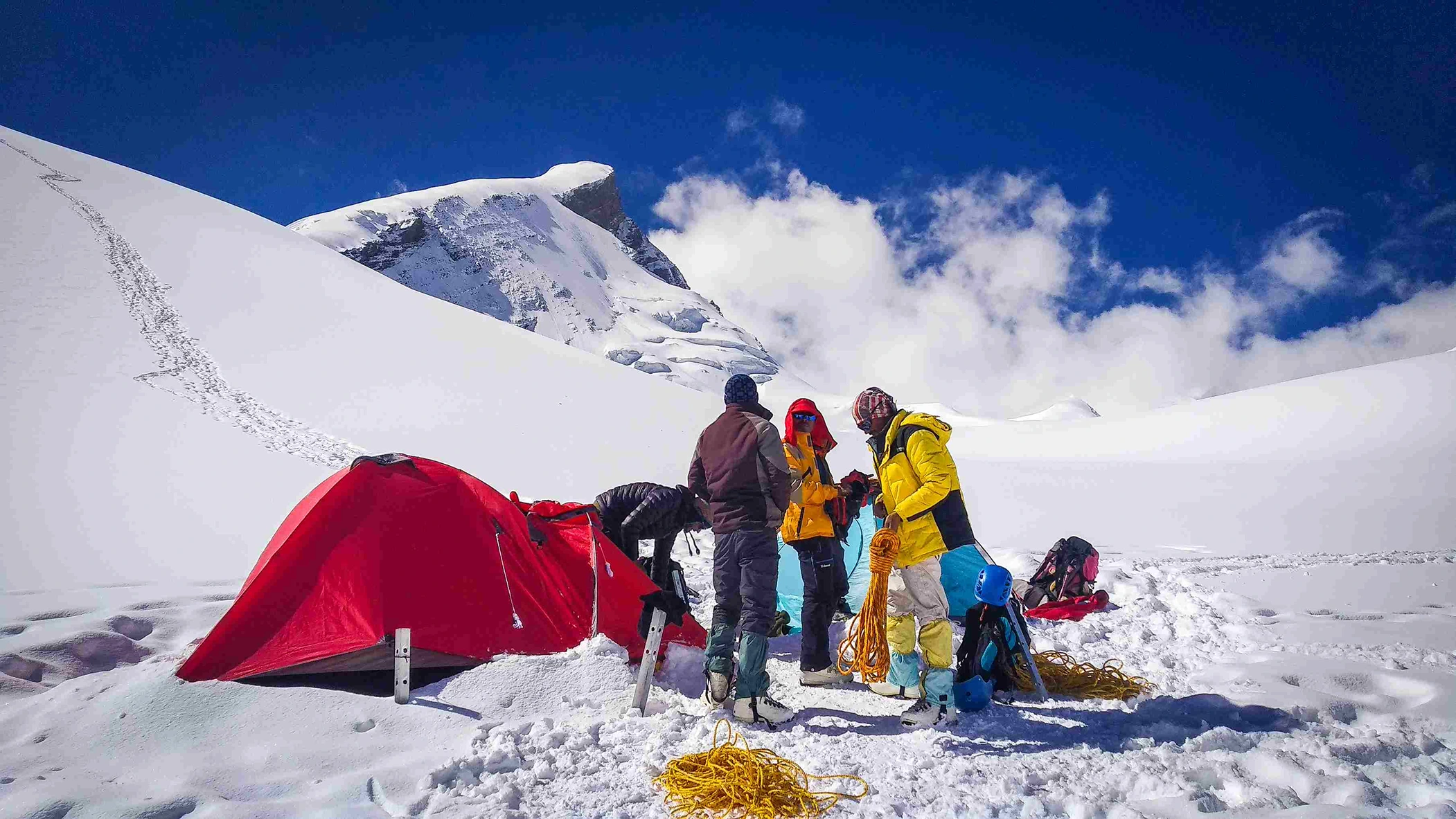
Many beginners confuse trekking with mountaineering. While both involve mountains, they differ significantly in technical demand, risk exposure, and required preparation.
Trekking
Trekking typically involves walking on established trails across mountains, valleys, and passes.
Characteristics:
- Marked or known routes
- No technical climbing gear required
- Lower objective risk
- Focus on endurance and scenery
- Accessible to fit beginners
Treks may still reach high altitudes, but terrain usually does not require rope systems or climbing tools.
Mountaineering
Mountaineering involves ascending peaks where terrain requires technical movement and safety systems.
Characteristics:
- Steep snow and ice slopes
- Glacier travel
- Fixed rope ascents
- Technical descent methods
- Higher objective hazards
- Mandatory gear and training
Key Differences at a Glance
| Aspect | Trekking | Mountaineering |
|---|---|---|
| Terrain | Trails & passes | Snow, ice, rock faces |
| Gear | Basic trekking gear | Technical climbing equipment |
| Skills | Walking endurance | Rope work, ice craft, safety systems |
| Risk Level | Moderate | High |
| Training | Helpful | Essential |
| Team Structure | Flexible | Structured rope teams |
The Overlap
Trekking often becomes the gateway to mountaineering. Many climbers start with high-altitude treks to build:
- Cardiovascular endurance
- Load carrying capacity
- Acclimatization experience
- Mountain awareness
This progression is natural and recommended.
Choosing Your First Himalayan Peak
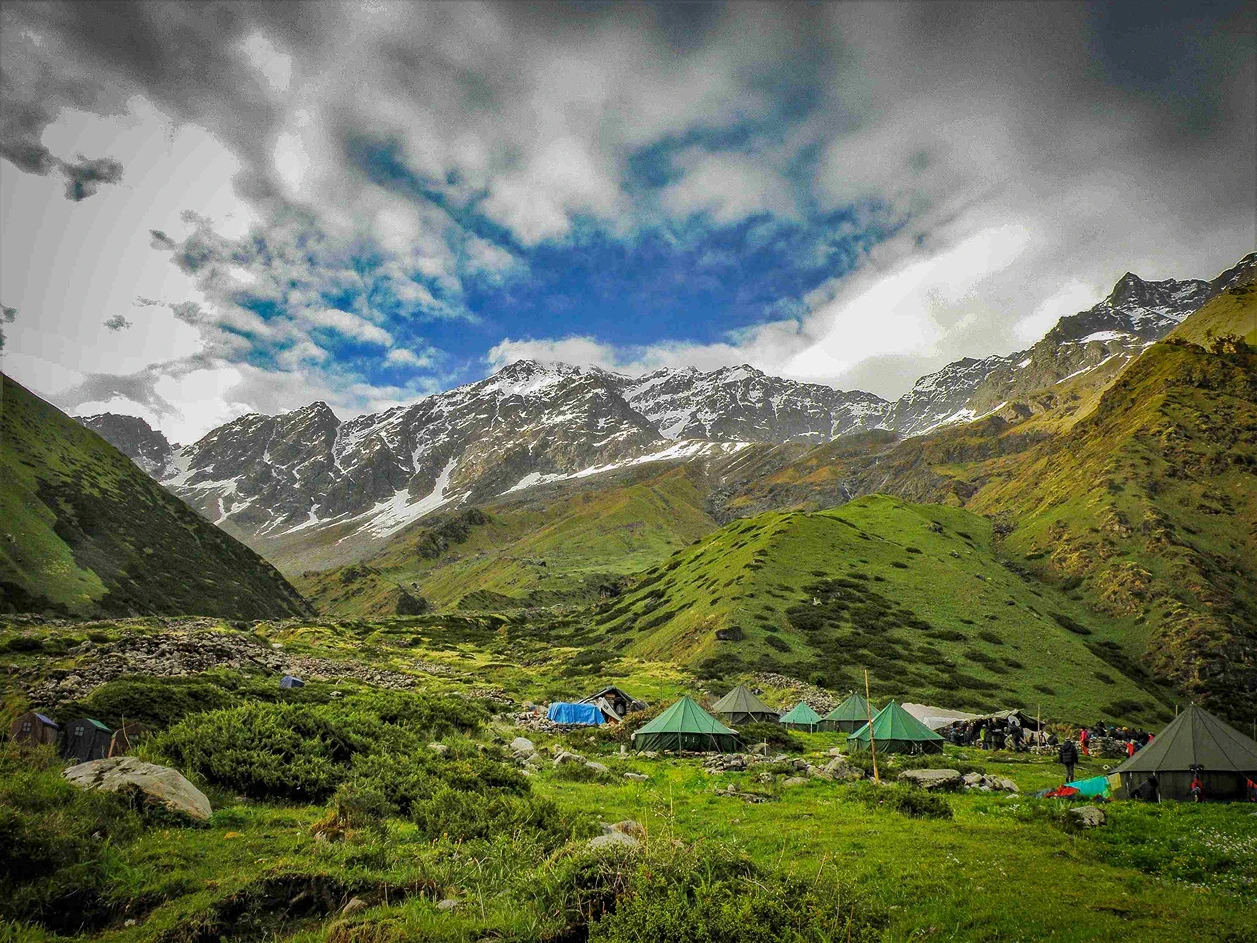
Selecting your first mountain is one of the most important decisions in your mountaineering journey. The right peak builds confidence and skills. The wrong one can overwhelm and increase risk.
What Makes a Good Beginner Peak?
1. Moderate Technical Grade
The climb should introduce basic snow, ice, and rope systems without extreme exposure.
2. Controlled Objective Risk
Lower avalanche zones, stable routes, and established expedition logistics.
3. Manageable Altitude
Peaks in the 5,500–6,500 meter range are ideal for beginners transitioning into technical climbing.
4. Strong Guide Support
Well-supported routes with experienced expedition operators and rescue readiness.
5. Learning Opportunity
Terrain that allows skill-building rather than pure physical struggle.
Factors to Consider
Physical Fitness Level
Can you sustain multi-day climbs carrying loads?
Prior Experience
Have you done high-altitude treks or basic climbing courses?
Technical Comfort
Are you comfortable using crampons and rope systems?
Time Availability
Expeditions require 10–20+ days including acclimatization.
Budget & Logistics
Permits, guides, equipment, travel, and contingency days matter.
Progression Path for Beginners
A safe learning curve typically follows:
- High-altitude trekking
- Basic mountaineering course
- Non-technical summit peaks
- Beginner technical peaks
- Advanced alpine expeditions
Skipping stages increases risk and reduces long-term success.
Essential Mountaineering Skills for Beginners
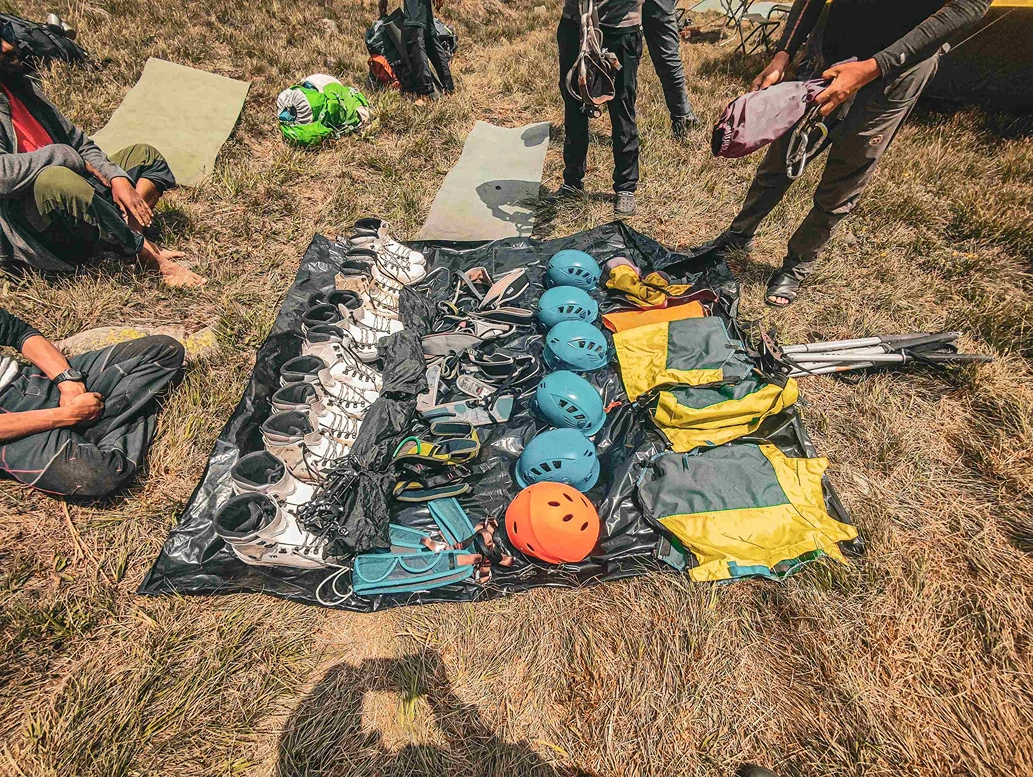
Mountaineering is skill-driven. Physical fitness alone is not enough.
1. Ice Axe Techniques
The ice axe is fundamental for:
- Balance on slopes
- Self-arrest during slips
- Cutting steps
- Anchoring
Self-arrest proficiency can prevent uncontrolled falls.
2. Crampon Movement
Walking on ice and hard snow requires:
- Flat-foot technique
- Front-pointing on steeper sections
- Edge control
- Rhythm and foot placement
Improper crampon use leads to slips and ankle strain.
3. Rope Systems & Knots
Climbers must understand:
- Harness usage
- Tying into rope
- Essential knots
- Fixed rope ascenders
- Belaying basics
Rope discipline ensures team safety.
4. Glacier Travel
Key glacier skills include:
- Rope team spacing
- Crevasse awareness
- Snow bridge assessment
- Rescue basics
Glaciers demand constant attention.
5. Load Management
Carrying equipment efficiently reduces fatigue:
- Backpack weight distribution
- Layering strategy
- Energy conservation
6. Acclimatization Strategy
Understanding altitude response:
- Gradual ascent
- Hydration
- Rest cycles
- Monitoring symptoms
Poor acclimatization is the most common expedition failure.
7. Weather Interpretation
Mountains change rapidly:
- Wind patterns
- Storm systems
- Temperature shifts
- Summit window timing
Good decisions rely on weather awareness.
8. Mental Conditioning
Climbers must develop:
- Patience under slow progress
- Calm decision-making
- Risk judgment
- Team communication
Mental fatigue often precedes physical exhaustion.
Common Mistakes Beginners Make
1. Underestimating Altitude
Fitness at sea level does not guarantee performance above 5,000 meters.
2. Rushing the Summit
Skipping acclimatization leads to altitude sickness and retreat.
3. Ignoring Technical Training
Mountains punish inexperience. Training is non-negotiable.
4. Overpacking or Underpacking
Both reduce efficiency and safety.
5. Poor Hydration & Nutrition
Dehydration accelerates fatigue and altitude issues.
6. Following Social Media Hype
Viral content hides preparation, logistics, and risk.
7. Inadequate Footwear
Improper boots cause frostbite and mobility issues.
8. Weak Team Communication
Mountaineering is collective decision-making.
9. Neglecting Descent Planning
Most accidents occur while descending.
10. Ignoring Early Warning Signs
Headaches, dizziness, and confusion must never be dismissed.
Safety Tips for First-Time Climbers
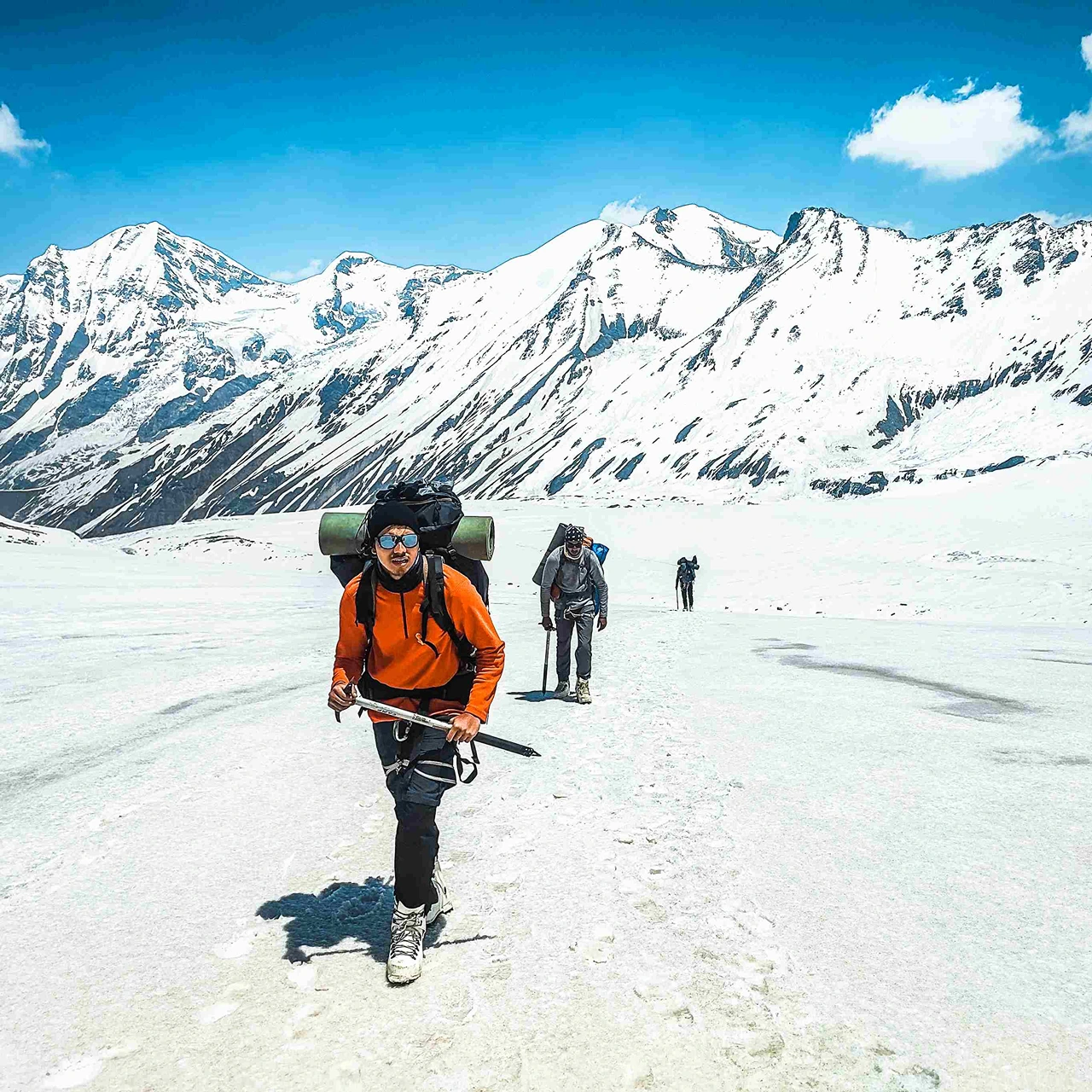
Safety is not a checklist — it is a system of habits.
1. Choose Certified Operators
Professional expedition leaders reduce avoidable risk.
2. Train Before You Climb
Enroll in mountaineering courses.
3. Prioritize Acclimatization
Climb high, sleep low. Follow staged ascent.
4. Respect Turnaround Times
Summits are optional. Safe return is mandatory.
5. Wear Proper Layering
Thermal regulation prevents hypothermia and frostbite.
6. Stay Hydrated Constantly
Altitude increases fluid loss.
7. Monitor Your Body
Recognize AMS, HAPE, and HACE symptoms early.
8. Follow Rope Protocol
Never detach without instruction.
9. Protect Extremities
Hands, feet, and face are frostbite-prone.
10. Keep Emergency Margins
Weather delays and fatigue require buffer days.
Preparing for Your First Expedition
Physical Preparation
- Cardiovascular endurance training
- Strength conditioning
- Loaded backpack hikes
- Flexibility training
Technical Preparation
- Basic mountaineering certification
- Ice craft practice
- Rope handling sessions
Gear Familiarity
Practice with equipment before the expedition.
Mental Preparation
Study route profiles, terrain, and contingency plans.
Frequently Asked Questions
Is mountaineering dangerous for beginners?
Yes, without training. Structured preparation reduces risk significantly.
How long does preparation take?
Typically 6–12 months depending on fitness and experience.
Do I need prior trekking experience?
Strongly recommended for altitude adaptation.
What age is suitable to start?
Adults with good fitness and medical clearance.
Conclusion
Himalayan mountaineering is not an impulsive adventure. It is a progression — from curiosity to competence, from trekking trails to technical ascents.
Your first expedition should not be about proving toughness. It should be about learning systems, building judgment, and respecting mountain environments.
With the right preparation, patient progression, and experienced guidance, your first Himalayan climb can become the foundation for a lifetime of meaningful expeditions.
To ensure the safety and expert guidance during the first trek or expedition, reach out to Terranova Expedition’s Team, they are highly experienced.
