Every climber remembers their first real expedition. Not a trek, not a short summit hike—but a true high-altitude climb where the terrain demands technical awareness, the air feels thinner with every step, and the mountain expects discipline.
For many aspiring mountaineers in India, Mount Friendship Peak (5,289m) in Himachal Pradesh becomes that first defining experience. It sits at the perfect intersection of accessibility and challenge, offering just enough technical exposure to introduce climbers to mountaineering while still being achievable with proper preparation.
Located in the Pir Panjal range near Manali, Friendship Peak is often described as a “beginner expedition peak.” But that label can be misleading. The mountain may be suitable for beginners, but it still demands respect, preparation, and a clear understanding of high-altitude environments.
This guide is built from a realistic expedition perspective—what you experience, what you learn, and how you should prepare if Friendship Peak is your first step into mountaineering.
Why Friendship Peak is Ideal for Beginners
Friendship Peak stands out because it offers a complete introduction to mountaineering without overwhelming technical difficulty.
The climb includes glacier travel, snow slopes, use of crampons, and a proper summit push, all of which are essential elements of high-altitude climbing. At the same time, the route is structured in a way that allows beginners to learn these skills gradually under guidance.
Another important factor is accessibility. The approach begins from Manali, making logistics simpler compared to remote Himalayan regions. This allows climbers to focus more on preparation and execution rather than complicated travel arrangements.
The altitude, just above 5,000 meters, is high enough to introduce climbers to the effects of reduced oxygen, yet manageable with proper acclimatization. This balance makes it an ideal training ground for future 6000m expeditions.
The Journey Begins: From Manali to Base Camp
The expedition typically starts from Manali, a town that has become a hub for trekking and mountaineering in Himachal Pradesh.
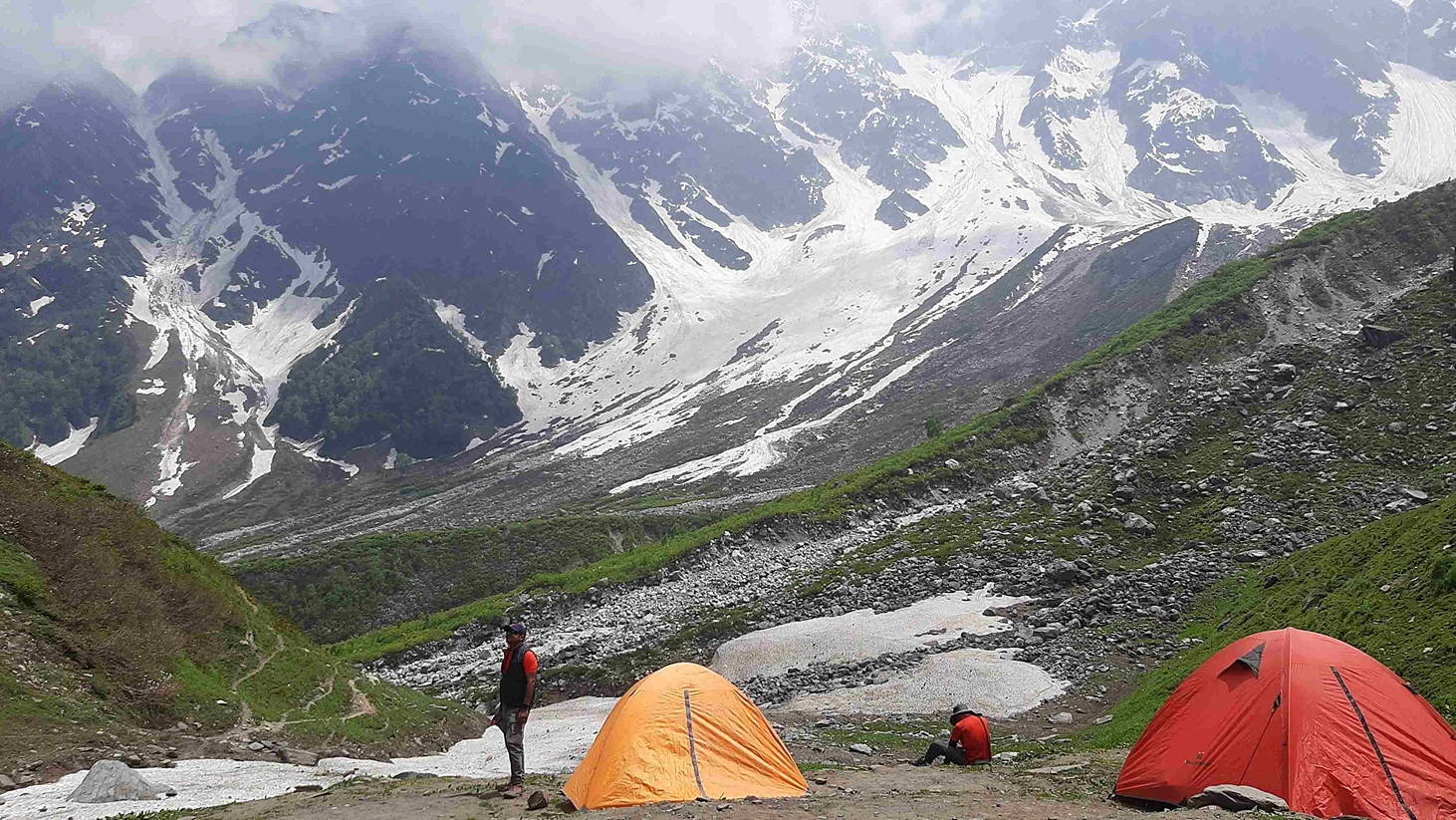
The initial days involve trekking through dense forests, alpine meadows, and gradually transitioning into rocky terrain. Camps are usually set around areas like Bakarthach, which offer stunning views of surrounding peaks.
These early days are not just about reaching base camp—they are about setting the rhythm. You begin to adjust your pace, understand how your body reacts to altitude, and prepare mentally for what lies ahead.
One mistake many beginners make here is treating the approach like a regular trek and walking too fast. The real climb has not even started yet, but fatigue can already begin to build.
Tip from Experience:
Start slow from Day 1. Your pace in the beginning affects your performance on summit day.
Base Camp: Learning the Basics
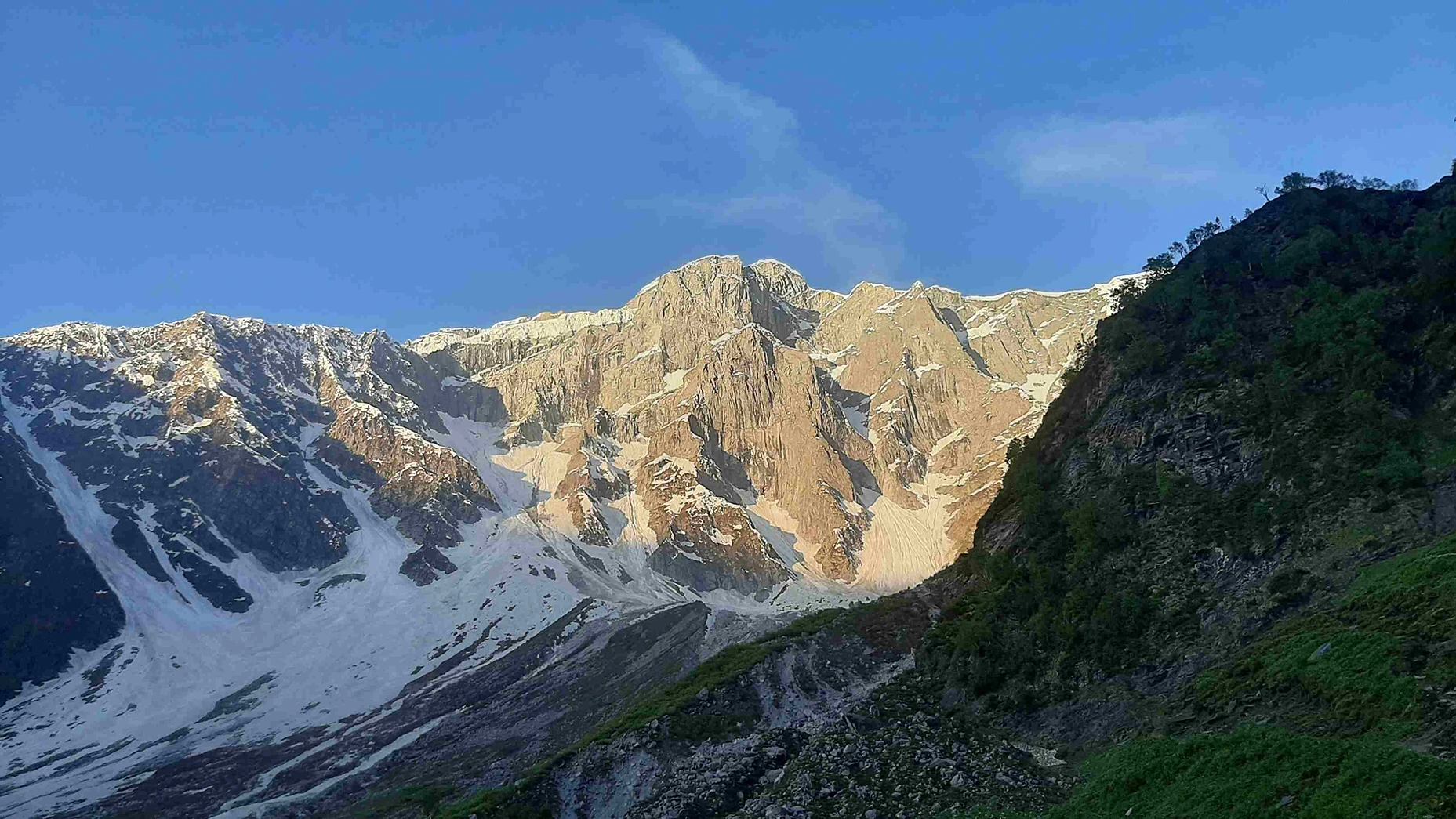
Reaching base camp marks the transition from trekking to mountaineering.
At this stage, climbers are introduced to basic technical skills such as using crampons, handling ice axes, and understanding rope systems. Even if you have prior training, practicing these skills in actual mountain conditions is essential.
The environment also changes. Temperatures drop, wind exposure increases, and movement becomes more effort-intensive. Appetite may reduce, and sleep can become irregular.
This is where discipline becomes important. Eating well, staying hydrated, and resting properly are no longer optional—they are necessary for the climb ahead.
Tip from Experience:
Do not skip training sessions at base camp. What feels basic here becomes critical higher up.
Acclimatization and Load Carry
Before moving to higher camps, climbers usually perform load carry rotations. This involves carrying gear to higher points and returning to base camp.
While this may feel repetitive, it plays a crucial role in acclimatization. The body adapts better when exposed gradually to higher altitudes.
Load carry days are often underestimated. Carrying weight at altitude is significantly more tiring than at lower elevations. Recovery is slower, and energy must be managed carefully.
This phase also helps build confidence on the terrain. You become more comfortable walking on snow, navigating slopes, and moving as part of a team.
Tip from Experience:
Respect load carry days. They prepare your body for summit day more than anything else.
Moving to Higher Camp: The Real Shift
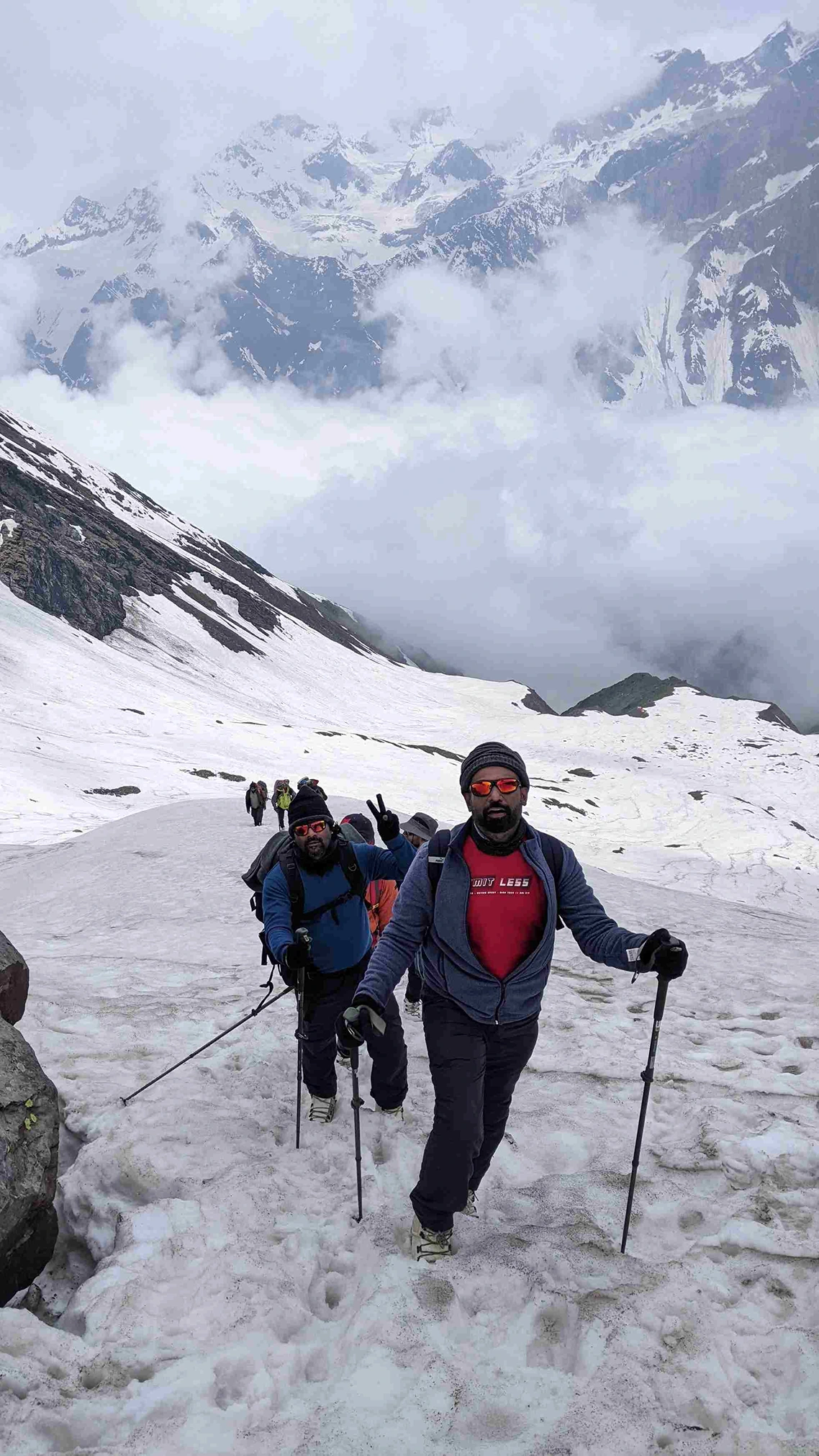
As you move to higher camps, the environment becomes more serious.
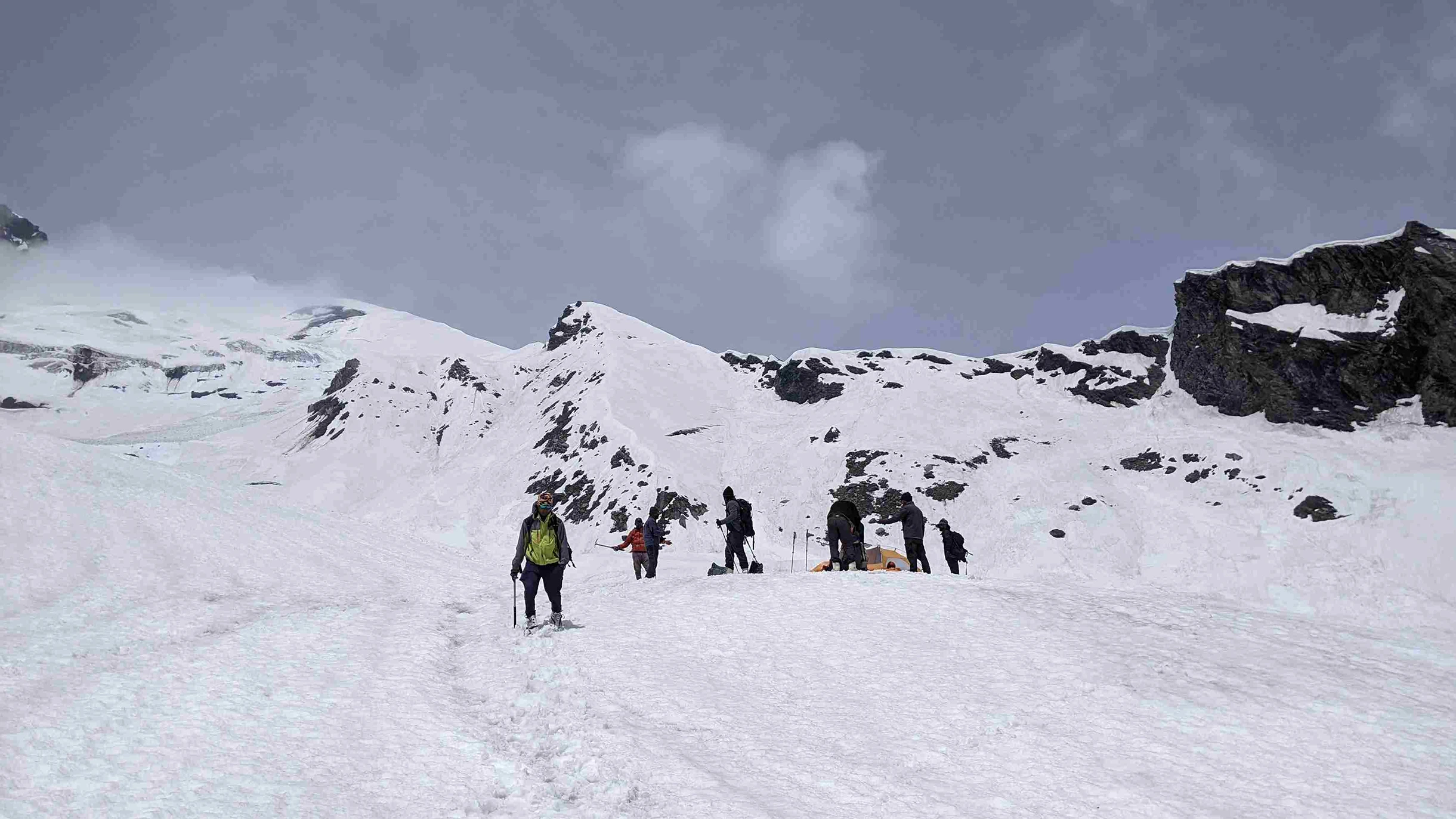
The terrain is now dominated by snow and glacier sections. Movement requires the use of crampons, and rope systems may be introduced depending on conditions.
Breathing becomes heavier, even during rest. Simple tasks take more effort. Conversations become shorter, and focus increases.
This is where many beginners experience their first real challenge with altitude. Headaches, fatigue, and reduced appetite are common.
Managing these symptoms becomes part of the climb. Ignoring them is not an option.
Tip from Experience:
Listen to your body, but do not panic. Controlled response is key at altitude.
Summit Push: Your First Real Climb
Summit day on Friendship Peak typically begins in the early hours of the morning. The temperature is low, and the climb is done mostly in darkness under headlamps.
The route involves steady snow slopes and sections where rope support may be used. While not extremely technical, the climb demands focus and controlled movement.
At this stage, altitude becomes the biggest challenge. Every step requires effort, and maintaining rhythm is critical.
The summit ridge often feels longer than expected. Fatigue builds up, and the mind starts to question progress.
Reaching the summit is a powerful moment—not because it is easy, but because you understand what it took to get there.
The Descent: The Overlooked Challenge
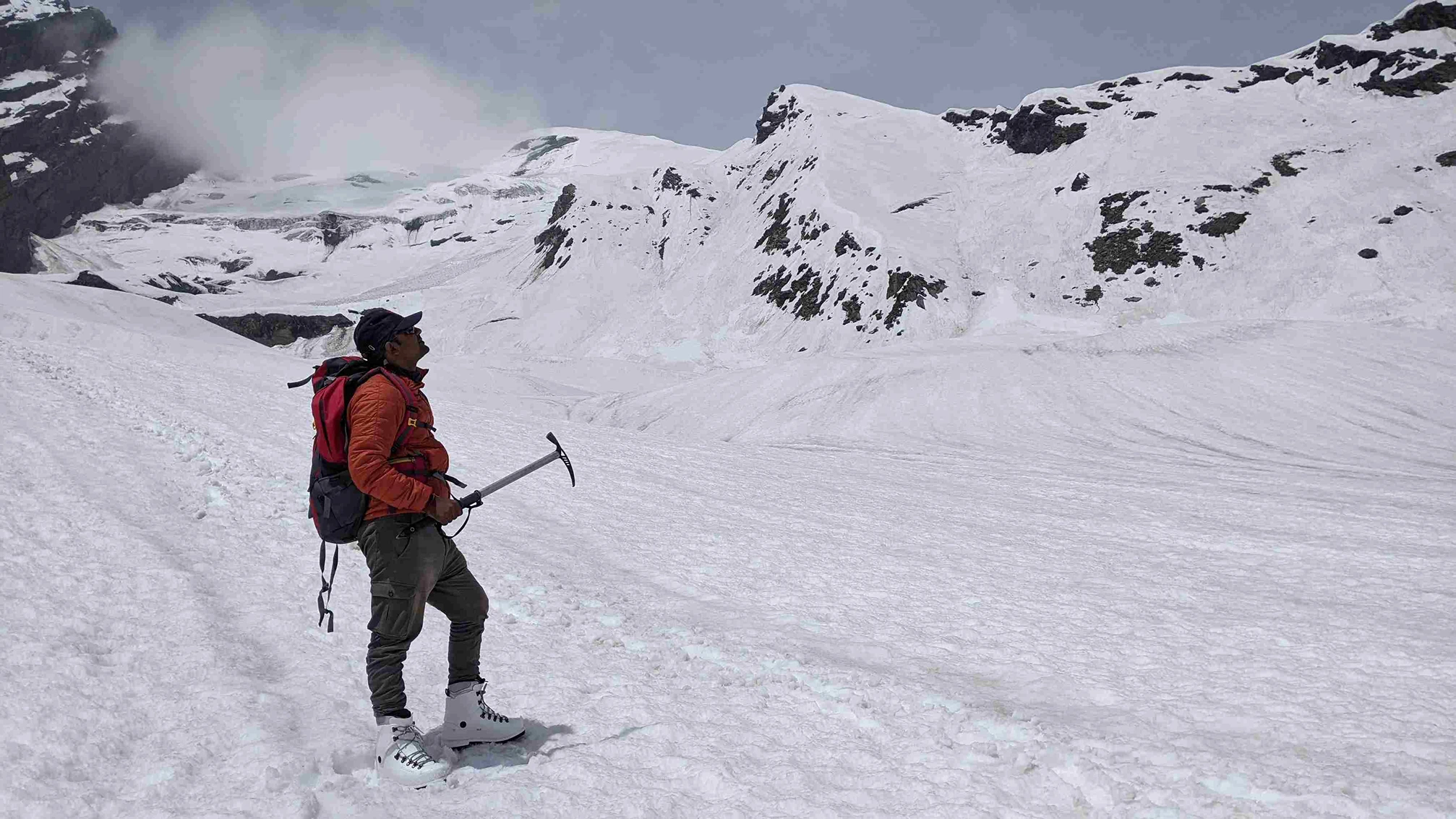
Many beginners assume that the climb ends at the summit. In reality, the descent is equally important.
Fatigue is at its peak, and concentration tends to drop. This increases the risk of slips and mistakes.
Descending on snow requires careful foot placement and control. Rushing can lead to unnecessary risks.
The goal is not just to reach the summit, but to return safely.
Tip from Experience:
Stay mentally active during descent. This is where discipline matters most.
Common Mistakes Beginners Make
One of the biggest mistakes is underestimating the climb. Friendship Peak is often labeled as beginner-friendly, which leads some climbers to take preparation lightly.
Another mistake is poor pacing during the initial days. Moving too fast early on can result in fatigue that affects summit performance.
Many climbers also neglect nutrition and hydration. At altitude, appetite drops, but energy demand increases.
Overpacking is another issue. Carrying unnecessary gear adds weight and reduces efficiency.
Ignoring early signs of altitude sickness is perhaps the most serious mistake. Timely response is critical.
Who Should Attempt Friendship Peak?
Friendship Peak is suitable for individuals who have:
• Completed at least one high-altitude trek (above 3,500–4,000m)
• Good physical fitness and endurance
• Basic understanding of trekking in mountain environments
• Willingness to learn and follow instructions
It is an ideal first step for those looking to move from trekking into mountaineering.
What You Learn from This Expedition
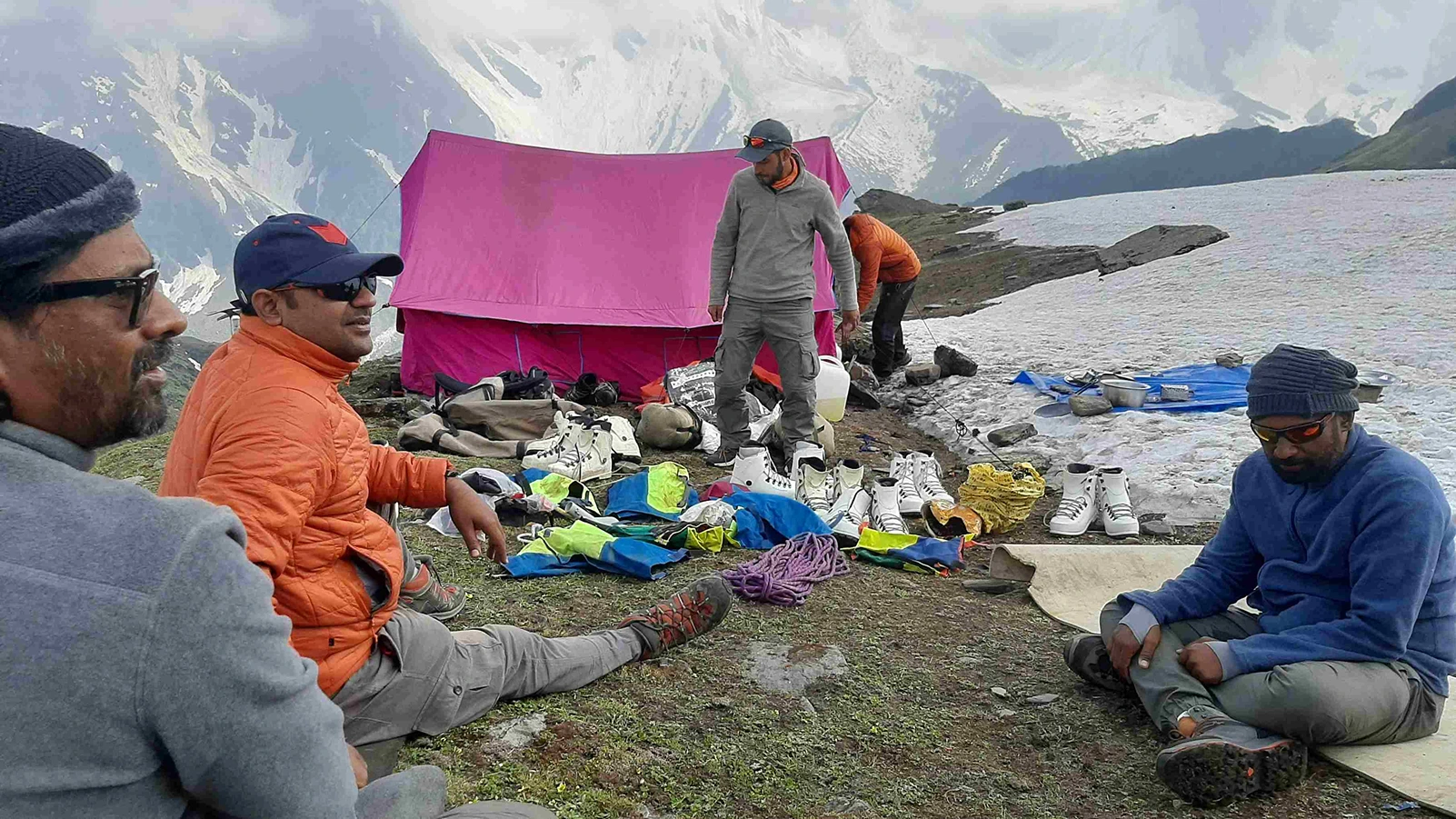
Friendship Peak teaches you the fundamentals of mountaineering.
You learn how to move on snow, how to use basic equipment, and how to function at altitude. You understand pacing, energy management, and the importance of acclimatization.
More importantly, you learn how to think in the mountains. Decision-making, patience, and discipline become part of your approach.
This learning becomes the foundation for future climbs.
Final Tips for Beginners
Train consistently before the expedition. Focus on endurance rather than short bursts of activity.
Do not rely on motivation alone. Build habits that support long-duration effort.
Keep your gear simple and functional. Avoid unnecessary weight.
Follow your guides and trust their decisions.
And most importantly, approach the climb with the mindset to learn, not just to summit.
Conclusion
Mount Friendship Peak is more than just a beginner expedition—it is an introduction to the world of mountaineering.
It offers the right balance of challenge and accessibility, allowing climbers to experience high-altitude climbing in a structured and manageable way.
For many, it becomes the starting point of a much larger journey into the Himalayas.
Because the first climb is never just about reaching the top—it is about discovering what you are capable of becoming.