If you are planning a Himalayan Expedition in Ladakh, chances are that Kang Yatse has already appeared on your list.
Rising dramatically above the Markha Valley, the Kang Yatse massif is one of Ladakh’s most recognisable high-altitude mountaineering destinations. Its two principal climbing objectives Kang Yatse I and Kang Yatse II both take climbers beyond 6,000 metres and offer an extraordinary experience in the Indian Himalayas.
But there is an important distinction every aspiring climber needs to understand:
Kang Yatse I and Kang Yatse II are not simply two similar summits with a small difference in altitude.
Their climbing difficulty, technical requirements, route characteristics and suitable experience levels are substantially different.
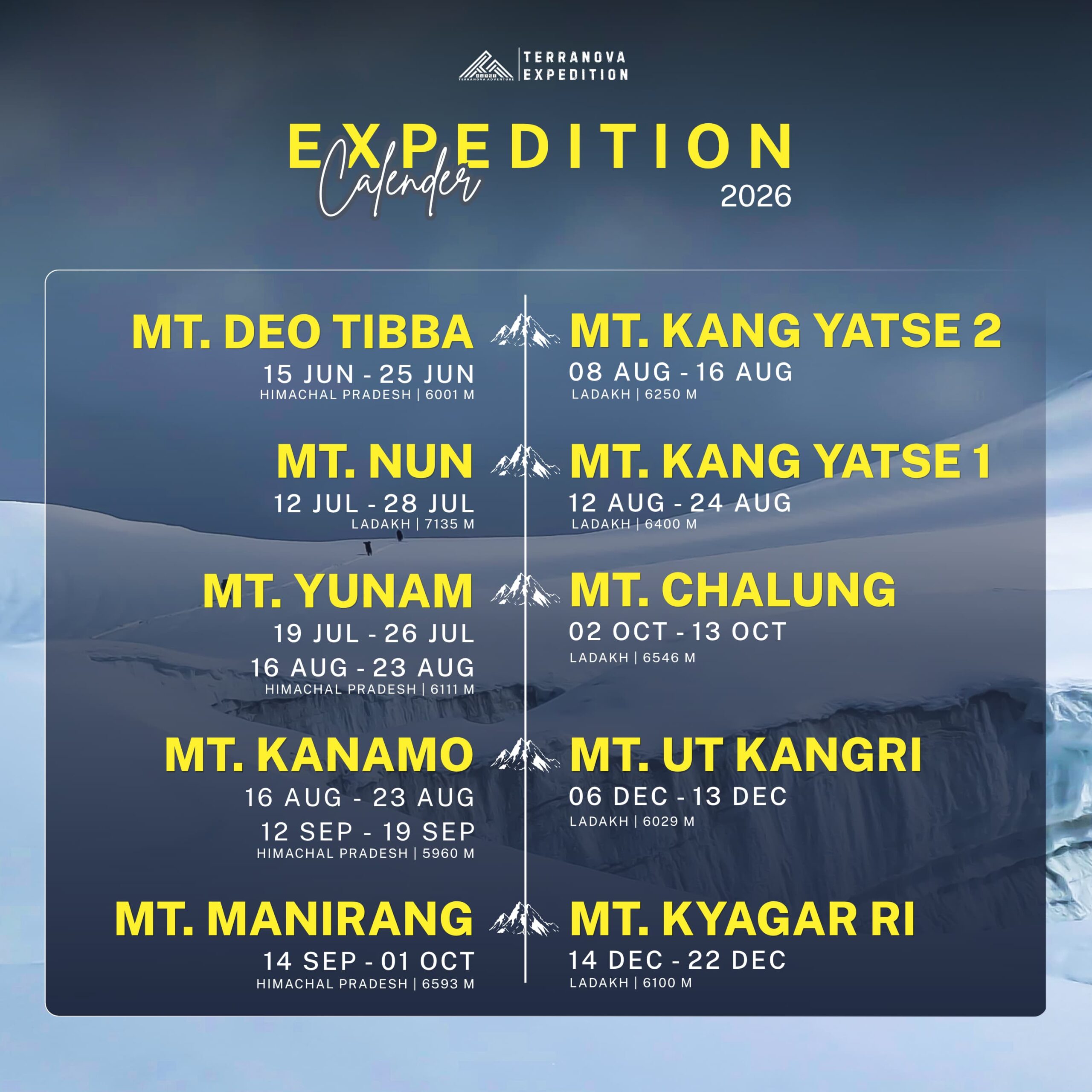
Kang Yatse II, at approximately 6,250 metres, is generally regarded as the more accessible of the two and is frequently chosen by experienced high-altitude trekkers looking to attempt their first 6,000-metre summit.
Kang Yatse I, at approximately 6,400 metres, is a much more serious technical mountaineering objective. It requires previous high-altitude experience, technical climbing competence and confidence with mountaineering equipment.
So, if you are deciding between a Kang Yatse 1 Expedition and Kang Yatse 2 Expedition, choosing purely on the basis of altitude would be a mistake.
This detailed guide explains the difference between the two peaks, their routes, difficulty, technical requirements, preparation and who should attempt each one.
Where Are Kang Yatse I and Kang Yatse II?
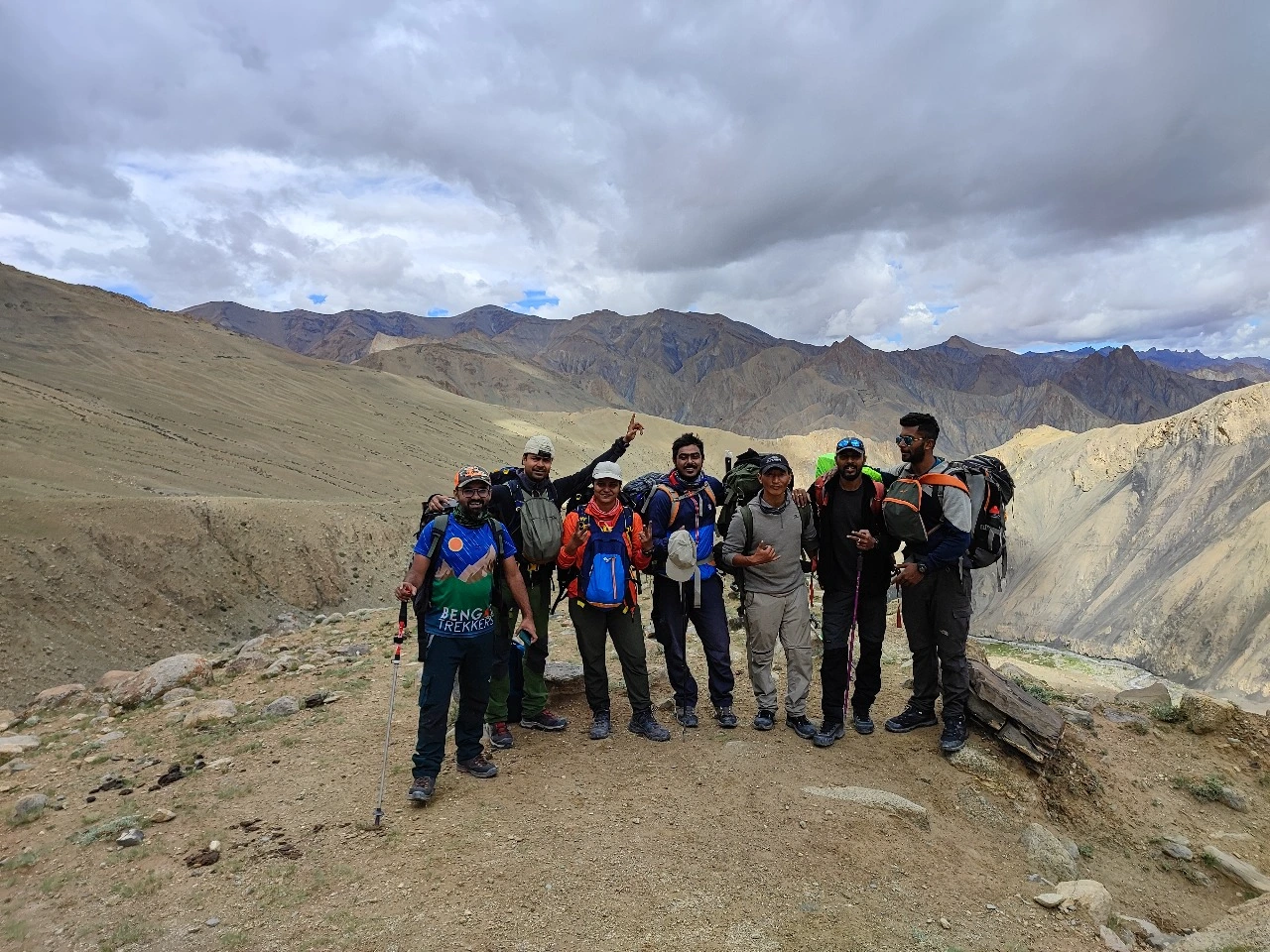
Both peaks belong to the Kang Yatse massif in Ladakh, situated around the upper Markha Valley and Hemis National Park.
The approach itself is one of the reasons these expeditions are so attractive.
Unlike an expedition where climbers simply drive close to base camp, the journey towards Kang Yatse passes through the dramatic landscapes of the Markha Valley.
Trekkers experience traditional Ladakhi settlements, broad valleys, high-altitude pastures, river crossings and the distinctive barren mountains that define this part of Ladakh.
As the expedition moves higher, the environment gradually changes from trekking terrain into a true high-altitude mountain landscape.
The two principal objectives are:
Kang Yatse I – approximately 6,400 metres
Kang Yatse II – approximately 6,250 metres
A difference of around 150 metres might not appear significant.
Technically, however, the difference is substantial.
Kang Yatse I vs Kang Yatse II: Quick Comparison
| Factor | Kang Yatse I | Kang Yatse II |
| Approx. Altitude | 6,400 m | 6,250 m |
| Type | Technical mountaineering peak | Less technical / trekking peak |
| Difficulty | Very Difficult | Difficult |
| Technical Skills | Strongly required | Basic skills useful/required depending on conditions |
| Fixed Rope Use | Important on technical sections | Limited/condition-dependent |
| Glacier Travel | Significant | Less complex |
| Crampons | Required | Commonly required |
| Ice Axe | Required | Commonly used |
| Previous Experience | Technical & high-altitude experience | Strong high-altitude trekking experience |
| Suitable First 6000m Peak? | Generally No | Often Yes, with proper preparation |
| Main Season | Summer to early autumn | Summer to early autumn |
| Best For | Experienced mountaineers | Experienced trekkers progressing to mountaineering |
This table reveals the most important point:
Kang Yatse II is usually a progression from trekking towards mountaineering. Kang Yatse I is a technical mountaineering objective.
What Is the Kang Yatse 2 Expedition?
For many climbers, the Kang Yatse 2 Expedition is their introduction to the world above 6,000 metres.
At approximately 6,250 metres, Kang Yatse II is high enough to demand serious acclimatisation, fitness and mental endurance, but its normal climbing route is considerably less technical than Kang Yatse I.
This makes it particularly attractive to trekkers who have already completed difficult high-altitude treks and now want to progress towards Himalayan mountaineering.
But calling Kang Yatse II “non-technical” can sometimes create the wrong impression.
Non-technical does not mean easy.
At more than 6,000 metres, the reduced availability of oxygen changes everything.
Walking becomes slower. Recovery takes longer. Cold feels more severe. Appetite may decrease. Even simple tasks around camp can require more effort.
The summit attempt can involve snow, scree and steep slopes, and crampons and an ice axe may be necessary depending on mountain conditions.
Therefore, Kang Yatse II should be treated as a serious high-altitude expedition rather than an ordinary trek with a summit at the end.
What Is the Kang Yatse 1 Expedition?
The Kang Yatse 1 Expedition is a different category of challenge.
At approximately 6,400 metres, Kang Yatse I is the higher principal summit of the massif and presents significantly more technical climbing.
The mountain requires climbers to negotiate steep snow and ice terrain, glaciated sections, exposed areas and sections requiring rope techniques.
Participants should be comfortable using mountaineering equipment such as:
- Crampons
- Ice axe
- Harness
- Helmet
- Ascender/Jumar
- Carabiners
- Ropes
- Appropriate mountaineering boots
More importantly, climbers need to know how to use this equipment effectively while tired, cold and operating at extreme altitude.
That is where the true difficulty of Kang Yatse I lies.
Knowing how to use an ascender during a training session at lower altitude is very different from using one efficiently on a steep mountain section above 6,000 metres.
For this reason, Kang Yatse I is generally recommended for climbers with previous mountaineering and high-altitude expedition experience.
Biggest Difference: Technical Difficulty
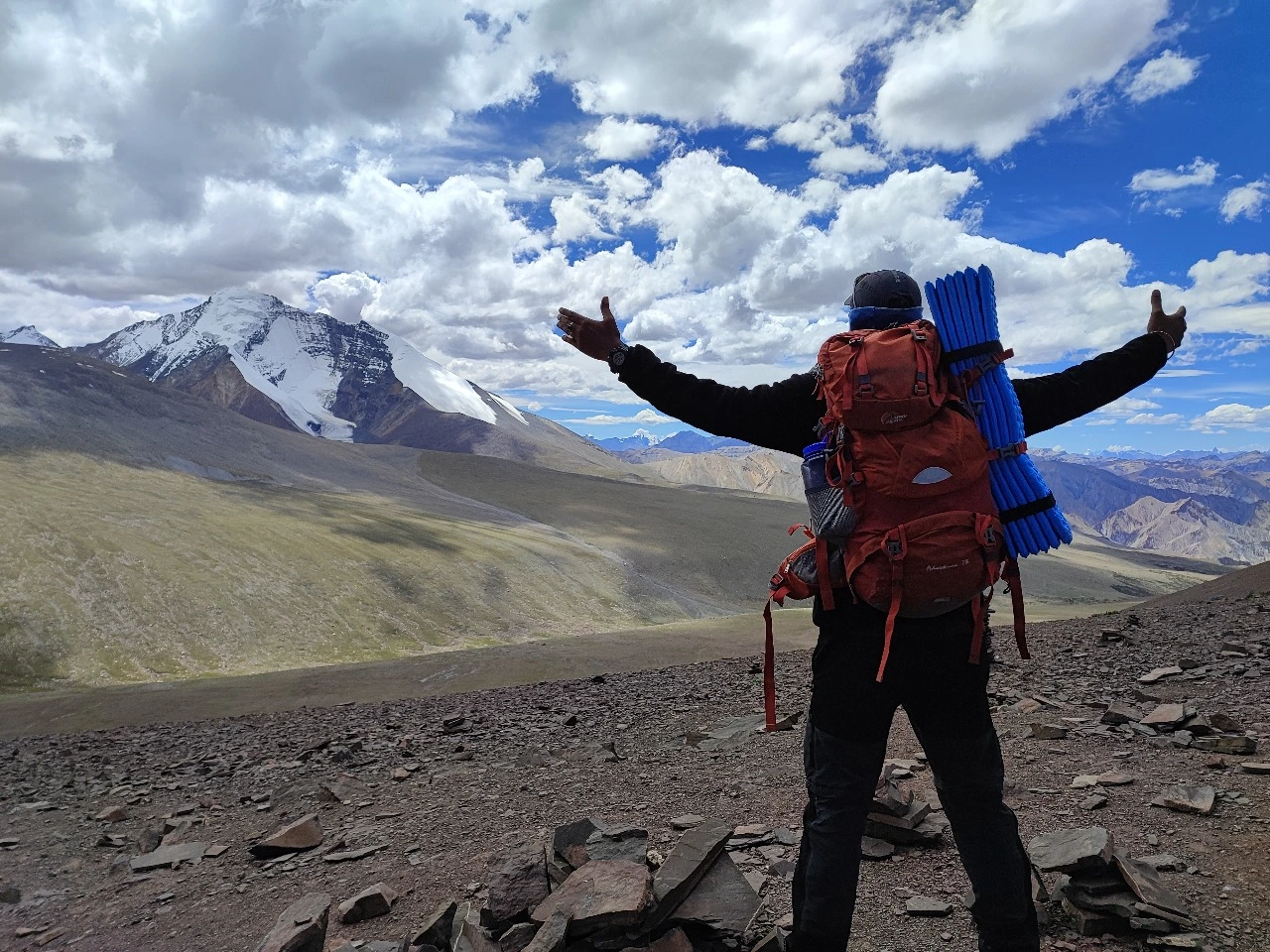
The technical gap between Kang Yatse I and Kang Yatse II is arguably more important than their difference in altitude.
Kang Yatse II
Kang Yatse II is generally the less technical objective.
Its standard route is primarily a demanding high-altitude ascent rather than sustained technical climbing.
Depending on snow conditions, climbers may need crampons and an ice axe and must know how to move safely on snow.
The primary challenge remains:
Altitude + endurance + summit-day effort.
Kang Yatse I
Kang Yatse I requires genuine mountaineering competence.
The climb can involve steep snow and ice, glacier travel, fixed ropes and exposed terrain.
Here, the challenge becomes:
Altitude + endurance + technical climbing + exposure + decision-making.
That combination makes Kang Yatse I significantly more demanding.
Which Peak Is Better for Your First 6,000m Expedition?
For most strong trekkers entering the 6,000-metre category, Kang Yatse II is the more logical choice.
Suppose you have already completed several Himalayan treks at significant altitude and have good cardiovascular fitness but limited technical climbing experience.
In that situation, jumping directly to Kang Yatse I would create a substantial skill gap.
Kang Yatse II allows you to experience:
- Acclimatisation above 5,000 metres
- Expedition-style camping
- Extreme-altitude movement
- Alpine summit starts
- Snow climbing
- Basic mountaineering equipment
- Long summit days
- Physical and mental fatigue at 6,000 metres
All of these experiences provide a useful foundation for future technical expeditions.
However, climbers should not assume that simply completing Kang Yatse II automatically makes them ready for Kang Yatse I.
Technical training and additional experience may still be necessary.
Which Peak Is Better for Experienced Mountaineers?
If you already have strong high-altitude experience and are competent with technical mountaineering equipment, Kang Yatse I offers the more challenging climbing objective.
It demands far more than cardiovascular fitness.
You need efficient rope movement, good balance on snow and ice, familiarity with crampons and the ability to remain composed on exposed terrain.
At altitude, efficiency matters.
A climber who constantly struggles with equipment can expend considerably more energy than someone whose technical movements have become instinctive through training and experience.
Kang Yatse I therefore makes more sense for climbers who want to progress deeper into technical Himalayan mountaineering rather than simply achieve their first 6,000-metre summit.
Altitude: 6,250m vs 6,400m
It is tempting to think:
“Kang Yatse I is only about 150 metres higher, so how much harder can it really be?”
This is exactly where climbers can misjudge these peaks.
The additional altitude is not what creates most of the difference.
The terrain does.
Kang Yatse II reaches approximately 6,250 metres but follows a comparatively straightforward climbing line under normal conditions.
Kang Yatse I rises to approximately 6,400 metres but requires considerably more technical climbing.
Therefore:
Altitude tells you how high the mountain is. It does not tell you how difficult the route is.
This principle applies across mountaineering.
A technically difficult 6,000-metre peak can be substantially harder than a higher mountain with a more straightforward normal route.
Fitness Requirements for Kang Yatse II
Good general fitness is not enough for a Kang Yatse 2 Expedition.
You should develop mountain-specific endurance.
Training should ideally begin several months before departure and include:
Cardiovascular Training
Running, cycling, swimming, stair climbing and incline walking can build aerobic capacity.
Strength Training
Focus particularly on:
- Quadriceps
- Hamstrings
- Glutes
- Calves
- Core
- Lower back
Backpack Training
Regular uphill walking with a progressively loaded backpack can prepare your body for long trekking days.
Long-Duration Training
Being able to exercise hard for one hour does not necessarily mean you can move efficiently for eight or ten hours.
Long hikes and back-to-back training days help build expedition-specific endurance.
Fitness and Skills Required for Kang Yatse I
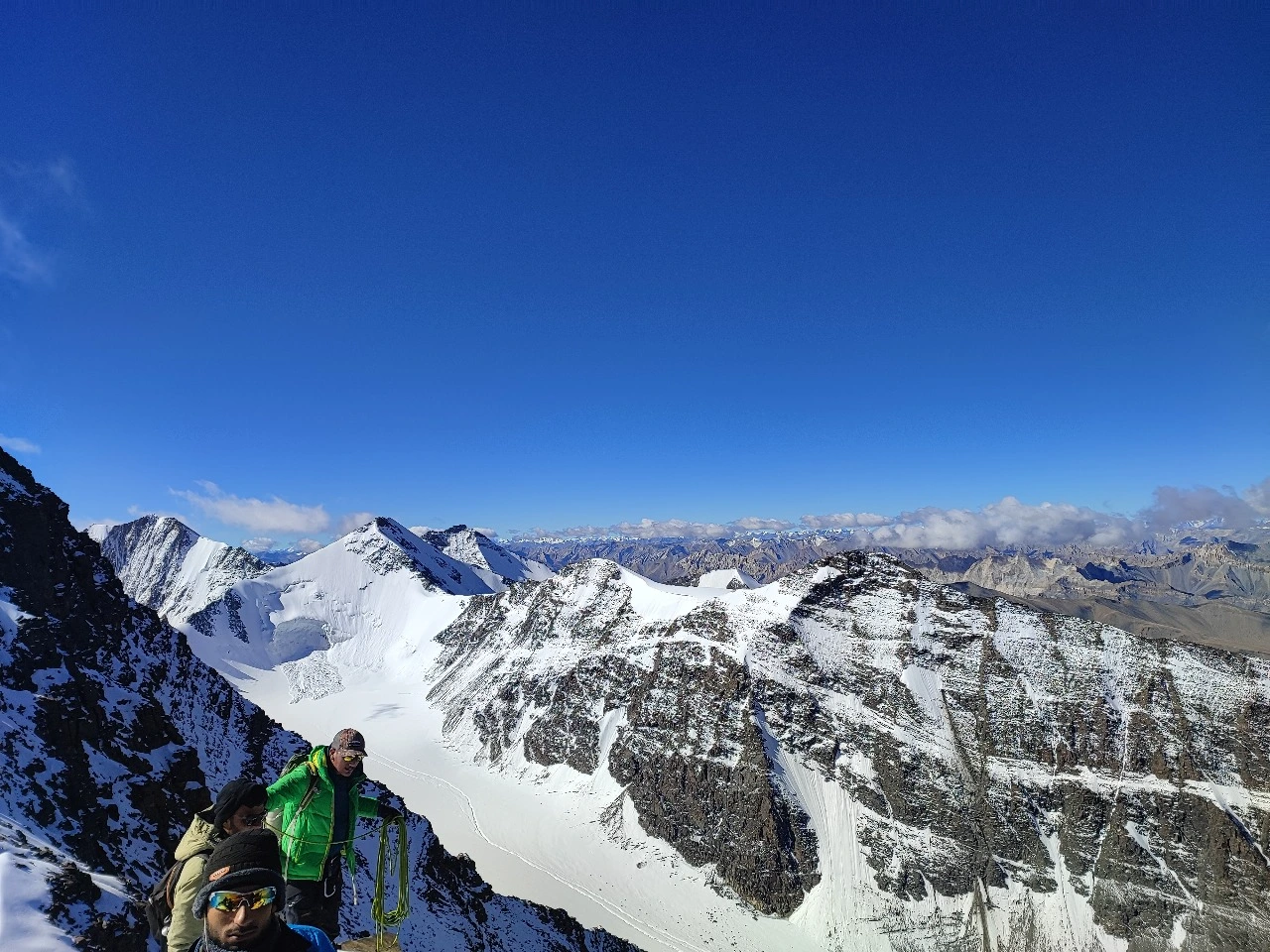
For a Kang Yatse 1 Expedition, all the fitness requirements above still apply—but technical competence must be added.
Climbers should ideally be comfortable with:
- Walking efficiently in crampons
- Ice-axe handling
- Self-arrest fundamentals
- Ascending fixed ropes
- Descending safely
- Rope management
- Glacier travel fundamentals
- Movement on steep snow
- Basic crevasse awareness
- Using a harness and climbing hardware
A Basic Mountaineering Course or equivalent practical experience can provide a valuable foundation.
Kang Yatse I should not be the mountain on which you encounter technical equipment for the first time.
Acclimatisation: Critical for Both Peaks
Whether you choose Kang Yatse I or Kang Yatse II, acclimatisation is fundamental.
Leh itself sits at a considerable altitude, and arriving by air creates an immediate altitude gain.
Trying to rush the itinerary is one of the worst decisions a climber can make.
A responsible expedition plan should provide adequate time for the body to adjust before moving higher.
The Markha Valley approach can assist progressive acclimatisation because elevation generally increases as the team advances towards base camp.
Nevertheless, every climber responds differently.
Excellent physical fitness does not provide immunity against altitude illness.
A marathon runner can experience altitude problems while a slower trekker acclimatises perfectly well.
Listen to your body and report symptoms honestly to your expedition leader.
Best Time for Kang Yatse I and Kang Yatse II
The principal climbing period for both objectives falls during Ladakh’s summer and early-autumn season, broadly June/July through September, with exact suitability varying between the two peaks and from year to year.
July and August are particularly popular expedition months.
Ladakh lies in a rain-shadow region, meaning it receives considerably less monsoon precipitation than many other parts of the Indian Himalayas.
However, this does not mean mountain weather is guaranteed.
At 6,000 metres, conditions can change quickly.
Snowfall, wind, temperature, visibility and route conditions can all affect a summit attempt.
This is why climbers researching Upcoming Himalayan Expeditions should consider the recommended climbing window rather than selecting a departure purely according to holiday availability.
What Is the Summit Day Like?
Summit day is generally the hardest part of either expedition.
Teams usually begin during the night or very early morning.
Why?
Early starts can provide firmer snow conditions, lower exposure to daytime weather deterioration and sufficient time to descend after reaching the summit.
Kang Yatse II Summit Attempt
The Kang Yatse II summit attempt demands sustained endurance.
The combination of darkness, cold, altitude and continuous climbing makes it psychologically demanding even when the terrain is not highly technical.
Progress can become extremely slow above 6,000 metres.
Every step requires concentration.
Kang Yatse I Summit Attempt
On Kang Yatse I, the same high-altitude fatigue is combined with technical climbing.
This means climbers must remain precise while exhausted.
Rope work, crampon placement and movement on exposed terrain require concentration.
For experienced mountaineers, this technical element is exactly what makes Kang Yatse I such a rewarding Himalayan Expedition.
Equipment: How Do the Requirements Differ?
Both expeditions require high-quality high-altitude clothing, trekking equipment and cold-weather protection.
Kang Yatse II may also require mountaineering equipment such as crampons, harness and ice axe depending on route conditions and expedition setup.
Kang Yatse I requires a more comprehensive technical system.
Equipment alone, however, does not make a climber technically prepared.
Owning crampons does not mean you know how to walk efficiently in them.
Owning an ice axe does not mean you understand self-arrest.
Owning an ascender does not mean you can use it efficiently on a fixed rope.
Skills must be practised before the expedition.
Kang Yatse I vs II: Who Should Choose What?
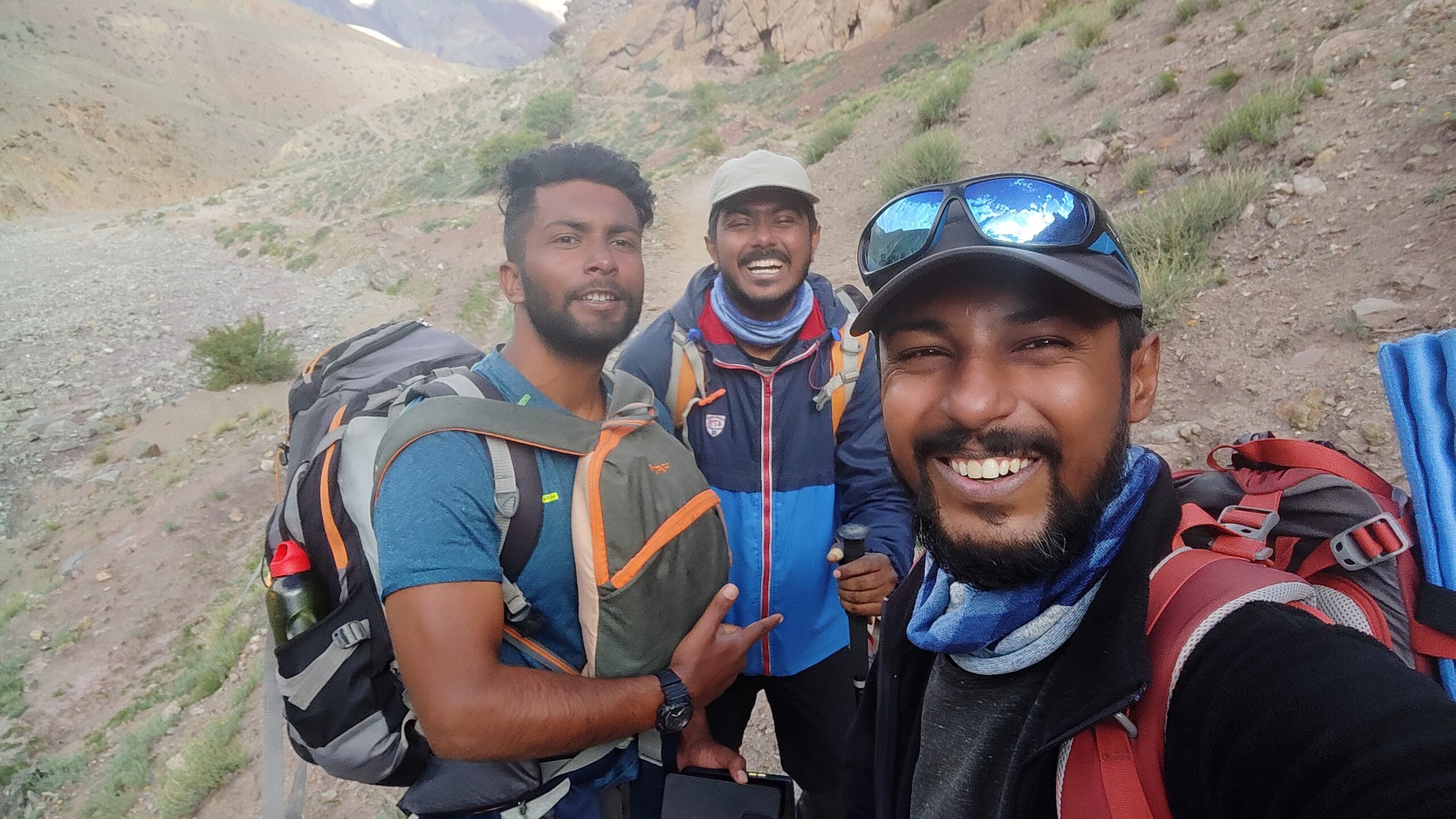
Choose Kang Yatse II If:
You are an experienced high-altitude trekker looking to progress towards mountaineering.
You want to attempt your first 6,000-metre peak.
You possess strong physical fitness but have limited technical climbing experience.
You want to experience expedition-style climbing without immediately moving into a highly technical objective.
You are prepared to learn and practise basic snow and mountaineering techniques.
Choose Kang Yatse I If:
You already possess significant high-altitude experience.
You have previous mountaineering experience.
You are confident using crampons, ice axe, harness and fixed ropes.
You understand movement on steep snow and glaciated terrain.
You want a technical 6,000-metre climbing challenge rather than primarily an altitude challenge.
Can You Climb Kang Yatse II First and Then Kang Yatse I?
For experienced and properly prepared climbers, the two peaks can form an excellent progression.
Kang Yatse II can provide valuable altitude exposure and help climbers understand how they perform above 6,000 metres.
After developing additional technical skills and experience, Kang Yatse I can become the next major objective.
Some specialised itineraries even combine both peaks in a single expedition, using Kang Yatse II as an acclimatisation and progression objective before attempting Kang Yatse I.
However, a twin-peak itinerary is substantially more demanding and should only be considered by climbers whose fitness, technical skills and recovery capacity are appropriate for the challenge.
The goal should never be to collect two summits as quickly as possible.
The goal should be to progress safely.
How to Prepare 3–4 Months Before Your Kang Yatse Expedition
If Kang Yatse appears on your list of Upcoming Himalayan Expeditions, begin preparation well before reaching Leh.
Month 1: Build Your Base
Focus on consistent cardiovascular exercise and general strength.
Train four to five days per week depending on your existing fitness level.
Month 2: Increase Endurance
Add longer hikes, stair climbing and incline sessions.
Begin carrying a backpack during selected workouts.
Month 3: Become Mountain-Specific
Introduce back-to-back endurance days.
Practise long uphill efforts and increase your loaded hiking time.
For Kang Yatse I, technical training should already be part of your preparation.
Final Month: Consolidate
Do not suddenly double your training volume.
Maintain fitness, check equipment, prioritise recovery and arrive in Ladakh healthy rather than exhausted from overtraining.
Common Mistakes Climbers Make When Choosing Between Kang Yatse I & II
1. Looking Only at Altitude
The difference between 6,250 m and 6,400 m does not adequately represent the difference in difficulty.
2. Assuming Kang Yatse II Is Easy
It is still a serious 6,000-metre expedition.
3. Attempting Kang Yatse I Without Technical Skills
Physical fitness cannot replace technical mountaineering competence.
4. Rushing Acclimatisation
A shorter itinerary is not automatically a better itinerary.
At altitude, adequate acclimatisation is an important part of risk management.
5. Training Only in the Gym
Strength is valuable, but mountain endurance requires long-duration cardiovascular conditioning and time on your feet.
6. Choosing According to Ego
Choose a mountain based on your current experience—not on which summit sounds more impressive.
Kang Yatse I or Kang Yatse II: Which One Should You Choose?
The answer depends on where you currently stand as a climber.
If you are an experienced trekker who has completed demanding high-altitude treks and wants to move towards a 6,000-metre summit, Kang Yatse II is generally the more appropriate progression.
If you already have significant high-altitude and technical mountaineering experience and want a serious alpine challenge, Kang Yatse I offers a substantially more demanding objective.
Think of the progression like this:
High-altitude trekking → Kang Yatse II → technical training and further climbing experience → Kang Yatse I
This does not need to be everyone’s exact progression, but it demonstrates an important mountaineering principle:
Build experience progressively rather than jumping directly to the hardest objective.
Plan Your Kang Yatse Expedition with Terranova Expeditions
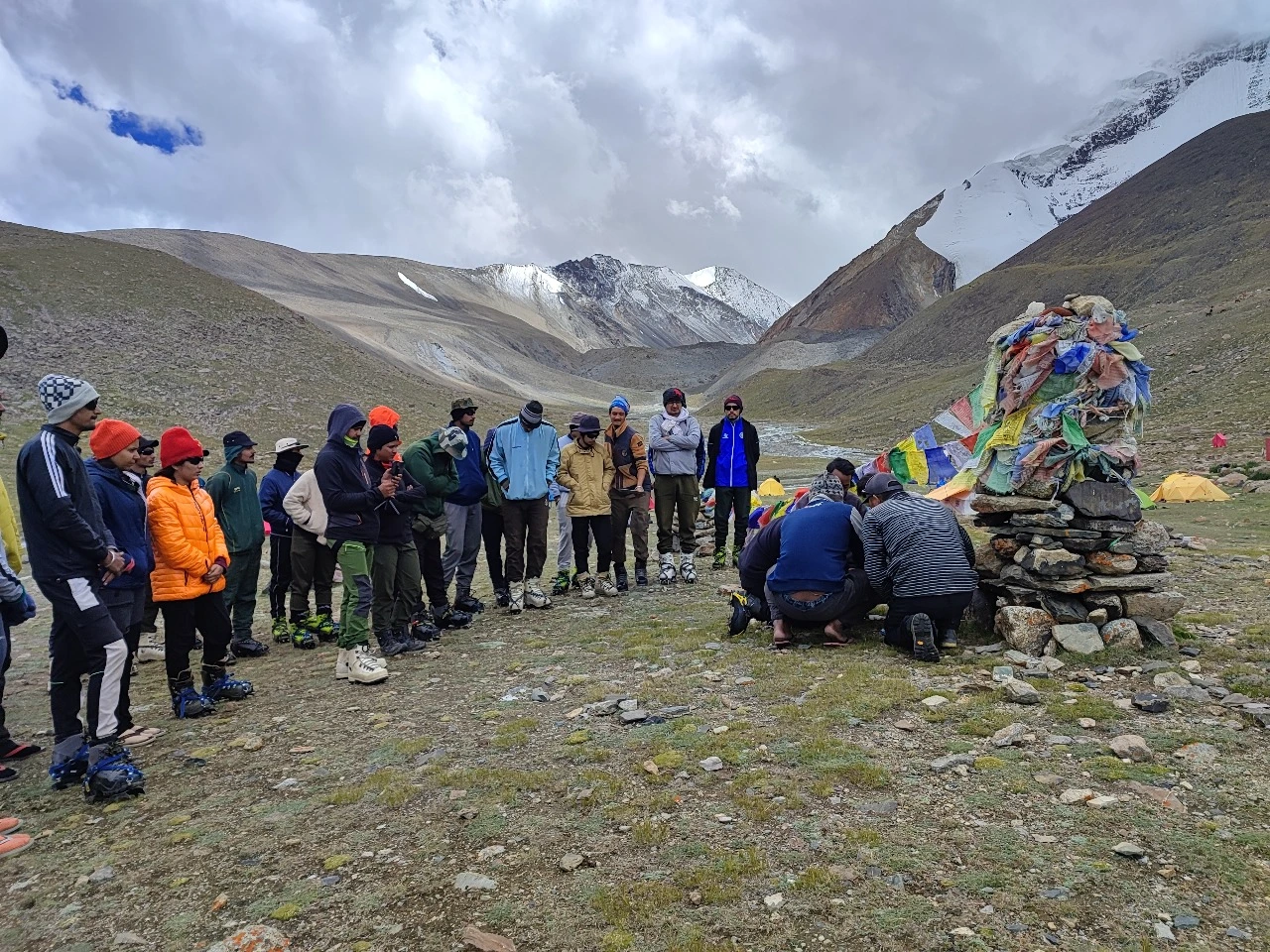
Kang Yatse I and Kang Yatse II may rise from the same massif, but they provide two distinctly different Himalayan experiences.
Kang Yatse II is an outstanding objective for strong trekkers ready to move beyond conventional high-altitude trekking and experience their first serious 6,000-metre summit.
Kang Yatse I is designed for experienced mountaineers seeking technical climbing, exposure, glacier terrain and the challenge of operating efficiently at extreme altitude.
Whichever peak you choose, preparation should begin long before you arrive in Ladakh.
Train consistently.
Build altitude experience progressively.
Learn the technical skills your objective demands.
Allow sufficient time for acclimatisation.
Most importantly, choose the mountain that matches your present ability rather than the mountain with the more impressive number.
As you explore Upcoming Himalayan Expeditions, remember that successful mountaineering is not simply about standing on the highest summit possible.
It is about developing the skills and experience that allow you to climb progressively bigger mountains safely.
For some climbers, that next step will be the Kang Yatse 2 Expedition.
For experienced mountaineers, it may be the Kang Yatse 1 Expedition.
Both offer an extraordinary opportunity to experience high-altitude mountaineering in the spectacular landscapes of Ladakh.
Frequently Asked Questions About Kang Yatse I & II
1. What is the main difference between Kang Yatse I and Kang Yatse II?
Kang Yatse I is approximately 6,400 metres and is a technical mountaineering peak involving steeper and more complex terrain. Kang Yatse II is approximately 6,250 metres and follows a considerably less technical normal route, making it a more suitable progression for experienced trekkers entering 6,000-metre mountaineering.
2. Is Kang Yatse II suitable for beginners?
It should not be considered a beginner trek. However, strong trekkers with previous high-altitude experience, appropriate fitness, acclimatisation and expedition preparation may choose Kang Yatse II as an early or first 6,000-metre objective.
3. Is Kang Yatse I a technical expedition?
Yes. Kang Yatse I is a genuine technical mountaineering objective. Climbers should have previous high-altitude experience and competence with crampons, ice axe, fixed ropes, harness systems and movement over steep snow and glaciated terrain.
4. Which is harder: Kang Yatse I or Kang Yatse II?
Kang Yatse I is significantly harder. The approximately 150-metre altitude difference is relatively small, but Kang Yatse I’s technical terrain makes it a much more demanding climb.
5. Which Kang Yatse peak is better for a first 6,000m expedition?
For a strong and experienced high-altitude trekker, Kang Yatse II is generally the more appropriate of the two. Kang Yatse I should normally be attempted after gaining technical mountaineering experience.
6. What is the best time for the Kang Yatse Expedition?
The main climbing season is during Ladakh’s summer and early-autumn period, broadly from June/July to September. Exact departure windows should be selected according to the particular peak and current mountain conditions.
7. Do I need a mountaineering course for Kang Yatse I?
Formal course requirements can depend on the expedition operator and applicable regulations, but proper technical training is strongly recommended. Climbers should be competent with crampons, ice axe, ropes and other essential mountaineering equipment before attempting Kang Yatse I.
8. Can I attempt Kang Yatse I after completing Kang Yatse II?
Kang Yatse II can be an excellent progression towards Kang Yatse I, but completing it does not automatically make a climber technically ready. Additional technical mountaineering training and climbing experience may be required before attempting Kang Yatse I.
9. How should I prepare physically for a Kang Yatse Expedition?
Begin structured training at least three to four months beforehand. Combine cardiovascular endurance, leg and core strength, stair or incline training, long hikes and loaded backpack sessions. Kang Yatse I aspirants should add dedicated technical mountaineering preparation.
10. Why are Kang Yatse I and II popular Himalayan Expeditions?
They combine 6,000-metre climbing with Ladakh’s spectacular Markha Valley landscape. More importantly, the two peaks provide different levels of progression: Kang Yatse II for experienced trekkers moving into mountaineering and Kang Yatse I for climbers seeking a significantly more technical Himalayan objective.