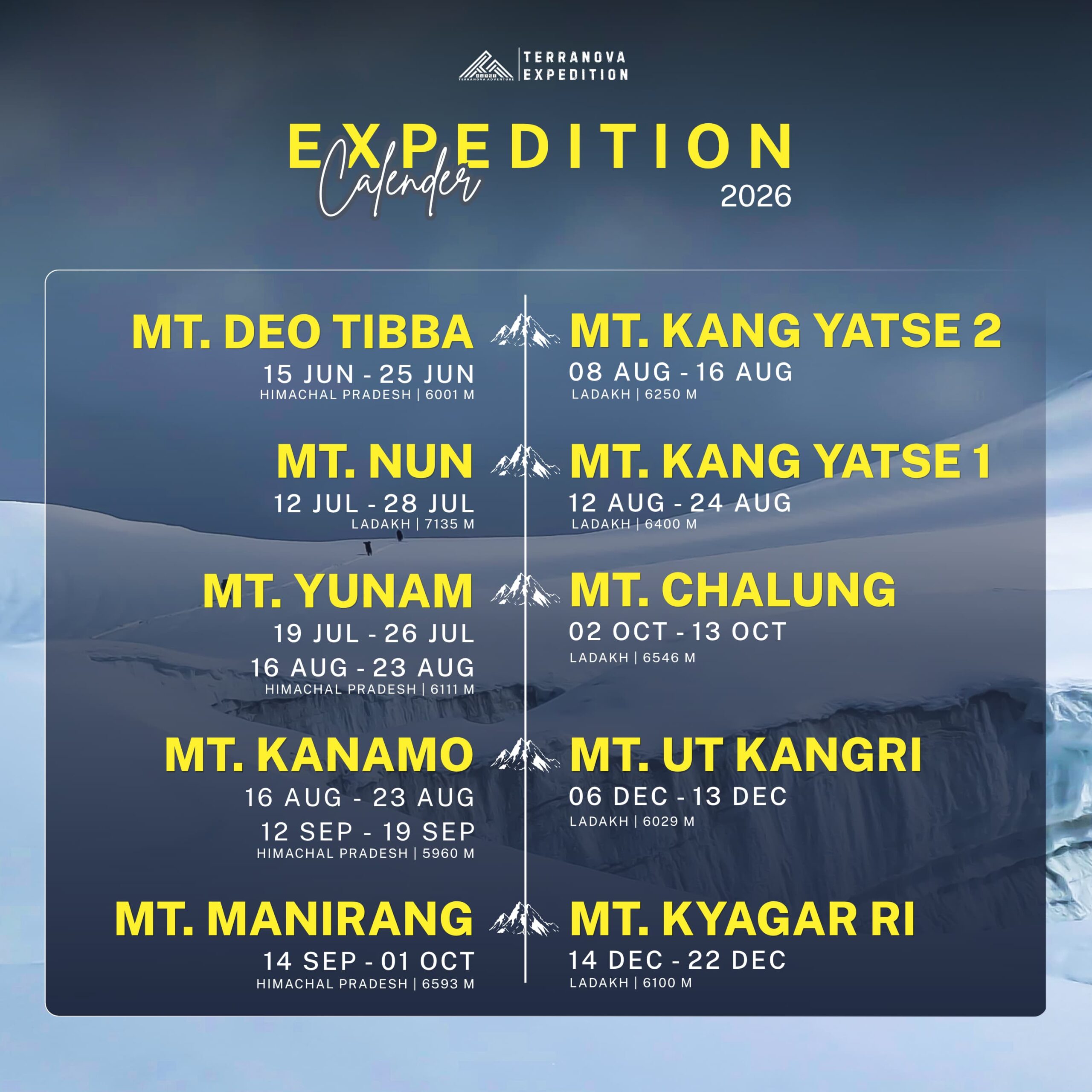
The Indian Himalayas offer some of the finest opportunities for high-altitude mountaineering in the world. From the glaciated slopes of Uttarakhand to the stark high-altitude landscapes of Ladakh and Lahaul, every Himalayan expedition comes with its own terrain, technical demands, weather patterns and climbing season.
But there is one important rule that every aspiring mountaineer should understand:
A Himalayan peak should be climbed in the right season—not simply when you have time available.
This becomes particularly important when planning an expedition between October and February.
October marks the transition from the post-monsoon climbing season into Himalayan winter. By November, temperatures at altitude fall dramatically, snow accumulation increases, daylight becomes shorter and many high mountain approaches begin becoming considerably more difficult. December, January and February bring full winter conditions across much of the Indian Himalayas.
Does this mean there are no Himalayan adventures between October and February?
Absolutely not.
However, there is a major difference between a winter Himalayan trek and a 6,000-metre mountaineering expedition.
This guide explains which of these expeditions may extend into October, which should be planned for their regular climbing seasons, and how serious mountaineers can use the winter months to prepare for their next Himalayan summit.
Can You Do a Himalayan Expedition Between October and February?
Some expeditions may be possible during early October under favourable conditions, but the five expeditions discussed in this guide should not generally be considered November-to-February commercial climbing objectives.
October itself requires some explanation.
Early October can still fall within the post-monsoon climbing window for selected peaks in Uttarakhand and Himachal Pradesh. Skies can be exceptionally clear, visibility can be excellent and trails may remain accessible.
But conditions change quickly as the month progresses.
At higher elevations, temperatures begin dropping substantially. Fresh snowfall can alter the climbing route, water sources may freeze, winds can become stronger and camps become much colder.
By November, the character of the mountains has changed.
Winter conditions increasingly dominate the high Himalayas. December to February is therefore better suited to carefully selected winter treks and specialised objectives rather than assuming that regular 5,000–6,000+ metre expedition itineraries can simply be operated in winter.
For expedition planning, always distinguish between:
- Official or commonly used climbing season
- A possible shoulder-season attempt
- A specialised winter ascent
These are not the same thing.
A highly experienced mountaineering team may attempt objectives outside their standard commercial season, but that does not make those months suitable for regular expedition batches.
1. Black Peak Expedition
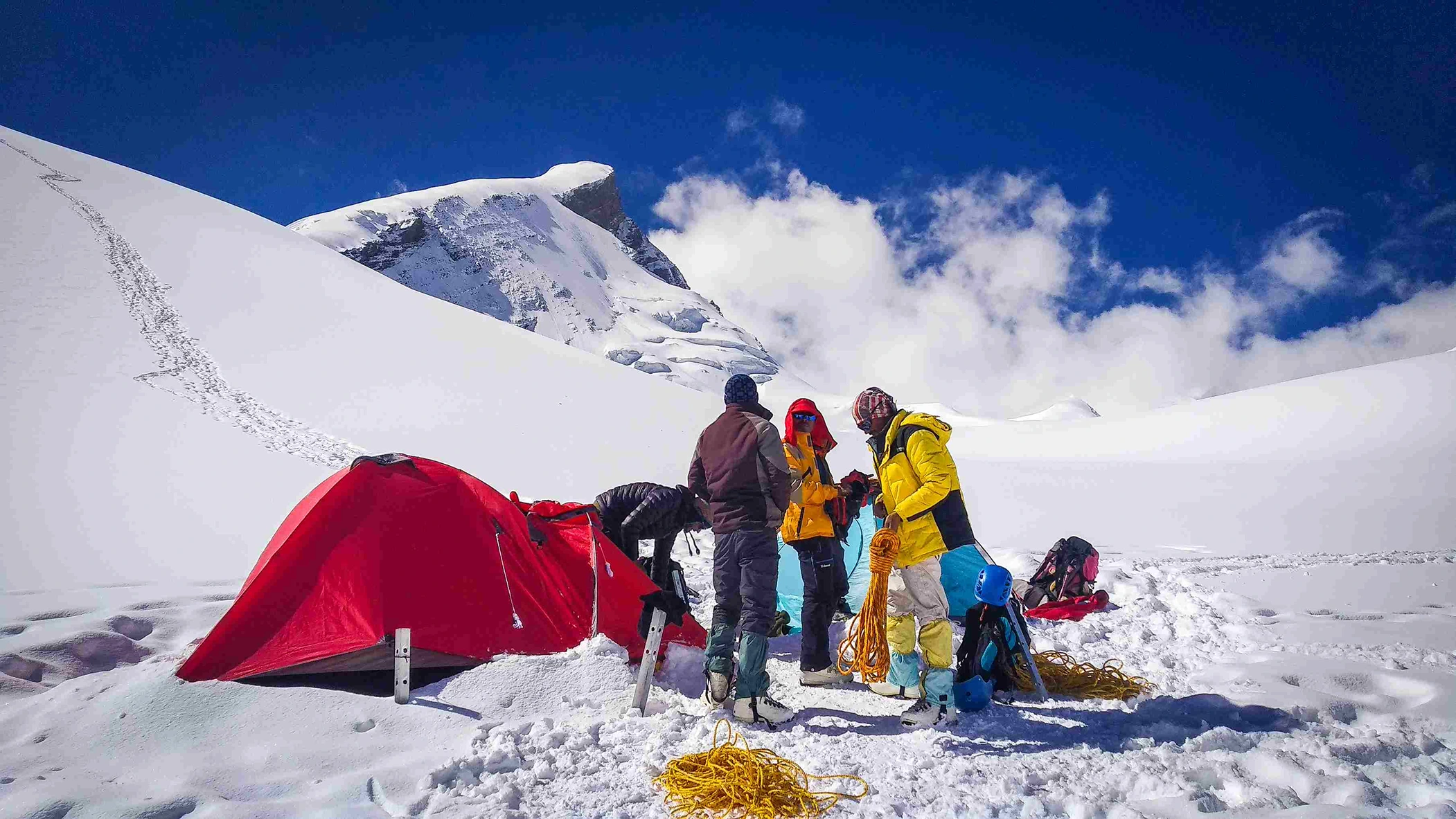
Altitude: Approximately 6,387 metres
Region: Uttarakhand
Range: Garhwal Himalayas
Common climbing windows: Pre-monsoon and post-monsoon, with September–October being an important autumn period
October–February status: Early October may be considered depending on conditions; deep winter is not a normal commercial window.
Black Peak, also known as Kala Nag, is one of the most prominent mountaineering objectives in Uttarakhand’s Garhwal Himalayas.
Rising to approximately 6,387 metres, the mountain forms part of the Bandarpunch massif and provides a serious progression for trekkers moving towards technical mountaineering.
Unlike a conventional high-altitude trek, the Black Peak Expedition involves genuine mountaineering terrain.
Climbers may encounter glaciers, steep snow and ice, crevasses, fixed-rope sections and technically demanding sections on the upper mountain. The expedition therefore requires strong physical conditioning along with previous high-altitude experience and appropriate mountaineering skills.
Can Black Peak Be Climbed in October?
October deserves special attention.
The post-monsoon period can provide clear skies and excellent mountain visibility. Early October may still provide an expedition opportunity when the mountain, route, weather and snow conditions are favourable.
However, October should never be treated as uniformly suitable from the first day to the last.
As autumn progresses, temperatures drop rapidly and new snowfall can change the technical condition of the mountain. This is why expedition dates should be determined by actual route conditions and professional assessment rather than simply by the calendar.
Black Peak from November to February
For standard commercial expedition planning, November through February should not be promoted as the normal Black Peak climbing season.
Winter introduces much more severe conditions, including heavy snow accumulation, extreme cold, potentially unstable snowpacks and greater logistical difficulties.
This period is better used to prepare for a future Black Peak attempt.
A climber targeting Black Peak in 2027 can spend these months improving:
- Cardiovascular endurance
- Leg and core strength
- Loaded backpack training
- Snowcraft skills
- Rope techniques
- Crampon movement
- Ice-axe handling
- Acclimatisation knowledge
- Expedition equipment familiarity
For serious aspirants, winter preparation can make the difference between merely joining an expedition and arriving genuinely ready for the mountain.
2. Yunam Peak Expedition
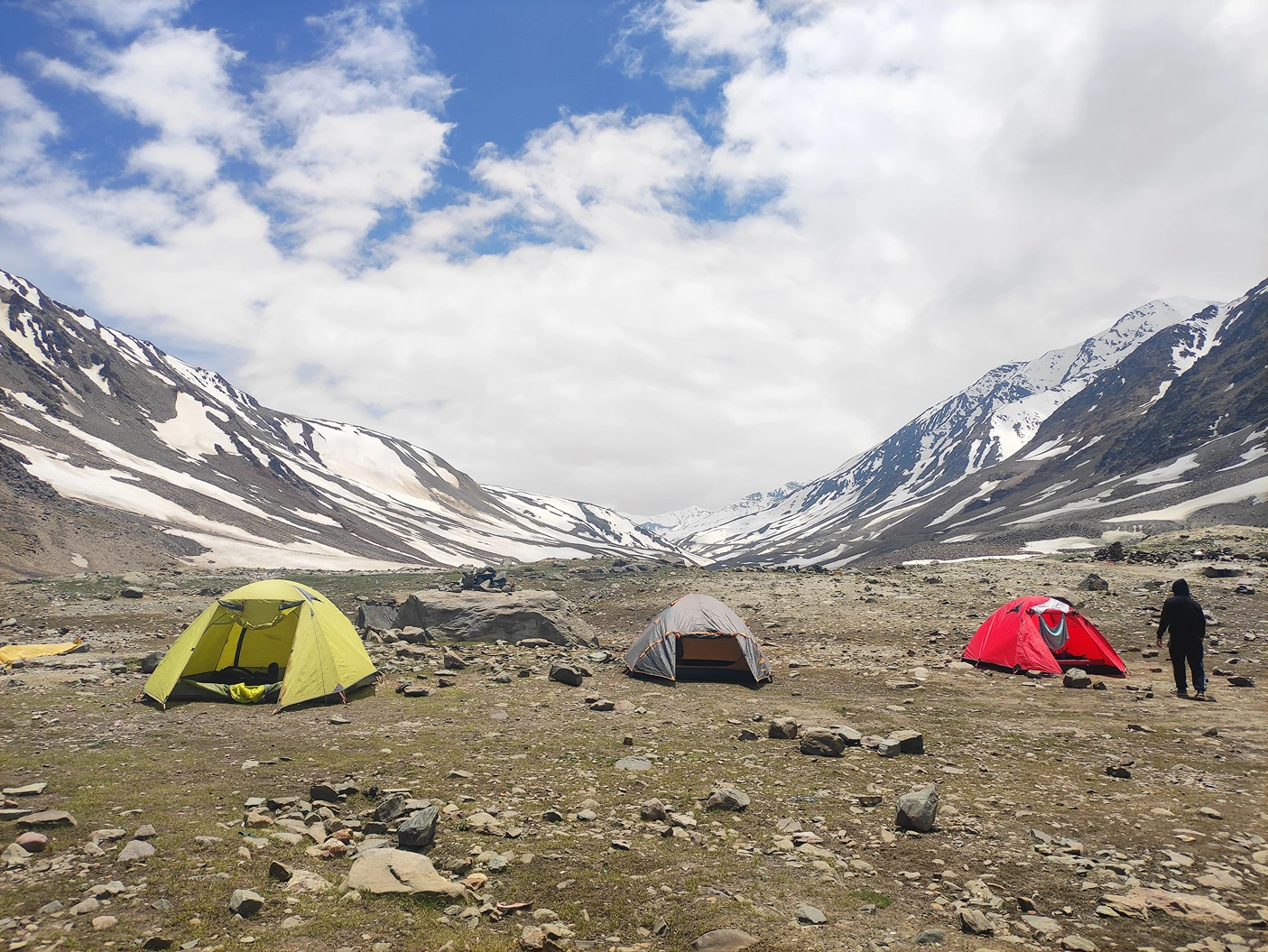
Altitude: Approximately 6,111 metres
Region: Lahaul, Himachal Pradesh
October–February status: Not recommended as the regular climbing period
Better approach: Prepare during winter and target the appropriate 2027 season.
Yunam Peak is a popular choice among climbers seeking to cross the 6,000-metre mark in the Indian Himalayas.
Located in the Lahaul region of Himachal Pradesh, Yunam Peak Expedition combines extreme altitude with a rugged, stark Himalayan landscape.
The mountain may not be considered highly technical compared with more advanced expedition peaks, but its altitude makes it a serious objective.
At more than 6,100 metres, oxygen availability is dramatically reduced. Climbers need excellent cardiovascular fitness, appropriate acclimatisation and the ability to continue moving efficiently in freezing conditions.
Can You Climb Yunam Peak Between October and February?
For a normal guided expedition, October to February should not be treated as Yunam Peak’s regular climbing window.
One reason is not simply the summit itself but the broader logistics of the Lahaul high-altitude environment.
As winter approaches, temperatures fall rapidly and snow can affect access, camps and high-altitude movement. Conditions that are manageable during the established climbing season can become significantly more severe.
The right approach is therefore not:
“I am free in December, so can I climb Yunam?”
Instead, ask:
“What is the safest and most suitable seasonal window for Yunam, and how can I prepare for it?”
That distinction is fundamental to responsible expedition planning.
Use October–February to Prepare for Yunam Peak
If Yunam Peak is your 2027 objective, winter gives you several months to build the fitness required for 6,000 metres.
Training should progressively include long-duration cardiovascular sessions, incline walking, stair climbing, strength training and hikes with a loaded backpack.
A previous high-altitude trekking experience is also extremely valuable.
Yunam may appear approachable on paper, but 6,111 metres should never be underestimated.
3. Friendship Peak Expedition
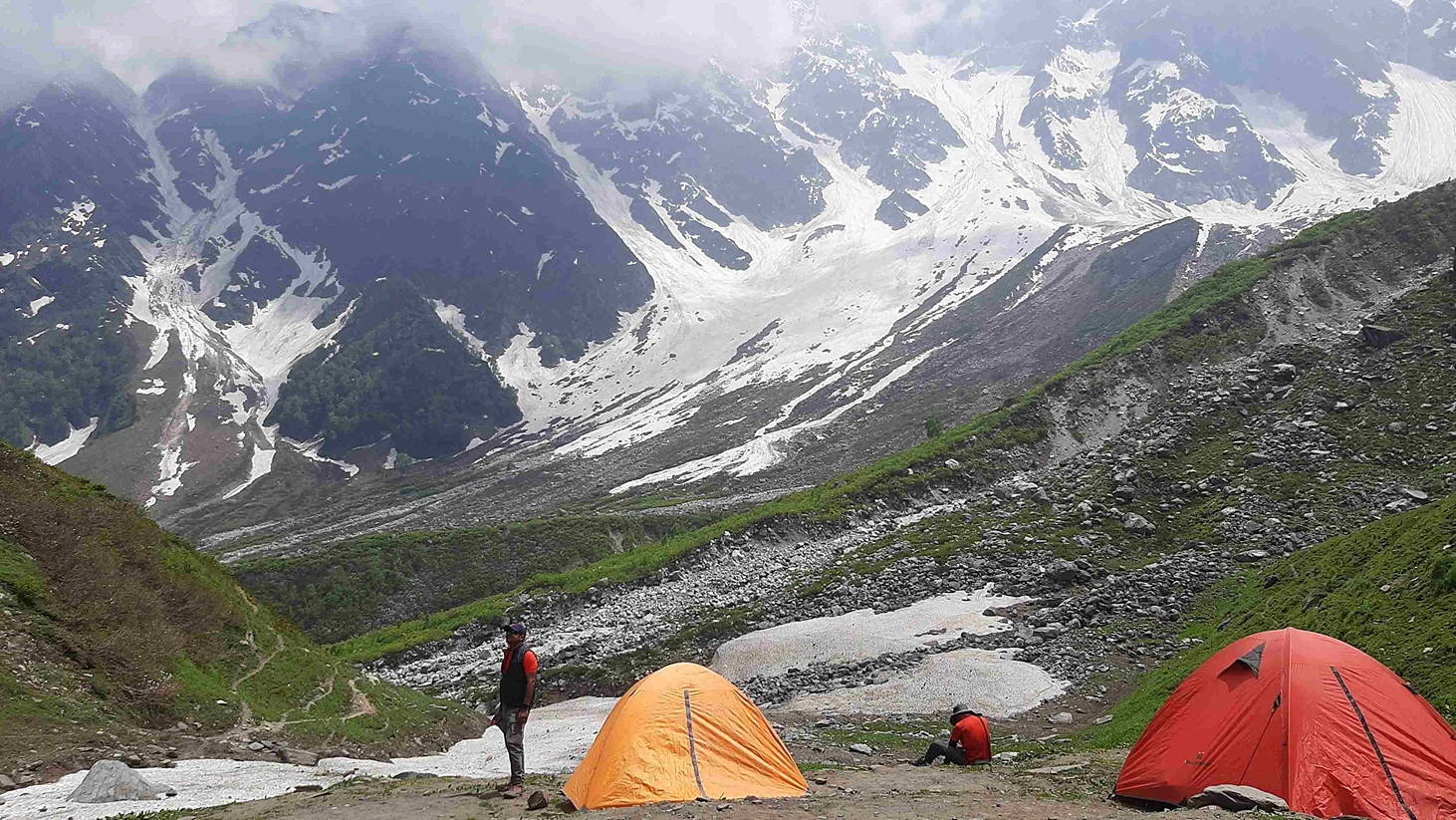
Altitude: Approximately 5,289 metres
Region: Himachal Pradesh
Range: Pir Panjal
Best-known windows: May–June and September–October
October–February status: October can be possible; November–February is generally outside the recommended commercial season.
For mountaineers looking for their first experience of a Himalayan summit involving technical equipment, Friendship Peak Expedition is an attractive objective.
Situated near the famous Solang Valley and Beas Kund region, Friendship Peak rises to approximately 5,289 metres.
Its comparatively lower altitude compared with 6,000-metre expeditions does not make it an ordinary trek.
Climbers may need to learn and use equipment such as:
- Crampons
- Ice axe
- Climbing harness
- Ropes
- Carabiners
- Helmet
- Mountaineering boots
Depending on route conditions, the summit push can involve snow, ice, glacier travel, rocky moraine and steep terrain.
Is Friendship Peak Possible in October?
Yes, October can form part of Friendship Peak’s post-monsoon climbing period, particularly earlier in the month when conditions remain suitable.
September and October can bring clear skies and outstanding visibility across the Pir Panjal.
However, October is colder than September and the margin for stable climbing conditions gradually becomes smaller as winter approaches.
Late-season departures therefore require close attention to forecasts, recent snowfall and route conditions.
Friendship Peak in November, December, January and February
These months should not be marketed as the standard Friendship Peak expedition season.
Deep winter brings substantially more demanding conditions. Snowfall, avalanche exposure, extreme temperatures and access issues can transform the nature of the climb.
A winter ascent undertaken by highly experienced mountaineers with specialist planning is fundamentally different from a regular guided Friendship Peak expedition.
For most aspiring climbers, the smarter option is to train through winter and target the established pre-monsoon or post-monsoon window.
4. Kang Yatse 1 Expedition
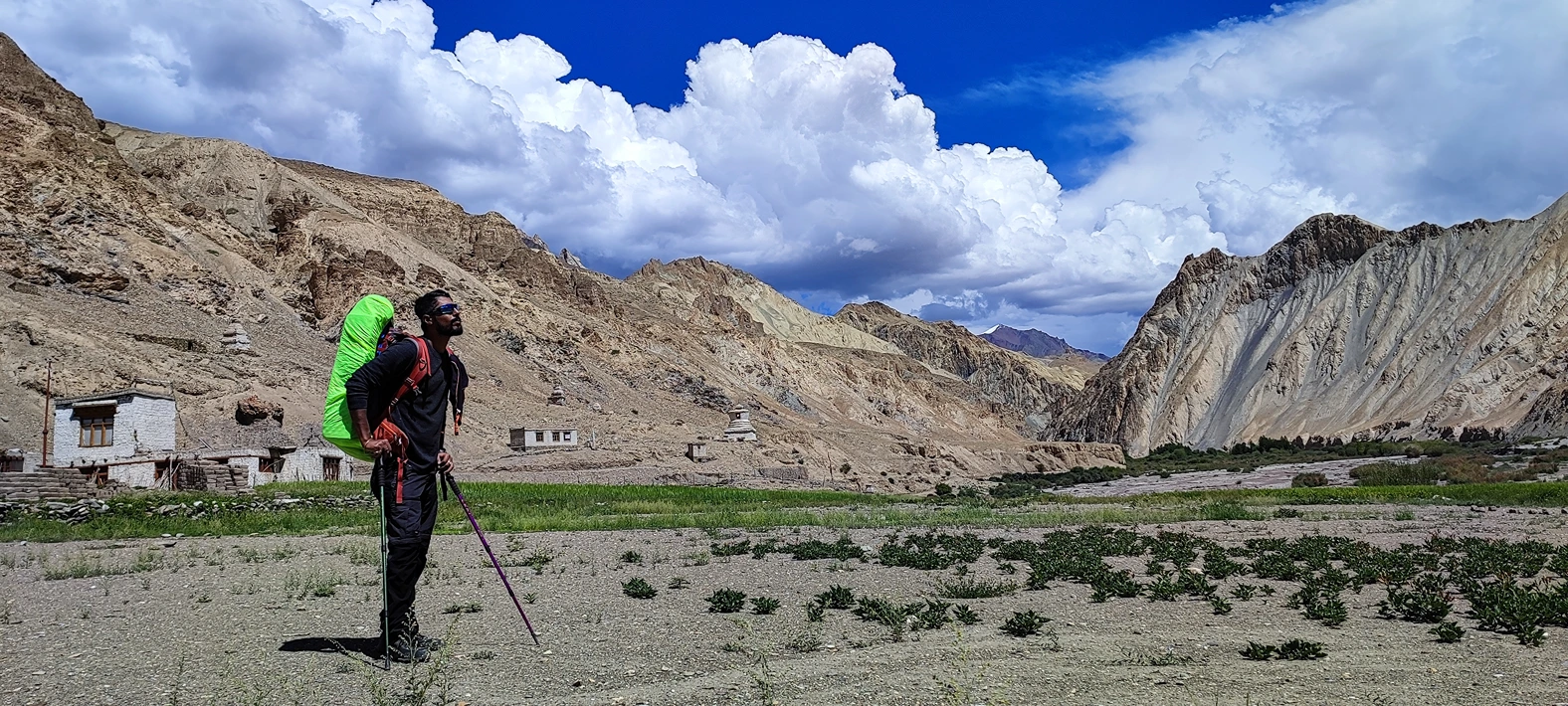
Altitude: Approximately 6,400 metres
Region: Ladakh
Mountain group: Kang Yatse massif
Primary expedition period: Summer
October–February status: Not recommended as a regular expedition window.
Kang Yatse I is a serious mountaineering objective in Ladakh and should not be confused with its comparatively more accessible neighbour, Kang Yatse II.
The mountain rises above the Markha Valley region and reaches approximately 6,400 metres.
The Kang Yatse 1 Expedition is considerably more technical than many introductory 6,000-metre Himalayan peaks.
Its climbing challenges can include steep snow and ice, exposed terrain, rope work and demanding high-altitude sections.
It is therefore intended for climbers who already possess relevant experience rather than someone looking for their first Himalayan trek.
Why October–February Is Not the Right Standard Window
Ladakh experiences an extremely harsh high-altitude winter.
By late autumn, temperatures fall dramatically. Winter conditions affect access, camps, water availability, snow conditions and the overall safety and logistics of high-altitude climbing.
January and February can be spectacular months to experience Ladakh in a completely different way, but that does not make them suitable for a regular Kang Yatse I commercial expedition.
For climbers targeting Kang Yatse I in 2027, winter is far more valuable as a structured preparation block.
Use this period to develop advanced endurance, climbing technique, rope skills, snowcraft and experience on progressively harder mountains.
5. Kang Yatse 2 Expedition
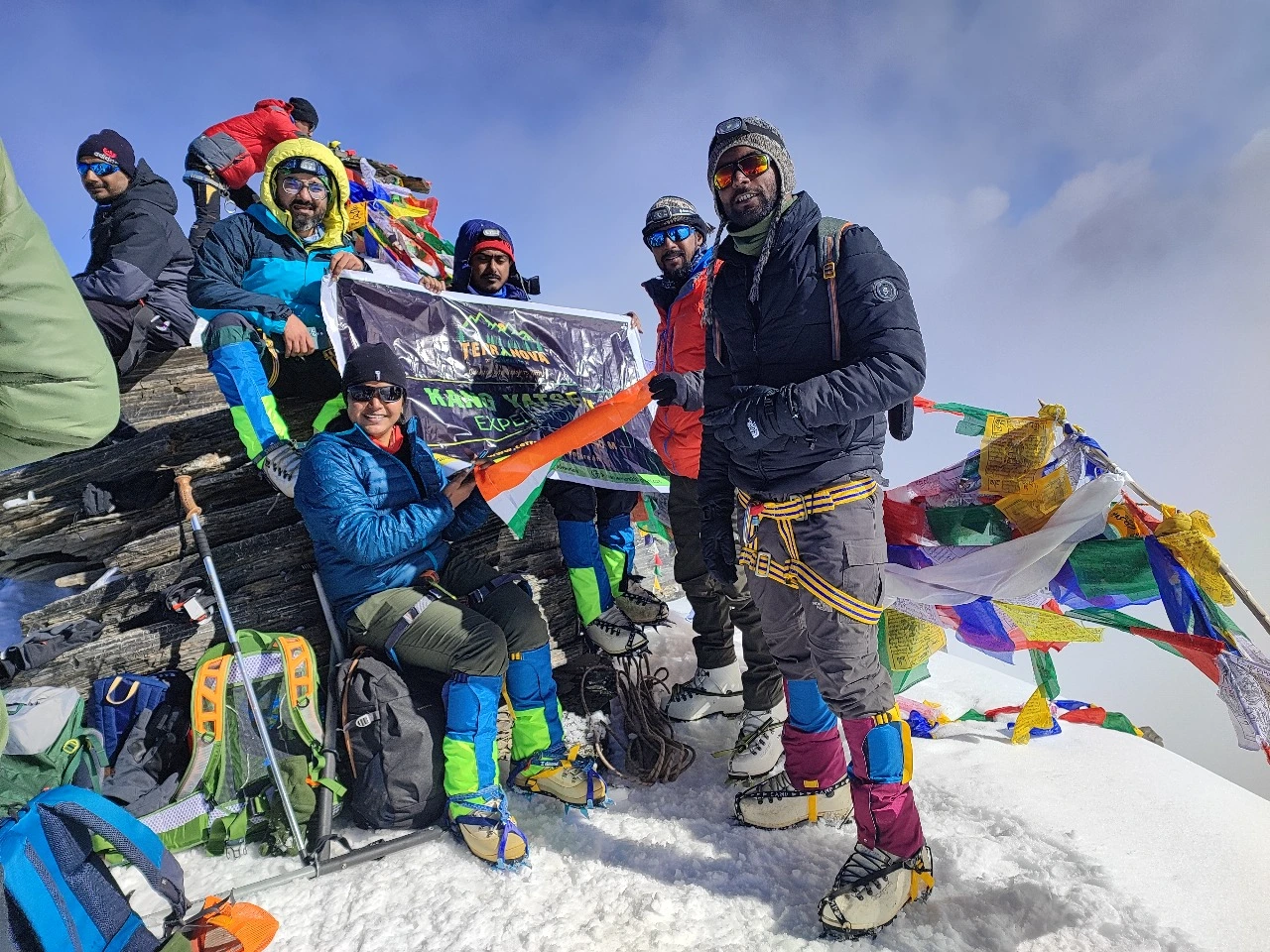
Altitude: Approximately 6,250 metres
Region: Ladakh
Mountain group: Kang Yatse massif
Common climbing period: Summer into early autumn depending on conditions
October–February status: Not a standard winter expedition.
For climbers looking for a first or early 6,000-metre summit in Ladakh, Kang Yatse 2 Expedition is one of the best-known objectives in the region.
At approximately 6,250 metres, it is a major altitude challenge.
The approach through the Markha Valley adds to the appeal of the expedition, taking climbers through one of Ladakh’s most spectacular high-altitude landscapes before they reach the base of the Kang Yatse massif.
Kang Yatse II is generally considered less technical than Kang Yatse I, but “less technical” should never be confused with “easy.”
The altitude alone makes it a demanding expedition.
Can Kang Yatse 2 Be Climbed from October to February?
For normal commercial expedition planning, these months should not be presented as the recommended Kang Yatse II season.
October already brings increasingly cold conditions to Ladakh. As the region moves towards November and December, the high-altitude environment becomes much more severe.
Instead of attempting to force Kang Yatse II into a winter schedule, climbers should choose a departure during the appropriate climbing season.
This provides a better chance of suitable route conditions, safer acclimatisation and a successful expedition experience.
Expedition Season Comparison: October to February
| Expedition | Normal/Preferred Season | October | November–February |
| Black Peak Expedition | Pre-monsoon / Sep–Oct | Possible in suitable early-season conditions | Not standard commercial season |
| Yunam Peak Expedition | Summer / early autumn | Generally outside preferred window | Not recommended |
| Friendship Peak Expedition | May–Jun / Sep–Oct | Possible depending on conditions | Not standard commercial season |
| Kang Yatse 1 Expedition | Summer | Generally too late for normal batches | Not recommended |
| Kang Yatse 2 Expedition | Summer / early autumn | Generally outside primary window | Not recommended |
Important: Himalayan climbing seasons are indicative rather than guarantees. Snowfall, temperatures, access, avalanche conditions and other mountain hazards can change rapidly. Final expedition decisions should always be based on current conditions and professional assessment.
What Can You Do in the Indian Himalayas from October to February?
The end of the main climbing season does not mean Himalayan adventure stops.
Instead, the nature of the activity changes.
October is an excellent transition month. Depending on the region and weather, some autumn treks and late-season climbs remain possible.
From November onwards, the Indian Himalayas become an extraordinary destination for winter trekking.
Routes at lower elevations can offer snow-covered forests, frozen landscapes and spectacular views of the Greater Himalayas without requiring climbers to undertake a technical 6,000-metre expedition in the middle of winter.
For an aspiring mountaineer, winter trekking also has another benefit: experience.
Walking for several days in freezing temperatures teaches you how your body responds to cold, how to manage layering, hydration and footwear, how to maintain energy and how to remain mentally focused when conditions become uncomfortable.
Those lessons become extremely valuable on a future Himalayan expedition.
October to February: The Perfect Preparation Period for Your 2027 Expedition
One of the biggest mistakes in expedition planning is concentrating entirely on the expedition dates.
Your actual expedition begins months before you arrive at base camp.
If you plan to attempt Black Peak, Yunam Peak, Friendship Peak, Kang Yatse I or Kang Yatse II in 2027, the period from October 2026 to February 2027 can become the foundation of your summit preparation.
October: Assess Your Current Fitness
Start by understanding where you currently stand.
Can you comfortably walk uphill for several hours?
How quickly do you recover after strenuous exercise?
Can you carry a backpack weighing 8–12 kg over uneven terrain?
Your first month should establish a fitness baseline rather than immediately pushing maximum intensity.
November: Build Aerobic Endurance
Running, cycling, swimming, incline walking and stair climbing can improve cardiovascular capacity.
For a Himalayan expedition, consistency is more important than occasional extreme workouts.
Gradually increase duration while maintaining proper recovery.
December: Add Strength and Load
Introduce more focused leg and core strength training.
Squats, lunges, step-ups, calf raises and loaded carries can all contribute to mountain-specific conditioning.
Weekend hikes with a backpack are particularly useful because they combine endurance, load management and time on your feet.
January: Develop Mountain-Specific Conditioning
Training should now become more specific.
Longer hikes, back-to-back training days, stair sessions with a backpack and sustained uphill workouts help simulate expedition fatigue.
If appropriate, undertake a winter Himalayan trek to gain practical experience with cold conditions.
February: Evaluate Expedition Readiness
By February, climbers targeting the upcoming season should have a much clearer understanding of their readiness.
This is the time to review equipment, previous altitude experience, technical skills and any weaknesses in fitness.
For technical objectives such as Black Peak and Kang Yatse I, mountaineering training becomes particularly important.
Choosing Between These Five Himalayan Expeditions
The “best” expedition is not necessarily the highest one.
It is the mountain that matches your current experience and helps you progress safely.
Choose Friendship Peak if:
You want to transition from high-altitude trekking towards introductory mountaineering and gain experience with basic technical equipment.
Choose Yunam Peak if:
You already possess high-altitude trekking experience and want to challenge yourself above 6,000 metres.
Choose Kang Yatse 2 if:
You want a major 6,000-metre Ladakh objective and have the endurance and acclimatisation experience required for a serious high-altitude expedition.
Choose Black Peak if:
You are looking for a more technical 6,000-metre Himalayan expedition and already possess relevant climbing experience and skills.
Choose Kang Yatse 1 if:
You are an experienced mountaineer seeking a significantly more technical high-altitude objective in Ladakh.
Progression matters.
Moving directly from ordinary trekking to a demanding technical summit simply because it is more impressive on paper is rarely a sensible mountaineering strategy.
Why Season Matters More Than the Calendar
Searches such as “Himalayan Expedition in December”, “winter expedition in India” or “Himalayan Expedition October to February” can make it appear as though expedition planning is similar to booking a normal holiday.
It isn’t.
Mountaineering is governed by conditions.
At high altitude, a change in season can affect:
- Snow depth
- Avalanche hazard
- Glacier conditions
- Crevasse exposure
- Rockfall
- Water availability
- Daylight hours
- Wind chill
- Road and trail access
- Campsite accessibility
- Rescue logistics
- Summit success probability
That is why a responsible expedition company should be willing to tell a climber not to climb a particular mountain during a particular period.
The objective is not simply to reach the summit.
The objective is to organise the expedition with appropriate risk management and bring the team safely back down.
Plan Your 2026–27 Himalayan Expedition with Terranova Expeditions
A successful Himalayan Expedition begins with choosing the right mountain, the right season and the right level of preparation.
If you are planning an expedition between October 2026 and February 2027, it is important to understand that not every major Himalayan summit is appropriate for this winter period.
Black Peak and Friendship Peak may offer possibilities around their autumn windows, particularly around early October when conditions permit. Yunam Peak, Kang Yatse I and Kang Yatse II should generally be planned around their appropriate seasonal climbing windows rather than being forced into a winter itinerary.
For mountaineers planning their 2027 objectives, however, October to February is far from an “off-season.”
It is your preparation season.
These months provide time to develop endurance, improve strength, gain winter trekking experience, learn technical skills, evaluate equipment and choose a Himalayan objective that genuinely matches your experience.
The Indian Himalayas reward preparation, patience and respect for mountain conditions.
Choose the mountain carefully.
Choose the season intelligently.
And arrive at base camp ready for what lies above.
Frequently Asked Questions
1. Can we do a Himalayan Expedition between October and February?
Yes, Himalayan activities are possible during this period, but not every high-altitude expedition is suitable. Early October can overlap with the autumn climbing window of selected peaks, while November to February brings full winter conditions to many high-altitude regions. Always select an expedition according to its appropriate climbing season.
2. Can Black Peak be climbed in October?
Black Peak has a recognised post-monsoon climbing period extending into autumn. An early-October attempt may be possible when route, snow and weather conditions are suitable. As winter approaches, conditions become significantly colder and more challenging.
3. Can Friendship Peak be climbed in October?
October can be part of Friendship Peak’s post-monsoon climbing window. Earlier dates generally provide a better seasonal margin than late October, but every expedition remains dependent on current weather and mountain conditions.
4. Can Yunam Peak be climbed in December or January?
These months are not considered the normal commercial climbing season for Yunam Peak. Climbers should target Yunam during its appropriate seasonal window and use winter for training and preparation.
5. Can Kang Yatse 1 or Kang Yatse 2 be attempted during winter?
Kang Yatse I and Kang Yatse II are normally climbed during Ladakh’s warmer climbing season. November to February brings severe winter conditions and should not be promoted as a regular commercial expedition period for these peaks.
6. Which of these expeditions is suitable for someone moving from trekking to mountaineering?
Friendship Peak is commonly chosen as a progression towards mountaineering because it introduces climbers to snow and glacier travel and basic technical equipment. However, participants should still possess strong fitness and preferably previous high-altitude trekking experience.
7. Which is more difficult: Kang Yatse 1 or Kang Yatse 2?
Kang Yatse I is significantly more technical than Kang Yatse II. Kang Yatse II is often selected by climbers progressing towards 6,000-metre mountaineering, whereas Kang Yatse I requires stronger technical skills and previous climbing experience.
8. What should I do from October to February if my expedition is in summer 2027?
Use these months for structured preparation. Build cardiovascular endurance, strengthen your legs and core, practise carrying a loaded backpack, gain winter trekking experience and develop the technical mountaineering skills required for your chosen peak.
9. Is winter a good time to train for a Himalayan Expedition?
Yes. Winter provides an excellent preparation period for upcoming expeditions. It allows climbers to improve physical conditioning while also gaining practical experience in cold-weather layering, equipment management and movement in snow through appropriately selected winter treks.
10. How should I choose the right expedition in the Indian Himalayas?
Consider your previous altitude experience, physical fitness, technical mountaineering skills, available preparation time and the mountain’s recommended climbing season. Choosing an expedition based only on altitude or popularity can result in taking on an objective for which you are not adequately prepared.