For most travellers, Manali is a Himalayan holiday destination—a place of mountain cafés, pine forests, winding roads and snow-covered landscapes. For mountaineers, however, Manali represents something entirely different. It is where expedition teams assemble, climbing equipment is checked, supplies are organised, route conditions are discussed and weeks of preparation finally begin to take shape.
Located in Himachal Pradesh and surrounded by the Pir Panjal and greater Western Himalayan landscape, Manali has long served as an important operational base for mountaineering. Its road connectivity, proximity to climbing regions, local mountain support network and access towards Lahaul make it particularly valuable for climbers preparing for serious Himalayan objectives.
For Terranova Expeditions, Manali is closely connected with several important mountaineering journeys, including the Friendship Peak Expedition, Deo Tibba Expedition, Hanuman Tibba Expedition and Jagatsukh Peak Expedition. It also provides a useful gateway towards the wider expedition landscape of Himachal and the Western Himalayas, where climbers progress towards objectives.
But what makes Manali so important to mountaineers is not simply its location. A successful expedition requires logistics, preparation, progressive altitude gain, technical readiness and good decision-making. Manali provides the environment where many of these pieces come together before the mountains become more remote.
Why Manali Works as a Himalayan Expedition Base
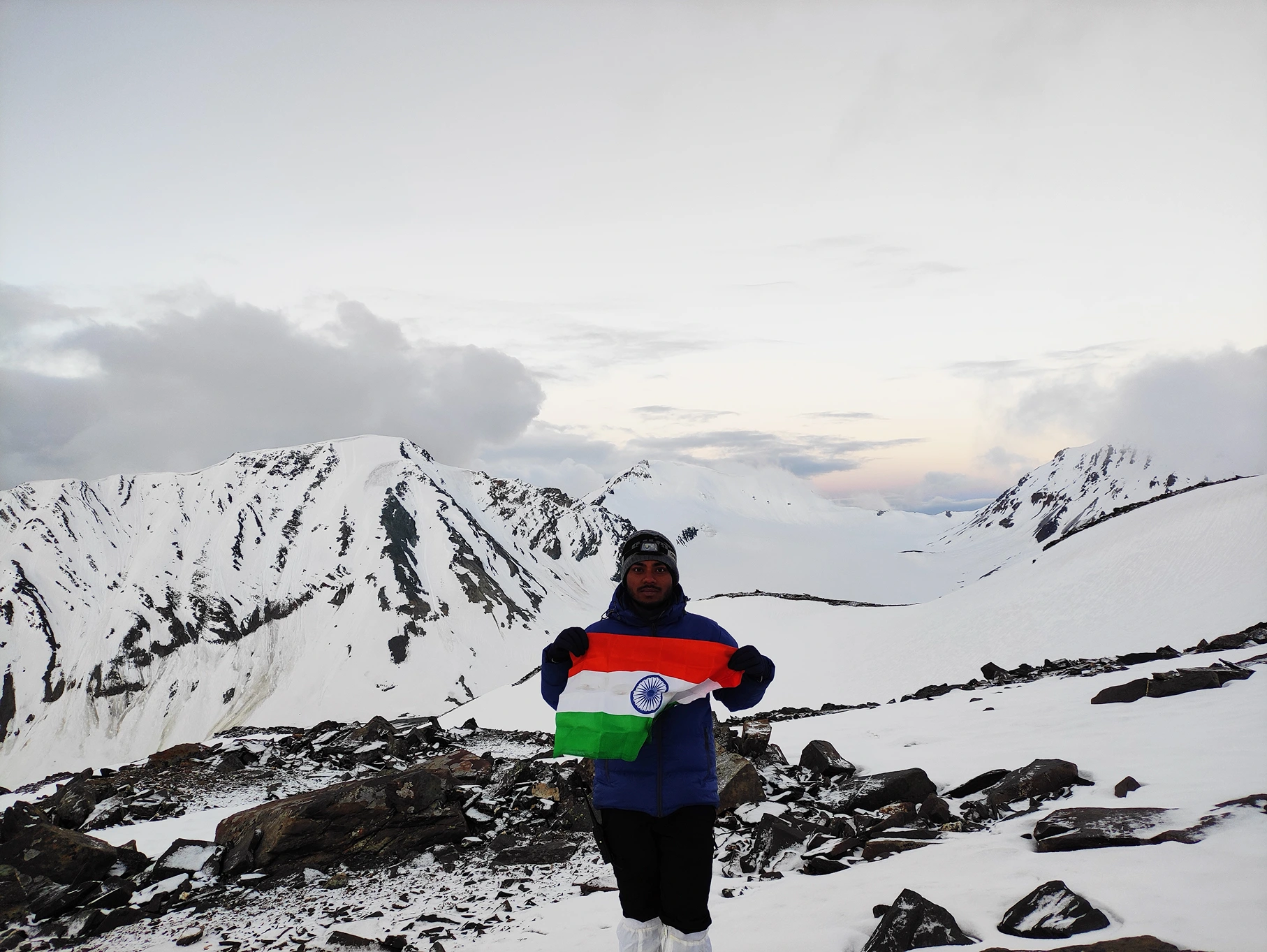
The first advantage of Manali is accessibility.
Expedition teams can reach Manali relatively easily from Delhi and other major cities in North India before travelling towards remote trailheads. Once the team leaves Manali, roads and trails can quickly lead into far more isolated mountain environments.
This makes the town a practical location for completing important pre-expedition tasks.
Before departure, climbers can review personal equipment, organise technical gear, check footwear, purchase missing essentials and meet the expedition team. Expedition leaders can simultaneously review weather forecasts, transportation arrangements, route information and other operational details.
That preparation may appear routine, but small problems become considerably harder to solve once a team reaches Base Camp.
A missing pair of gloves in Manali is an inconvenience. At 5,000 metres, it can become a serious problem.
This is why experienced mountaineers treat their time at the expedition base as part of the climb itself.
Manali Is the Beginning, Not the Acclimatization Destination
One important distinction needs to be understood.
Unlike Leh, which sits at roughly 3,500 metres, Manali is located at a much lower altitude of around 2,000 metres. Simply spending several days in Manali does not prepare the body for sleeping at 5,000 or 6,000 metres.
Instead, Manali acts as a staging point from which gradual acclimatization begins.
A well-designed expedition itinerary increases sleeping altitude progressively. Trekking days, intermediate camps, rest periods and—in more demanding expeditions—load-ferry or acclimatization rotations allow the body to respond gradually to reduced oxygen availability.
This becomes increasingly important when attempting 6,000-metre expedition peaks in India.
Fitness cannot replace acclimatization. A strong runner or experienced athlete can still develop Acute Mountain Sickness if altitude is gained too quickly. Good expedition planning therefore balances physical progress with sufficient time for adaptation.
For Terranova Expeditions, reaching Base Camp quickly is never more important than reaching it properly prepared.
Friendship Peak Expedition – A Step Into Mountaineering
Among the mountains associated with Manali, the Friendship Peak Expedition is one of the best-known objectives for climbers moving from high-altitude trekking towards mountaineering.
At approximately 5,289 metres, Friendship Peak introduces climbers to an environment very different from a conventional trek. Snow conditions, long climbing days, cold temperatures and the use of mountaineering equipment make the expedition a meaningful progression.
Calling Friendship Peak an introductory expedition should never be interpreted as calling it easy.
Climbers still require excellent physical conditioning, previous trekking experience and the ability to remain comfortable during long days in mountain terrain.
For someone building a long-term mountaineering journey, Friendship Peak can provide valuable experience before progressing towards higher or more technical objectives.
Jagatsukh Peak Expedition – Building Mountain Experience Close to Manali
The Jagatsukh Peak Expedition offers another opportunity to experience Himalayan climbing in the Manali region.
The Jagatsukh side of the mountains provides access to dramatic alpine terrain and helps climbers develop the habits required on longer expeditions—efficient movement, equipment management, pacing and functioning comfortably in a high-altitude camp environment.
It can form part of a sensible progression for mountaineers who want to build practical mountain experience before attempting more demanding Himalayan objectives.
Hanuman Tibba Expedition – A Serious Alpine Objective
Rising prominently above the Manali region, Hanuman Tibba is a significantly more demanding mountaineering objective.
The Hanuman Tibba Expedition requires previous mountain experience, strong physical conditioning and competence in technical terrain. Glacier movement, snow and ice conditions, changing weather and route complexity make it a mountain that should be approached with respect.
For climbers who have already gained experience on introductory expeditions, Hanuman Tibba can represent an important progression towards more technical Himalayan climbing.
Deo Tibba Expedition – Entering the 6,000-Metre World
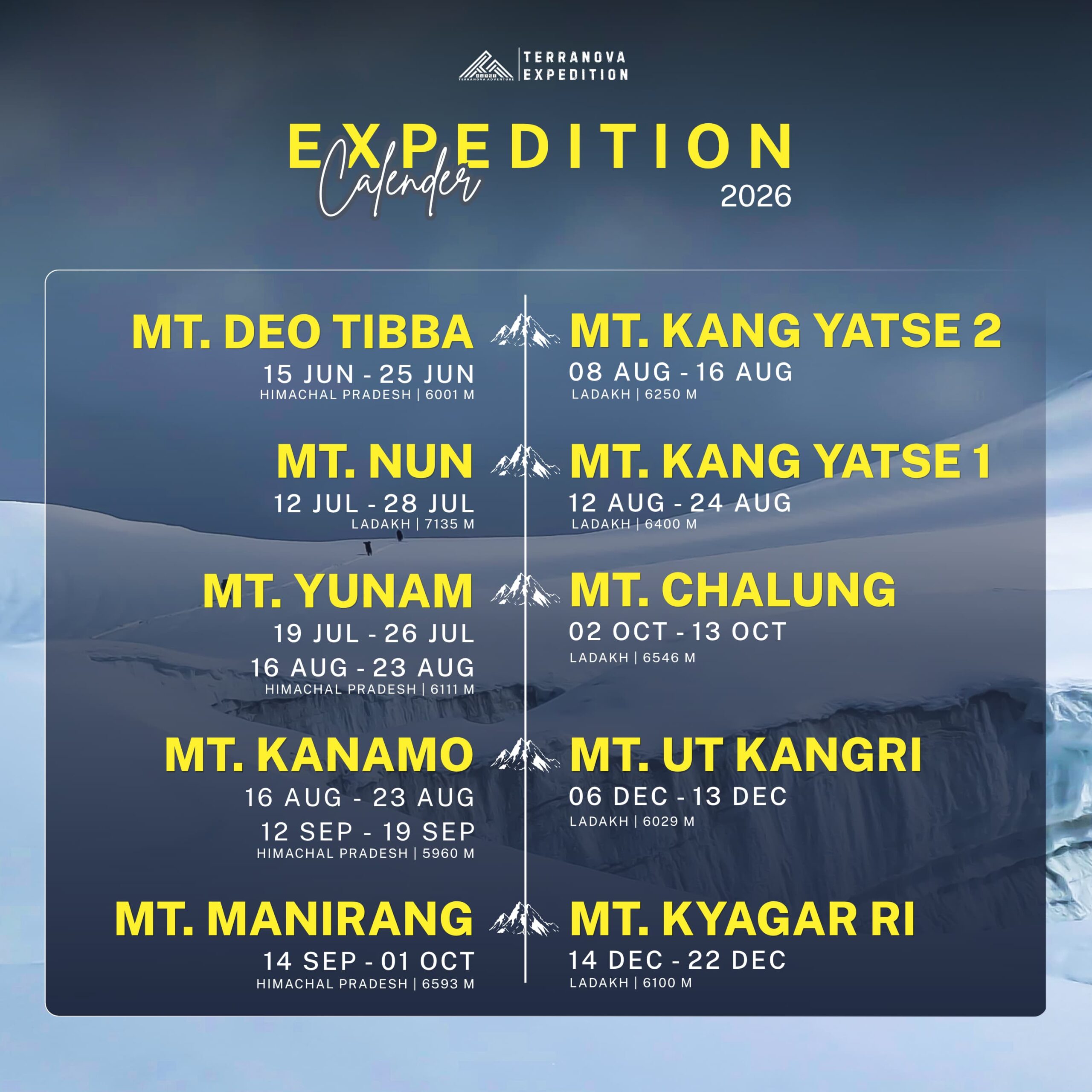
At approximately 6,001 metres, the Deo Tibba Expedition marks a major step forward.
The mountain rises in the Pir Panjal Range and is one of the important technical expedition objectives accessible from the Manali region. Terranova’s expedition itinerary begins and concludes in Manali, making the town a genuine operational base for the climb.
Unlike an ordinary high-altitude trek, Deo Tibba requires climbers to deal with glacier terrain, snow and ice, high camps and the physical demands associated with moving above 6,000 metres.
The progression from Manali through intermediate camps is particularly important. Each stage contributes to acclimatization while preparing the team for the increasingly demanding environment higher on the mountain.
For climbers progressing beyond introductory mountaineering, Deo Tibba provides a valuable opportunity to gain serious Himalayan expedition experience.
Beyond Manali: The Wider Western Himalayan Expedition Network
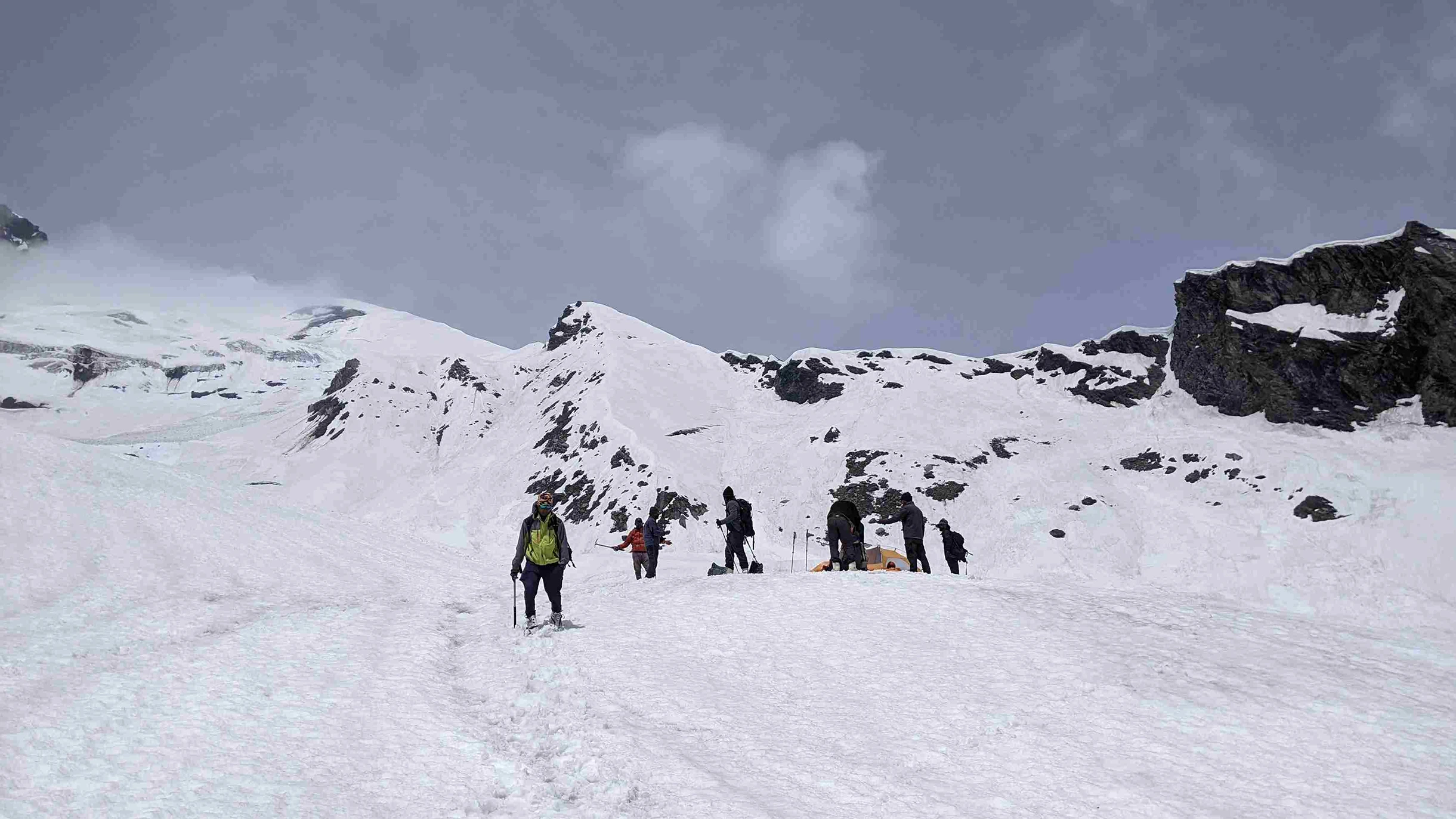
Manali’s importance also comes from its position within the wider Western Himalayan climbing network.
The opening and development of road access towards Lahaul has made the region an increasingly useful gateway for climbers travelling towards more remote expedition areas.
This is where the internal connection between Manali and Terranova’s broader expedition portfolio becomes valuable.
Climbers who gain experience on mountains around Manali may eventually progress towards objectives such as the CB 13 & CB 14 Expedition, Shinkun East Expedition and Shinkun West Peak Expedition.
Others may choose high-altitude objectives such as the Yunam Peak Expedition, where the challenge comes heavily from altitude and endurance.
The Ramjak Peak Expedition provides another high-altitude objective in the Western Himalayan landscape, while expeditions such as Mt. Manirang and Reo Purgyil take climbers deeper into the remote mountains of Himachal Pradesh.
Similarly, Kanamo Peak Expedition provides another high-altitude climbing objective in the Spiti region.
The important point is not that all these mountains literally begin from Manali. They don’t.
Rather, Manali forms part of a larger mountaineering corridor and provides a natural connection between several expedition regions across Himachal Pradesh, Lahaul, Spiti and the Western Himalayas.
For SEO as well as for climbers, maintaining that geographic distinction matters.
From Friendship Peak to Bigger Himalayan Objectives
Mountaineering should be treated as a progression rather than a checklist of summits.
Someone with strong trekking experience might begin with an introductory climbing objective such as Friendship Peak. After gaining confidence with equipment, snow movement and expedition life, they can progress towards more demanding objectives.
A possible progression may look like:
High-altitude trekking → Friendship Peak → higher/semi-technical expedition → technical 6,000 m peak → advanced Himalayan expedition
The exact sequence will differ for every climber.
A person who performs well at altitude but lacks technical experience has different training needs from someone who understands rope systems but has never slept above 5,000 metres.
This is why choosing an expedition solely by summit height is a mistake.
Other Major Expeditions to Explore with Terranova
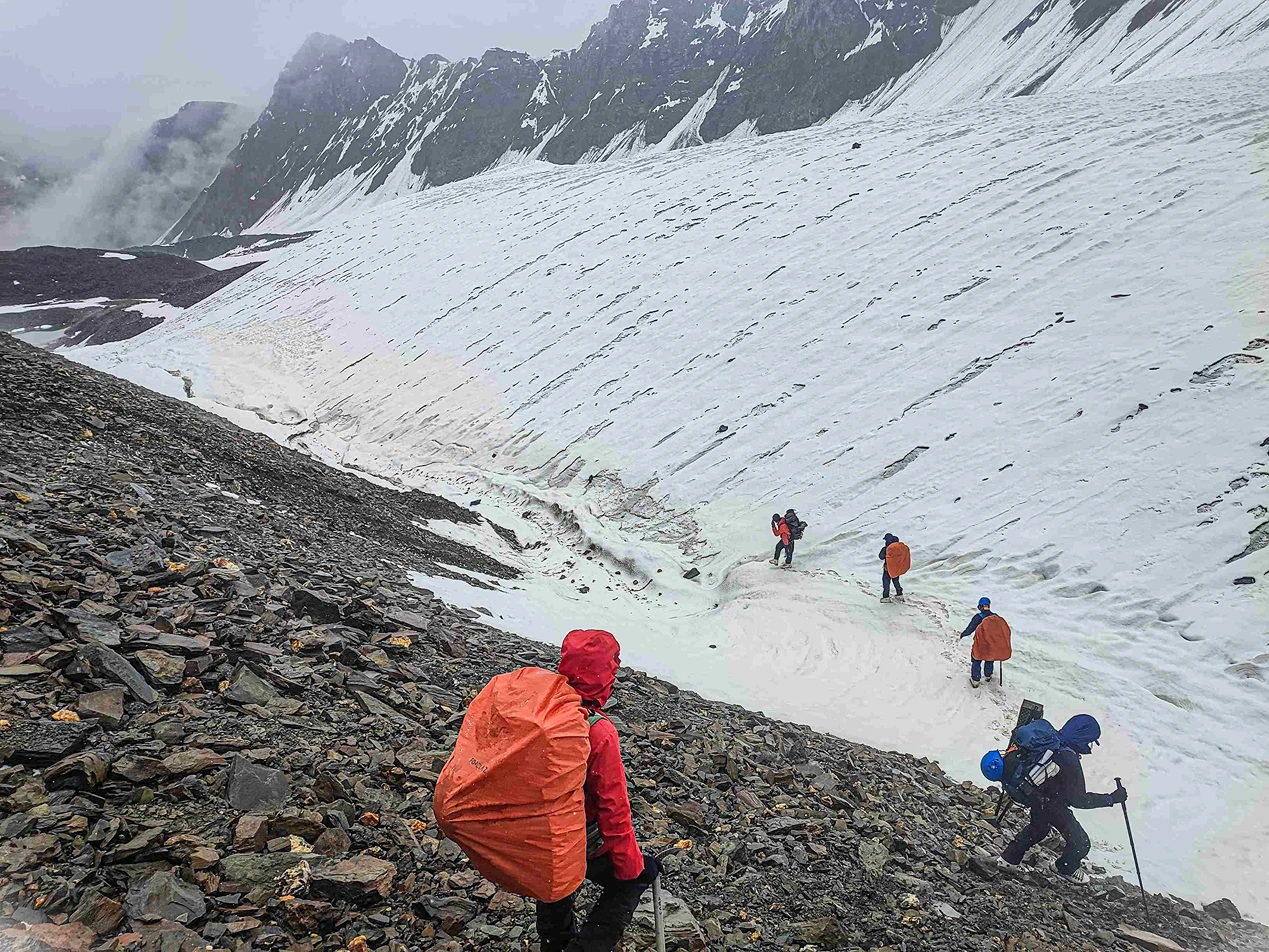
For climbers looking beyond the immediate Manali region, Terranova Expeditions offers access to a broad range of Western Himalayan objectives.
CB 13 & CB 14 Expedition
The CB 13 & CB 14 Expedition takes climbers into the rugged mountains of the Chandrabhaga region. These objectives are suitable for mountaineers looking to develop experience on more serious 6,000-metre terrain.
Shinkun East Expedition
The Shinkun East Expedition offers a remote Himalayan climbing experience where expedition planning, acclimatization and technical preparation become increasingly important.
Shinkun West Peak Expedition
The Shinkun West Expedition provides another progression option for climbers who have developed experience on introductory and intermediate Himalayan peaks.
Yunam Peak Expedition
The Yunam Peak Expedition is particularly attractive to climbers wanting to cross the 6,000-metre threshold. While it is generally less technical than many major Himalayan climbing objectives, its altitude and long summit push should not be underestimated.
Ramjak Peak Expedition
The Ramjak Peak Expedition takes mountaineers deeper into the high-altitude environment of the Western Himalayas and is suitable for climbers seeking a less conventional expedition objective.
Mt. Manirang Expedition
The Mt. Manirang Expedition is a serious high-altitude undertaking in Himachal Pradesh, requiring strong acclimatization, endurance and previous mountain experience.
Reo Purgyil Expedition
The Reo Purgyil Expedition takes climbers towards one of Himachal Pradesh’s most formidable mountain environments. It belongs firmly in the category of objectives for experienced mountaineers rather than those searching for their first summit.
Kanamo Peak Expedition
The Kanamo Peak Expedition in Spiti provides a high-altitude objective for climbers looking to develop their experience before progressing towards increasingly technical mountains.
Chalung Peak Expedition
The Chalung Peak Expedition adds another remote Himalayan objective to Terranova’s portfolio and is best considered as part of a climber’s gradual progression through increasingly serious mountain environments.
Each of these expeditions should be internally linked from its name to the relevant Terranova expedition page.
How to Choose the Right Expedition
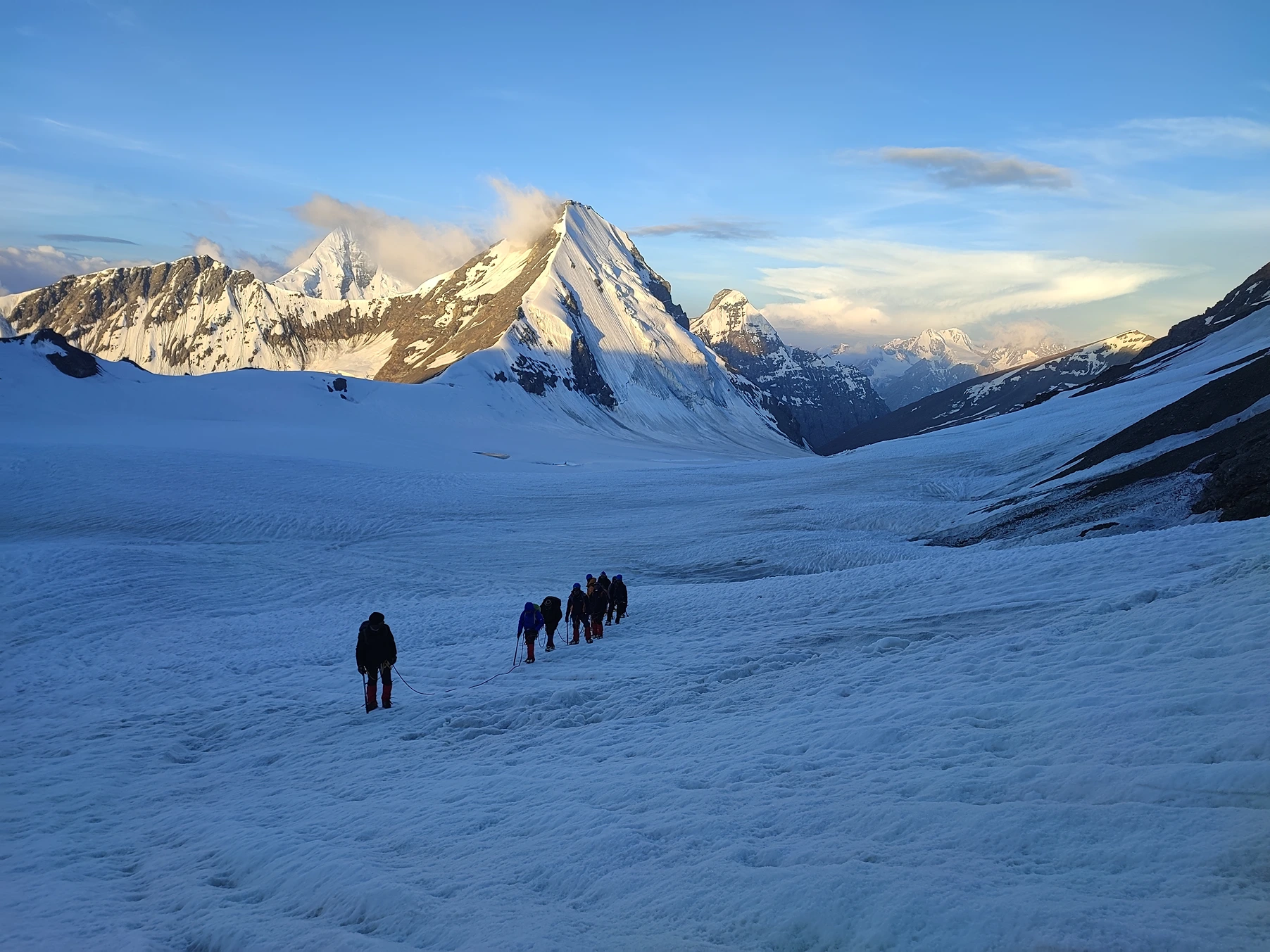
The best expedition is not necessarily the highest mountain you can book.
Ask yourself:
What altitude have I previously reached?
Someone who has never crossed 4,500 metres should not choose a serious 6,000-metre technical objective simply because they are physically fit.
Do I have technical experience?
Using crampons, an ice axe, ascenders, descenders and fixed ropes requires practice.
How do I perform on long mountain days?
Summit pushes can continue for many hours in darkness, cold and thin air.
What is my long-term goal?
If you eventually want to climb technical 6,000 or 7,000-metre mountains, your earlier expeditions should help develop the skills required for those objectives.
A good expedition should challenge you without placing you unnecessarily beyond your current ability.
Preparing in Manali Before Leaving for the Mountain
The final hours before leaving Manali should be used carefully.
Check your mountaineering boots and make sure they have already been broken in. Inspect your headlamp and carry spare batteries. Review your layering system and ensure gloves, sunglasses and waterproof clothing are easily accessible.
Technical equipment—including harnesses, helmets, crampons and ice axes—should be checked according to the requirements of the particular expedition.
This is also the time to organise personal medication, hydration systems, snacks and essential documents.
But preparation isn’t only about equipment.
Arrive physically rested. Avoid turning the days before an expedition into an exhausting sightseeing schedule. Eat properly, sleep well and begin the expedition hydrated.
Once you leave Manali, convenience disappears quickly.
When Is the Best Time for Expeditions from Manali?
There is no single climbing season that applies to every mountain connected with Manali.
The ideal expedition window depends on the peak, route, snowfall, glacier conditions, monsoon pattern and road accessibility.
Some expeditions operate primarily during the pre-monsoon period, while others are better suited to post-monsoon climbing windows.
Rather than choosing a mountain because a particular month suits your holiday schedule, first check whether that month corresponds with the appropriate climbing season for the peak.
In mountaineering, the mountain determines the calendar.
Why Choose Terranova Expeditions?
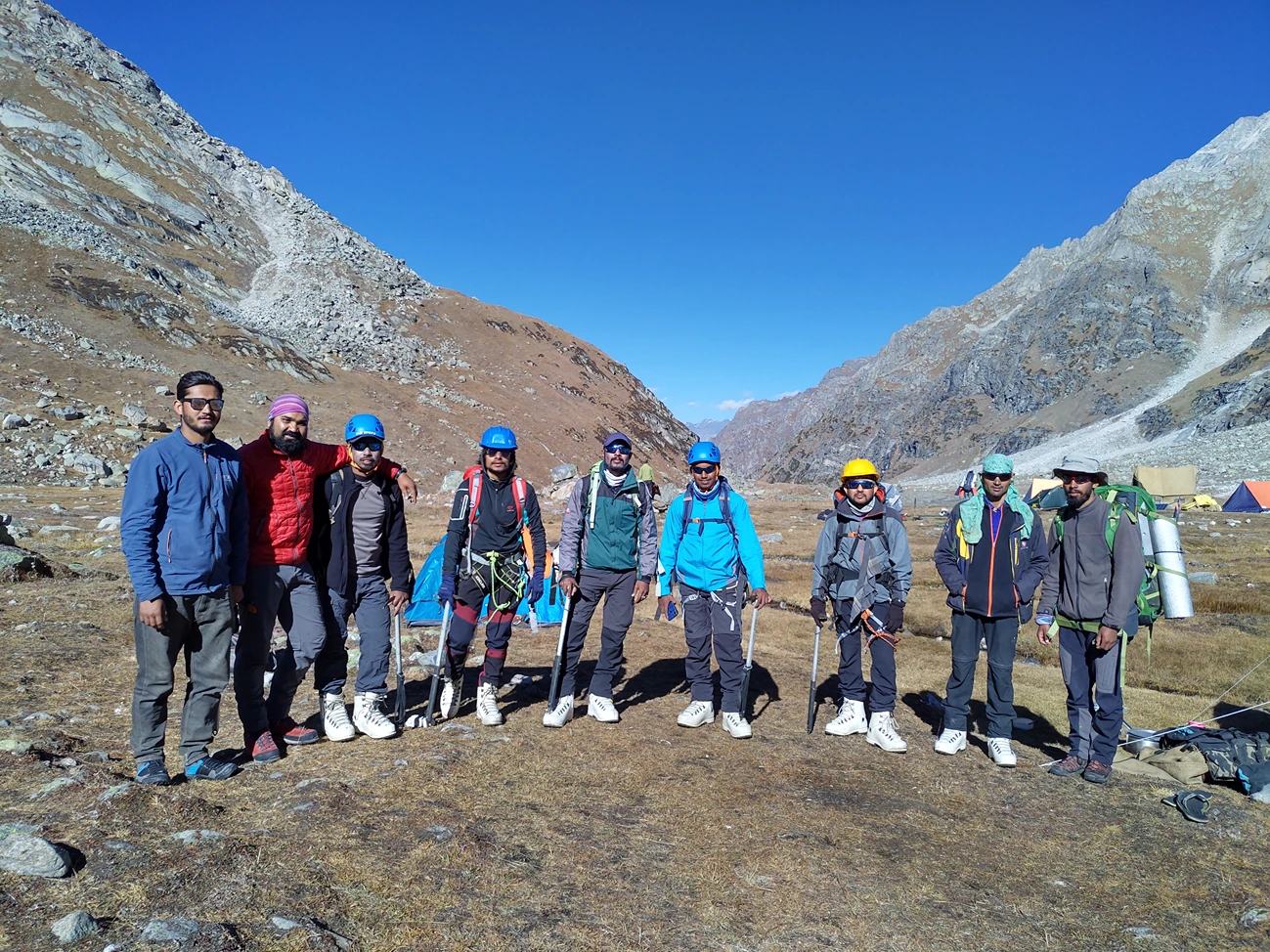
A Himalayan expedition requires much more than transport, tents and a guide.
It requires route planning, acclimatization strategy, technical knowledge, weather assessment, logistics and the ability to make conservative decisions when mountain conditions change.
Terranova Expeditions operates with a preparation-first approach. Our aim is not to rush climbers towards a summit but to create an environment where they can develop their skills, understand the mountains and make steady progress towards increasingly ambitious objectives.
With an operational presence in Manali and experience across numerous Himalayan expedition regions, Terranova works with climbers at different stages of their mountaineering journey—from those attempting Friendship Peak to experienced mountaineers preparing for serious 6,000-metre objectives.
The summit matters.
But returning safely, stronger and more experienced than when you started matters more.
Conclusion
Manali’s role in Himalayan mountaineering goes far beyond being a convenient meeting point.
It is where climbing teams come together, equipment is checked, expedition plans become real and the transition from everyday life to the mountains begins.
You don’t need to begin with the biggest mountain.
Begin with the right mountain.
Build experience, understand altitude, learn technical skills and respect the decisions that keep an expedition safe.
Because in the Himalayas, success isn’t measured only by how high you climb. It is measured by how well prepared you were to be there.
Frequently Asked Questions
1. Why is Manali an important base for Himalayan expeditions?
Manali combines road connectivity, expedition infrastructure, access to mountain regions and proximity to several important climbing areas. It is particularly useful for expeditions in and around the Pir Panjal region and as a gateway towards Lahaul and the wider Western Himalayas.
2. Which Terranova expeditions are directly associated with Manali?
Terranova expeditions strongly connected with the Manali region include the Friendship Peak Expedition, Deo Tibba Expedition, Hanuman Tibba Expedition and Jagatsukh Peak Expedition. Other Western Himalayan expeditions may use different trailheads even though Manali can be relevant to regional logistics.
3. What is the altitude of Manali?
Manali is located at roughly 2,000 metres above sea level, although elevation varies across the town and surrounding area.
4. Is Manali high enough for acclimatization before a 6,000-metre expedition?
Manali can begin the transition to altitude, but staying there alone is not sufficient preparation for 6,000 metres. Proper expedition itineraries progressively increase sleeping altitude through approach camps and acclimatization days.
5. Which is a good first mountaineering expedition near Manali?
Friendship Peak is commonly considered an introductory mountaineering objective for trekkers who already possess strong fitness and previous high-altitude trekking experience. Introductory does not mean easy, and preparation remains essential.
6. Is Friendship Peak suitable for complete beginners?
Someone with no trekking or high-altitude experience should first build mountain fitness and altitude exposure. Friendship Peak is better suited to experienced trekkers transitioning into mountaineering than complete beginners.
7. How difficult is the Deo Tibba Expedition?
Deo Tibba is a serious 6,000-metre mountaineering expedition involving high altitude, glacier and snow terrain and technical climbing requirements. It is considerably more demanding than an ordinary Himalayan trek.
8. Is Hanuman Tibba suitable for beginners?
No. Hanuman Tibba should be approached as a technical mountaineering objective requiring previous climbing experience, strong physical conditioning and familiarity with mountain equipment.
9. Which 6,000-metre expeditions can I consider after Friendship Peak?
The appropriate progression depends on your performance and technical experience. Potential objectives can include Yunam Peak, followed by more demanding climbs such as Deo Tibba, CB 13 & CB 14, Shinkun East or Shinkun West as your skills develop.
10. What is the difference between trekking and a mountaineering expedition?
Trekking primarily involves travelling on established trails and non-technical terrain. Mountaineering may involve glaciers, snow and ice slopes, ropes, crampons, ice axes, harnesses and technical climbing techniques.
11. Do I need a Basic Mountaineering Course for Himalayan expeditions?
It depends on the mountain. Some introductory or semi-technical objectives may not require formal certification, while technical expeditions demand previous skills and experience. Climbers should always check the prerequisites for the specific expedition.
12. How fit should I be for a 6,000-metre expedition?
You need strong cardiovascular endurance, leg and core strength and the ability to move for several hours with a backpack. Training should begin well before departure and include hiking, endurance work and strength conditioning.
13. What technical equipment is required?
Depending on the mountain, equipment may include mountaineering boots, crampons, an ice axe, climbing harness, helmet, ascender, descender, carabiners and rope systems. Exact requirements vary by expedition.
14. What is the best time for mountaineering expeditions from Manali?
There is no universal season. Some peaks are best attempted during pre-monsoon months and others during post-monsoon periods. Always follow the recommended climbing window for the specific mountain and route.
15. Can mountaineering equipment be arranged in Manali?
Manali has an established trekking and mountaineering ecosystem, and various equipment and supplies can be sourced locally. However, critical personal gear—especially properly fitted mountaineering boots—should ideally be tested well before the expedition.
16. What should I check before leaving Manali for Base Camp?
Check personal clothing, mountaineering boots, technical equipment, headlamp and batteries, medication, documents, hydration equipment and weather protection. Any gear issue is considerably easier to solve before entering remote terrain.
17. Is Yunam Peak a technical expedition?
Yunam Peak is generally considered less technical than mountains such as Deo Tibba or Hanuman Tibba, but its altitude above 6,000 metres makes it physically demanding. Strong fitness, previous high-altitude experience and proper acclimatization remain essential.
18. How should I choose between Friendship Peak and Deo Tibba?
Choose according to experience rather than height alone. Friendship Peak can suit experienced trekkers transitioning into mountaineering, while Deo Tibba is a substantially more serious technical and high-altitude objective requiring greater experience.
19. Are all Terranova’s Himachal expeditions started from Manali?
No. Manali is an important operational gateway, but individual expeditions have different roadheads, valleys and starting points. Always check the specific Terranova itinerary for the expedition you intend to climb.
20. What is the best way to progress to bigger Himalayan expeditions?
Build experience gradually. Start with demanding high-altitude treks, progress to an appropriate introductory mountaineering objective, develop technical skills and altitude experience, and then move towards technical 6,000-metre and eventually larger Himalayan expeditions. Choosing the right progression is far more valuable than simply choosing the highest available mountain.