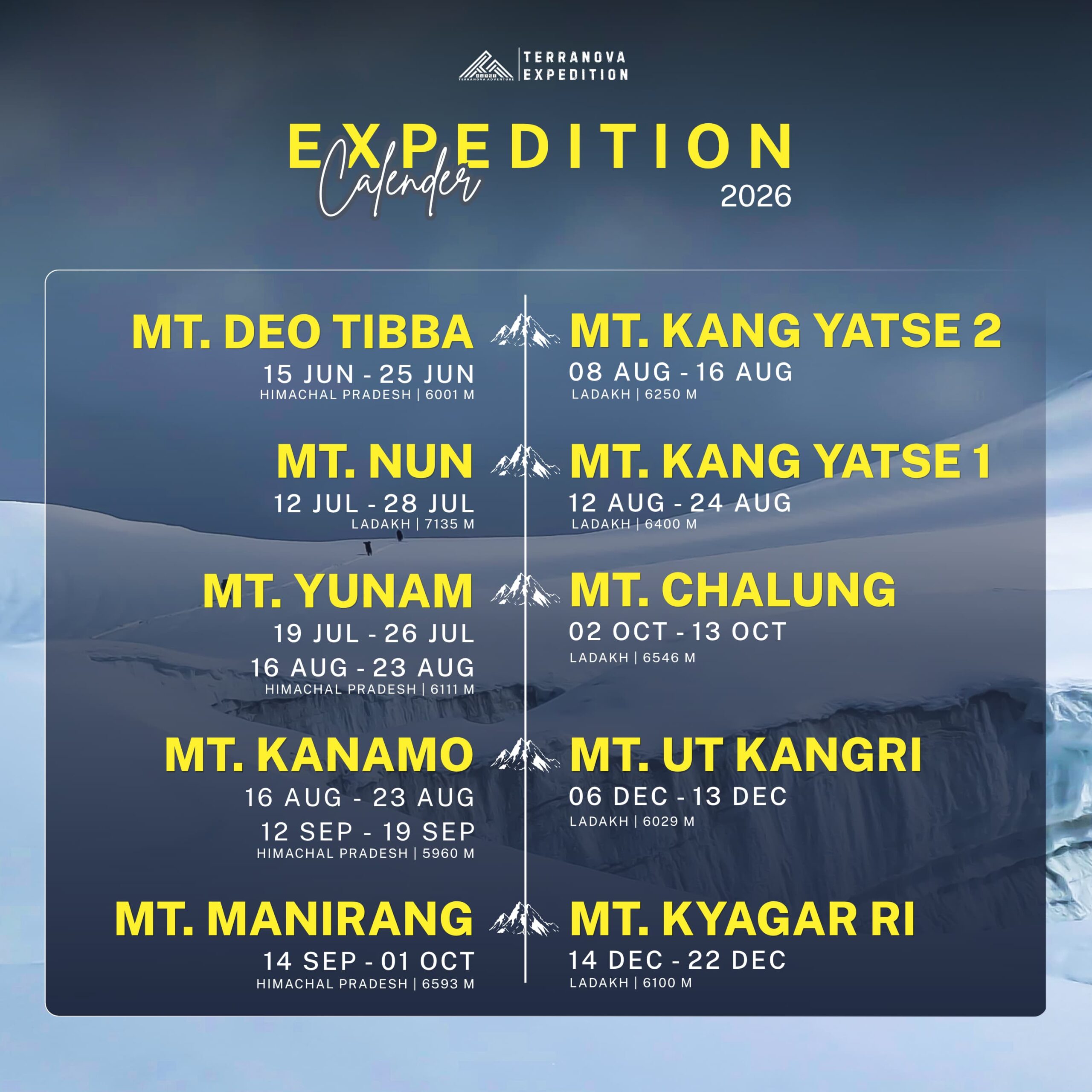
The Friendship Peak Expedition remains one of India’s most popular mountaineering adventures for trekkers looking to take their first step into the world of Himalayan climbing. Rising to an impressive 5,289 metres (17,352 ft) in the Pir Panjal Range of Himachal Pradesh, Friendship Peak offers the perfect blend of high-altitude trekking, glacier travel, snow climbing, and breathtaking Himalayan scenery.
The Friendship Peak Expedition 2026 season is expected to attract climbers from across India and around the world due to favourable climbing conditions, improved accessibility from Manali, and increasing interest in introductory mountaineering expeditions. Whether you’re preparing for your first expedition or building experience before attempting higher Himalayan peaks such as Yunam Peak, Black Peak, or Kang Yatse, Friendship Peak provides an ideal learning platform.
Unlike conventional Himalayan treks, the Friendship Peak Expedition introduces participants to expedition-style climbing. Climbers learn how to move efficiently on snow, use technical mountaineering equipment, manage high-altitude conditions, and operate as part of a professional expedition team while working towards their first Himalayan summit.
Bookings for Friendship Peak Expedition 2026 Are Now Open
The Friendship Peak Expedition 2026 with Terranova Expeditions is now open for bookings.
Every expedition is carefully planned to maximise safety, acclimatization, and summit success while providing participants with a genuine Himalayan mountaineering experience.
Our expeditions include:
- Experienced expedition leaders
- Certified mountaineering instructors
- Professional climbing guides
- High-altitude camping equipment
- Technical climbing gear support
- Medical kit and oxygen backup
- Nutritious expedition meals
- Weather monitoring and summit planning
- Small expedition groups for personalised support
Whether you are an experienced trekker aiming for your first Himalayan summit or an aspiring mountaineer preparing for more technical expeditions, the Friendship Peak Expedition offers an unforgettable learning experience.
Why the Friendship Peak Expedition 2026 Season Is Special
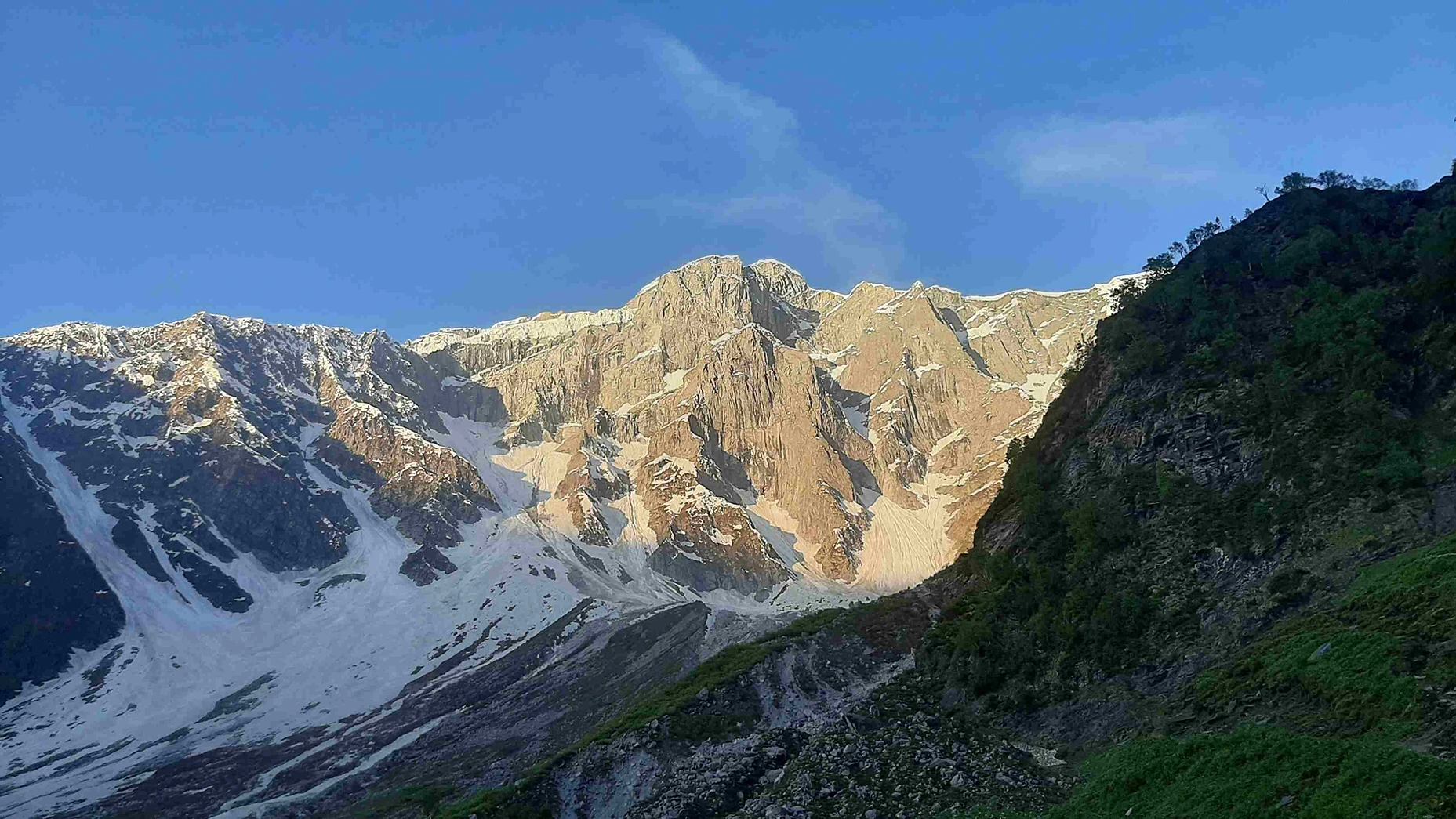
The Friendship Peak Expedition 2026 season is expected to witness strong participation from adventure enthusiasts due to several favourable factors.
Stable Climbing Windows
The months between June and September generally provide the most favourable weather conditions for climbing Friendship Peak. Stable snow conditions, moderate temperatures, and longer daylight hours improve the chances of successful summit attempts.
Easy Accessibility
One of the biggest advantages of the Friendship Peak Expedition is its proximity to Manali. Unlike many remote Himalayan expeditions that require long approach journeys, Friendship Peak can be reached after a short drive to Solang Valley followed by a gradual trekking approach.
Perfect Introduction to Mountaineering
For trekkers who have successfully completed high-altitude treks such as Hampta Pass, Rupin Pass, Buran Ghati, Kashmir Great Lakes, or Goechala, Friendship Peak serves as an excellent introduction to expedition mountaineering.
Participants gain hands-on experience with:
- Snow climbing
- Glacier movement
- Ice axe techniques
- Crampon walking
- Rope management
- High-altitude camping
These skills provide an ideal foundation for more challenging Himalayan expeditions in the future.
Growing Interest in Himalayan Expeditions
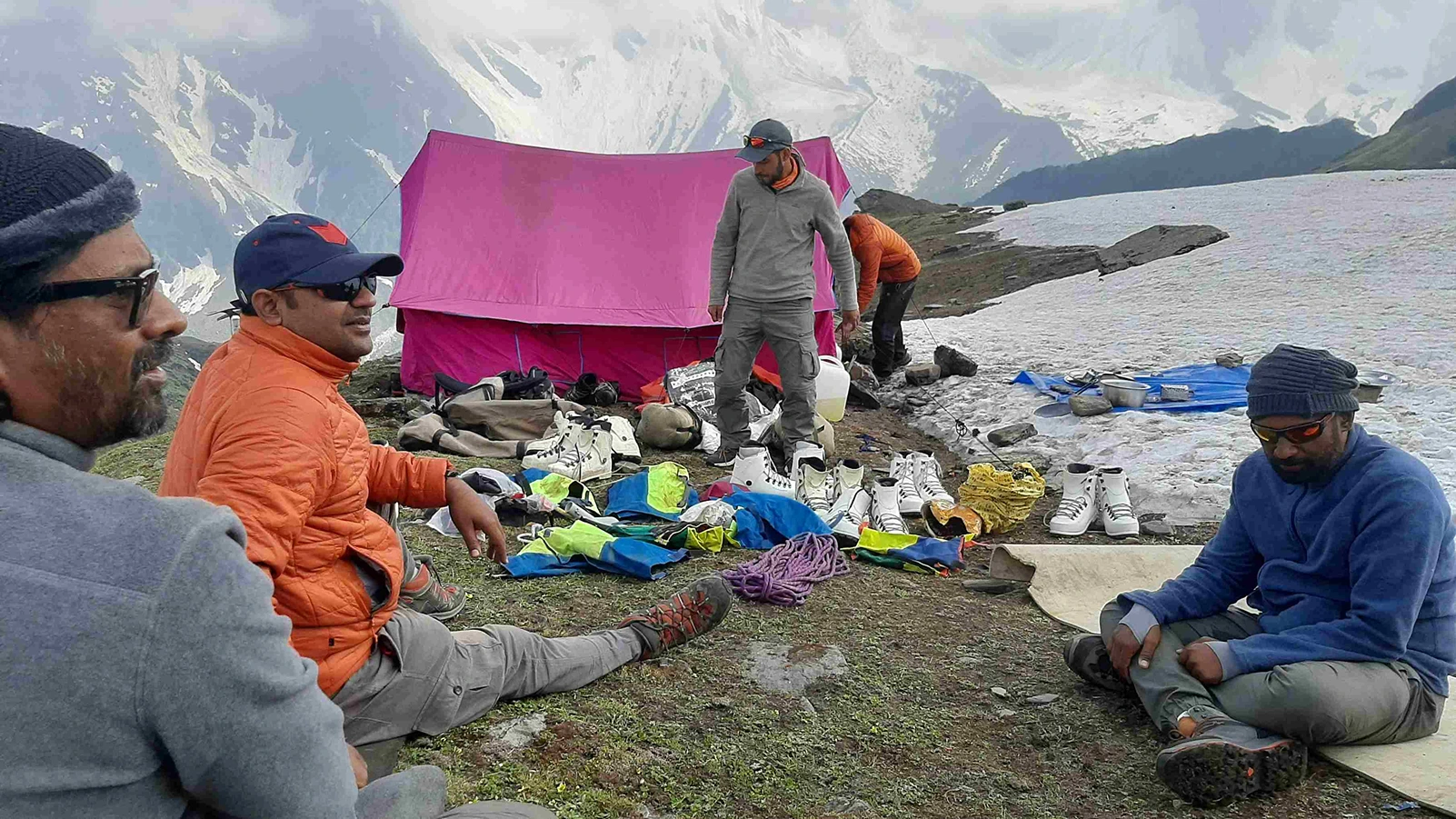
In recent years, more trekkers have begun transitioning from trekking to mountaineering. As a result, Friendship Peak Expedition 2026 is expected to be one of the most sought-after introductory climbing expeditions in India.
About the Friendship Peak Expedition
Standing at 5,289 metres (17,352 feet) above sea level, Friendship Peak is one of the most famous trekking peaks in Himachal Pradesh. Located in the beautiful Pir Panjal Range, the mountain offers spectacular views of several prominent Himalayan peaks, glaciers, and alpine valleys.
The expedition begins from the vibrant hill town of Manali, before progressing through the lush forests of Solang Valley, alpine meadows of Bakarthach, and snow-covered slopes leading to the summit.
Unlike ordinary trekking routes, the Friendship Peak Expedition combines trekking with practical mountaineering. Participants gradually transition from walking on forest trails to navigating glaciers and snowfields while learning the essential techniques required for climbing in the Himalayas.
Although Friendship Peak is often described as a beginner-friendly expedition, it should not be underestimated. The summit demands physical endurance, mental resilience, proper acclimatization, and the ability to perform efficiently at high altitude.
With experienced guidance and structured acclimatization, Friendship Peak provides one of the safest and most rewarding introductions to Himalayan mountaineering.
Location of Friendship Peak
Friendship Peak is located in the Kullu district of Himachal Pradesh, within the Pir Panjal mountain range.
The standard expedition route follows:
Manali → Solang Valley → Dhundi → Bakarthach → Lady Leg → Advanced Base Camp → Summit Camp → Friendship Peak Summit
The mountain is surrounded by some of the most spectacular landscapes in the Indian Himalayas, including glaciers, alpine meadows, rugged ridgelines, and panoramic views of neighbouring peaks.
Its close proximity to Manali makes logistics relatively straightforward, allowing climbers to spend more time focusing on acclimatization and climbing rather than lengthy approach marches.
Quick Facts About Friendship Peak Expedition
| Detail | Information |
| Peak Name | Friendship Peak |
| Elevation | 5,289 m (17,352 ft) |
| Mountain Range | Pir Panjal |
| State | Himachal Pradesh |
| District | Kullu |
| Base Town | Manali |
| Starting Point | Solang Valley |
| Duration | 7–9 Days |
| Difficulty | Moderate to Difficult |
| Expedition Type | Trekking Peak / Mountaineering Expedition |
| Best Season | June to September |
| Maximum Altitude | 5,289 m |
History of Friendship Peak
Friendship Peak has long been regarded as one of the premier training peaks for aspiring mountaineers in India. Owing to its accessible location near Manali and its mix of trekking, glacier travel, and snow climbing, it has become a preferred destination for adventure clubs, mountaineering institutes, defence personnel, and independent climbers.
Over the years, the mountain has helped thousands of trekkers make the transition from high-altitude trekking to expedition climbing. Its route offers an excellent opportunity to develop essential mountaineering skills in a controlled environment before progressing to more demanding Himalayan peaks above 6,000 metres.
Today, Friendship Peak continues to play an important role in Himalayan mountaineering, serving as a stepping stone for climbers preparing for expeditions such as Yunam Peak, Black Peak, Kang Yatse, Mt. Kun, and Mt. Nun.
Why Choose the Friendship Peak Expedition?
The Friendship Peak Expedition is much more than a summit climb. It is a complete learning experience that introduces participants to the challenges and rewards of Himalayan mountaineering.
Experience Real Mountaineering
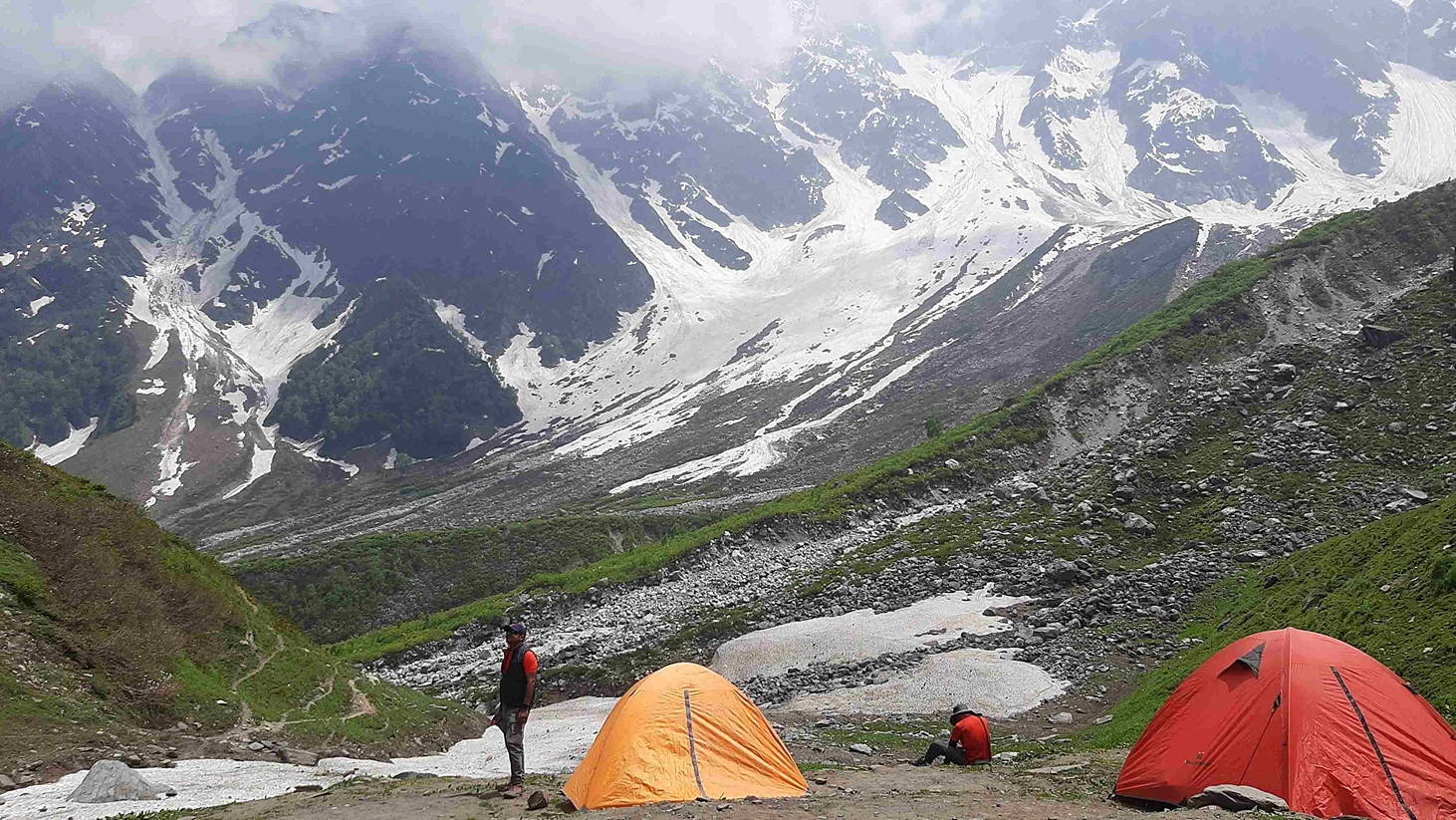
Unlike standard treks, Friendship Peak offers practical exposure to snow climbing, glacier movement, and the use of mountaineering equipment under the supervision of experienced guides.
Ideal First Expedition Peak
Its manageable technical difficulty and structured approach make it one of India’s best peaks for trekkers looking to attempt their first mountaineering expedition.
Spectacular Himalayan Landscapes
The expedition passes through dense forests, alpine meadows, glacier valleys, and snowfields, providing constantly changing scenery throughout the journey.
Learn Essential Mountaineering Skills
Participants gain valuable experience in:
- Crampon walking
- Ice axe handling
- Rope techniques
- Snow climbing
- Glacier safety
- High-altitude camping
- Expedition planning
- Team coordination
These skills provide a strong foundation for future Himalayan expeditions.
Climb with Terranova Expeditions
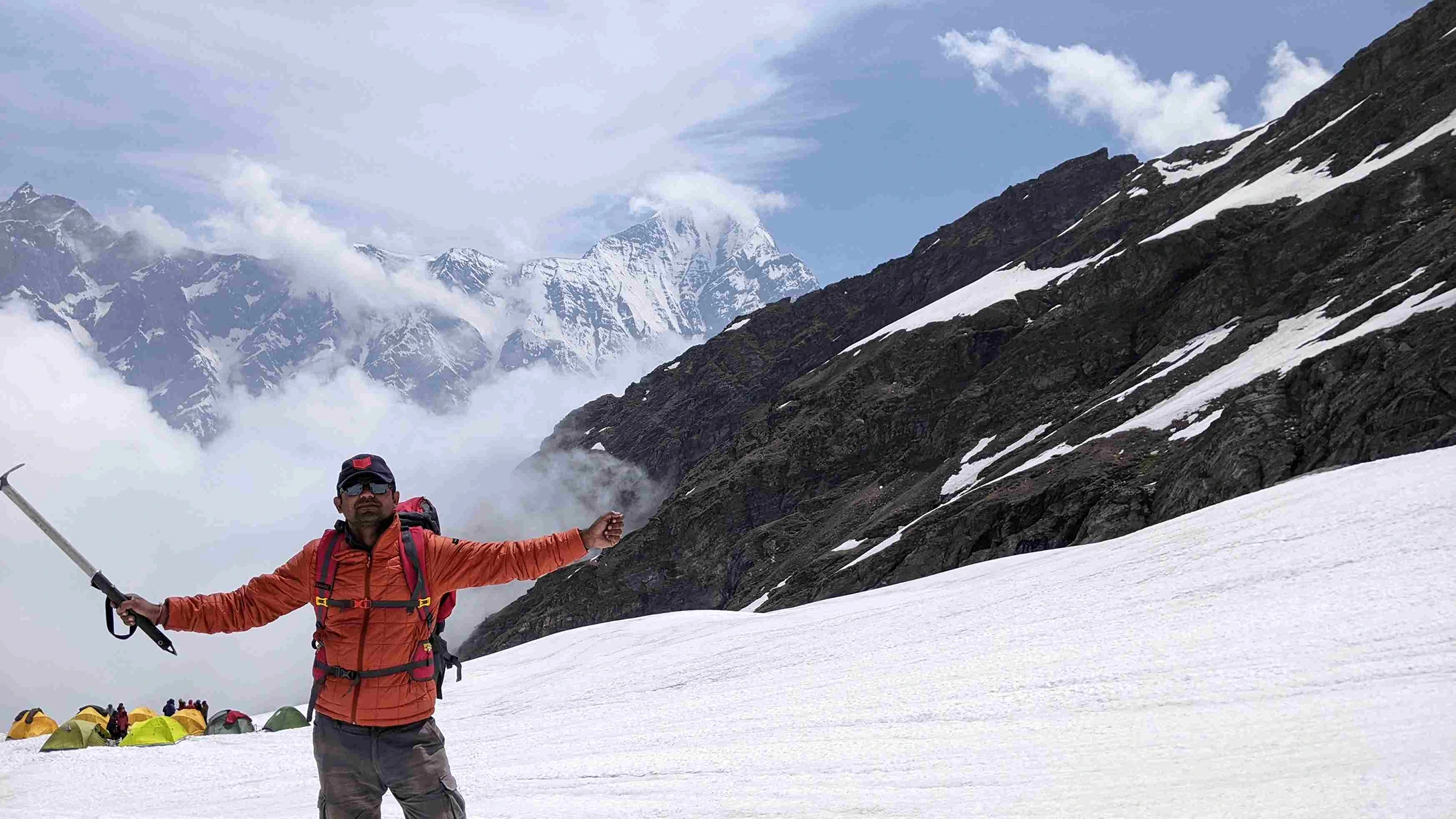
At Terranova Expeditions, every Friendship Peak expedition is led with a strong emphasis on safety, proper acclimatization, and personalised guidance. Our experienced team carefully plans every stage of the journey to maximise your chances of a successful summit while ensuring you gain practical mountaineering knowledge that extends far beyond a single expedition.
From Manali to the Summit of Friendship Peak
One of the reasons the Friendship Peak Expedition has become one of India’s most popular introductory mountaineering adventures is its incredibly scenic approach. Unlike remote Himalayan expeditions that require several days of trekking just to reach Base Camp, Friendship Peak combines comfortable accessibility from Manali with a progressively challenging route that allows climbers to adapt naturally to increasing altitude.
The Friendship Peak Expedition Route passes through lush cedar forests, alpine meadows, glacial valleys, rocky moraines, and snow-covered slopes before finally reaching the spectacular summit at 5,289 metres. Every stage of the expedition introduces a new landscape, making the journey just as memorable as the summit itself.
For many participants, this expedition is their first opportunity to experience glacier travel, snow climbing, and life at high altitude under the guidance of professional mountaineering leaders.
Friendship Peak Expedition Route Overview
Manali → Solang Valley → Dhundi → Bakarthatch → Lady Leg Base Camp → Summit Camp → Friendship Peak Summit → Lady Leg Base Camp → Dhundi → Manali
The Friendship Peak Expedition Route is carefully designed to maximise acclimatization while gradually introducing climbers to increasingly challenging Himalayan terrain. Starting from the vibrant mountain town of Manali, the route traverses lush alpine meadows, glacial valleys, moraine fields, snow-covered slopes, and finally the summit ridge of Friendship Peak.
Unlike many Himalayan expeditions that rush climbers towards higher camps, the Friendship Peak Expedition 2026 follows a structured acclimatization schedule. Dedicated training sessions, a load ferry exercise, and a gradual altitude gain significantly improve climbers’ adaptation to high altitude while increasing the chances of a safe and successful summit.
Every campsite has been strategically selected to balance physical recovery, technical preparation, and altitude adaptation, making the expedition an ideal introduction to Himalayan mountaineering.
Day 1 – Arrival in Manali (2,000 m) | Team Introduction & Acclimatization
Your Friendship Peak Expedition 2026 begins in the beautiful mountain town of Manali, the adventure capital of Himachal Pradesh and the gateway to numerous Himalayan expeditions.
Upon arrival, participants are welcomed by the Terranova Expeditions team and introduced to fellow climbers. After checking into the accommodation, the expedition officially begins with a comprehensive briefing covering the complete climbing route, expedition objectives, safety protocols, communication procedures, and mountain ethics.
Every participant undergoes a detailed equipment inspection to ensure that clothing, footwear, and technical gear meet expedition standards. This allows enough time to replace or rent any missing equipment before entering the mountains.
Since proper acclimatization starts from the very first day, climbers are encouraged to take a gentle walk around Manali during the afternoon. This light activity helps the body gradually begin adapting to the increasing altitude before moving higher over the coming days.
During the evening briefing, the expedition leader discusses hydration strategies, nutritional planning, altitude awareness, team responsibilities, and expectations for the summit climb.
Night Stay: Homestay in Manali
Meals: Dinner
Day 2 – Manali to Dhundi (Drive) & Trek to Bakarthatch (3,300 m)
After an early breakfast, the expedition drives through the scenic Solang Valley towards Dhundi, the starting point of the trek.
The drive itself offers spectacular views of the Beas River, pine forests, waterfalls, and snow-covered peaks surrounding Solang Valley.
From Dhundi, the trekking journey officially begins.
The trail follows beautiful alpine meadows, glacial streams, and open grasslands while gradually gaining altitude. Along the way, climbers enjoy magnificent views of Hanuman Tibba, Shitidhar Peak, and surrounding Himalayan ridges.
The pace remains relaxed, allowing everyone to settle into the rhythm of mountain walking while practising efficient breathing and steady movement.
Bakarthatch—meaning “Shepherd’s Meadow”—is one of the most picturesque campsites of the entire expedition. Surrounded by green pastures, flowing streams, and towering mountain walls, it provides an ideal environment for the first night under canvas.
Trek Difficulty: Easy to Moderate
Trek Duration: 5–6 Hours
Night Stay: Tent Accommodation
Meals: Breakfast, Lunch & Dinner
Day 3 – Bakarthatch to Lady Leg Base Camp (3,900 m)
Today’s trek marks the transition from alpine meadows to rugged high-altitude terrain.
The route gradually climbs through moraine fields, rocky sections, and glacial valleys as vegetation begins to disappear. Every step brings climbers closer to the snow-covered slopes of Friendship Peak.
Throughout the ascent, spectacular views unfold across the Pir Panjal Range, including Hanuman Tibba, Shitidhar Peak, and surrounding glaciers.
Upon reaching Lady Leg Base Camp, the expedition establishes camp before undertaking a short acclimatization hike to improve the body’s adaptation to altitude.
Medical monitoring becomes increasingly important at this stage. Expedition leaders regularly check pulse rate, oxygen saturation, hydration levels, and overall health to ensure everyone is acclimatizing safely.
The evening briefing focuses on summit strategy, rescue procedures, weather updates, and preparation for the technical training scheduled the following day.
Trek Duration: 4–5 Hours
Night Stay: Base Camp Tents
Day 4 – Technical Training Day
This is one of the most important days of the Friendship Peak Expedition.
Instead of climbing higher, the entire day is dedicated to technical mountaineering instruction and altitude adaptation.
Training takes place on nearby snow slopes under the supervision of experienced expedition leaders.
Participants receive practical instruction in:
- Proper crampon walking techniques
- Ice axe handling
- Self-arrest techniques
- Rope movement
- Glacier safety
- Balance and movement on snow
- Summit clothing and layering systems
- Packing an efficient summit backpack
- Hydration and nutrition strategies for summit day
This training not only improves confidence but also ensures every participant understands the equipment and techniques required during the summit climb.
The evening concludes with a detailed weather briefing, risk assessment, and planning for the following day’s load ferry exercise.
Day 5 – Load Ferry to Summit Camp (4,750 m) & Return to Base Camp
Today’s objective is not to establish Summit Camp but to improve acclimatization through a traditional mountaineering practice known as a load ferry.
Participants carry a portion of the expedition equipment, food supplies, and personal gear towards Summit Camp, spend some time at higher altitude, and then descend back to Base Camp.
This “climb high, sleep low” strategy stimulates the body’s natural acclimatization process by encouraging increased red blood cell production and improving the body’s efficiency in low-oxygen environments.
The route becomes noticeably steeper as climbers negotiate rocky moraines, snow slopes, and glacier terrain while experiencing the actual conditions they will encounter during summit day.
After returning to Base Camp, the team focuses on hydration, recovery, and a nutritious high-calorie dinner to prepare for the move to Summit Camp the following day.
Trek Duration: 6–7 Hours
Night Stay: Base Camp Tents
Day 6 – Move from Base Camp to Summit Camp (4,750 m)
Having completed the load ferry and acclimatized to higher elevations, the team now relocates permanently to Summit Camp.
With full expedition packs, climbers steadily ascend through snow-covered terrain while carefully managing their pace and energy.
Upon reaching Summit Camp, magnificent views of Hanuman Tibba, Shitidhar Peak, and the surrounding glaciers create an unforgettable high-altitude setting.
The remainder of the afternoon is devoted entirely to summit preparation.
The expedition leader conducts the final summit briefing covering:
- Summit timings
- Rope team allocation
- Turnaround policy
- Weather assessment
- Emergency procedures
- Communication protocols
Participants organize their summit backpacks, ensuring essentials such as headlamps, crampons, water, snacks, insulated clothing, sunglasses, and technical equipment are easily accessible.
An early dinner is followed by several hours of rest before the midnight wake-up call for the summit attempt.
Night Stay: Summit Camp
Day 7 – Summit Attempt (5,289 m) & Descent to Lady Leg Base Camp
Summit day begins between 1:00 AM and 2:00 AM, when snow conditions are firm and weather is generally most stable.
Climbers move together in rope teams under the guidance of experienced mountaineers.
The route gradually steepens across snowfields, glacier sections, and the final summit ridge, demanding steady breathing, disciplined pacing, and careful foot placement.
As sunrise illuminates the Himalayas, breathtaking views emerge across Hanuman Tibba, Deo Tibba, Indrasan, Shitidhar, Seven Sisters, the Beas Kund Glacier, and the surrounding Pir Panjal Range.
Standing atop Friendship Peak (5,289 metres) represents the successful culmination of months of preparation and days of determined climbing.
Following photographs and a brief summit celebration, the descent begins immediately. Maintaining concentration during the descent is equally important, as fatigue and changing snow conditions require constant attention.
Rather than returning to Summit Camp, the team continues descending to Lady Leg Base Camp, where a well-earned rest awaits after one of the most rewarding days of the expedition.
Total Duration: 10–14 Hours
Night Stay: Lady Leg Base Camp
Day 8 – Descend to Dhundi & Drive to Manali | Closing & Certificate Ceremony
The final day begins with a relaxed descent through alpine meadows back to Dhundi.
Vehicles then transport the team to Manali, marking the official conclusion of the Friendship Peak Expedition 2026.
A closing ceremony celebrates the team’s achievement with expedition certificates, group photographs, and reflections on the journey from Manali to the summit and back.
For many participants, Friendship Peak is more than a successful climb—it marks the beginning of a lifelong mountaineering journey.
Meals: Breakfast & Lunch
Complete Friendship Peak Expedition Itinerary
| Day | Destination | Activity |
| Day 1 | Manali | Arrival, team introduction, gear check & acclimatization |
| Day 2 | Dhundi – Bakarthatch | Drive and trek |
| Day 3 | Bakarthatch – Lady Leg Base Camp | Trek and acclimatization |
| Day 4 | Lady Leg Base Camp | Technical training and snow craft |
| Day 5 | Summit Camp & Return | Load ferry and acclimatization |
| Day 6 | Summit Camp | Shift to Summit Camp and summit preparation |
| Day 7 | Friendship Peak Summit (5,289 m) – Lady Leg Base Camp | Summit attempt and descent |
| Day 8 | Dhundi – Manali | Descend, drive back, closing ceremony & certificates |
Lessons Learned from the Friendship Peak Expedition
Completing the Friendship Peak Expedition is about far more than standing on a summit. It teaches patience, resilience, teamwork, and respect for the mountains.
Every stage of the expedition—from the forests of Solang Valley to the snow-covered summit ridge—helps climbers develop the confidence and skills needed for future Himalayan objectives.
For many mountaineers, Friendship Peak is not the end of the journey—it is the beginning.
If you also wanted to do adventures activities then join us at Terranova Adventure .