One of the first things climbers obsess over before an expedition is clothing.
Questions usually sound like this:
• How cold will it be?
• Which jacket should I buy?
• Do I need a down suit?
• How many thermals should I carry?
• Will one jacket be enough?
But after spending enough time in the Himalayas, you realize something important:
Surviving and performing in the mountain expedition is not about owning the warmest jacket. It is about understanding the layering system.
In fact, many beginners who carry expensive gear still suffer from cold because they wear it incorrectly. On the other hand, experienced mountaineers often remain comfortable in harsh conditions because they understand how to manage body heat efficiently.
I learned this lesson during one of my first snow expeditions.
Like many beginners, I thought more layers automatically meant more warmth. So I started the climb wearing almost everything I had.
Within an hour, I was sweating heavily.
The moment we stopped for a break, cold air began cooling the moisture trapped inside my clothing. Suddenly, I felt colder than before.
That day taught me one of the most valuable lessons in mountaineering:
The enemy is not always cold. Sometimes it is trapped moisture.
Since then, I have seen the layering system prove itself repeatedly on expeditions in Uttarakhand, Himachal, Ladakh, and Nepal.
Whether you are climbing a trekking peak, attempting a 6,000-meter expedition, or preparing for an 8,000-meter objective, understanding layering is one of the most important mountain skills you can learn.
What Is the Layering System?
The layering system is a clothing strategy that allows climbers to regulate body temperature efficiently in changing mountain conditions.
Instead of relying on one thick jacket, climbers wear multiple functional layers.
Each layer has a specific job:
• Moisture management
• Insulation
• Weather protection
Together, these layers create a flexible system that can adapt to:
• Temperature changes
• Wind exposure
• Snowfall
• Physical exertion
• Altitude variations
The goal is simple:
Stay warm without overheating. Stay dry without becoming cold.
Why Layering Matters So Much at High Altitude
The Himalayas rarely provide stable conditions.
In a single day you may experience:
• Warm sunshine
• Strong winds
• Snowfall
• Sub-zero temperatures
• Intense uphill exertion
• Long stationary breaks
One fixed clothing setup cannot handle all these situations effectively.
That is why climbers use layers.
Layers allow you to:
• Add warmth when needed
• Remove insulation when moving
• Adjust to changing weather quickly
This flexibility is one of the biggest advantages in mountaineering.
The Biggest Mistake Beginners Make
Most beginners believe:
“More clothing equals more warmth.”
Not necessarily.
Wearing excessive clothing while climbing usually causes:
• Sweating
• Moisture buildup
• Overheating
Later, when movement slows or stops:
• The moisture cools rapidly
• Body heat drops
• Cold becomes more severe
I have personally experienced this during summit pushes where overdressing early created significant discomfort later.
Lesson from Experience:
The goal is not to feel warm while moving.
The goal is to stay dry while moving and warm while resting.
Understanding the Four-Layer System
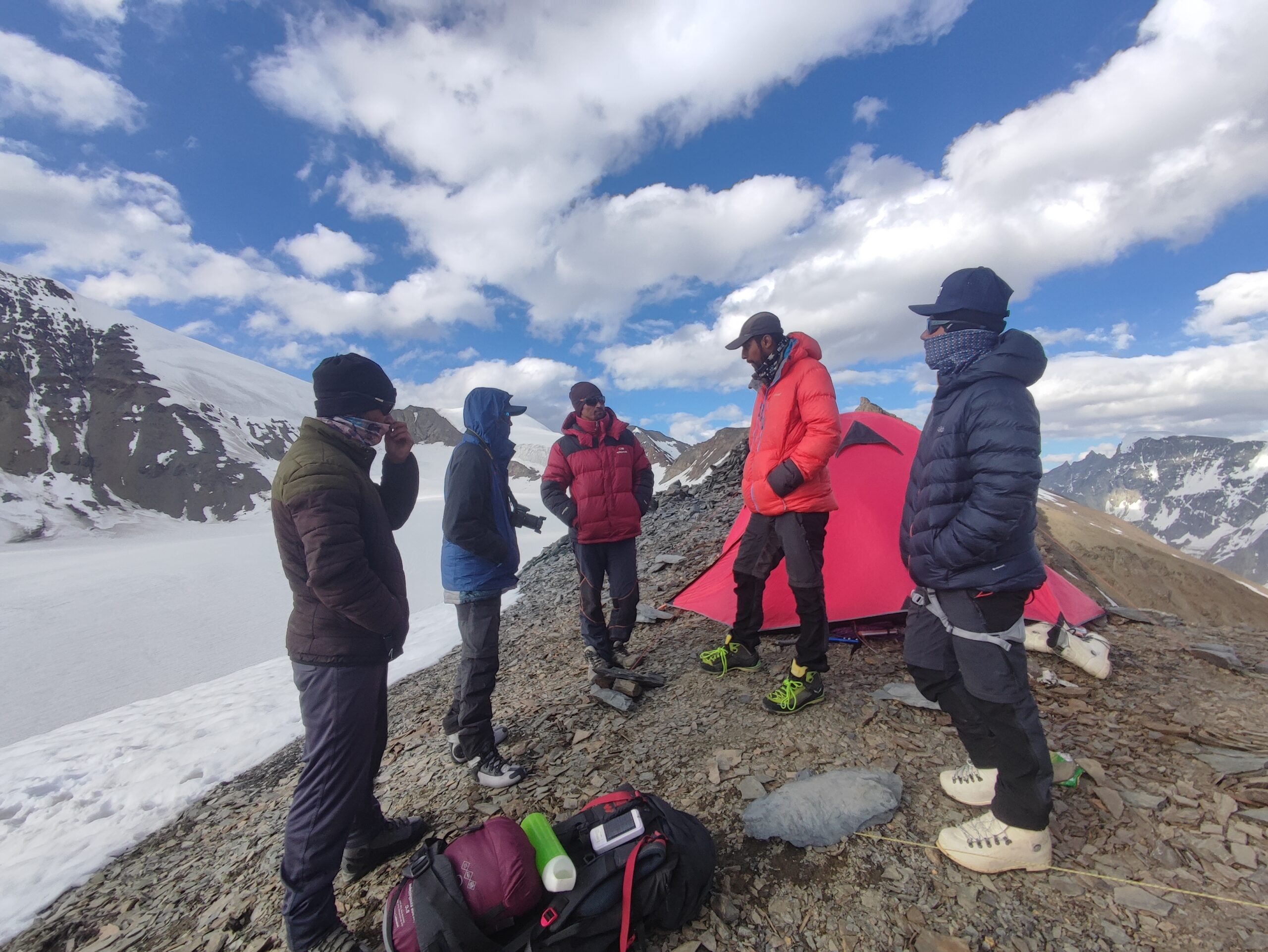
Most high-altitude clothing systems can be divided into four major layers:
1. Base Layer
2. Mid Layer
3. Insulation Layer
4. Outer Shell Layer
Each serves a different purpose.
Layer 1: The Base Layer
The base layer sits directly against the skin.
Its primary function is:
Moisture management.
Many beginners think the base layer exists for warmth.
That is only partially true.
Its real job is to:
• Move sweat away from the skin
• Keep the body dry
• Improve comfort during movement
Characteristics of a Good Base Layer
A quality base layer should:
• Dry quickly
• Fit comfortably
• Manage moisture efficiently
• Remain breathable
Common materials:
• Merino wool
• Synthetic fabrics
Why Cotton Is a Problem
One of the most important rules in mountaineering:
Avoid cotton whenever possible.
Cotton:
• Absorbs moisture
• Dries slowly
• Loses insulation when wet
At altitude, this can create serious comfort and safety issues.
Layer 2: The Mid Layer
The mid-layer provides insulation.
This layer traps warm air around the body and helps retain heat generated during movement.
Common mid-layer options include:
• Fleece jackets
• Grid fleece tops
• Lightweight synthetic insulation
Why Fleece Remains Popular
Fleece continues to be a favorite among climbers because it:
• Breathes well
• Dries quickly
• Maintains warmth even when slightly damp
During active climbing days, fleece often becomes the workhorse layer.
Layer 3: The Insulation Layer
This is the layer most people think about when they imagine mountain clothing.
The insulation layer is designed primarily for:
• Rest stops
• Camp use
• Summit mornings
• Extreme cold conditions
This layer usually consists of:
• Down jackets
• Synthetic insulated jackets
Down vs Synthetic Insulation
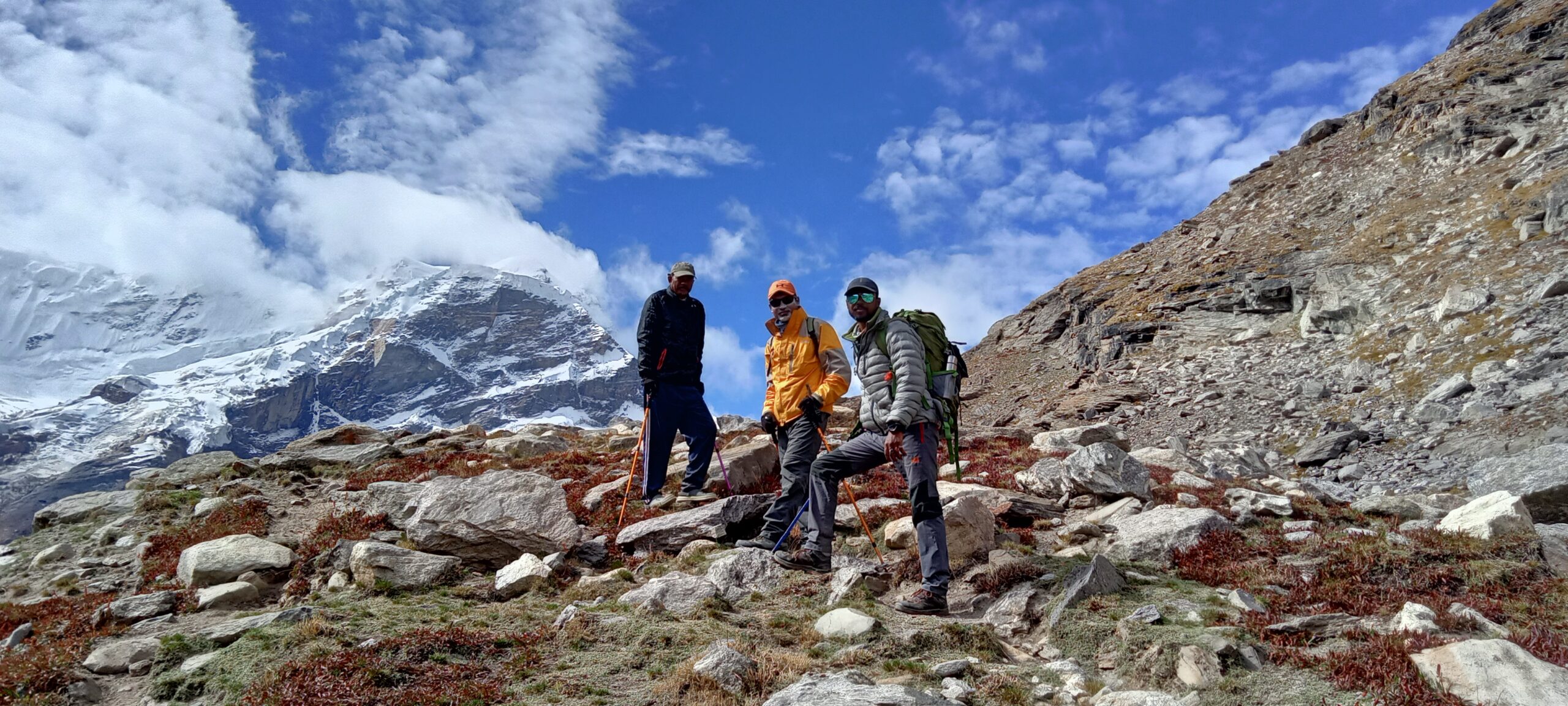
Both systems have advantages.
Down Insulation
Advantages:
• Exceptional warmth-to-weight ratio
• Highly compressible
• Excellent for dry cold environments
Disadvantages:
• Loses effectiveness when wet
Synthetic Insulation
Advantages:
• Performs better in damp conditions
• Dries faster
• More durable during repeated use
Disadvantages:
• Slightly heavier
• Bulkier than down
How Expedition Climbers Use Insulation Layers
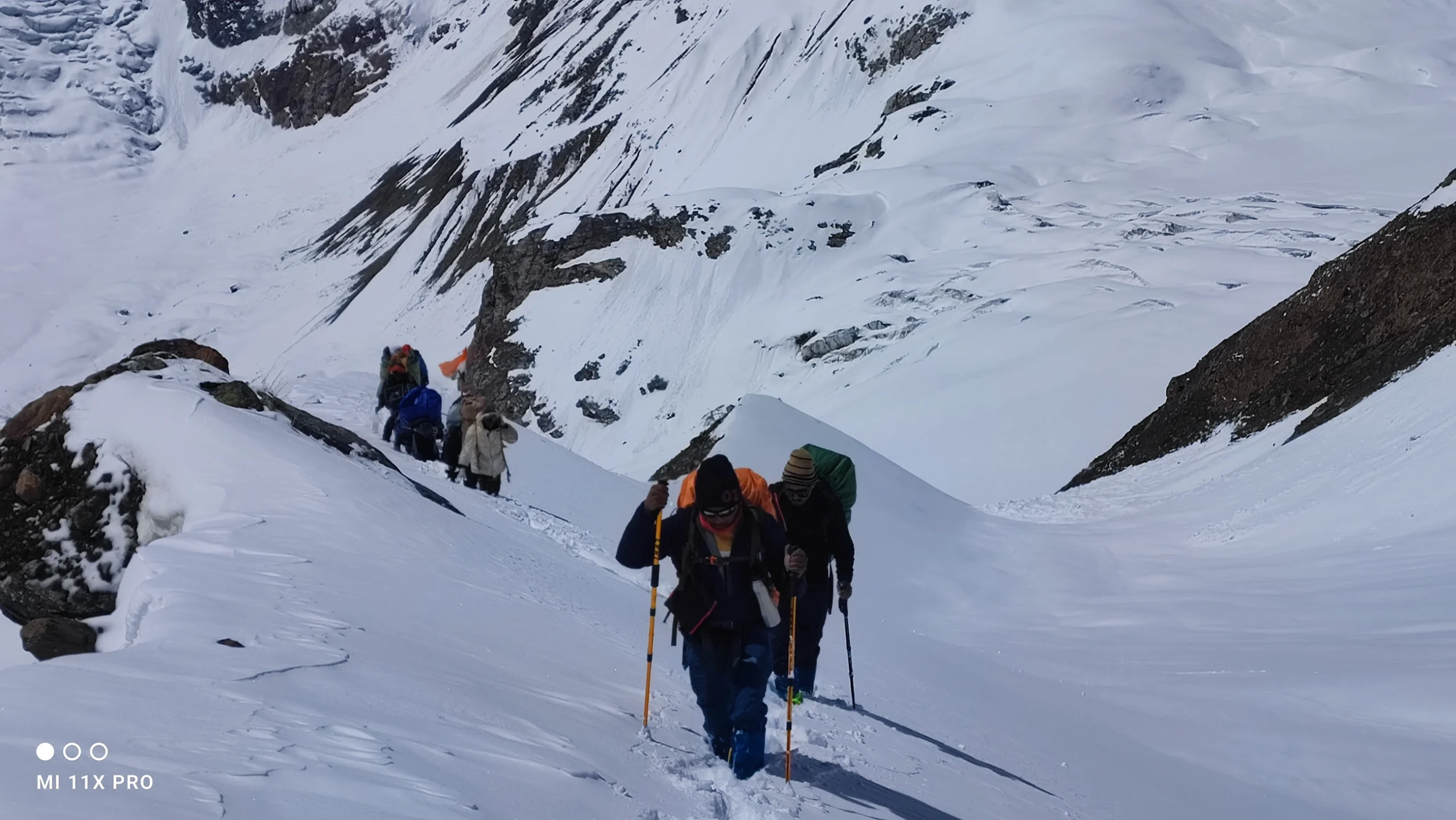
One mistake beginners make is wearing heavy down jackets while actively climbing.
Experienced mountaineers rarely do this.
Instead:
• Down jackets stay packed during movement
• They are worn during breaks or in camp
This prevents overheating and sweat accumulation.
Lesson from Experience:
The warmest jacket in your backpack is often more valuable than the warmest jacket on your body.
Layer 4: The Outer Shell
The shell layer protects against external conditions.
Its purpose is:
• Wind protection
• Snow protection
• Rain protection
This layer acts like armor for the entire clothing system.
Why Wind Is Often Worse Than Cold
One thing every mountaineer eventually learns:
Wind changes everything.
A temperature that feels comfortable in calm conditions can become brutally cold once strong wind arrives.
During one Himalayan summit push, temperatures were manageable.
The wind was not.
That single factor changed the entire layering strategy.
Lesson from Experience:
In the mountains, wind often feels colder than temperature itself.
Soft Shell vs Hard Shell
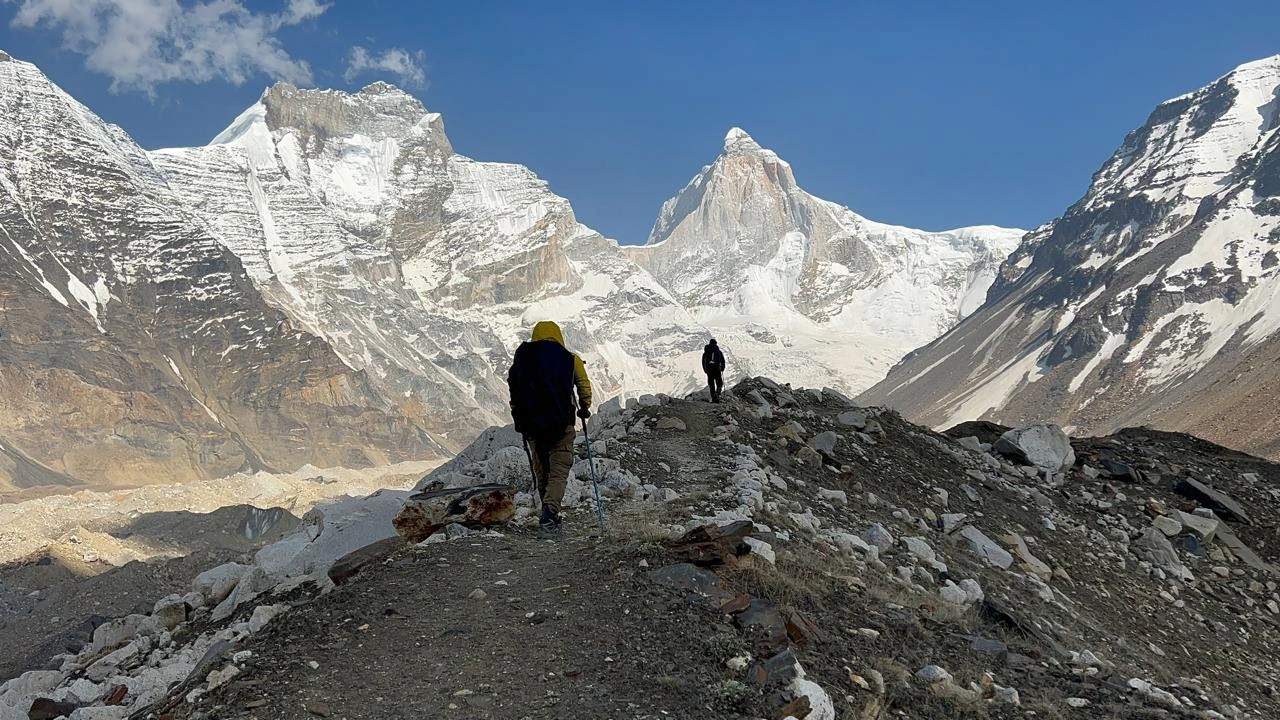
Many climbers use both systems.
Soft Shell
Best for:
• Dry conditions
• Active movement
• Breathability
Hard Shell
Best for:
• Snowstorms
• Heavy wind
• Rain
• Severe weather
Most serious Himalayan expeditions include a reliable hard shell.
Layering for Different Expedition Phases
One clothing setup does not work all day.
Good climbers adjust layers constantly.
During Trekking
Typical setup:
• Base layer
• Mid layer
• Optional light shell
Goal:
• Avoid sweating
During Acclimatization Climbs
Typical setup:
• Base layer
• Fleece
• Shell when needed
Goal:
• Balance warmth and breathability
During Summit Pushes
Typical setup:
• Base layer
• Mid layer
• Insulation
• Shell
Goal:
• Maximum warmth with controlled moisture
During Camp Time
Typical setup:
• Dry base layer
• Heavy insulation
• Warm accessories
Goal:
• Recovery and heat retention
The Importance of Layering Your Legs
Many climbers focus heavily on upper-body clothing.
Lower-body layering is equally important.
A typical system includes:
• Base layer bottoms
• Trekking pants
• Soft shell pants
• Insulated pants for extreme conditions
This becomes especially important above 5,500–6,000 meters.
Hands: The Most Overlooked Layering System
Cold hands can ruin an expedition quickly.
A proper hand system usually includes:
Liner Gloves
For dexterity and light tasks.
Insulated Gloves
For general climbing.
Mittens
For extreme cold and summit pushes.
Many experienced climbers carry all three.
Layering Your Head and Face
Significant heat loss occurs through:
• Head
• Neck
• Face
Essential items often include:
• Beanie
• Buff or neck gaiter
• Balaclava
• Sun hat
These small items can dramatically improve comfort.
Common Layering Mistakes
Wearing Everything at Once
Causes overheating and sweating.
Ignoring Wind Protection
Wind exposure changes thermal comfort dramatically.
Using Cotton Clothing
Poor moisture management creates problems.
Waiting Too Long to Adjust Layers
Small temperature changes become bigger problems later.
Hiking in Heavy Down Jackets
Often leads to excessive sweating.
My Biggest Layering Realization
After multiple Himalayan expeditions, one truth became obvious:
The best climbers are constantly adjusting layers.
They:
• Remove layers before overheating
• Add layers before getting cold
• Manage moisture aggressively
They do not wait for discomfort.
They stay ahead of it.
A Sample Layering Setup for a 6000m Expedition
While Trekking
• Lightweight base layer
• Fleece
• Trekking pants
During Cold Mornings
• Base layer
• Fleece
• Soft shell
Summit Push
• Base layer
• Mid layer
• Down jacket
• Hard shell
Camp
• Dry thermals
• Heavy down jacket
• Warm accessories
This system works effectively across a wide range of Himalayan conditions.
Final Advice Before Your Expedition
Do not focus only on buying expensive clothing.
Focus on understanding:
• Moisture management
• Heat retention
• Weather protection
• Layer adjustment timing
Because high-altitude comfort is not determined by one jacket.
It is determined by how intelligently your entire system works together.
Conclusion
The layering system is one of the most important skills in high-altitude trekking and mountaineering.
It allows climbers to regulate temperature, manage moisture, adapt to changing weather, and perform efficiently in harsh mountain environments.
After countless Himalayan days spent in snow, wind, sun, and sub-zero temperatures, one lesson remains constant:
The goal is not to wear the most clothing. The goal is to wear the right clothing at the right time.
And once you understand that principle, staying comfortable in the mountains becomes far easier than most beginners imagine.