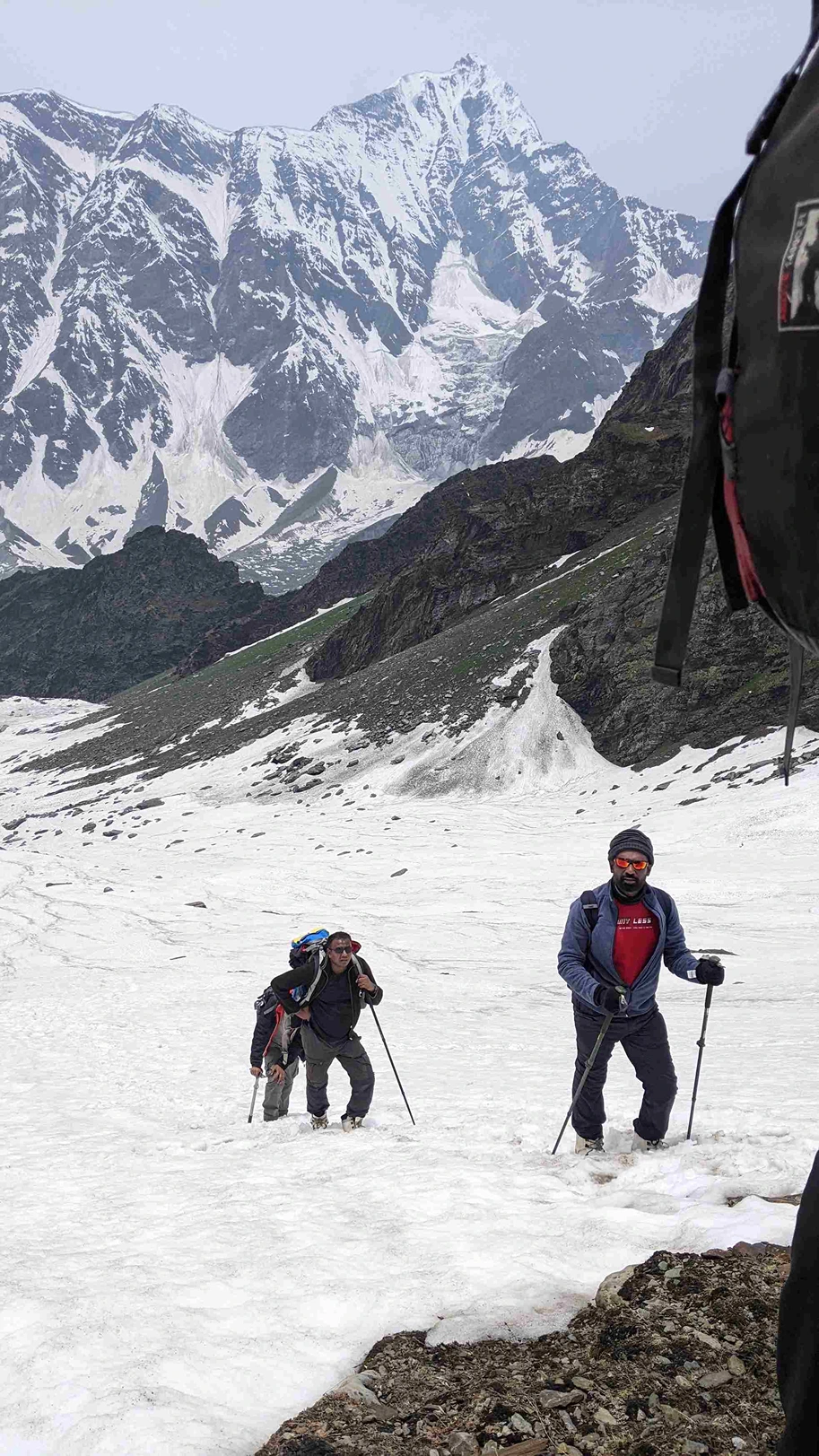
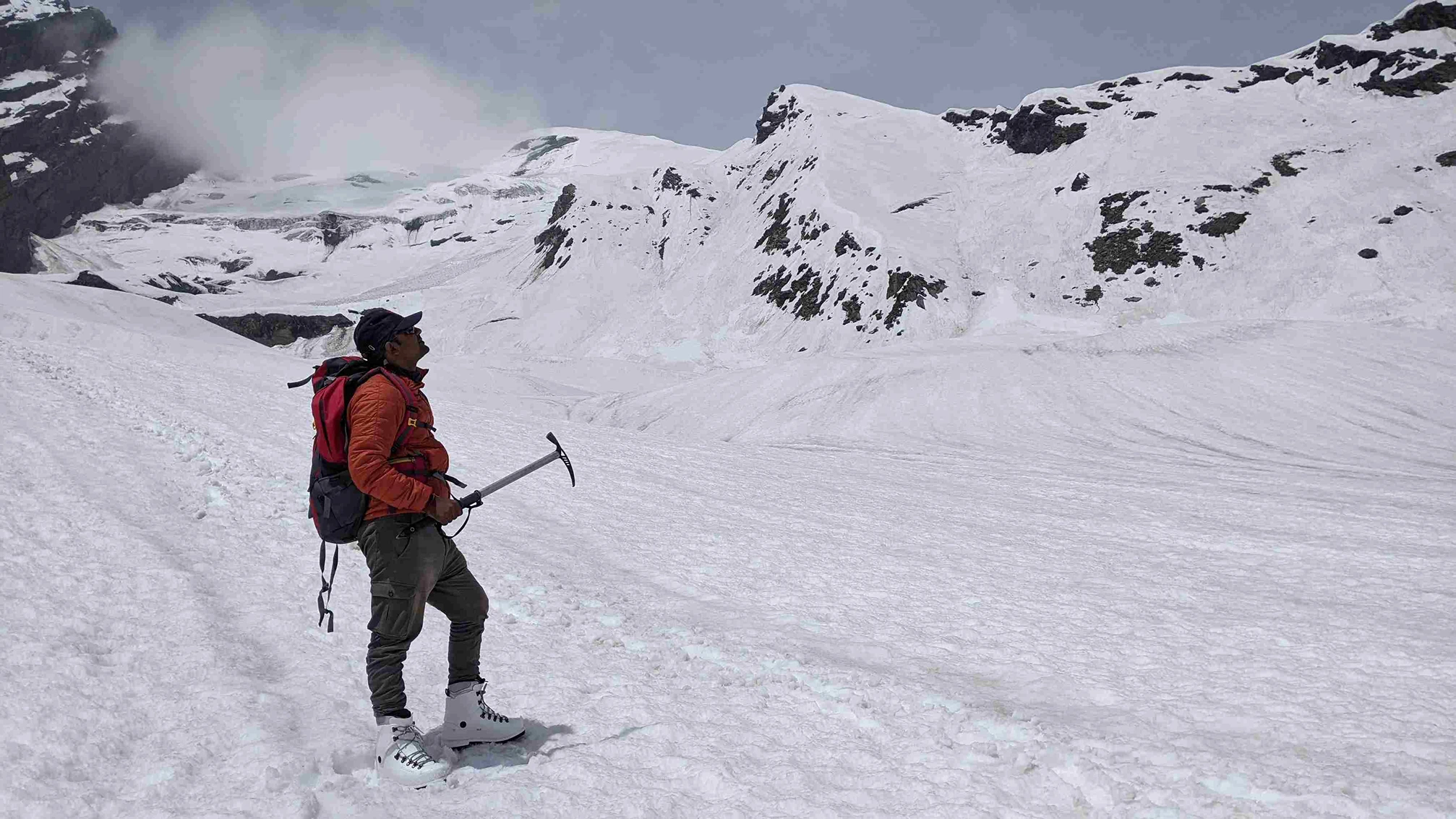
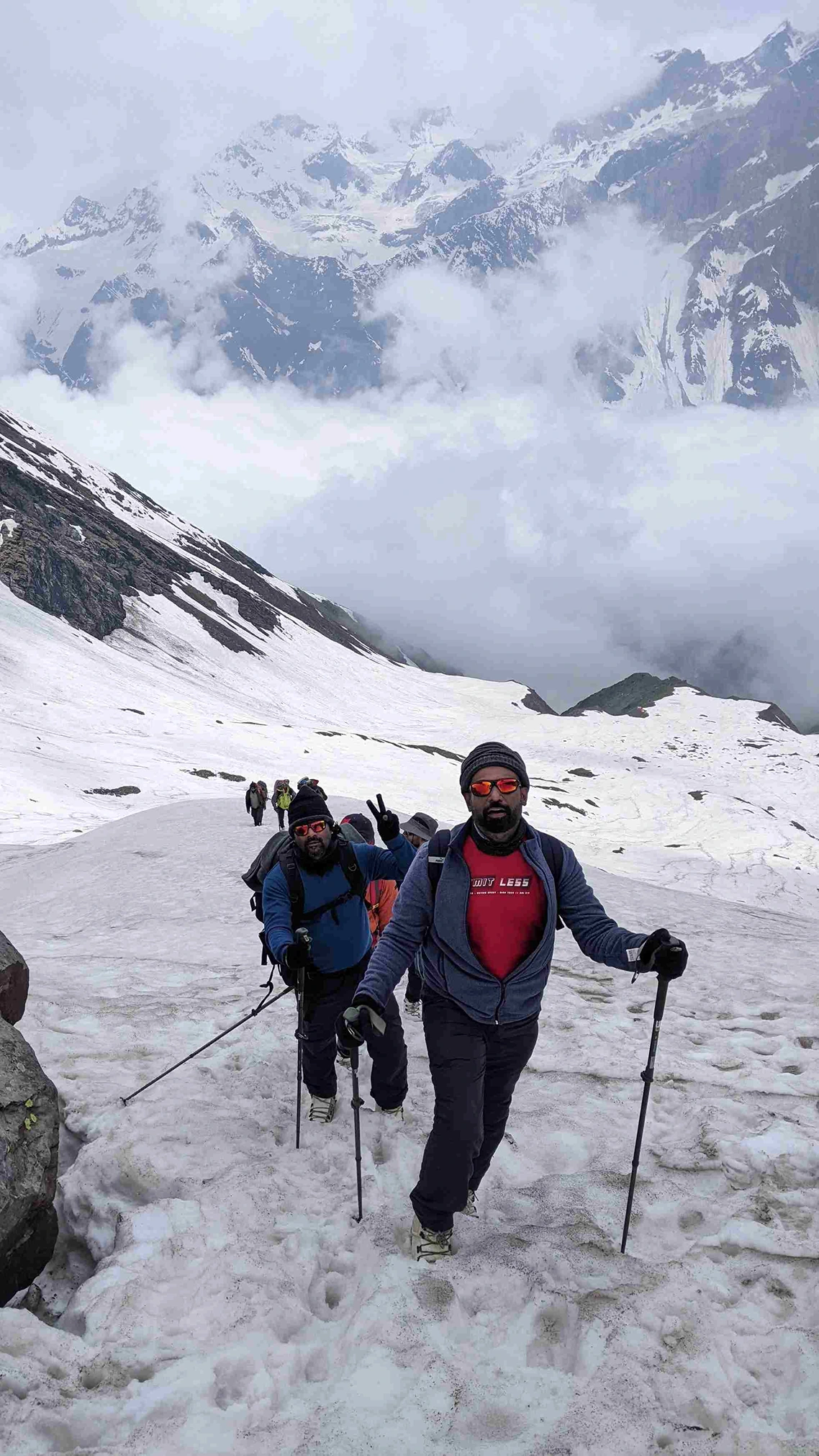
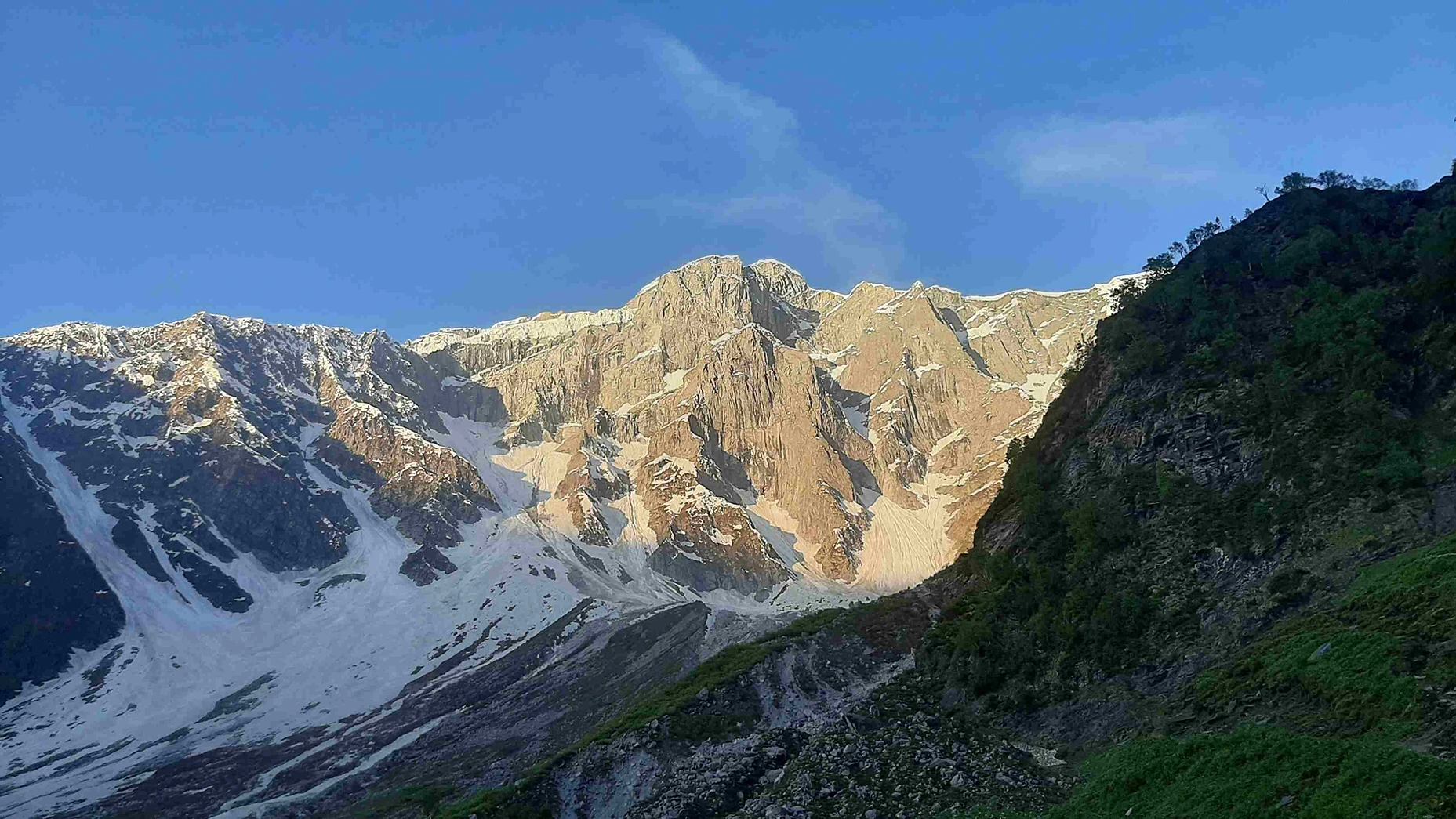
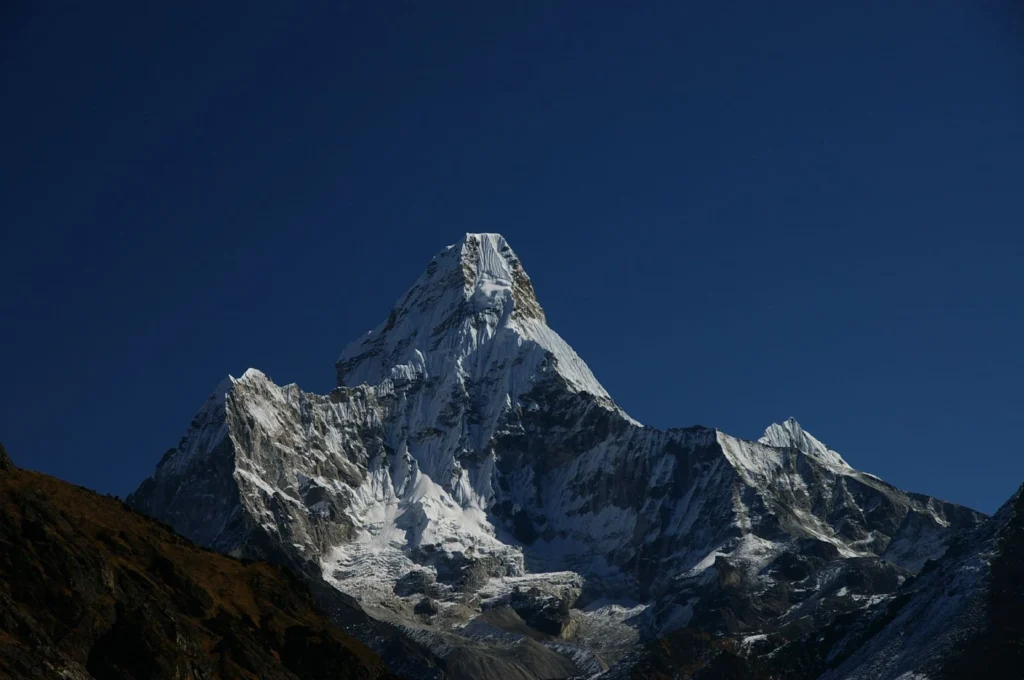
The Hanuman Tibba Expedition (5932 M) is one of the most respected and technically demanding sub-6000-meter climbs in the Indian Himalayas. Towering above the Dhauladhar Range and dominating the skyline north of Manali, Hanuman Tibba has long been considered a benchmark peak for serious Indian mountaineers preparing for higher and more technical objectives.
Although the altitude is slightly below 6000 meters, Hanuman Tibba should never be underestimated. The mountain demands technical competence, glacier travel experience, strong acclimatization discipline, and the ability to operate efficiently on steep snow and ice terrain. It is often described as a “small big mountain” — compact in height, but intense in effort.
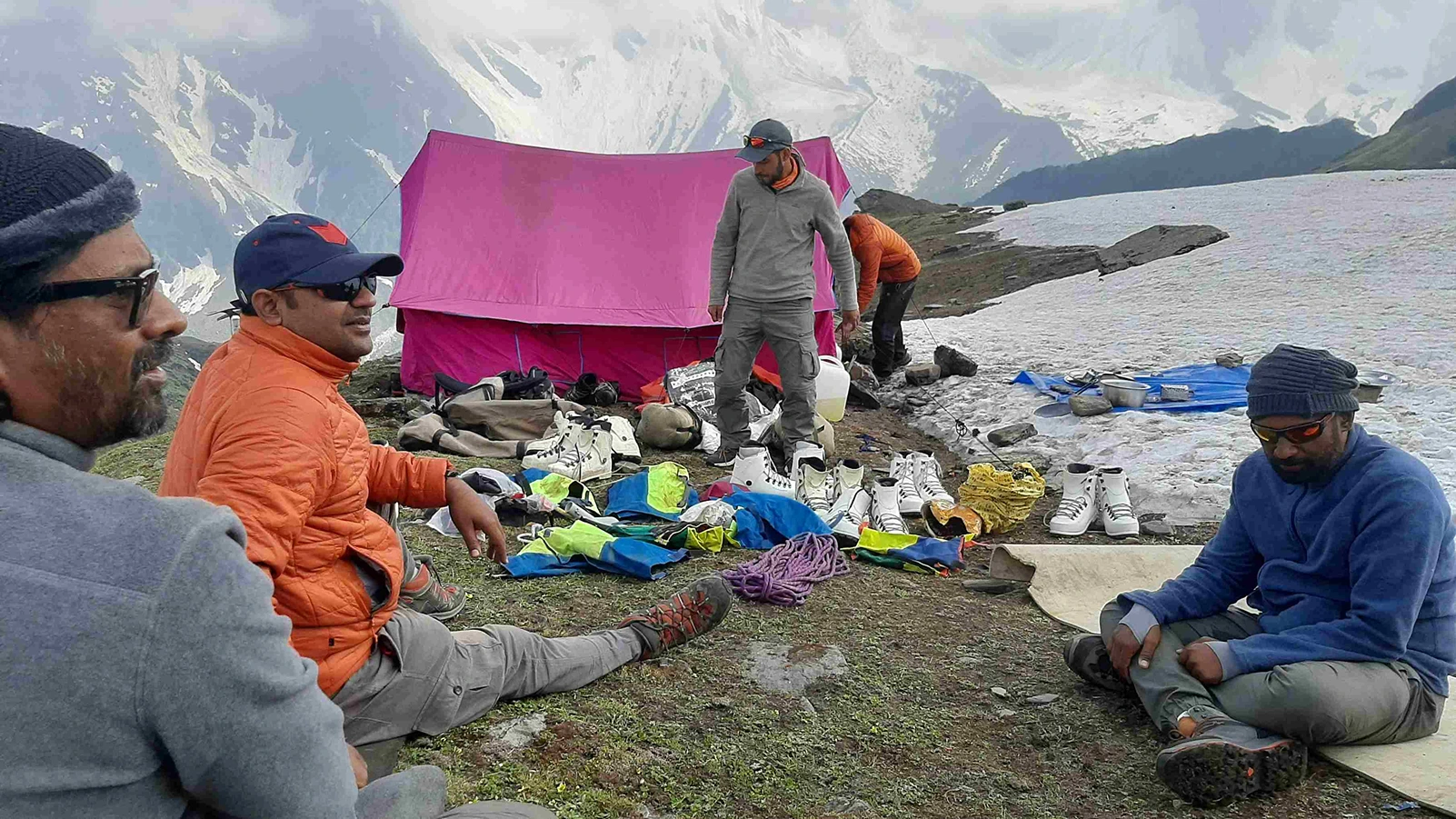
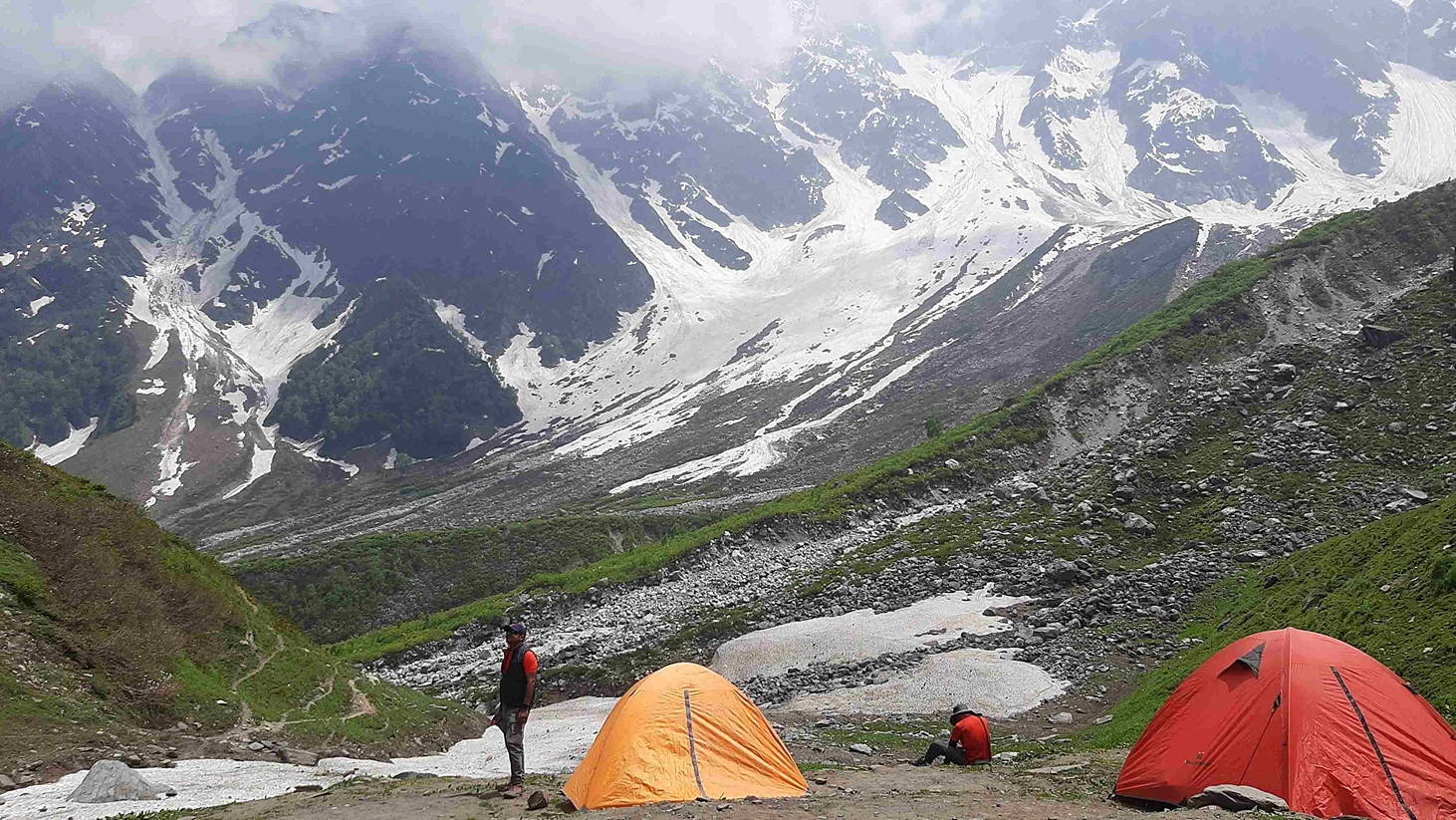
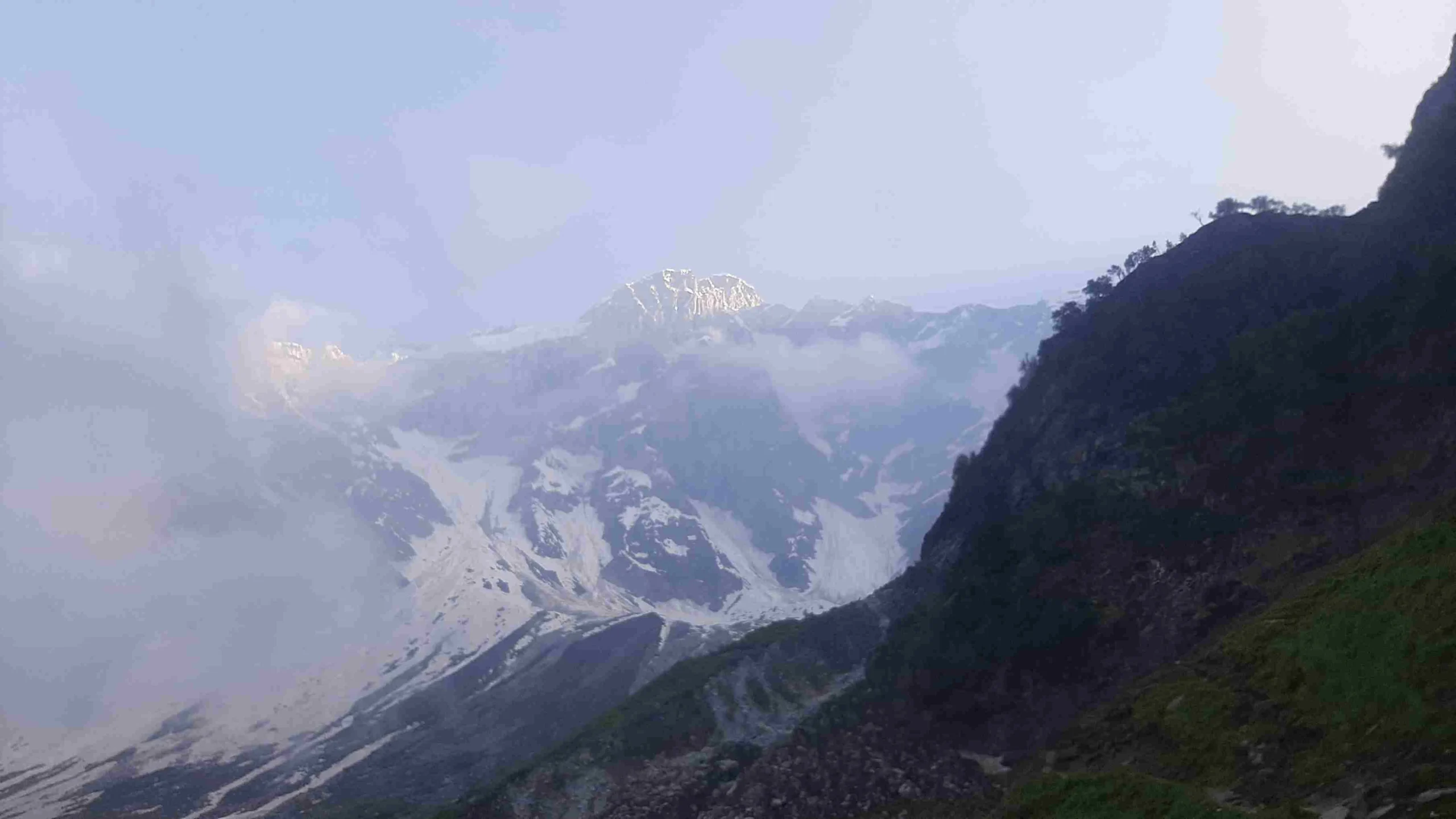
The expedition begins from Manali, gradually moving into the high-altitude environment through Dhundi and Bakarthach, following the upper Beas Valley. As trekkers progress toward the Beas Kund Glacier, the landscape transforms from alpine meadows to glacial terrain, with towering ice walls and sharp ridgelines closing in from all sides.
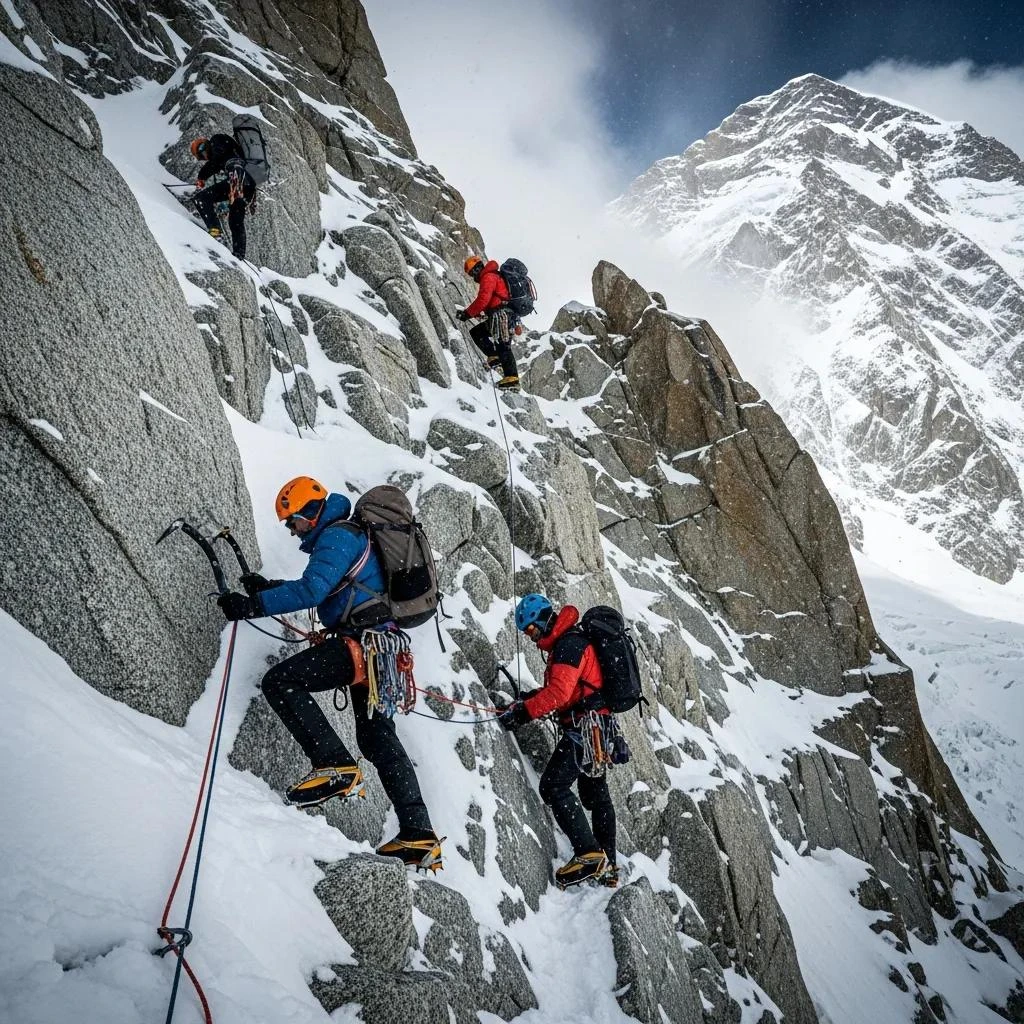
Unlike trekking peaks, the Hanuman Tibba Expedition involves:
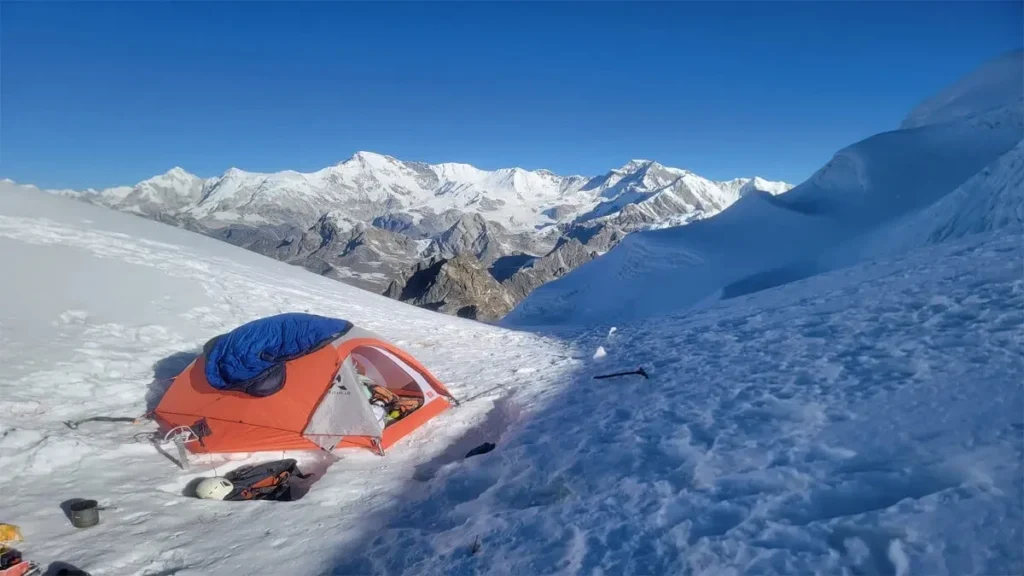
- Multiple technical camps
- Load ferry rotations
- Steep snow slopes
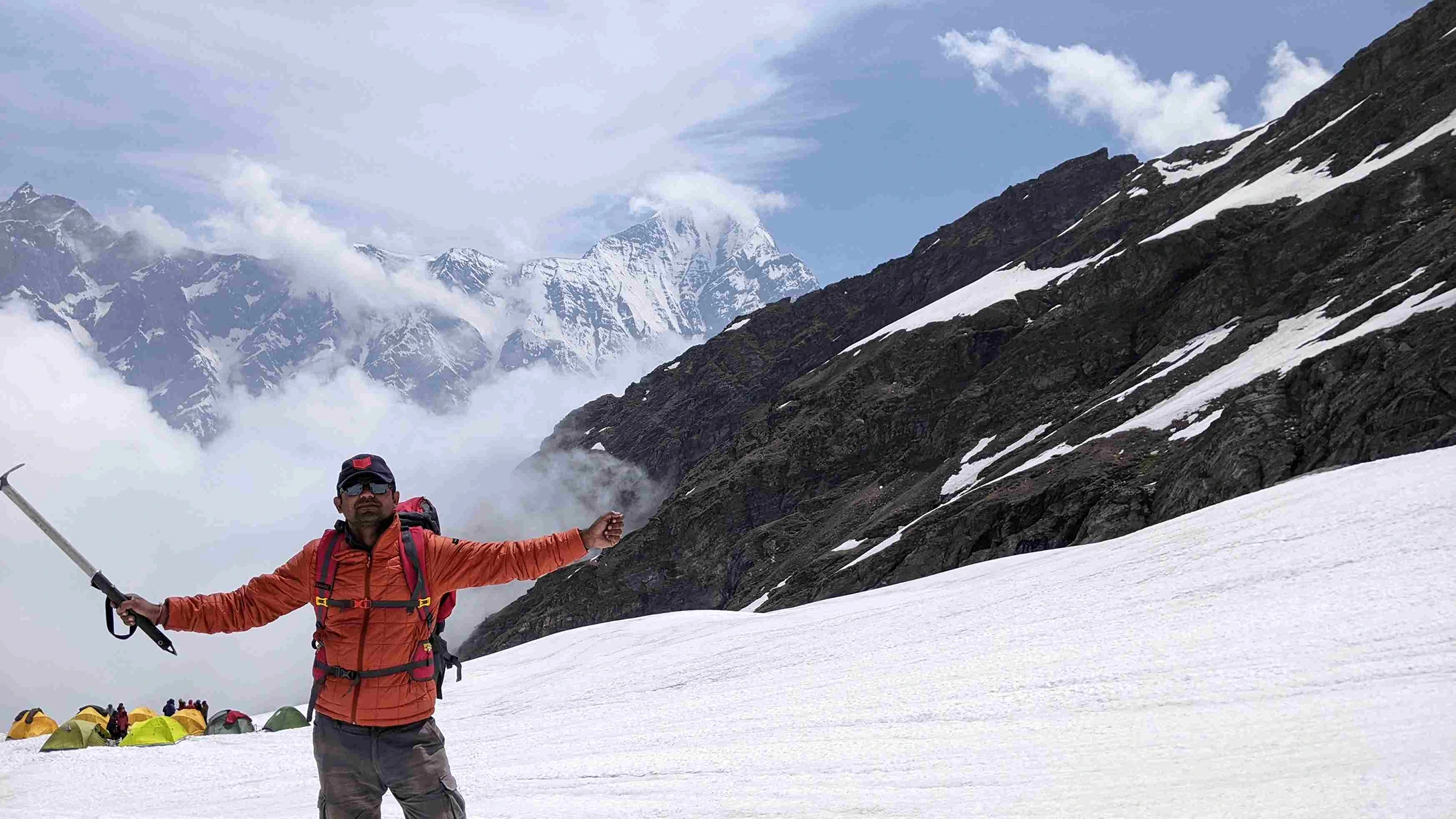
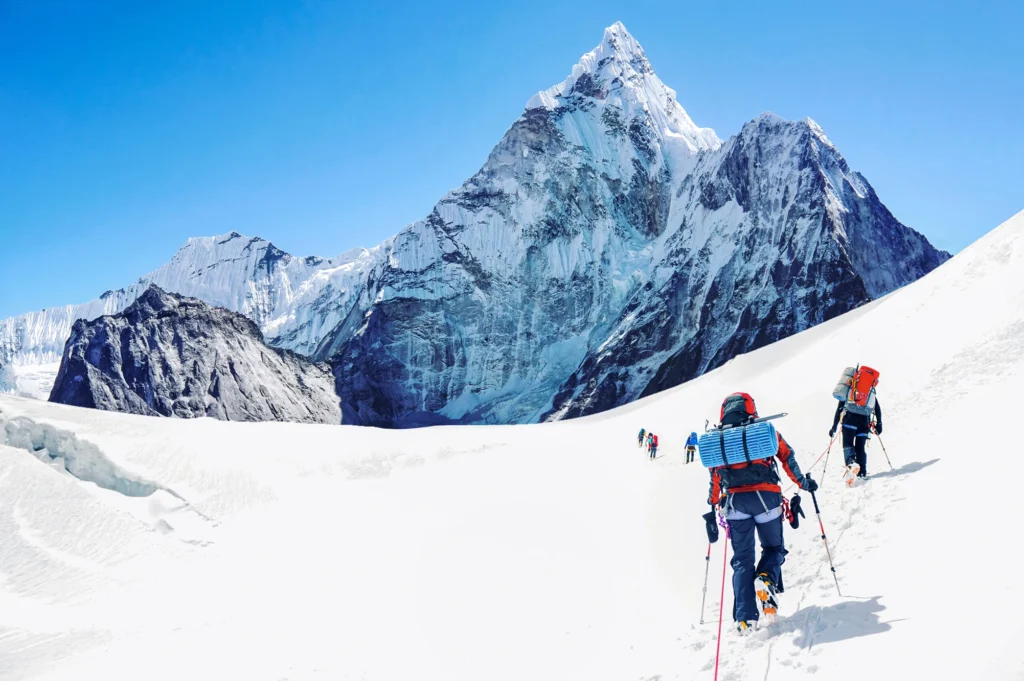
- Rope-assisted climbing
- Early-morning summit push
The summit day is long and demanding, requiring calm decision-making, steady pacing, and efficient use of mountaineering equipment. From the summit, climbers are rewarded with sweeping views of Indrasan, Deo Tibba, Friendship Peak, and the vast Lahaul–Spitiranges.
For trekkers aiming to transition from high-altitude trekking to serious mountaineering, Hanuman Tibba is a defining step — both physically and mentally.
HIGHLIGHTS OF THE HANUMAN TIBBA EXPEDITION
- One of India’s most respected technical training peaks
- Challenging snow and ice climbing below 6000 m
- Dramatic Beas Kund Glacier base camp location
- Multi-camp expedition experience
- Ideal progression toward 6000–7000 m peaks
- Stunning views of Dhauladhar & Lahaul ranges
- Strong technical and mental conditioning expedition